Construction site storage works best when it keeps frequently used tools and materials close to the work without turning the active jobsite into a cluttered staging area.
Sounds simple, right?
And it would be. If construction sites didn’t change constantly.
A storage location that works during one job phase might be in the way during a different one. Materials needed every hour should not live half a mile from the crew, while materials that will not be touched for six weeks may not deserve valuable space near the work.
So at every project phase, you have to ask yourself what belongs close enough to the crew that easier access improves the work.
For contractors, superintendents, project managers, and trade foremen, on-site modular storage can create a dedicated home for tools, parts, packaged supplies, and other compatible materials that need to stay close to the action.
Our 13- and 19-foot storage modules are especially useful when the project needs enclosed storage for weeks or months at a time and the storage may need to move again as the project changes.
Table of Contents
Construction Site Storage Should Follow the Work
Construction site storage is part of jobsite logistics.
Materials, equipment, deliveries, access routes, temporary structures, and staging areas all compete for space. Construction logistics planning therefore has to account not just for where material can physically sit, but for when crews need it and how people and equipment move around the site. Material storage and staging, equipment storage, temporary structures, ingress and egress, and access points are all related parts of site logistics.
That creates a practical storage rule. Keep frequently used, compatible tools and supplies close enough to support the work. Keep bulky materials where material-handling equipment can reach them. Keep low-touch future material off the active site when bringing it in early would only consume space.
Eliminate unnecessary trips, delays caused by the need to search for tools, waiting, and rehandling without creating new obstacles for the rest of the project.
What Belongs Close to the Crew?
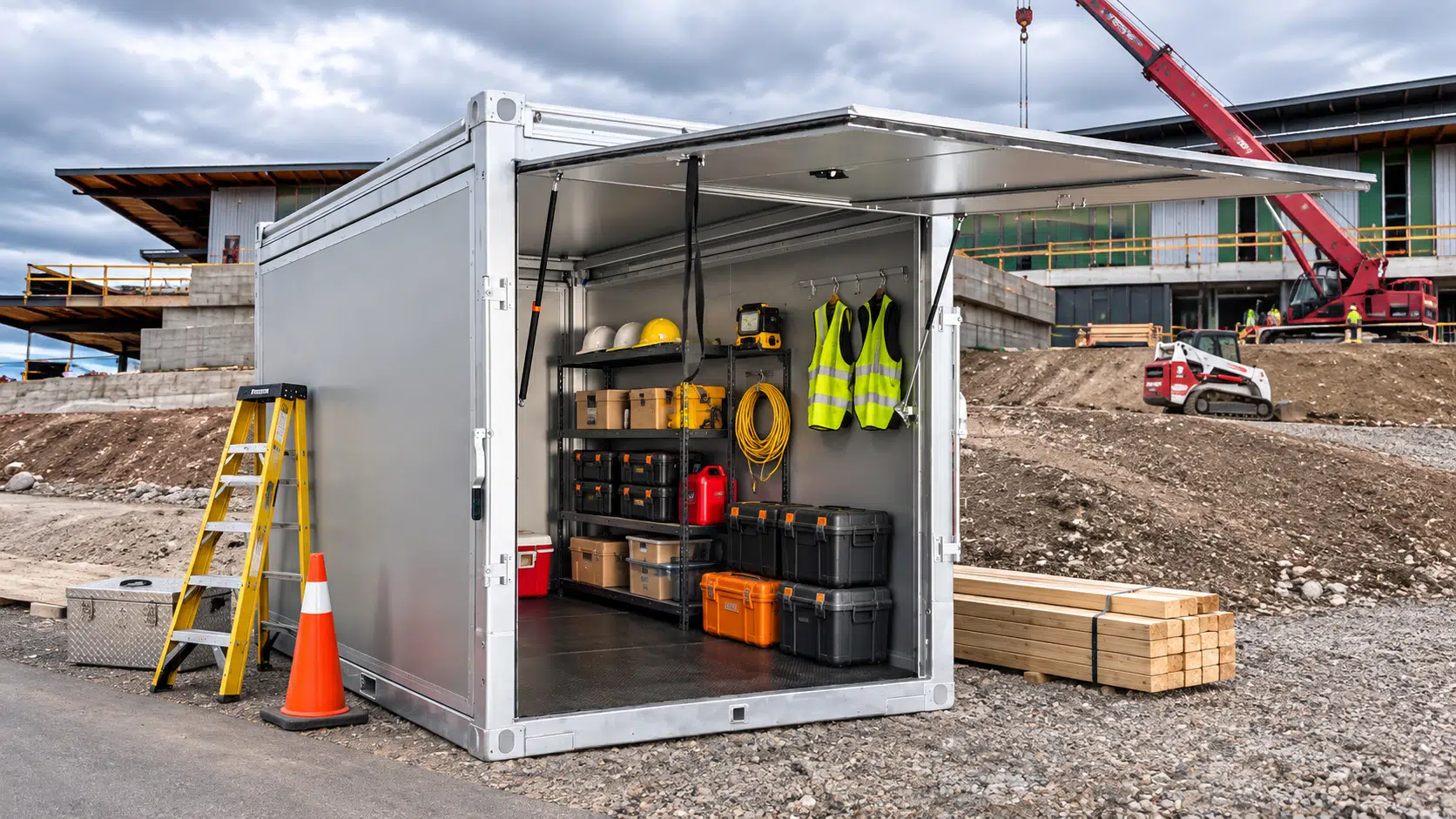
On-site modular construction site storage makes the strongest case for items you’ll need repeatedly but which you don’t want sitting directly in the work area.
Examples can include:
- Hand and power tools
- Fasteners, fittings, connectors, blades, bits, and other consumables
- Replacement parts
- PPE and backup gear
- Smaller specialty equipment
- Compatible packaged materials
- Layout and measuring equipment
- Installation hardware
- Job-specific supplies that crews need throughout the day
The goal is not to move every material into an enclosed structure. It is to give high-use items a known location near the people who use them.
Doing so can also make organization easier. A dedicated storage module can support shelving, cabinets, labeled zones, and controlled access instead of letting tools and small materials spread across trucks, gang boxes, temporary rooms, and miscellaneous corners of the project.
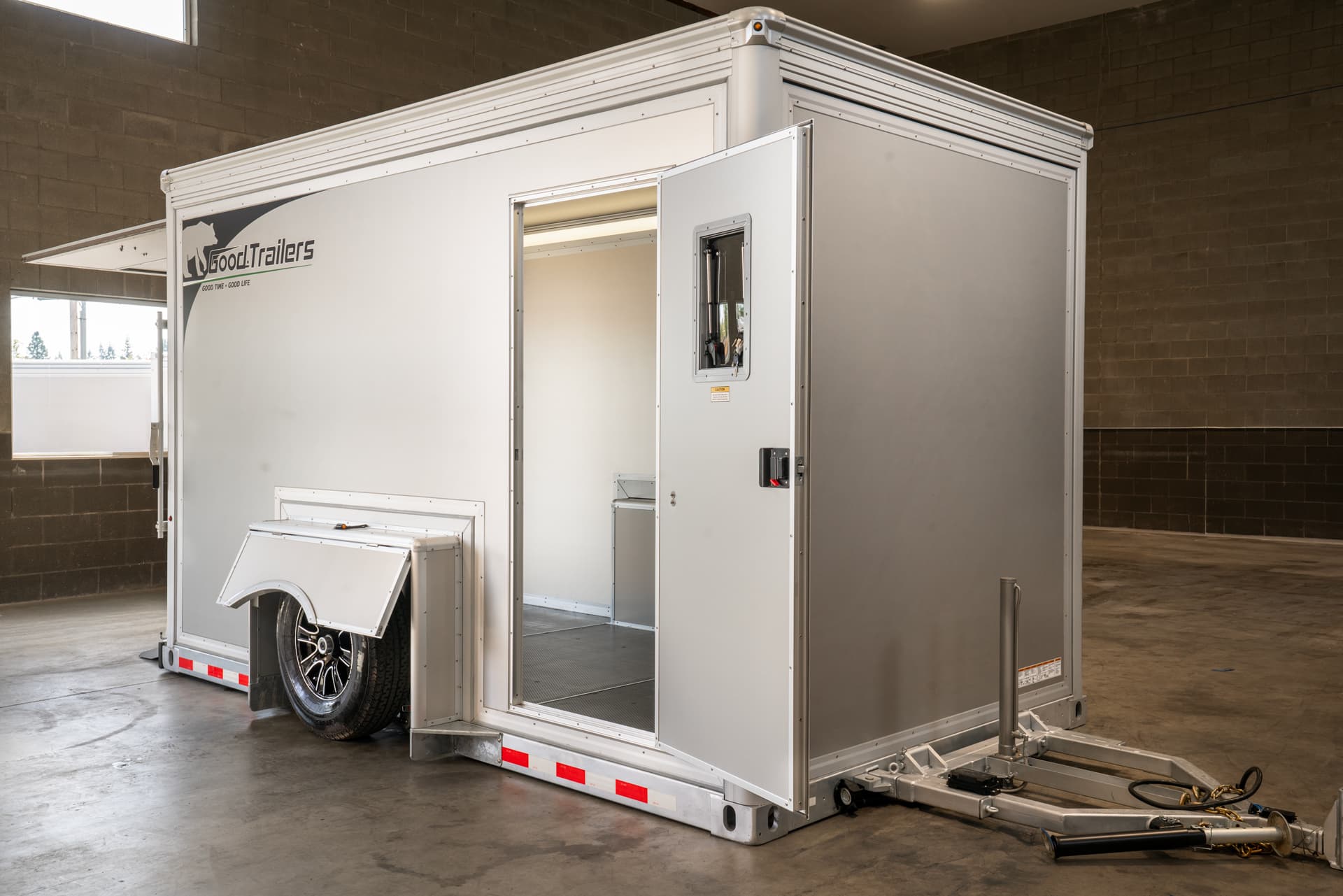
Our GMT13ST provides a 12’6″ x 6’9″ interior in a 13′ x 7’2″ exterior footprint. The GM19ST extends the interior length to 18’7″ while keeping the same 6’9″ interior width. Both use insulated composite aluminum panels and provide lockable enclosed storage.
What Belongs in the Laydown Yard?
Bulk materials often work better in a laydown yard or other open staging area where forklifts, telehandlers, cranes, and delivery trucks can approach them directly.
Depending on the project that may mean:
- Lumber
- Structural steel
- Pipe
- Masonry
- Formwork
- Large pallets
- Long stock
- Any other materials handled by equipment instead of individuals
OSHA also sets specific requirements for construction material storage. Materials stored in tiers must be secured against sliding, falling, or collapse; aisles and passageways must remain clear; incompatible materials must be segregated; and materials such as lumber, pipe, and structural steel have additional storage requirements.
A modular unit should not become the place where every leftover material gets pushed simply because it has a door.
Use construction site storage to improve the flow of work, not to hide poor staging.
What Should Stay Off-Site Until Later?
Some material does not need to be on the jobsite yet.
If the project will not use a shipment for several weeks, bringing it in early can consume staging space, create another item to protect and track, and force the team to move it again as the site changes.
Off-site storage, supplier-held material, or later scheduled delivery can make more sense when:
- The material is low-touch until a future phase
- The site has a very limited staging space
- The quantity is too large for practical point of use storage
- The material requires specialized environmental or regulatory controls
- Early delivery would interfere with active logistics
Point of Use Storage Can Reduce Jobsite Friction
The strongest argument for modular construction site storage is proximity.
If a worker needs the same fittings, blades, fasteners, batteries, replacement parts, or specialty tools several times a day, distance becomes part of the workflow.
Frequently used supplies are easier to manage when crews know where they are and can reach them without leaving the active area.
Point-of-use construction site storage can also help keep the work area itself cleaner. Supplies can stay close without living in walkways, against unfinished walls, or wherever somebody happened to set them down.
Using your portable storage this way can help you keep work areas, passageways, and stairs clean and clear.
Tool Trailer or Modular Storage Building?
A tool trailer and a modular storage building can solve similar-looking problems, but they support different routines.
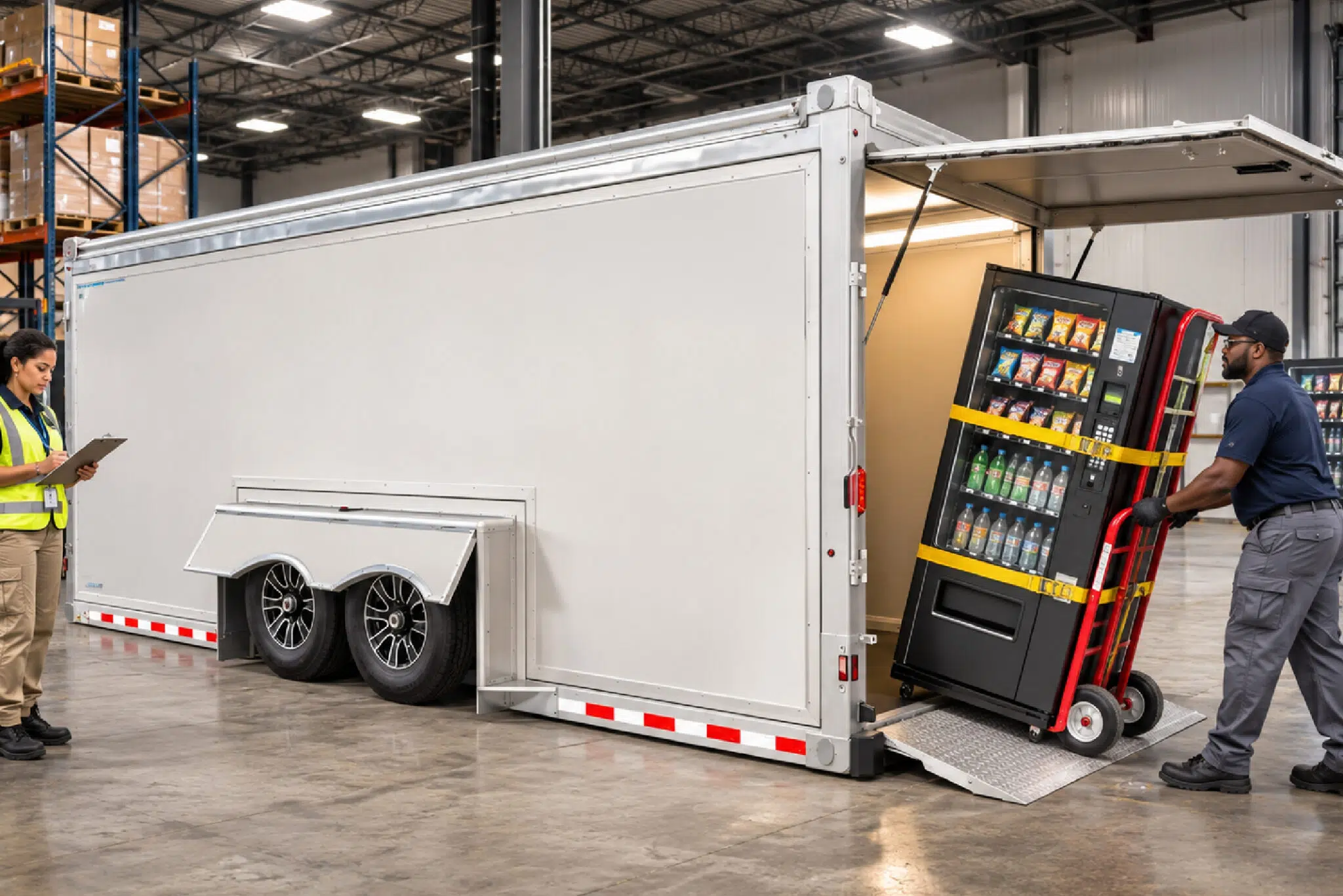
A tool trailer makes the most sense when the tools need to leave with the crew. If the same trailer follows a contractor from service call to service call or leaves the project every evening, mobility is part of its daily job.
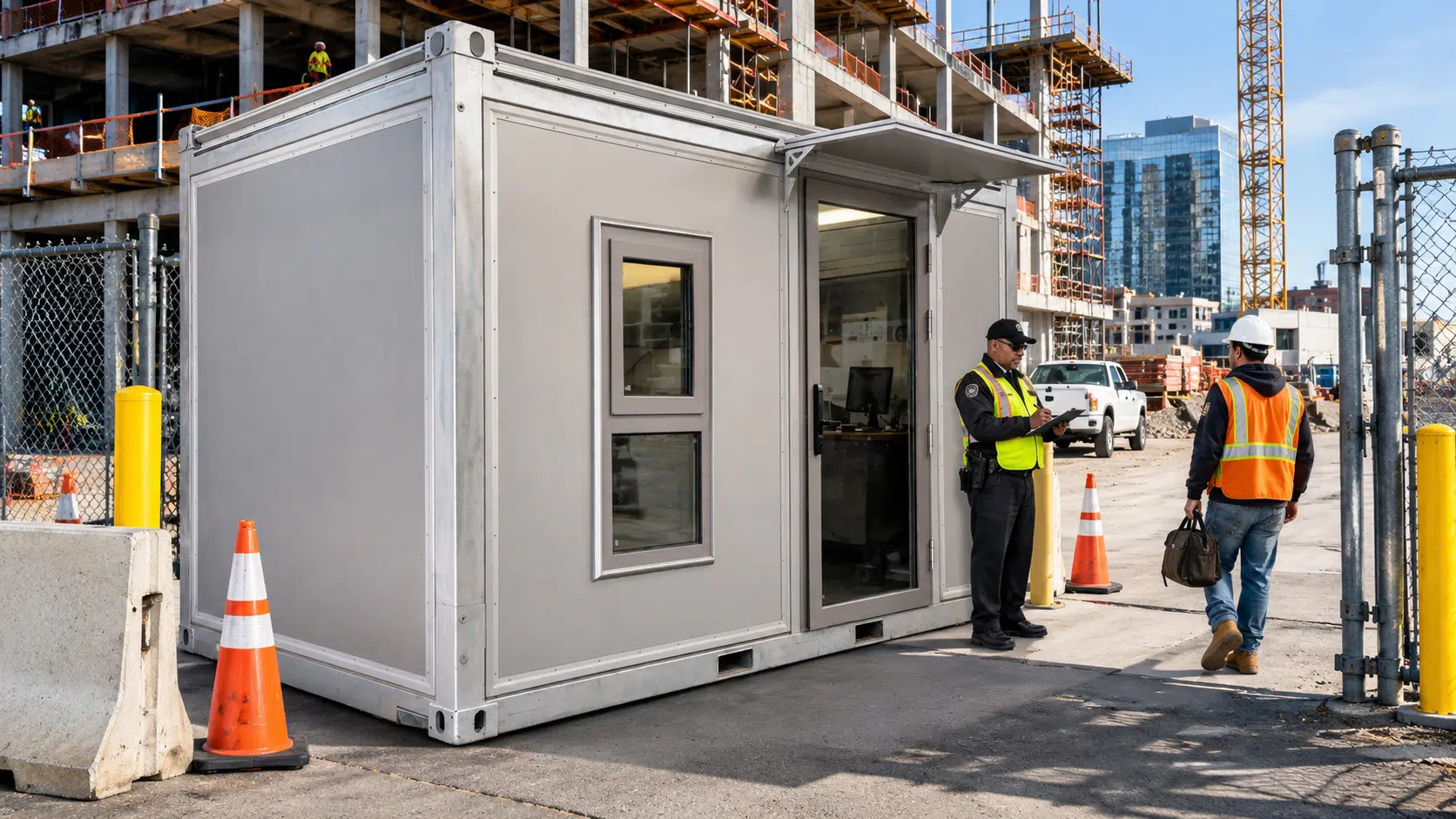
A modular storage structure makes more sense when the project needs a stationary tool or supply room for weeks or months at a time.
| Work Pattern | Better Starting Point |
|---|---|
| Tools leave with the crew every day | Enclosed tool trailer |
| Tools and supplies stay at one project for weeks or months | Modular storage |
| Equipment must be transported as well as stored | Trailer |
| Storage needs to move when the project phase changes | Modular storage or trailer, depending on how often it moves |
| The same storage resource should move to the next long project | Modular storage |
GM14ST vs. GM19ST for Construction Site Storage
The GM13ST and GM19ST solve different sizes of construction site storage problem.
The GM13ST is useful when the priority is keeping a focused group of tools and supplies near the work without consuming more site space than necessary.
Its exterior measures 13′ × 7’2″, with a 12’6″ × 6’9″ × 7’4″ interior. The GM13ST weighs approximately 1,900 pounds before stored contents and configured options are added.
The GM19ST keeps the same 7’2″ exterior width while extending the structure to 19 feet. Its interior measures 18’7″ × 6’9″ × 7’4″, giving a contractor more room for shelving, aisle access, larger quantities, or multiple organized storage zones. Its estimated dry weight is approximately 2,300 pounds before contents and options.
Choose the 13-foot model when the crew needs a compact point-of-use tool and supply room.
Choose the 19-foot model when the storage operation needs more separation, more shelving, or more material without turning the interior into a game of moving three things to reach the fourth.
Construction site storage should make access easier. More volume only helps when it remains usable.
Move the Storage as the Project Changes
One of the strongest reasons to use modular construction site storage is that the logical storage location can change during the same project.
During early work, the best location may be close to the site entrance or temporary utilities.
As the structure goes vertical, storage may need to move closer to the active building or to a different side of the project.
Later phases may change traffic routes again as paving, landscaping, occupied areas, or finished access points come online.
Our modular storage structures can be relocated with appropriate equipment, and compatible units can also be linked or stacked in suitable configurations as needs change. The specific arrangement depends on the selected models, intended use, loading, and site conditions.
That gives construction site storage a useful second life after the original placement stops being ideal.
And when the project ends, the same structure can move on instead of becoming a permanent feature of a completed site.
What Should Stay Out of General Purpose Modular Storage?
Regulated products requiring specific storage temperatures, fire-protection, segregation, containment, ventilation, or containment should all go into storage structures equipped to meet these needs.
Always check the material safety data sheet, manufacturer instructions, and applicable regulations before assigning specialized materials to any construction site storage area.
Our standard storage units are best treated as general purpose enclosed storage for compatible tools, equipment, parts, and supplies.
FAQ
Should I rent or buy construction site storage?
Renting can make sense for a one-time project, an uncertain schedule, or a contractor that wants to test the workflow before committing to ownership. Buying becomes worth comparing when the same contractor repeatedly needs point-of-use storage and expects the structure to move from project to project.
Can a modular storage unit move to another part of the same job site?
Yes, when the site and lifting plan support the move. Our storage modules are designed to be relocatable with appropriately rated handling equipment. Before moving a unit, confirm the configured structure weight, stored contents, lifting requirements, route, ground conditions, and the procedure for your specific model. Depending on the load and the move, contents may need to be removed or reorganized before relocation.
Can a modular storage unit be placed inside another building?
Usually, yes. Consider access for delivery and eventual removal, structural floor capacity, clearances, fire and egress requirements, the construction sequence, and whether later work could prevent the unit from being removed.
Key Takeaways
- Construction site storage should keep frequently used tools and compatible supplies close to the work without cluttering the active work area.
- High-use small materials, tools, parts, PPE, and consumables are often better candidates for point-of-use modular storage than bulk construction materials.
- Lumber, pipe, steel, masonry and other large materials may belong in a laydown area instead, a place where material-handling equipment has direct access.
- Low-touch future materials may be better left off-site until the project actually needs them.
- A tool trailer fits crews that move their storage every day; a modular storage building fits projects that need a stationary tool or supply room for a longer stretch.
- The GM13ST provides compact point-of-use storage, while the GM19ST gives more room for shelving, aisle access, and organized storage zones.
- Relocatable storage can move as project phases, traffic patterns, and work areas change.
- General-purpose modular storage should not be assumed suitable for regulated or specialized materials with their own storage requirements.
Keep Your Storage Close to the Work
Interested in bringing our portable storage solutions to your job site? Contact us to get started today!
Loading form…
This resource was compiled by the GoodMFG® Product Team, drawing on 75 years of combined experience in hydraulic systems, heavy-duty transport, trailers, and modular structures.
P.S. – We build modular structures every day, but we don’t run your operation. If there’s a specific logistical headache or a “field reality” we’ve missed, we want to hear about it. Help us refine the equipment that makes your day easier! Email our Marketing Lead at devan-h @ goodrv.com and let us know what we should solve next.