Vending machine transport gets easier to plan when you stop thinking about the machine as a big rectangular box and start thinking about the entire route it has to travel.
A full-size snack or beverage machine can stand around six feet tall and weigh several hundred pounds before you add a dolly, protective materials, tools, or anything else traveling with it. Current examples range from Seaga’s 440-pound SnakMart to CPI beverage machines weighing well over 600 pounds.
The machine may roll once it is on the right handling equipment, but that does not make the loading transition, trailer doorway, or securement plan optional.
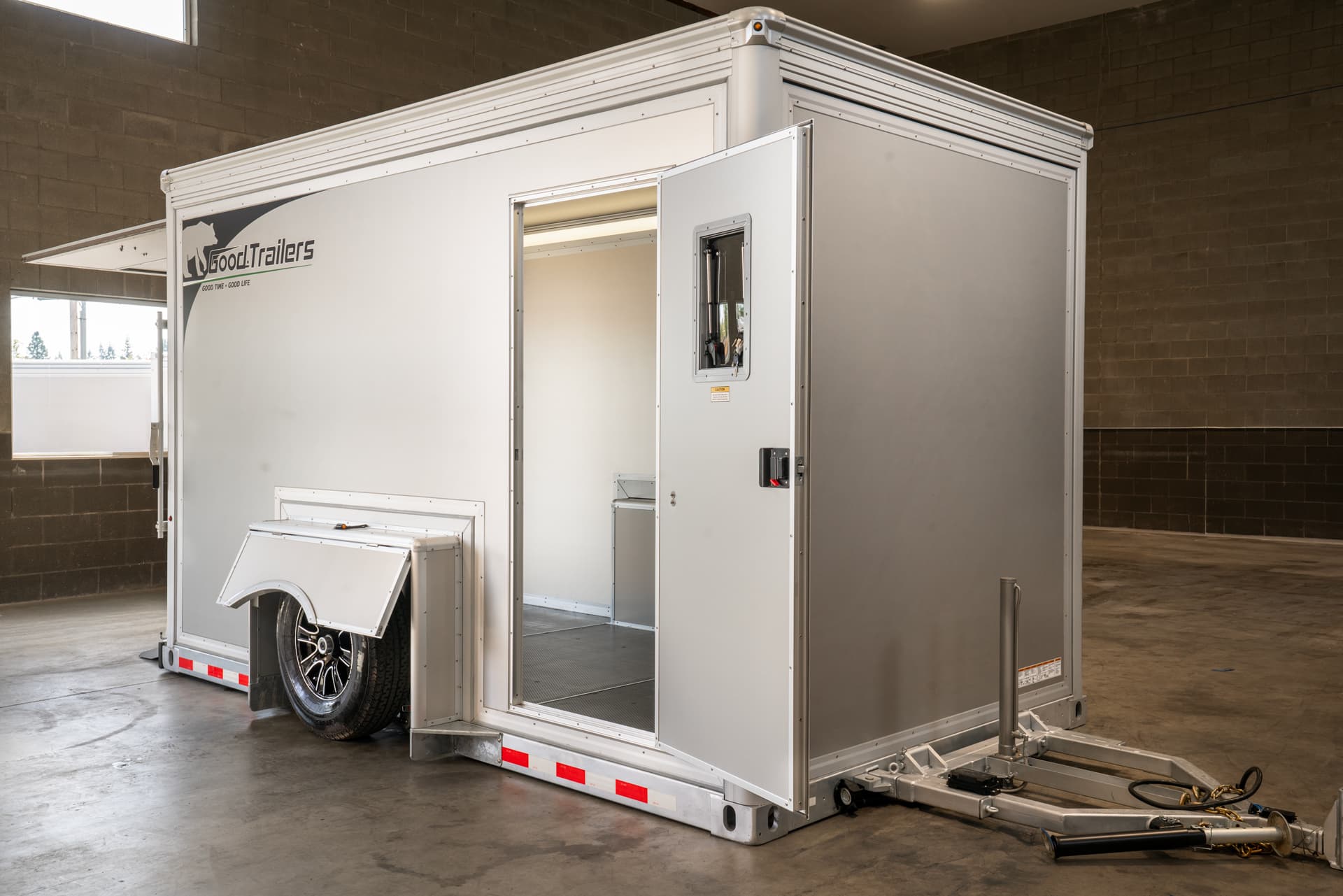
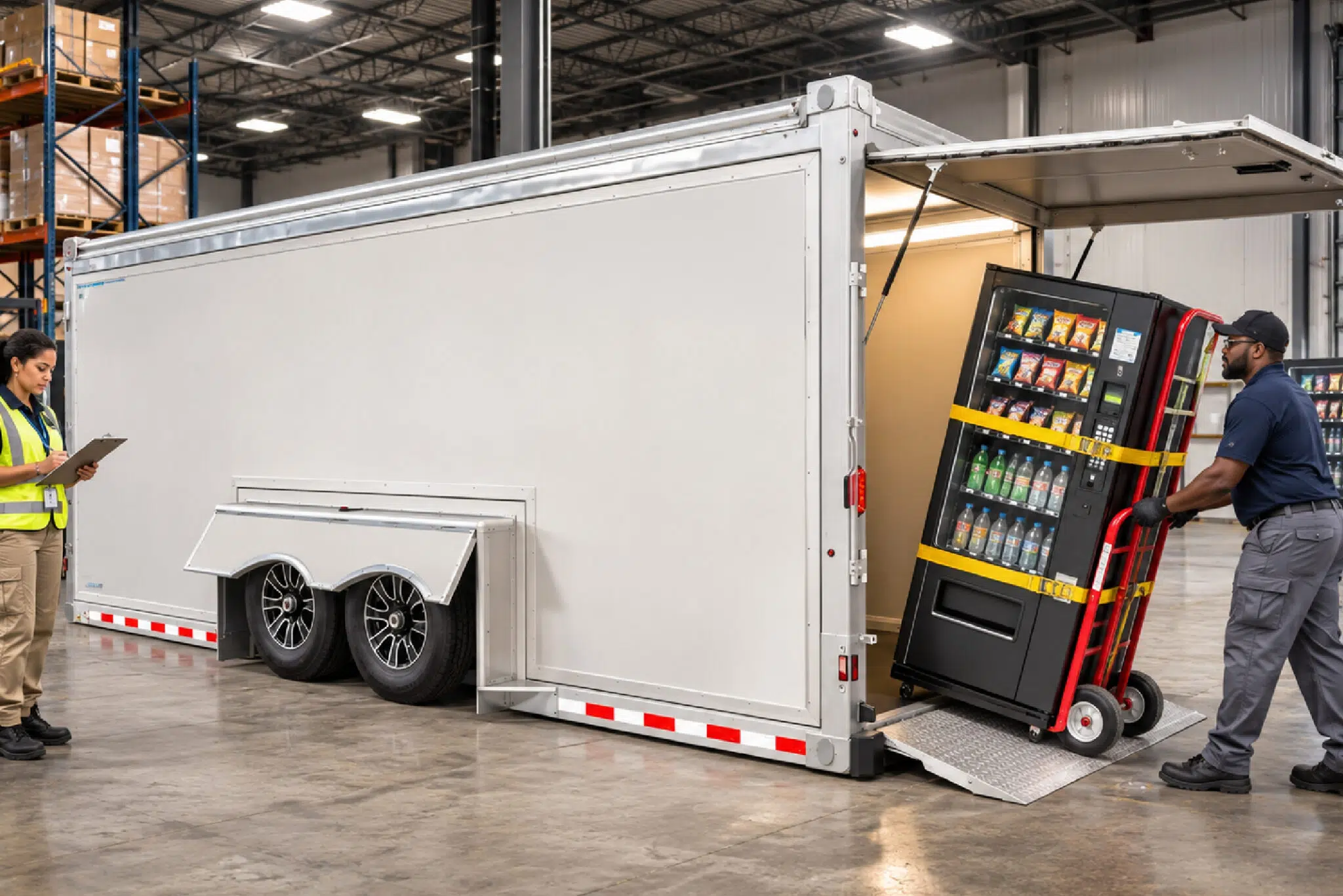
For vending machine transport, an enclosed hydraulic drop deck can be a strong fit because it combines a low loading transition with covered cargo space. Our GT13AL and GT19AL lower until the deck sits 5.4 inches above the loading surface, with a short 22-inch ramp completing the transition.
That can make sense for vending operators, professional movers, route businesses, and equipment dealers that move machines regularly.
It is not the only workable way to move a vending machine, and the machine manufacturer’s handling instructions still come first.
Table of Contents
Start Vending Machine Transport with the Machine Manual
Before choosing a trailer for vending machine transport, check the transport instructions for the exact machine you’ll be hauling.
Vending machines aren’t all built alike. Refrigerated beverage machines, snack machines, combo machines, and specialty vending devices can all have different handling requirements.
Some manufacturers require machines to remain upright during transport. Some instruct operators to remove product or change before moving. Refrigerated machines may also have specific instructions about what to do before the machine is powered back on after transport.
Your owners’ manual should settle those questions for you. Once you know how the machine must travel, vending machine transport becomes a trailer-selection problem:
- Can the trailer accept the machine in its approved transport orientation?
- Can the machine and moving equipment fit through the rear opening?
- Can you position the machine correctly once it’s aboard?
- Does the complete load remain within trailer and tow vehicle ratings?
Why a Low Loading Transition Matters
Vending machine transport often involves a tall cabinet with substantial weight above a relatively small footprint. That makes the transition from the ground to the trailer worth considering before anyone starts pushing.
Our enclosed drop deck trailers lower the deck to 5.4 inches above the loading surface. A 22-inch rear ramp with an 11-degree approach bridges the remaining height.
Instead of controlling the machine up a long ramp to a deck that remains at normal towing height, you cross a short transition onto a level main floor.
That doesn’t make a 600-pound vending machine light! You’ll still want to move the thing with a dolly and trained crew members.
But it does reduce one part of the problem: the height change between the ground and the trailer deck.
For vending machine transport, that can be particularly useful when the machine must remain upright or when a mover is controlling a tall load on a dolly.
GT13AL: A Strong Starting Point for Vending Machine Transport
For many vending machine transport jobs, the GT13AL is the first model we’d start thinking about.
It gives you:
- 12’6″ x 6’10” x 7’6″ interior space.
- 74″ x 84″ rear opening.
- 3,975 pounds estimated carrying capacity.
- 5.4-inch lowered deck height.
- 22-inch, 11-degree rear loading transition.
- An enclosed, lockable cargo area.
A full-size snack or beverage machine weighing roughly 500 to 700 pounds uses only part of that carrying capacity.
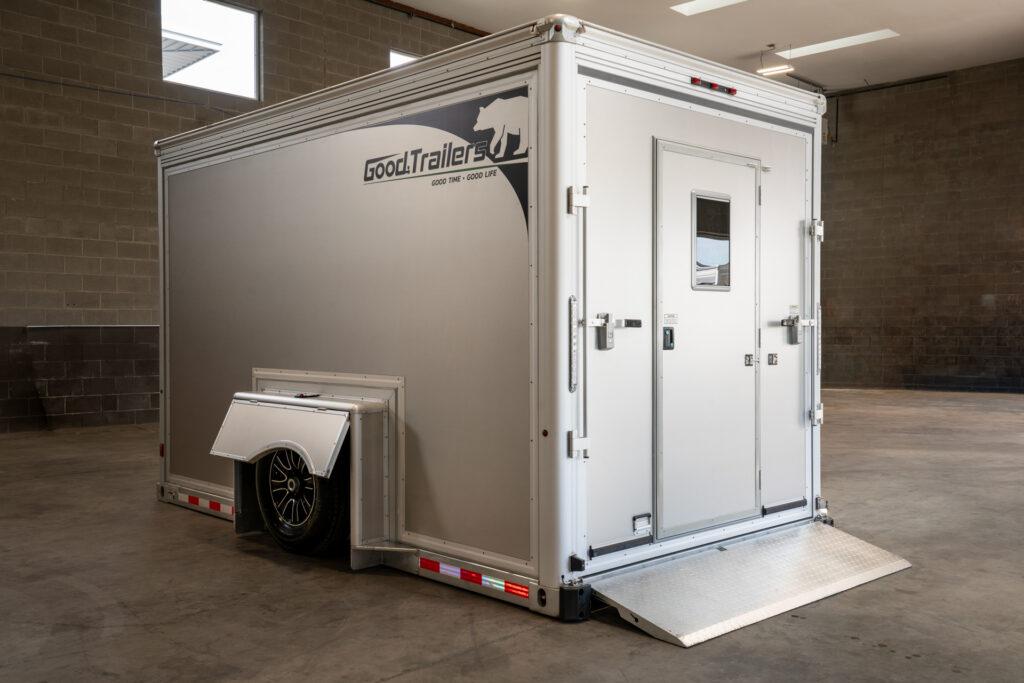
That leaves room for the real transport setup: dollies, moving blankets, securement equipment, tools, replacement parts, and potentially additional compatible machines.
Don’t use payload alone to determine how many machines you can bring inside. Each machine will need floor space, clearance between each other and the walls, appropriate load distribution, and room for the securement system to work. You also need to remain within the trailer’s GVWR and your tow-vehicle ratings.
For an operator moving one vending machine between locations, the GT13AL may provide more trailer than the machine technically requires.
That is not necessarily wasted capacity if the trailer is part of a route or service operation and also carries everything required to remove, install, protect, and secure the machine. Vending machine transport tends to involve more than the vending machine!
When the GT19AL Makes More Sense
The GT19AL enters the vending machine transport conversation when the job stops being one machine at a time.
Its interior measures 18’7″L x 6’10” W x 7’6″ H, with a 74.4″ x 85.4″ rear opening and an estimated carrying capacity of 7,929 pounds.
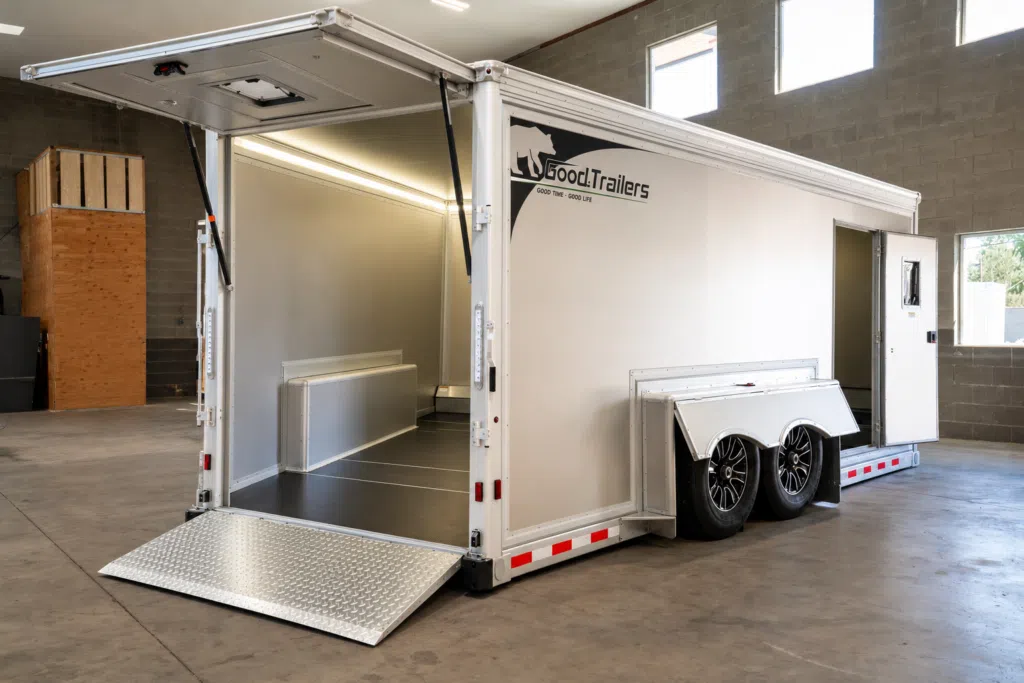
The extra length gives you more room to plan around multiple machines, a larger moving equipment package, or a mix of vending equipment and service gear.
The GT19AL may make more sense for:
- Vending operators installing or rotating several machines on the same route.
- Professional movers handling multiple units for one facility.
- Dealers delivering more than one machine.
- Refurbishers collecting and returning equipment.
- Businesses that use the trailer for other compatible rolling equipment between vending jobs.
The GT19AL is not automatically the better vending machine transport trailer because it’s bigger. If one machine is a modest equipment package are your normal load, the GT13AL may fit the work without asking you to tow six feet of trailer you’ll rarely use.
But if your workflow usually requires several cabinets or additional cargo, the 19-foot interior starts earning its keep.
Enclosed Transport Protects More than the Cabinet
A vending machine may contain glass, payment hardware, displays, product-delivery mechanisms, electronics, and even refrigeration equipment. And all of that makes enclosed trailers the natural candidate for vending machine transport.
Using an enclosed model keeps your machine out of direct rain, road spray, and flying debris while it travels. It also gives you lockable space for dollies, straps, tools, replacement, parts, moving blankets, payment equipment, and other service gear between stops.
For vending operators who leave the trailer set up between jobs, the enclosed space can also keep the whole moving system together instead of redistributing dollies, blankets, straps, and tools between the shop and truck every morning.
Plan Securement Before the Machine is Inside
Vending machine transport can become awkward fast if the machine is already positioned before anyone asks where the restraints are supposed to go.
The correct securement method depends on the vending machine, the handling equipment, and manufacturer’s requirements.
Once you’ve checked these details, you can decide what happens next. Our enclosed trailers can be configured with floor-mounted D-rings or E-track where appropriate, giving you options for building a repeatable securement layout around the equipment you actually move.
A tall rolling cabinet must remain stable through acceleration, braking, turns, bumps, and any other road movement. You don’t want to route restraints across glass, doors, controls, payment hardware, or other vulnerable components unless the machine manufacturer specifically permits it.
Finding the right vending machine transport securement set-up is everything.
Remember the Dolly
A vending machine may only spend a few minutes on a dolly, but those minutes can determine whether the entire vending machine transport plan works.
The handling equipment will have its own:
- Width
- Length
- Rated capacity
- Wheels or tracks
- Handle clearance
- Turning radius
- Operating requirements
A 39-inch-wide vending machine on moving equipment may no longer behave like a 39-inch-wide load.
Before choosing the trailer, walk through the entire path.
Can the dolly approach the trailer straight enough to cross the ramp?
Does the combined machine-and-dolly package clear the rear opening?
Is there enough room inside to transition the machine from its loading setup into its transport position?
Can workers reach the approved securement points?
And where does the dolly ride once the machine is loaded?
This is one reason ground-level loading can be valuable for vending machine transport. Bringing the trailer closer to the ground can reduce the ramp climb without requiring the crew to invent an entirely different handling method just to reach the deck.
Taller Equipment? Check Lift Panel Height
Many of the common full-sized machines we checked to write this post are roughly 69 to 73.5 inches high. That gives them plenty of room to get inside the GT13AL.
Nevertheless, some machines might not fit. Specialty machines, machines with toppers or signage, or other variances can increase the effective height of a standard machine.
Fortunately, you have options if you need a little more room: upgrading to our high-cube HDX trailer with 8’6″ of interior height and a 95″ rear opening.
Should You Use a Flatbed for Vending Machine Transport?
There’s certainly nothing stopping you, but we tend to think an enclosed drop deck trailer deserves the first comparison if you don’t want a road rock flying up and pinging the glass on one of your machines.
Granted, if the machine or crate is so tall you can’t even get it into a high cube then you might not have much choice but to go flatbed and to figure out how you’re going to protect the machine. The same is true if forklift access from the side turns out to be important.
New Machines & Existing Machines: Different Moves
Not every vending machine transport job starts the same way.
Delivering a New Machine
A new vending machine may arrive packaged, palletized, or crated.
Use the manufacturer’s shipping dimensions rather than the bare installed dimensions.
If the machine is supposed to remain on its shipping base until it reaches the installation site, plan the trailer and handling equipment around that complete package.
Relocating an Installed Machine
An existing machine may need product, cash, change, or other removable components taken out and packed separately before transport. Be especially mindful of whether your manufacturer calls for moving empty machines.
Moving Refrigerated Vending Equipment
Refrigerated equipment often comes with specific orientation and restart requirements. Make sure you check your owners’ manual prior to transport and understand all the steps you need to take before loading your refrigerated vending machine.
Moving Several Machines on a Route
This is where trailer layout becomes part of vending machine transport efficiency.
If you regularly rotate, replace, or install several machines, a planned interior with known securement locations and dedicated space for dollies and moving gear can reduce the amount of set-up you have to recreate at every pickup.
Vending Machine Transport Examples
Real machine specifications help show why trailer selection deserves more than a guess.
Seaga ENV5S Snack Machine
Seaga lists the ENV5S at:
- 72 inches high
- 39 inches wide
- 36 inches deep
- 517 pounds
Those basic dimensions fit within the GT13AL’s 74-inch-wide by 84-inch-high rear opening and 12’6″ x 6’10” x 7’6″ interior on paper.
That does not certify the complete transport set-up.
You still need to account for the dolly, padding, restraints, machine instructions, load position, and towing setup.
But it demonstrates why the GT13Al is worth evaluating for full-size vending machine transport.
Seaga SnakMart
The smaller Seaga SnakMart measures:
- 69.5 inches high
- 30 inches wide
- 29 inches deep
- 440 pounds
For a compact machine like this, trailer capacity is unlikely to be the difficult part of the comparison. The more useful question is how many machines travel together, what handling equipment comes with them, and what other jobs the trailer needs to perform for the business.
FAQ
Should a vending machine be transported upright?
Some vending-machine manufacturers specifically require upright transport, particularly for beverage or refrigerated equipment. Follow the handling instructions for your machine. Do not lay a machine down simply because doing so would make it possible to fit inside a particular trailer.
Should I move a bending machine with product inside?
Many machines caution you against transporting machines while they’re loaded up. Consult your manual.
Can I use E-track for a vending machine?
E-track can be a useful part of a properly designed securement system when the track, mounting, fittings, restraints, and working-load limits are appropriate. Use the machine manufacturer’s approved restraint locations and avoid loading vulnerable glass, doors, electronics, or payment hardware.
Key Takeaways
- Vending machine transport starts with the machine manufacturer’s handling instructions.
- Measure the rear trailer opening as well as the interior. A machine that fits inside still has to get through the door.
- Account for the dolly, pallet, padding, restraints, and other equipment that changes the effective size of the load.
- Our enclosed drop deck trailers lower to a 5.4-inch deck height and use a short 22-inch, 11-degree rear transition.
- Enclosed transport helps protect finished machines and supporting equipment from direct rain, road spray, and debris.
- Plan the securement system around the machine before you load it.
Build Vending Machine Transport Around the Whole Route
Good vending machine transport starts with great equipment.
Want to load yours at ground level? Find your nearest dealer or contact us for options today!
Loading form…
This resource was compiled by the GoodMFG® Product Team, drawing on 75 years of combined experience in hydraulic systems, heavy-duty transport, trailers, and modular structures.
P.S. – We build modular structures every day, but we don’t run your operation. If there’s a specific logistical headache or a “field reality” we’ve missed, we want to hear about it. Help us refine the equipment that makes your day easier! Email our Marketing Lead at devan-h @ goodrv.com and let us know what we should solve next.