A shipping container vs. storage building comparison should start with the job you need to do, not with the fact that both options look like…well. Boxes! Large, enclosed boxes.
If you’re tempted to think: why do I even care, I’ll just go with whatever’s cheapest? We totally get it. Sometimes it’s difficult to distinguish where the real differences are and whether they’re worth worrying about.
But believe it or not, there are some differences worth considering.
For example, a standard shipping container was designed first as freight equipment. A modular storage building was designed, first, as usable storage space. Either can work well, but those different starting points have an impact on access, insulation, layout, expansion, and how naturally the space fits into daily operations.
At GoodMFG®, we build insulated modular storage structures in 13- and 19-foot standard and high-cube configurations. Are we always the right choice? Of course not. But often we are, and this guide will help you think beyond the cheapest box. Even if we’re the cheapest box!
Table of Contents
Shipping Container vs. Storage Building: Start with the Intended Job
A shipping container is standardized freight equipment designed for repeated handling and intermodal transportation. International standards define container dimensions, ratings, fittings, and testing so containers can move reliably through ships, trucks, rail systems, terminals, and yards.
That is a real strength, and it matters in a shipping container vs. storage building comparison.
If your business needs equipment that can participate in freight transportation, a shipping container is built for that job. Even when the container stays on one property, that freight-oriented design also gives businesses a simple way to obtain a large enclosed storage volume.
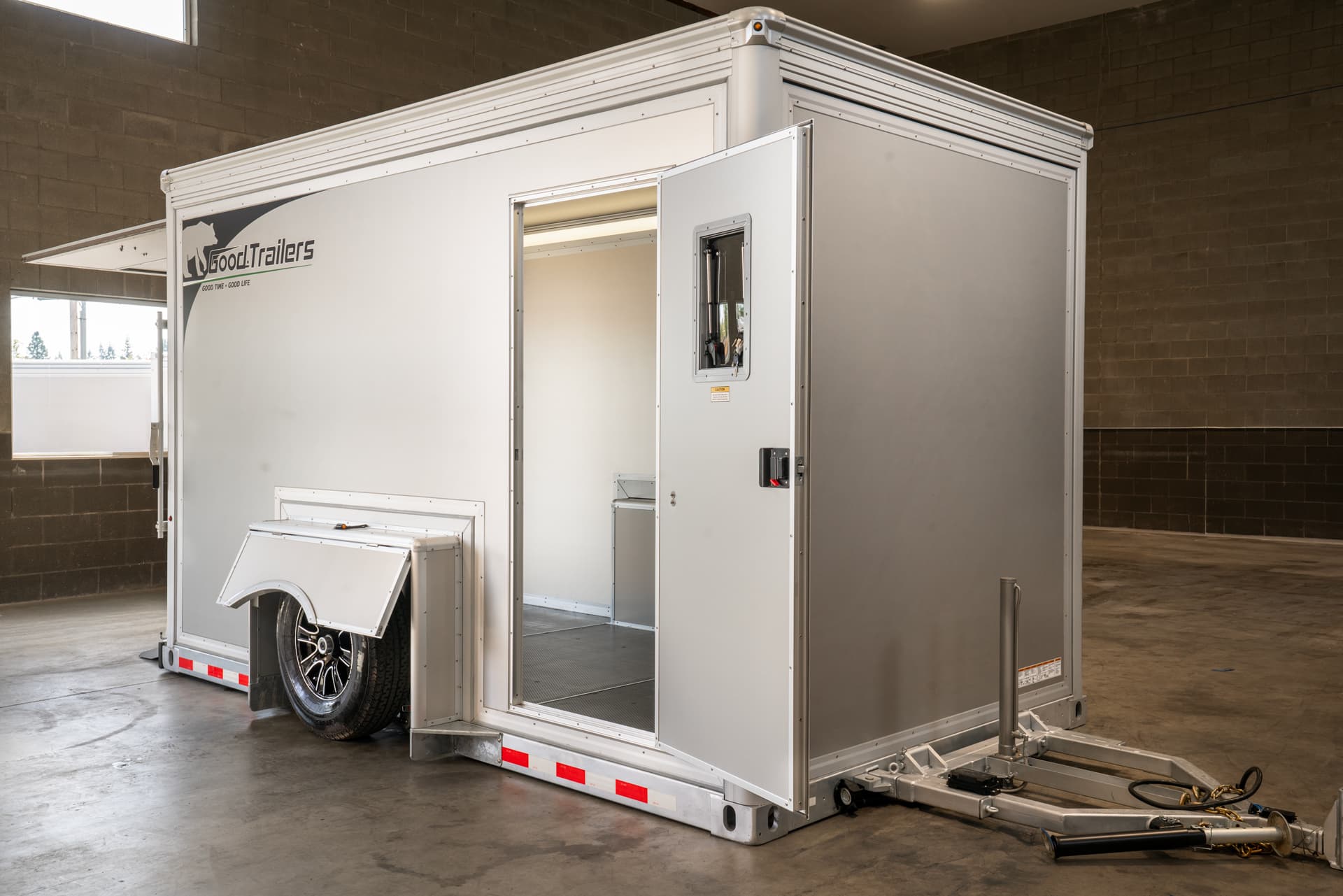
A GoodMFG® modular storage building starts from a different premise. It is a purpose-built storage structure with insulated composite aluminum panels, lockable access, and configurations intended to support storage as part of an operating facility.
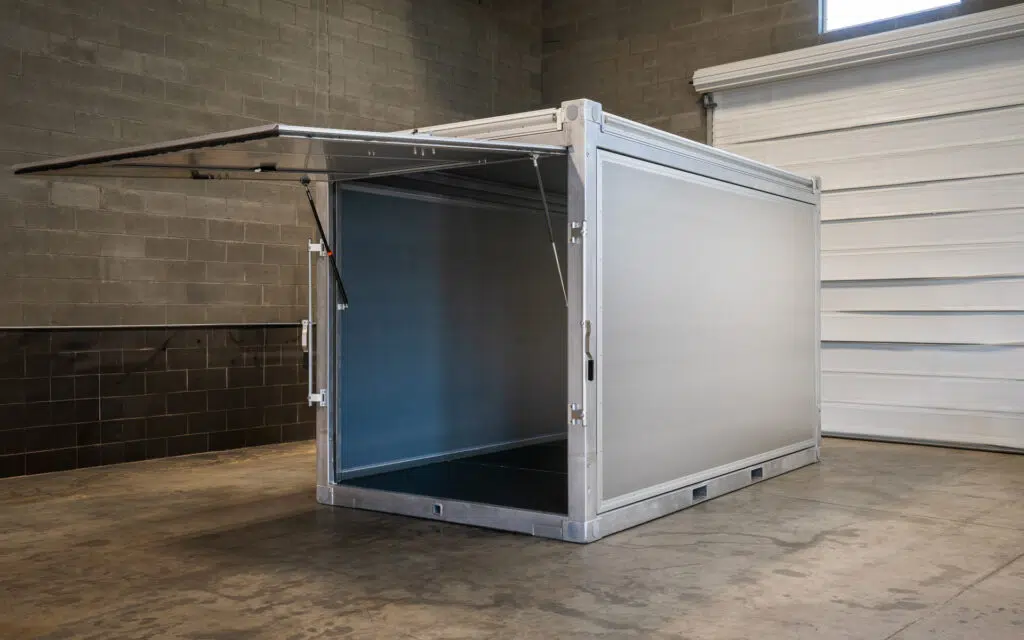
That distinction is the foundation of a useful shipping container vs. storage building comparison.
- Choose around freight and bulk capacity when those are the priorities.
- Choose around daily storage when people, access, organization, insulation, or future expansion matter more.
Neither starting point is universally better, but one may very well fit your operation better.
Quick Shipping Container vs. Storage Building Comparison
| What to compare | Standard Shipping Container | GoodMFG® Modular Storage |
|---|---|---|
| Original purpose | Intermodal freight transportation | Purpose-built business storage |
| Common size approach | Standard freight sizes, including 20- and 40- units | 13- and 19-foot standard and high-cube models |
| Bulk storage capacity | Strong advantage, especially with 40-foot units | More compact footprints for moderate storage needs |
| Standard access | Cargo doors designed around freight loading | Storage-focused access: man door, lift panel, with optional second lift panel on the other side. |
| Insulation | Depends on the container or later modification | Insulated composite aluminum panels are part of the structure |
| Interior organization | Can be added or modified | Shelving & other storage-oriented options can be planned with the configuration |
| Expansion | Containers can be modified or combined as a separate project | Compatible modules can be linked, stacked, relocated, or reconfigured in suitable layouts |
| Used-unit condition | Varies with age, previous use, repairs, and maintenance | New unit begins service as the storage structure ordered |
| Best fit | High-volume, straightforward enclosed storage; freight-related uses | Storage that becomes part of a business’ regular workflow |
The table is a starting point, not a verdict. A shipping container vs. storage building decision changes when the way people use the space changes.
When a Shipping Container Makes Good Business Sense
A fair shipping container vs. storage building comparison should make this clear: shipping containers can be excellent storage.
A standard 20-foot dry container provides roughly 1,170 cubic feet of cargo capacity, while a standard 40-foot container provides about 2,390 cubic feet. If your priority is maximizing enclosed bulk storage in one unit, particularly in a 40-foot footprint, that is a meaningful advantage.
A shipping container can make especially good sense when:
- The contents can remain in a relatively basic freight-style enclosure.
- Infrequent employee access.
- Large cargo doors work well for the items being stored.
- You need substantial bulk volume.
- The unit may eventually need to participate in freight transport.
- The price and condition of an available container make the economics attractive.
Imagine a business storing event equipment that comes out twice a year, non-sensitive construction materials between projects, or palletized reserve stock nobody expects to touch for several months.
If the job is, essentially, “keep this enclosed and locked until we need it,” a container may do that job pretty well.
When a Modular Storage Building Makes More Sense
The shipping container vs. storage building calculation changes when storage becomes part of the workday.
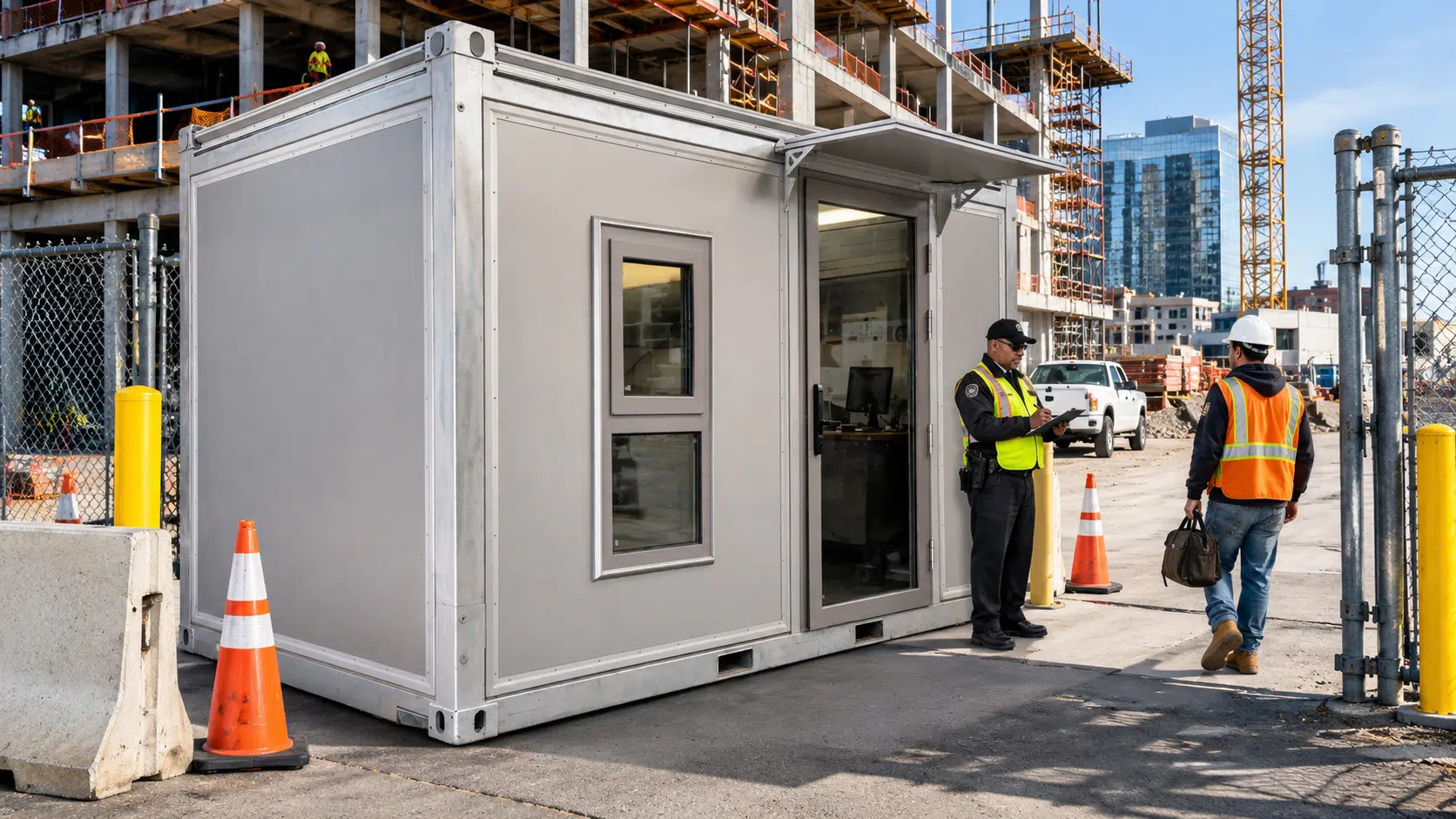
Suppose employees retrieve tools, supplies, spare parts, packaging, or inventory several times each shift. Now the unit is not simply holding goods. It is becoming another room in the operation.
That makes questions about access, insulation, and proximity much more important. It also makes access to options important, such as having the ability to add shelves or cabinets if you want to.
For businesses using storage regularly, that purpose-built starting point can save you from buying freight equipment and then turning it into the storage space you wanted afterward.
A modular storage building is especially worth comparing when:
- Employees enter the space regularly.
- Stored items need organized access rather than bulk containment.
- Insulation matters to the storage plan.
- A smaller footprint fits the site better.
- You expect storage requirements to change.
- You want the structure to integrate into the larger arrangement later.
That is where the shipping container vs. storage building question becomes less about the box, and more about the workflow around the box.
Compare Capacity and Footprint
Capacity is one area where a shipping container can win cleanly.
A standard 40-foot container offers far more enclosed volume than any single GoodMFG® storage module. If your business simply needs the most cubic space available in one structure, we would not try to talk you out of doing the math.
The GoodMFG® storage range answers a somewhat different need.
The GM13ST and GM13HQ use a 13-foot × 7-foot-2-inch exterior footprint. The GM19ST and GM19HQ use a 19-foot × 7-foot-2-inch footprint. High-cube models add a foot of exterior height without increasing the corresponding ground footprint.
That gives a business ways to add moderate storage near the point of use without automatically committing to a 20- or 40-foot freight-container footprint.
For a shipping container vs. storage building comparison on a crowded property, that smaller footprint may matter.
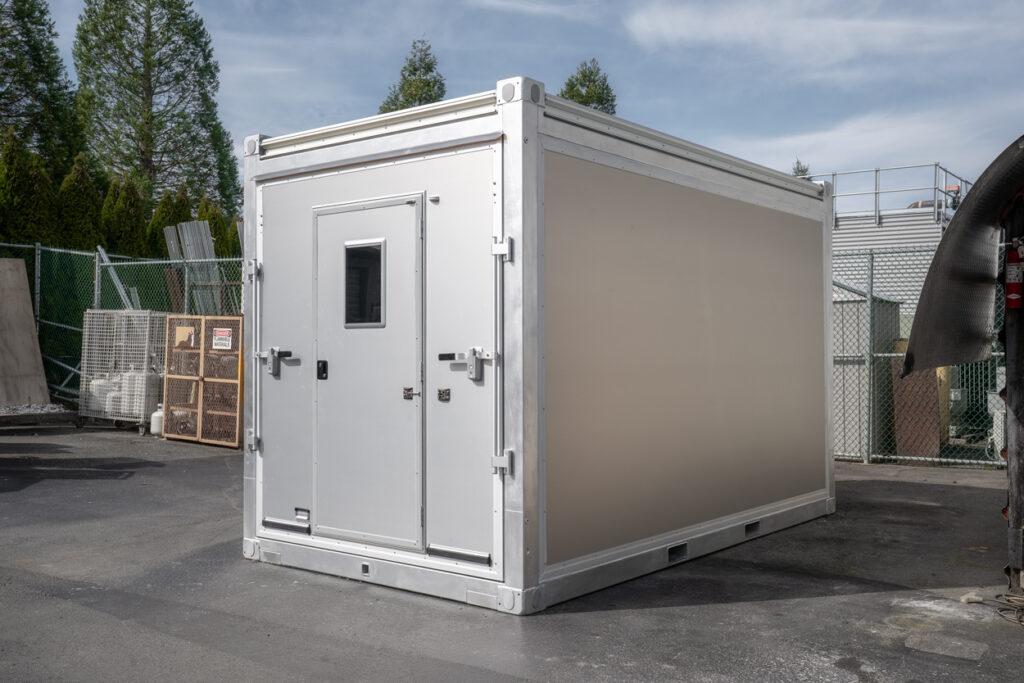
A facilities manager may not need the maximum possible volume. They may need enough secure storage beside a maintenance shop without consuming more of the yard than the job requires.
That is an important distinction in a shipping container vs. storage building comparison: more capacity is only an advantage when you actually need it.
Daily Access vs. Maximum Volume
If employees use the unit every day, access deserves its own place in the shipping container vs. storage building decision.
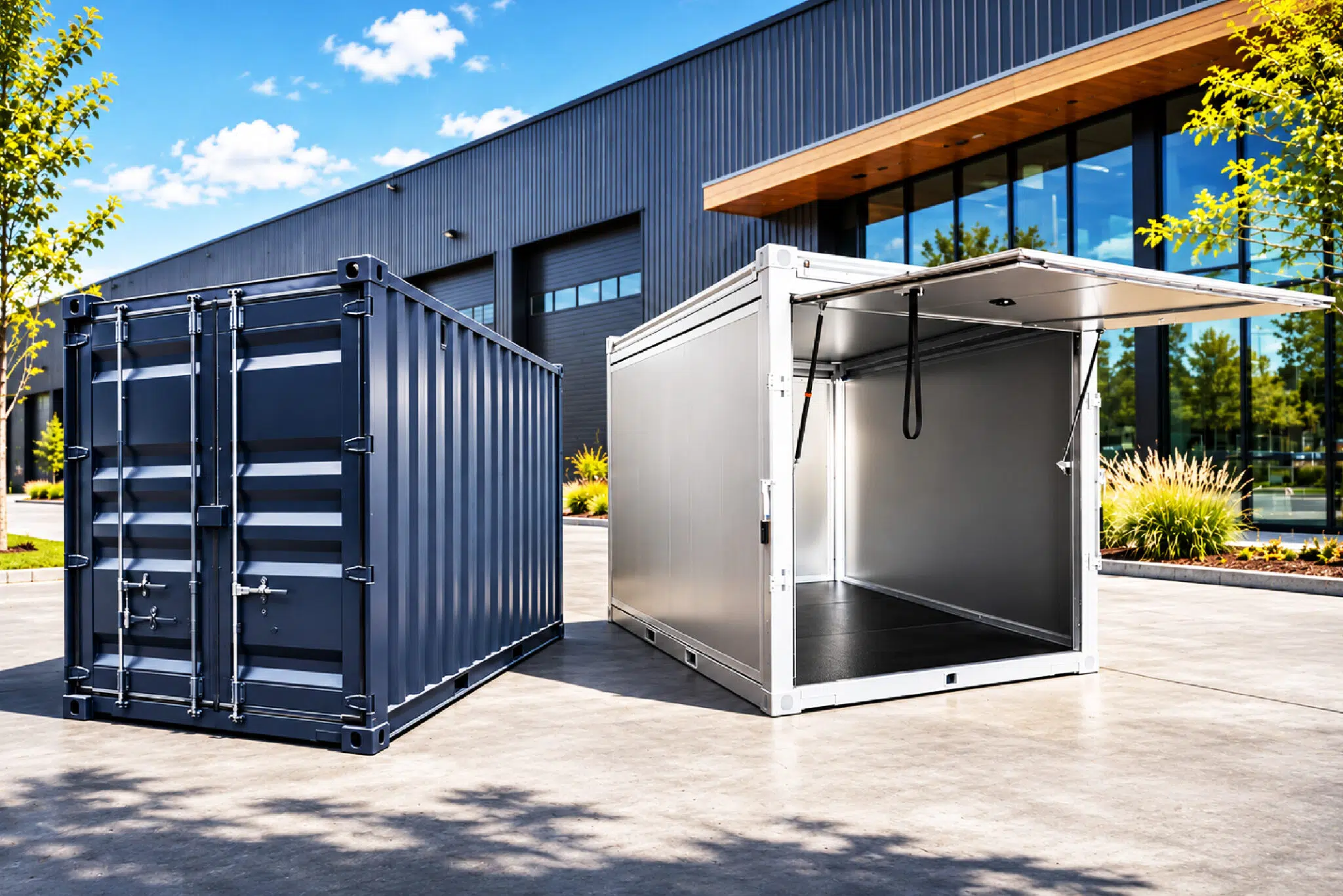
Standard container cargo doors are very effective for moving freight in and out. But opening large cargo doors may be more access than an employee needs when the job is retrieving one box of parts or a tool. If you want a different set up, you’d have to modify the container. Possible, but maybe costly.
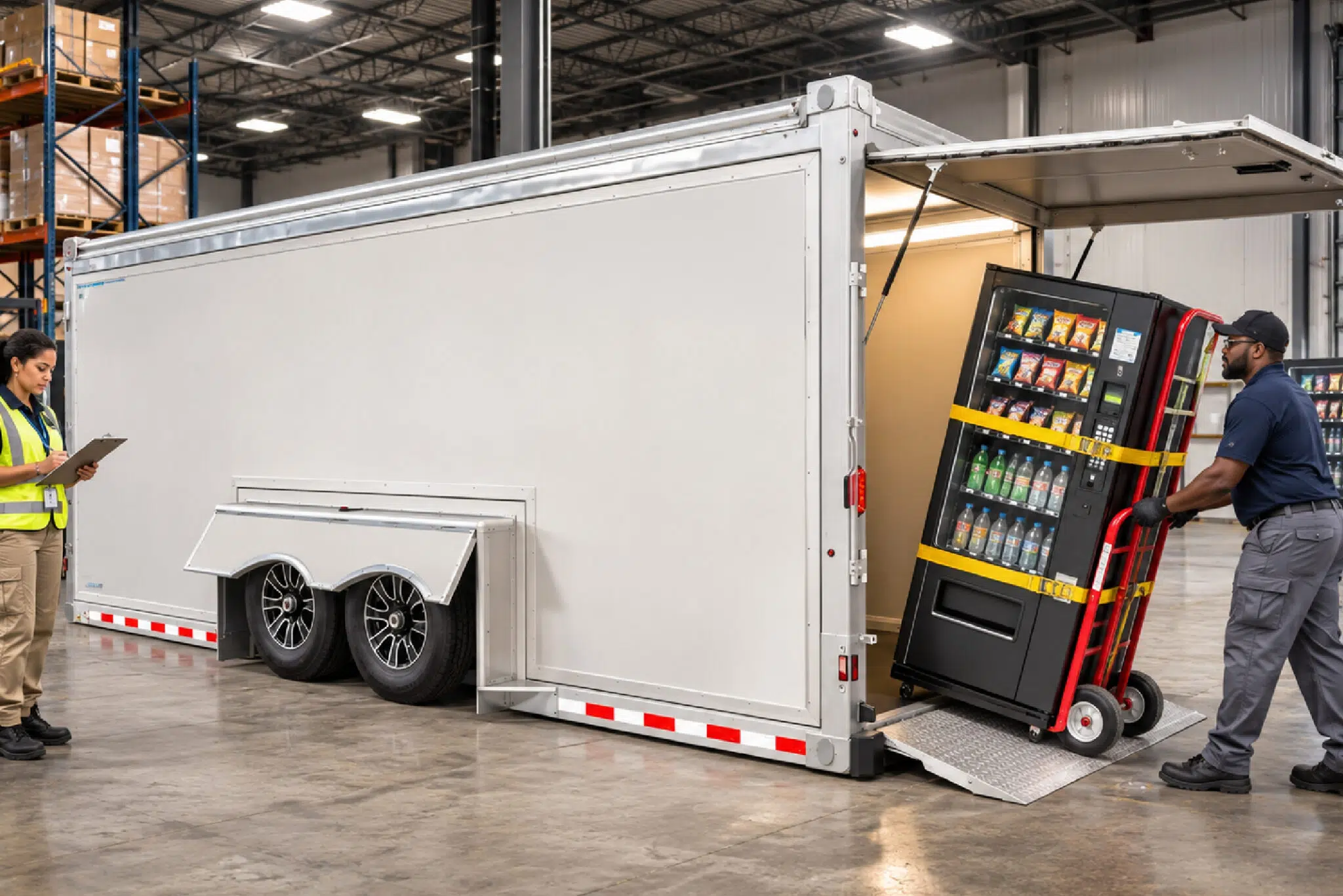
GoodMFG® storage structures begin as modular storage rather than converted freight equipment. Depending on the configuration, a man door can create ordinary personnel access, shelving can organize smaller inventory, and a lift panel can create another way to reach or serve stored items.
On a rainy Tuesday, a man door can be faster and more efficient.
Insulation & Moisture Management
GM13ST and GM19ST units are built with composite aluminum panels. We sandwich polystyrene foam between sheets of #5052 aluminum. This helps modulate interior temperature swings and reduces the chances that you’ll get condensation.
A conventional dry freight container is not automatically an insulated storage building. Container interiors can experience changing temperature and humidity conditions, and condensation can form when moist air reaches surfaces below the dew point. The contents, pallets, ventilation, weather, and operating conditions can all affect what happens inside.
That does not mean every shipping container will have condensation problems. A fair shipping container vs. storage building comparison would never pretend otherwise. In addition, ventilation, desiccants, added insulation and other practices can be used where appropriate. Virginia Tech’s review of moisture in sea containers discusses several approaches and explains why no single strategy is appropriate for every set of conditions.
But you should ask yourself what the container will cost after installing the modifications. Ask, “Who is responsible for cutting, reinforcing, sealing, and finishing new openings?” How much interior space will remain after the build out? What kinds of warranty concerns will the modification take? If your needs change, is it easy to adapt the finished solution?
For ordinary tools, parts, packaged inventory, and other compatible materials, however, built-in insulation can be a meaningful advantage in a shipping container vs. storage building comparison.
For a deeper look at moisture issues, see our Shipping Container Condensation Guide.
Looking Ahead: Expansion
Today’s storage problem might not be next year’s storage problem.
That means future adaptation is another useful shipping container vs. storage building question.
Shipping containers can be modified, arranged together, and incorporated into larger projects. Doing so can become a design and fabrication project that should account for structural changes, connections, site requirements, and the intended use.
GoodMFG® modular structures are built as part of a modular system. Compatible units can be linked, stacked, relocated, or reconfigured in suitable arrangements.
That does not mean every module can simply be attached to every other module in any configuration. The specific models, load, site, intended use, placement, and applicable requirements still matter.
It does mean future reconfiguration is an intended capability rather than an afterthought.
Shipping Container vs. Storage Building FAQs
Do shipping containers and modular storage buildings require permits?
Requirements vary by location, placement, use, duration, site, and configuration. The same is true for our modular structures.
Can GoodMFG® Storage Modules be expanded later?
Compatible GoodMFG® modular structures can be linked, stacked, relocated, or reconfigured in suitable arrangements. Final configurations depend on the models, loads, site conditions, intended use, and applicable requirements.
Key Takeaways
Here’s the TL;DR when comparing shipping containers vs. modular storage buildings.
- A shipping container vs. storage building comparison should begin with how the space will be actually used.
- Shipping containers are standardized freight equipment and can be excellent for simple, high-volume enclosed storage.
- GoodMFG® modular storage buildings are purpose-built storage structures with insulated composite panels and storage-oriented configuration options.
- Daily employee access, organization, insulation, footprint, and future expansion can strengthen the case for modular storage.
Storage Your Way
Have you decided one of our modular storage buildings is the right choice for you? Visit your nearest dealer. Can’t find one near you? Contact us for options!
Loading form…
This resource was compiled by the GoodMFG® Product Team, drawing on 75 years of combined experience in hydraulic systems, heavy-duty transport, trailers, and modular structures.
P.S. – We build modular structures every day, but we don’t run your operation. If there’s a specific logistical headache or a “field reality” we’ve missed, we want to hear about it. Help us refine the equipment that makes your day easier! Email our Marketing Lead at devan-h @ goodrv.com and let us know what we should solve next.