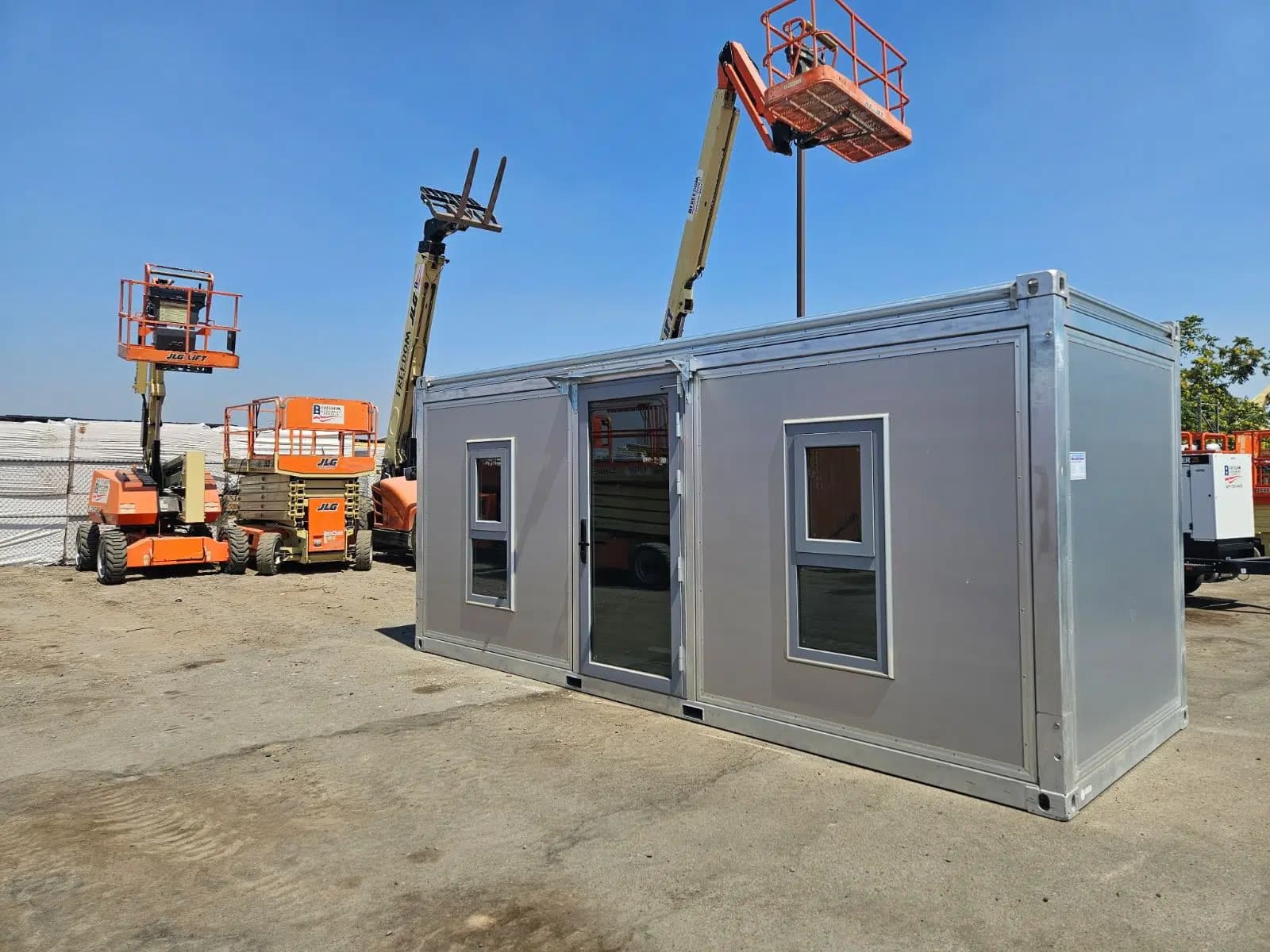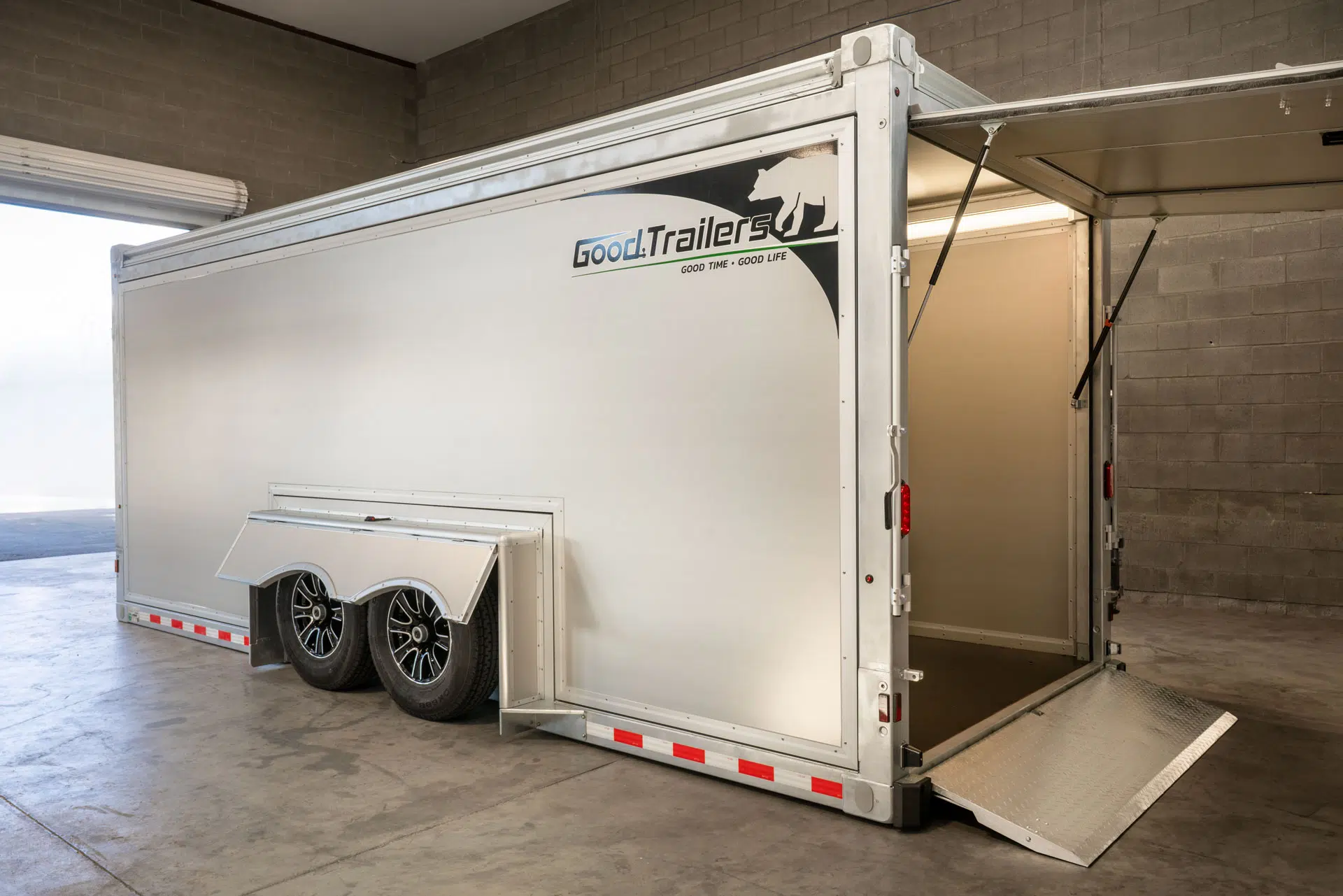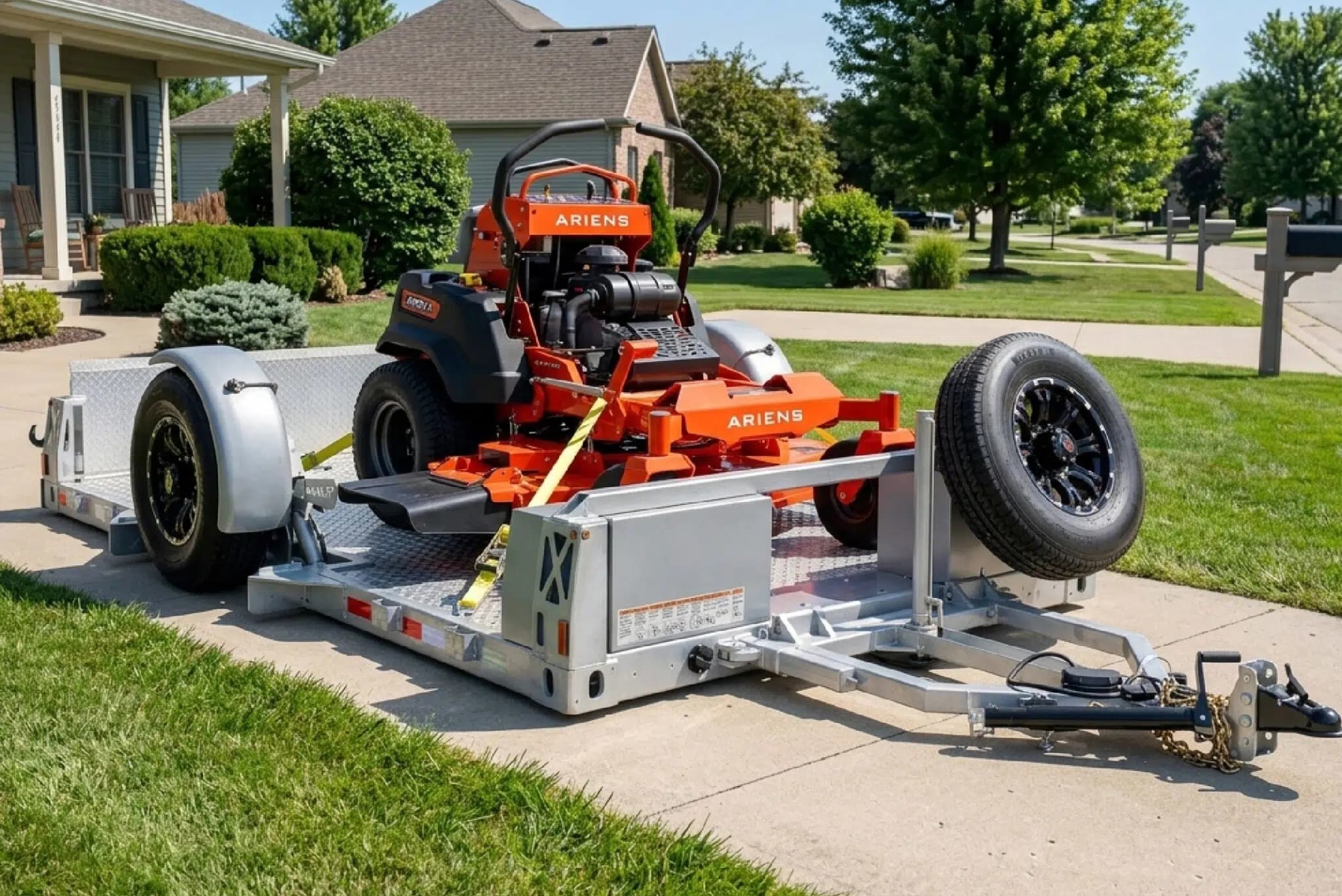
Shipping container condensation can make used units a poor choice.
Shipping containers are great at the job they were designed to do, which is moving freight around the world.
That does not automatically make a used shipping container the best choice for every long-term storage application.
If you are storing tools, inventory, documents, furniture, equipment, or other items you would rather keep dry and clean, there are a few additional questions worth asking. How will the structure handle condensation? What has been inside it before? How easy will your team find it to access and organize? And what happens if your storage needs change?
Whether you call it container sweat or container rain, shipping container condensation can put your goods at risk.
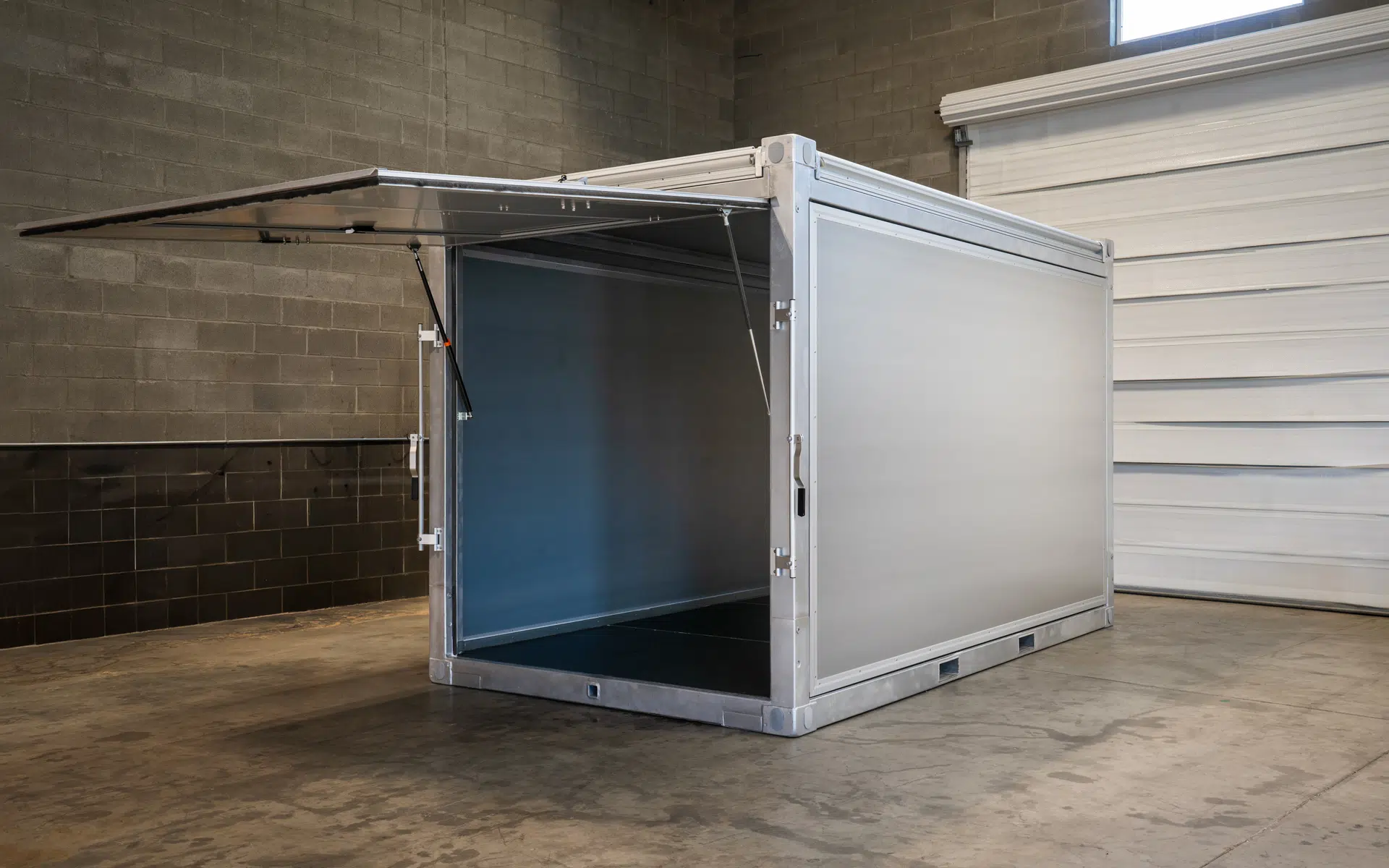
GoodMFG® modular storage structures take a different approach. They are purpose-built for storage, using insulated composite aluminum panels rather than an uninsulated freight-container shell.
So what difference does that actually make?
Table of Contents
Why Does Shipping Container Condensation Happen?
Shipping container condensation is a real and well-documented problem.
Virginia Tech’s Center for Packaging and Unit Load Design explains that moisture inside sea containers can come from several places:
- The air itself
- Packaging
- Wooden pallets
- Even the products stored inside the container.
When conditions change, that moisture can become liquid water. Virginia Tech notes that sea containers can experience substantial changes in temperature and humidity and that, as the air cools to its dew point, water vapor can condense inside the container.
Sometimes condensation forms directly on the cargo. Sometimes it forms on the inside of the container walls or roof.
When enough moisture collects overhead and drips onto the contents below, you get the phenomenon commonly called container rain.
The International Maritime Organization likewise describes condensation forming on the roof and walls of cargo transport units as temperatures change, with accumulated moisture potentially dripping or running onto cargo.
None of that means every shipping container will be dripping wet.
It means a bare metal enclosure, moisture inside the space, and changing temperatures can create the right conditions for condensation.
And if you are repurposing a container for long-term storage rather than international freight, it is reasonable to ask whether there is a better way to manage those conditions.
What Does Insulation Change?
Condensation depends partly on surface temperature.
When humid air encounters a surface that is colder than the air’s dew point, moisture can condense onto that surface. EPA moisture-control guidance specifically identifies insulation as one way to help keep interior surfaces warmer and reduce condensation potential.
GoodMFG® modular storage structures use composite aluminum panels with an insulating polystyrene core between #5052 aluminum skins.
Instead of leaving the interior face of the structure as a relatively direct extension of an exterior metal wall, that insulated assembly slows heat transfer through the enclosure.
That can help keep interior-facing walls and ceilings from responding as abruptly to outside temperature changes, reducing one of the conditions that can contribute to surface condensation.
There is an important limit, however.
Insulation does not remove water from the air.
If you put soaked equipment inside the structure, introduce another significant moisture source, or encounter environmental conditions that push an interior surface below the dew point, condensation can still occur.
So we do not describe the structure as physically incapable of condensation under every conceivable condition.
What we can say is considerably more useful.
We can say what we’ve seen in the Pacific Northwest.
How Good Modular Structures Perform in the PNW
GoodMFG® operates in the Pacific Northwest—a climate that does not exactly have a reputation for being bone dry.
And under normal storage use, we have not observed interior condensation problems in our modular storage structures here.
That real-world experience is part of the reason we talk about clean, dry storage as an important product benefit.
It is not a laboratory guarantee that condensation can never occur in another climate, with different contents, or under unusual temperature and humidity conditions.
But it also is not a benefit we invented for a brochure.
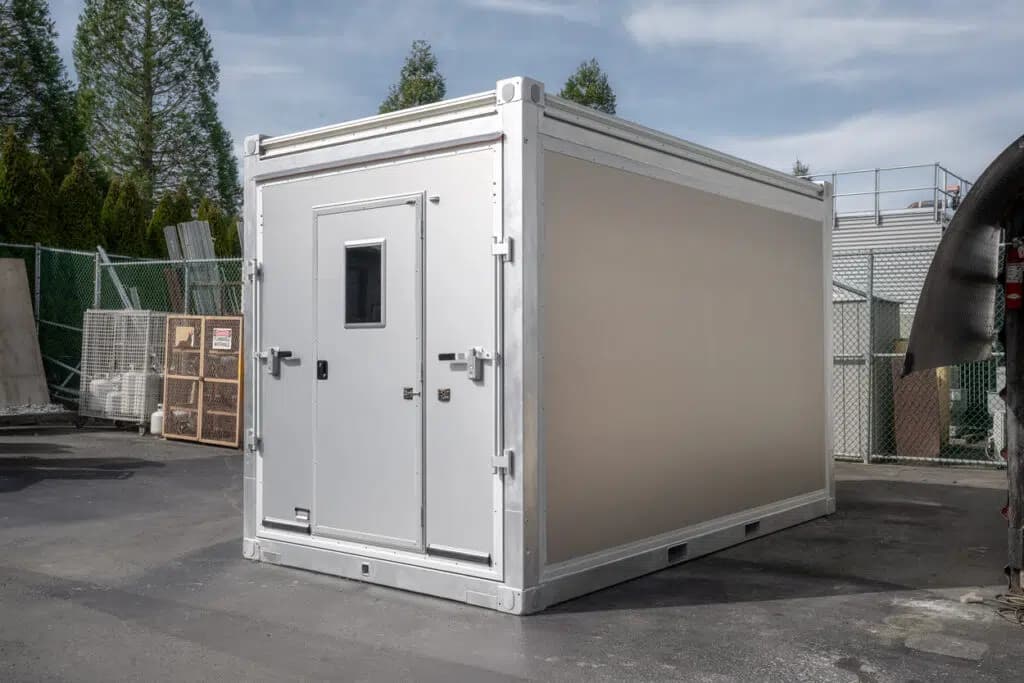
Our field experience is consistent with the way insulated construction works: slowing heat flow can help keep interior surface temperatures from dropping into the conditions where condensation forms.
If moisture-sensitive storage is one reason you are looking beyond a conventional steel container, that distinction is worth considering, and a GM13ST or GM19ST may be the perfect answer to shipping container condensation.
Want to take a walk around one? Check out this video.
What Do We Mean by Clean Storage?
There is another difference between buying a new purpose-built storage structure and repurposing a used freight container:
You know what the new structure has been used for.
A new GoodMFG® modular storage structure has not spent years carrying international freight from one shipper, port, and cargo owner to another.
That doesn’t mean every used shipping container is dirty, unsafe, or contaminated. Many are perfectly serviceable, and individual containers can be inspected, cleaned, repaired, and repurposed successfully.
But its history matters.
Research into active international freight containers has documented fumigants and other volatile chemicals in a portion of containers. A New Zealand study, for example, detected fumigants in 11.4% of sealed containers and found other airborne chemicals more frequently; researchers emphasized occupational exposure when containers are opened and unloaded.
We’re not saying every used shipping container is toxic. We are saying a used freight container can come with a history that a newly manufactured storage structure does not have.
With a new GoodMFG® structure, the storage space begins its working life as storage.
You get a purpose-built interior with a known starting point.
Used Shipping Container vs. Purpose-Built Modular Storage
Shipping containers still make sense for some jobs.
They are standardized, rugged freight equipment. If you need bulk storage, find a container in good condition, understand what you are buying, and have an appropriate plan for moisture and access, one may suit your operation perfectly well.
But storage requirements can go beyond simply having four walls and a lock.
That is where a purpose-built modular structure starts to offer a different set of advantages.
If condensation is a concern
A conventional unmodified shipping container is primarily a metal freight enclosure.
GoodMFG® storage structures use insulated composite panels designed to slow heat transfer through the envelope. That insulation can help reduce the surface-temperature conditions that contribute to condensation.
If interior history matters
A new storage structure starts with a known use history.
A used shipping container should be evaluated individually based on its condition and background.
If people need regular access
Think about how frequently staff will retrieve inventory, tools, or equipment.
A storage structure used every day is part of a workflow—not just somewhere to put things overnight.
If storage needs may grow
Compatible GoodMFG® modular structures can be linked or stacked in suitable configurations, giving businesses another way to expand or reconfigure space as requirements change.
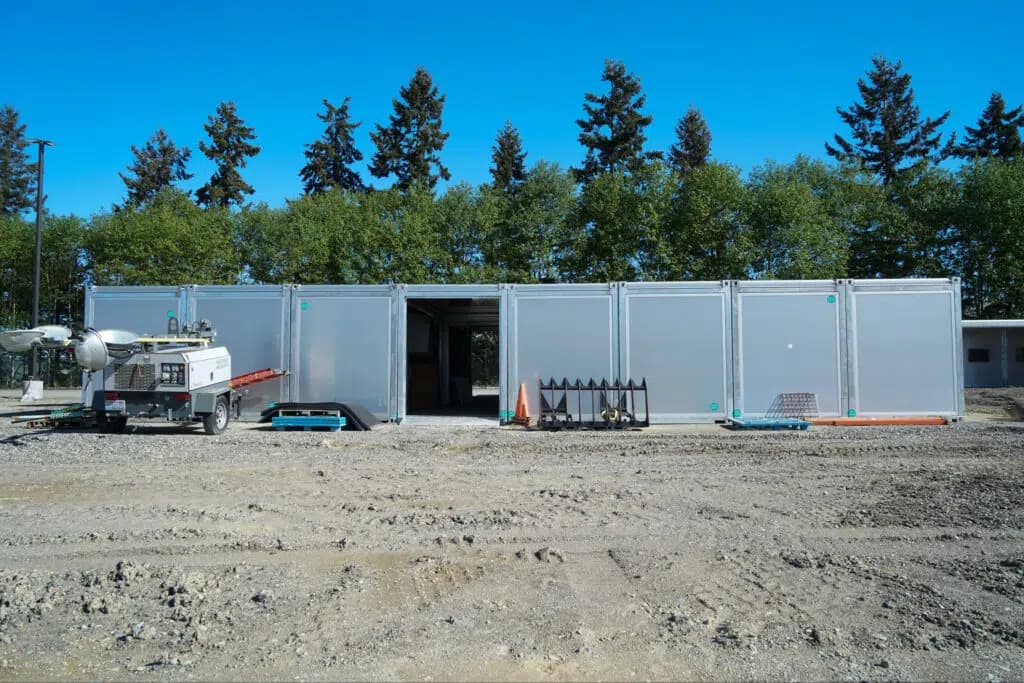
That may matter to a facility that expects its storage problem to look different two years from now than it does today.
Choose Storage Around What You Need to Protect
Before choosing either a shipping container or a modular storage structure, start with the contents you plan to store. Ask: “What happens if these items get damp?”
A few drops of shipping container condensation may be no more than a nuisance around some rugged equipment. Shipping container condensation may be a much larger problem around:
- Paper records
- Cardboard packaging
- Textiles
- Furniture
- Electronics
- Finished products
- Tools
- Inventory that must remain presentable.
If your team routinely puts wet landscaping equipment, cleaning machines, or other damp cargo into storage, insulation does not eliminate the moisture you just brought through the door.
You may still need sensible drying, ventilation, drainage, or humidity-control practices depending on what is stored.
On the other hand, if the concern is condensation forming on cold interior metal surfaces as weather conditions change, insulated construction directly addresses part of that mechanism.
Ask yourself: “What conditions am I creating inside my storage space, and how well is the structure designed to manage them?”
Plan Access & Organization, Too
Moisture protection matters, but don’t let it become the only item on the checklist.
A storage structure that keeps everything dry but makes workers unload half the building to reach one box is not exactly a logistical triumph.
GoodMFG® currently offers storage structures in several configurations, including standard-height and high-cube models in 13-foot and 19-foot lengths
For example, the standard GM13ST provides an interior approximately 12′6″ long, 6′9″ wide, and 7′4″ high, with a 74″ x 86″ rear-door opening.
The larger GM19ST increases the interior length to approximately 18′7″ while retaining the same published interior width, height, and rear-door opening.
Think about:
- What needs to fit through the door?
- How often will your team need access?
- Will shelving or cabinets improve organization?
- Will multiple access points improve the workflow?
- Are your storage requirements likely to expand?
- Where will the structure live on your property?
The best storage solution is the one that protects the contents and works with the people using it.
Note, there are some add-ons you can choose for a Good Modular Storage Structure that can make your life easier.
- An extra lift panel door on the back end of the storage unit can give you access to both the front and the back of the unit at the same time.
- A man door can make access more convenient.
- A pair of linked modular storage units gives you additional space.
FAQ
Is shipping container condensation the same thing as a leak?
No. A leak involves water entering through an opening or failed seal.
Shipping container condensation forms from water vapor that’s already present in the air when it encounters a sufficiently cold surface. A container can therefore be structurally water-tight and still develop condensation inside.
That is why “wind and watertight” and “free from condensation” are not interchangeable statements.
Does insulation eliminate condensation?
Insulation helps reduce condensation risk, but insulation alone can’t guarantee that condensation will never happen.
In our experience here in the PNW, we have not observed any condensation problems inside these structures under normal storage use. Different environments and uses may create different conditions.
What is container rain?
Container rain is a common term for condensation that develops on the interior roof of a shipping container and eventually drips onto the cargo below.
It can occur as temperature changes cause moisture-laden air inside the container to reach its dew point.
Can I put moisture-sensitive inventory in a GoodMFG® modular structure?
An insulated, weather-resistant enclosure can be a useful part of a storage plan for moisture-sensitive goods, but the requirements of the actual inventory still control.
If a manufacturer specifies a particular temperature, humidity range, ventilation requirement, or other storage condition, insulation alone should not be treated as a substitute for those controls.
Key Takeaways
Here’s the TL;DR as you consider your storage options.
- Shipping container condensation is a real thing. Temperature changes and moisture inside of a container can cause water vapor to condense on cargo, walls, or the roof.
- Insulated construction can help reduce condensation risk. GoodMFG® composite aluminum panels slow heat transfer, helping moderate interior surface temperatures.
- A new purpose-built structure offers a known starting history. Used shipping containers vary, so their individual condition and previous use should be evaluated rather than assuming they are either universally clean or universally contaminated.
- Storage design should solve more than one problem. Size, door clearance, organization, access, insulation, security, and potential expansion all matter when the structure becomes part of an everyday operation.
Choose Clean, Dry, Purpose-Built Storage
If shipping container condensation, unknown previous use, or day-to-day storage workflows are concerns, a purpose-built modular storage structure gives you fresh options.
GoodMFG® storage structures combine an insulated composite aluminum enclosure with lockable storage and modular configurations that can grow or change with your operation.
If Good Modular Structures seem like the right choice for your needs, find your nearest dealer or contact us for options today.
See also:
The Facilities Manager’s Guide to Rapid Deployment Modular Structures
Modular Office Solutions for Light Industrial Spaces
Creating Professional On-Site Spaces for High-Stakes Projects?
This resource was compiled by the GoodMFG® Product Team, drawing on 75 years of combined experience in hydraulic systems, heavy-duty transport, trailers, and modular structures.
P.S. – We build trailers every day, but we don’t run your crews. If there’s a specific logistical headache or a “field reality” we’ve missed, we want to hear about it. Help us refine the equipment that makes your day easier! Email our Marketing Lead at devan-h @ goodrv.com and let us know what we should solve next.