Rapid deployment modular structures solve one major problem fast: if you’re a facilities and operations manager, you probably don’t have unlimited time to solve a current or upcoming space problem.
Inventory grows faster than expected. A new crew needs somewhere to work. Renovations temporarily take rooms offline. A production area needs a nearby office. A seasonal program needs storage for six months—not a new building for the next 30 years.
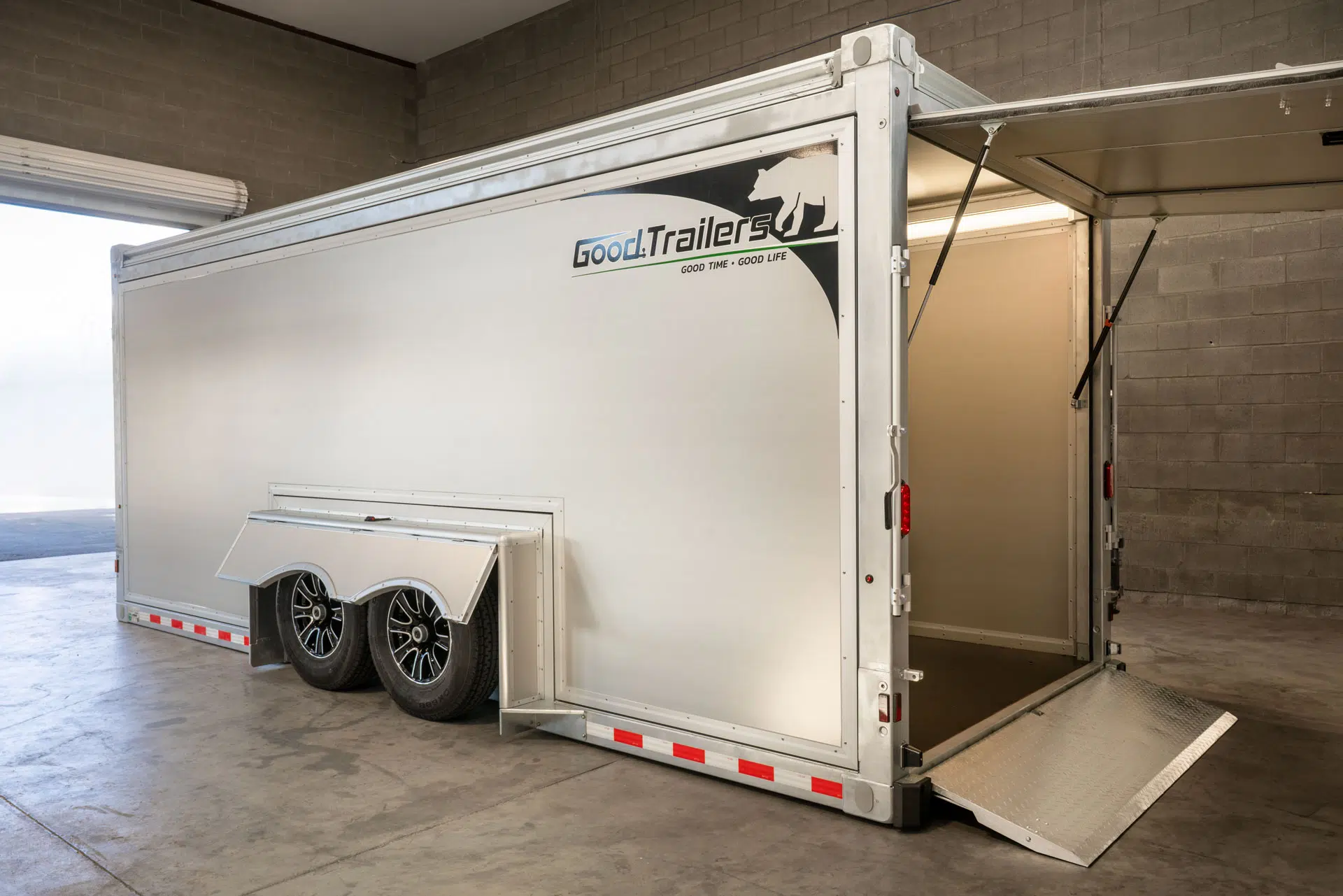
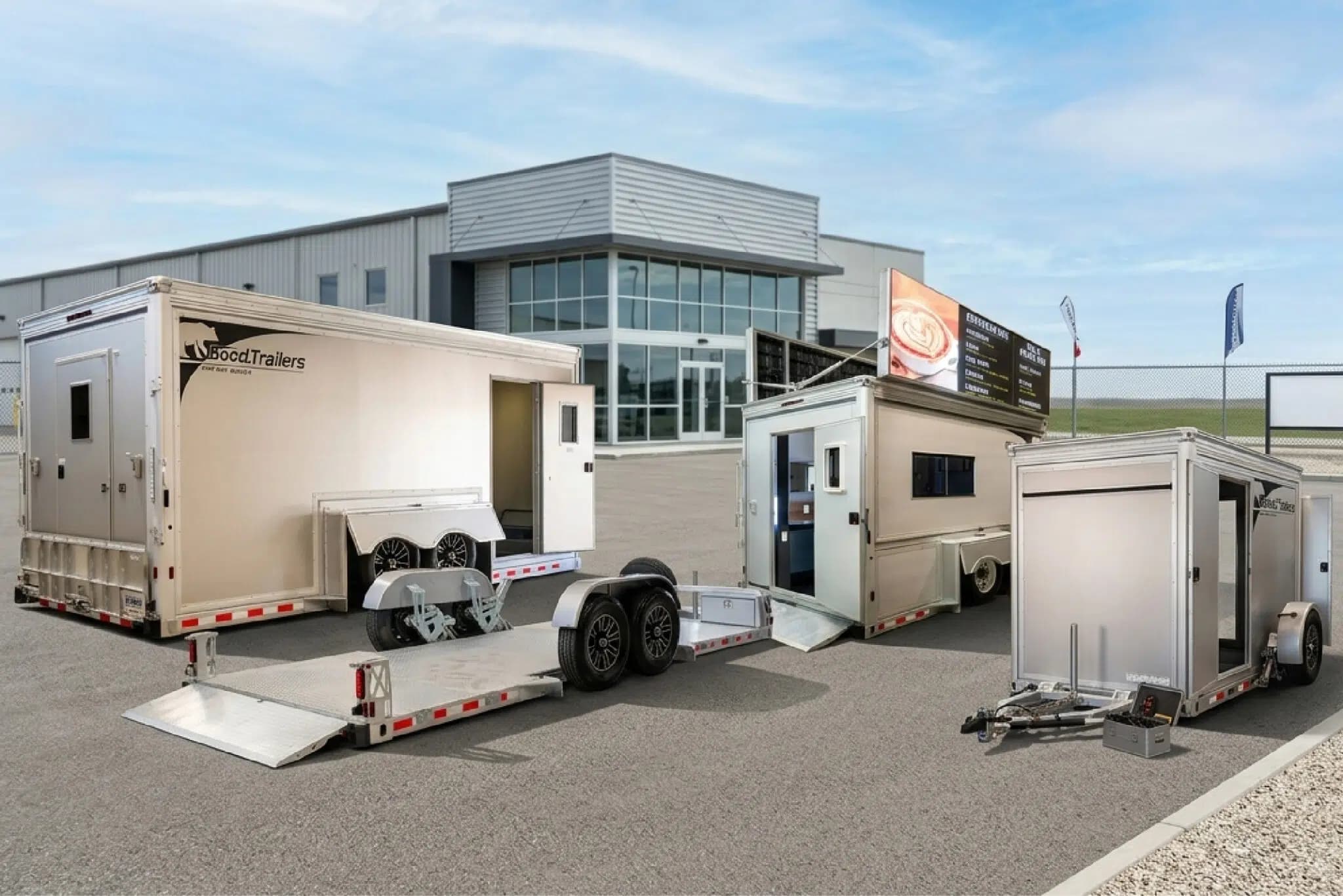
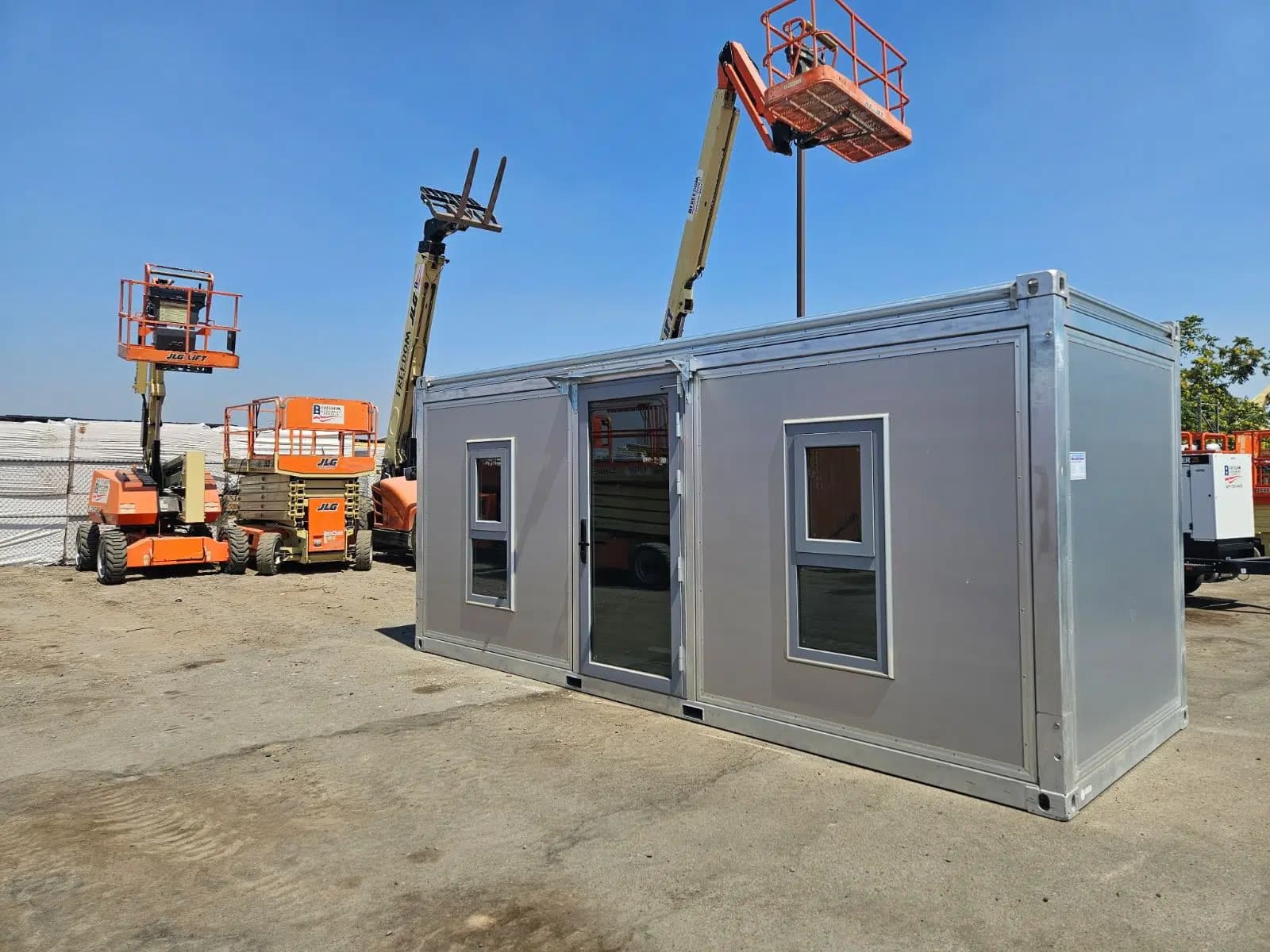
Instead of beginning with conventional construction, you can add purpose-built office or storage space near the people and equipment that need it. GoodMFG® currently offers modular storage structures, ground-level offices, and LED modules in 13- and 19-foot configurations. Structures can also be linked and reconfigured as needs change.
But “rapid deployment” works best when you do a little planning before the structure arrives.
Here is what facilities and operations teams should consider.
Table of Contents
- Start with the Operational Problem
- Choose the Type of Space You Need
- Determine How Much Space You Need
- Put the Space Close to the Work
- Prepare the Placement Area
- Plan Utilities and Access
- Understand Lead Time vs. Deployment Time
- Plan for What Happens Next
- FAQ
- Key Takeaways
- Space Where You Need It, When You Need It
Start With the Operational Problem
Do not start by asking, “Which modular structure should I buy?”
Start with:
What problem does this space need to solve?
That keeps you from overbuilding—or buying a structure that technically provides enough square footage but does not work for the operation.
For example:
- If incoming inventory is overflowing into aisles, you probably need secure storage.
- If supervisors are working from folding tables in a production area, you need workspace for people.
- If technicians keep walking across a large property to reach supplies, you may need storage closer to the point of use.
- If a temporary project needs its own staff, equipment, and paperwork, you may need both office and storage space.
- If the need is expected to grow, you may want a modular layout that can be expanded later.
Write down the problem before you choose the product.
It sounds simple, but that one step can clarify almost every decision that follows.
Choose the Type of Space You Need
GoodMFG®’s modular product line currently falls into three broad categories: storage structures, ground-level offices, and LED modules.
For most facilities and operations managers, the first decision will be between storage and office space. Do you need space for things, or for people?
Choose a storage structure when:
- Inventory or supplies need protection;
- Tools and equipment need a dedicated location;
- You need overflow storage beside an existing facility;
- A project needs its own materials area;
- You want to move items out of working aisles or production space.
GoodMFG® offers standard-height and high-cube storage models. The high-cube versions add an additional foot of exterior height, making them worth considering when vertical storage matters.
Choose a modular office building when:
- Supervisors need workspace near an active operation;
- A temporary crew needs somewhere to work;
- You need an in-plant office without taking existing rooms away from another department;
- A renovation temporarily displaces employees;
- Paperwork, computers, printers, or meetings need to happen closer to the work.
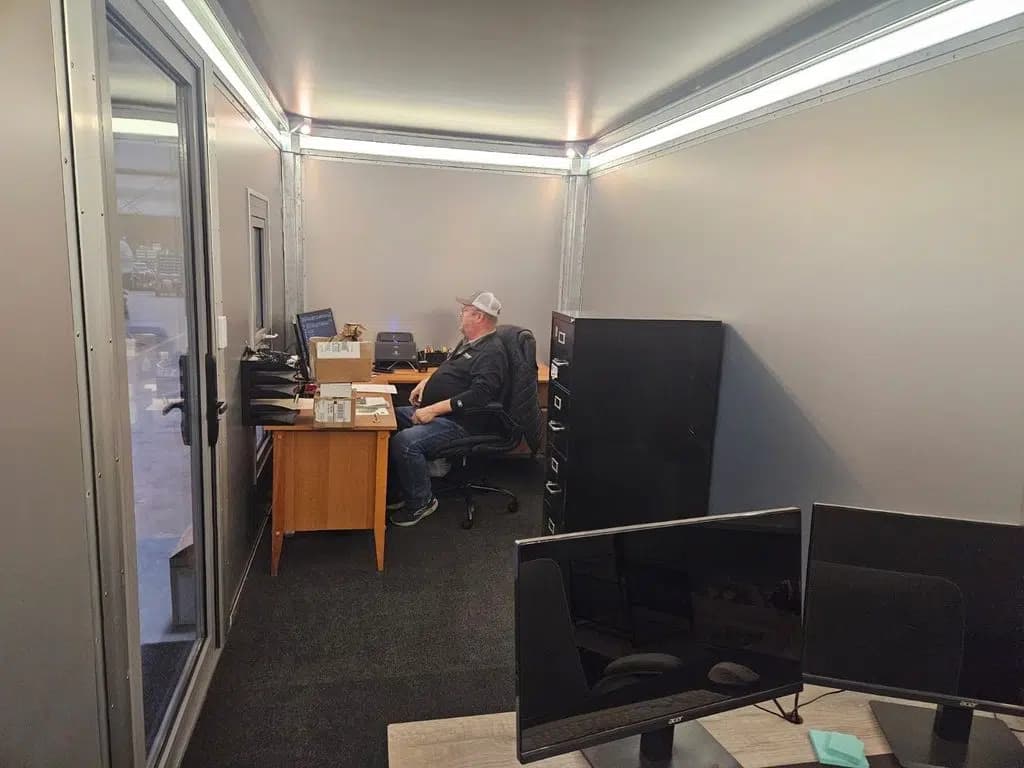
The 13-foot GoodMFG® office is designed around a single workstation, while the 19-foot version provides room for two. Lighting and electrical outlets are already incorporated into the office models. An optional mini split can make either unit more comfortable, especially during blistering summer months or inside of sweltering warehouses.
Determine How Much Space You Need
Rapid deployment modular structures make it easy to add space quickly, but you still need enough of the right kind of space.
GoodMFG®’s 13-foot structures provide approximately 85 square feet, while the 19-foot structures provide approximately 126.48 square feet.
Those numbers are useful starting points, but square footage alone does not tell you whether your operation will fit.
For storage, make a quick inventory of:
- Shelving or cabinets;
- Pallets, bins, or cases;
- Large equipment;
- Aisle space;
- Items that need to remain accessible;
- Anything unusually tall.
For an office, sketch:
- Desks or workstations;
- Chairs;
- Printers or shared equipment;
- Storage cabinets;
- Walking space;
- Doors and access points.
Do not plan every square inch around maximum capacity. A room that technically holds everything can still be miserable to work from.
If you expect the operation to grow, consider whether starting with additional space—or leaving room to connect another module later—makes more sense than immediately filling the first structure wall to wall.
Put the Space Close to the Work
Rapid deployment is not only about how quickly a structure can be installed.
It can also help solve where the space is located.
Suppose your maintenance department already has storage, but technicians have to walk across the property every time they need a commonly used part.
Or your supervisors have desks inside the main building, but the active project is at the other end of a large facility.
You technically have space. You just do not have it where you need it.
A modular structure can give facilities teams the ability to place storage or workspace closer to the operation it supports.
That can be useful for:
- Production support;
- Maintenance departments;
- Warehouse overflow;
- Construction or renovation projects;
- Seasonal inventory;
- Temporary staffing;
- Equipment staging;
- Plant-floor supervision.
For operations managers, proximity is worth considering alongside square footage.
Sometimes the best 85 square feet is not another room inside the building. It is 85 square feet next to the work.
Prepare the Placement Area
You do not necessarily need to think of a rapid deployment modular structure site the same way you would approach a new permanent building.
For routine planning, focus on three words:
Flat. Level. Stable.
That does not mean every rapid deployment modular structure must sit on a poured concrete pad.
Depending on the property, pavement, concrete, or an appropriately prepared compacted gravel area may all be practical locations. What matters is that the placement area provides a stable, level location and can be accessed for delivery.
Before choosing the spot, ask:
- Is the surface level?
- Is the ground stable?
- Does water collect there?
- Can delivery equipment reach the location?
- Is there enough clearance around the structure?
- Can doors and lift panels open without hitting another building, fence, vehicle, or stored material?
- Will people have a clear route to and from the structure?
If the proposed location is soft, badly sloped, frequently flooded, or otherwise questionable, that is the time to discuss the site before delivery rather than improvise when the structure arrives.
You do not need a civil-engineering report for every parking lot. You do need a sensible location.
Plan Utilities and Access
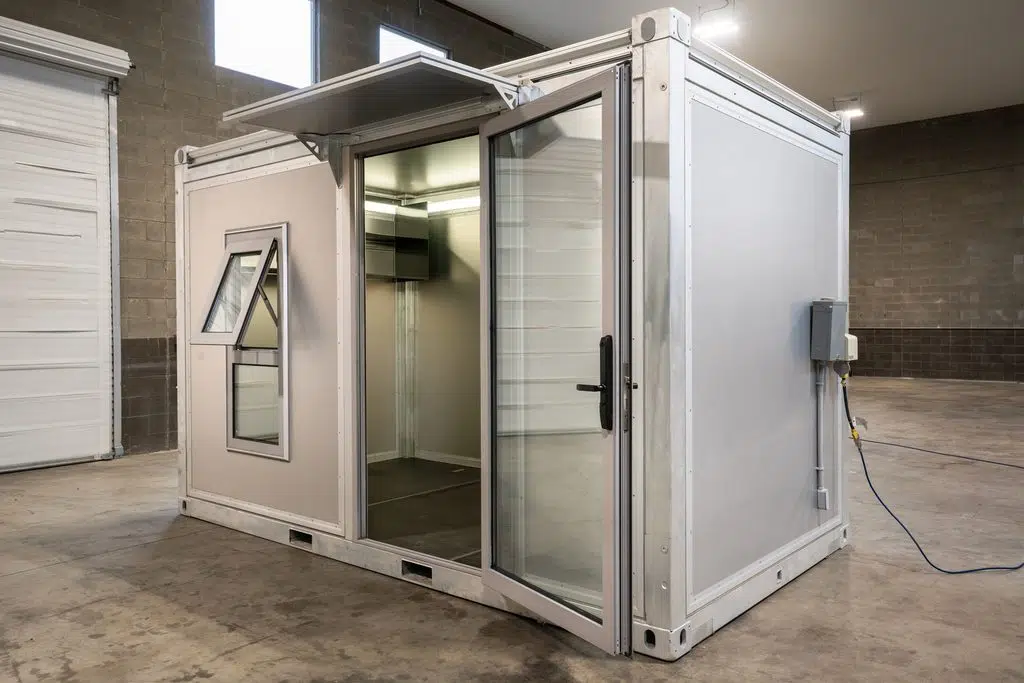
Our storage units don’t have any features that require power, but our modular office buildings do. To power your on-board electrical outlets, you’ll either need a generator or access to an outlet. The modular office buildings are equipped with electrical hook-ups.
It doesn’t matter if you assemble your unit in hours if nobody planned how it will function.
Ask yourself: what needs to be ready on Day 1? Where must this building be placed for maximum functionality?
For storage units, you’ll usually need enough space to get the lift panel open and enough clearance to put things into the structure.
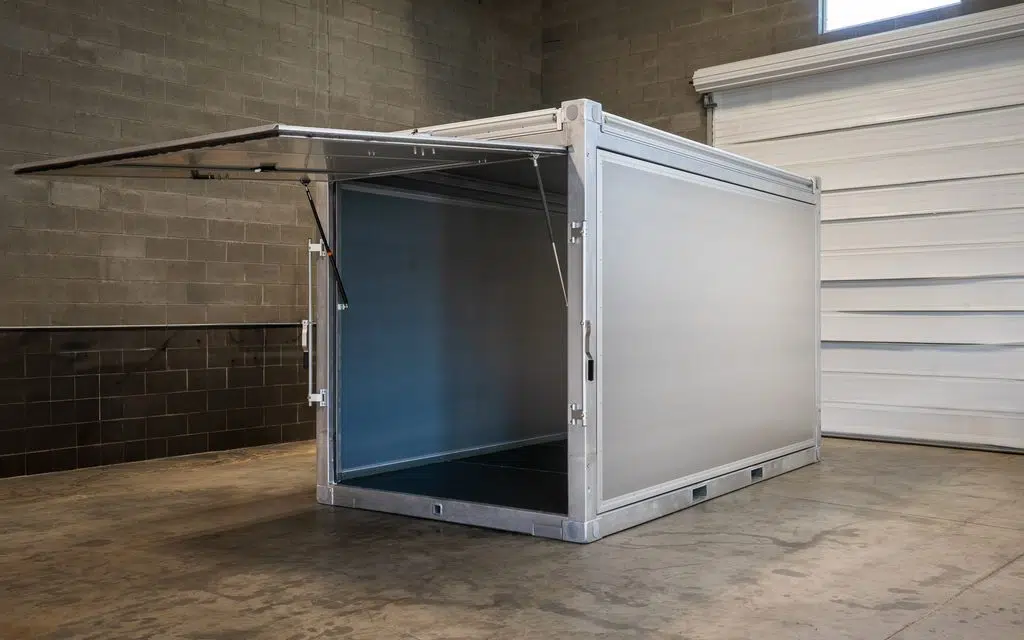
The storage units do not come with the same LED strip lighting. That means you might want to place them in a well-lit area. However, an optional additional lift panel on the other side of the unit, or a side-mounted optional man door, can give you additional options for getting to stored items.
Understand Lead Time vs. Deployment Time
The distinction matters. There are two timelines here.
Lead time is the time between deciding what you need and having the structure delivered.
We keep stock structures in production. Common configurations may already be available, either at the local dealers, or, if there is no dealer near you, through our main office. These are usually available for immediate delivery, but shipping can still take a few days depending on where you’re working.
Customized structures usually require longer lead times, currently estimated at 10-12 weeks. Those timelines can vary with production schedules.
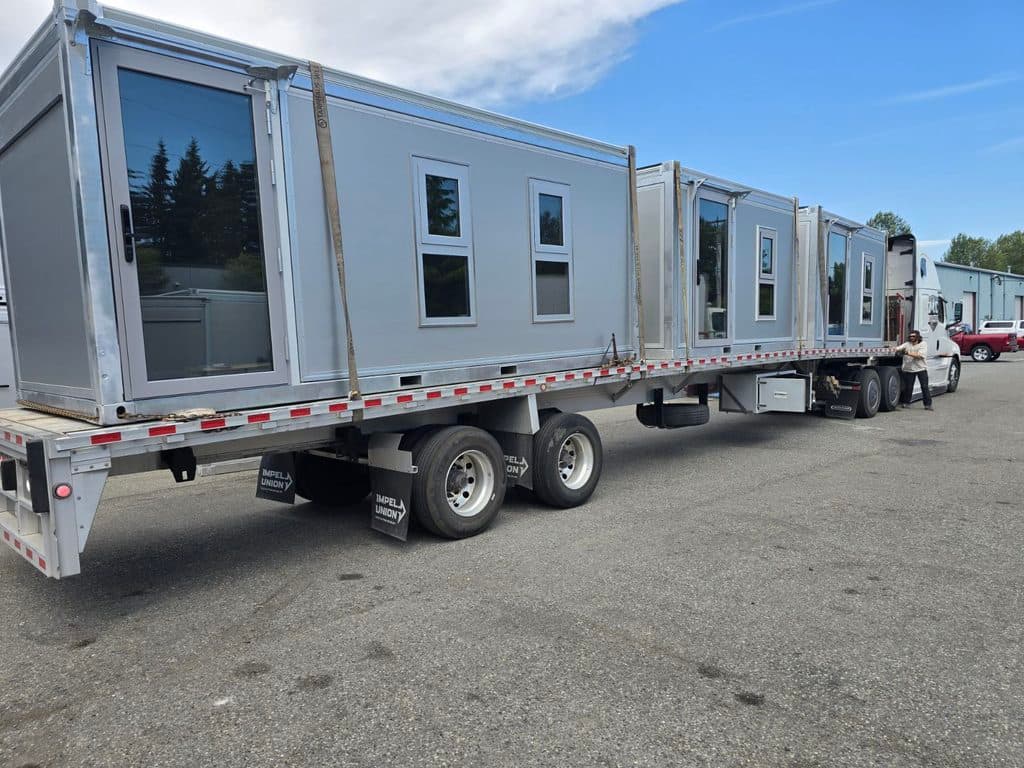
Deployment time is what happens when the structure reaches the location. Because it’s already manufactured, we can either ship it to you pre-assembled or ship the parts to you for on-site assembly. On-site assembly can usually be done in a matter of hours by a qualified professional.
That’s a real rapid-deployment advantage, but it doesn’t mean ordering on Tuesday morning puts the office or storage structure out on your lot by Tuesday afternoon.
Plan for What Happens Next
Things change. One project team becomes three. The storage problem disappears but now you need an office.
This is where our modular structures can offer advantages over spaces built for fixed purposes.
Good Modular Structures by GoodMFG® use a corner-caster and connector system that allows modules to be linked into larger configurations and reconfigured as needs change.
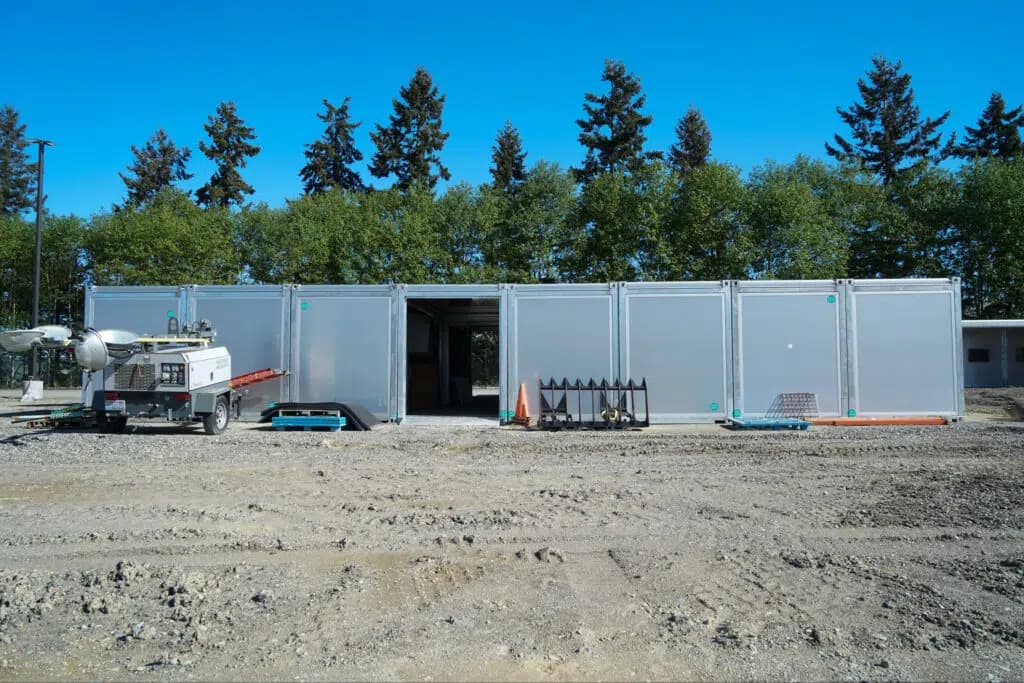
That means your planning shouldn’t stop with the immediate problem. You should also be thinking about how else your modular unit can be used.
For facilities and operations teams, the flexibility of linking, stacking, and moving structures is part of the value.
FAQ
What information should I have on hand before requesting a modular structure quote?
Come prepared with the intended use, preferred location, approximate space requirement, desired timeline, and any features you already know you need.
For an office, note the number of employees and major equipment or furniture. For storage, identify your largest items and any shelving requirements. Also mention utilities, doors, windows, HVAC, lift panels, or plans to connect additional structures.
You do not need a finished architectural plan. A basic sketch and a clear explanation of the operational problem can give the GoodMFG® team or your authorized dealer a much better starting point.
Can I start with one modular structure and expand later?
Absolutely! They’re designed to be linked and reconfigured at need.
Just how portable are these structures?
You can move them with a standard forklift and place them on the back of an appropriate trailer or truck or simply move them to some other part of your property.
Does using a modular structure eliminate permitting requirements?
Please don’t assume that it can. Requirements vary according to location, intended use, utilities, occupancy, configurations, and more. A portable or modular product will not necessarily remove every local requirement. Before deployment, confirm any applicable property, permitting, utility, or occupancy requirements for your particular location and use.
Key Takeaways
Here’s the TL;DR of what you need to be thinking about as you contemplate rapid deployment modular structures.
- Start with the operational problem. Decide whether you need space for inventory, people, equipment, or a combination before choosing a model.
- Rapid deployment is about reducing onsite work. Separate product lead time from the time required to place and prepare the structure once it arrives.
- Plan the site before delivery. Look for a flat, level, stable placement area with appropriate delivery and operating clearance.
- Think beyond the immediate project. Portable, linkable modular structures can be moved, expanded, and reassigned as operational needs evolve.
Space Where You Need It, When You Need It
If you think our rapid deployment modular structures are right for you, reach out to one of our dealers or contact us for options!
Loading form…
See also:
Modular Structure Buyers Guide
This resource was compiled by the GoodMFG® Product Team, drawing on 75 years of combined experience in hydraulic systems, heavy-duty transport, trailers, and modular structures.
P.S. – We build trailers every day, but we don’t run your crews. If there’s a specific logistical headache or a “field reality” we’ve missed, we want to hear about it. Help us refine the equipment that makes your day easier! Email our Marketing Lead at devan-h @ goodrv.com and let us know what we should solve next.