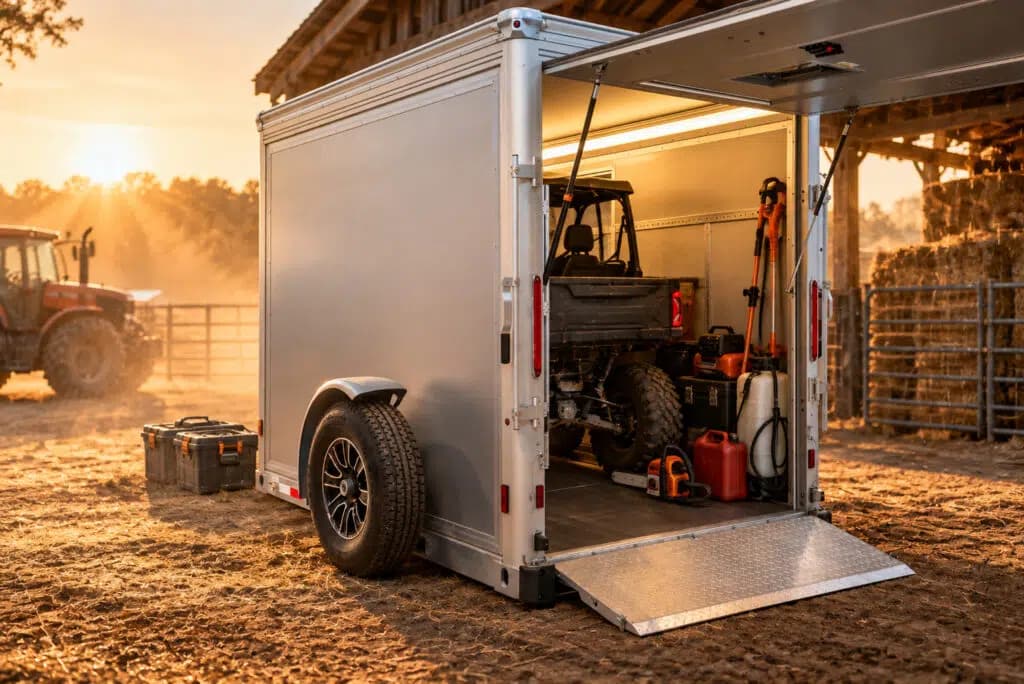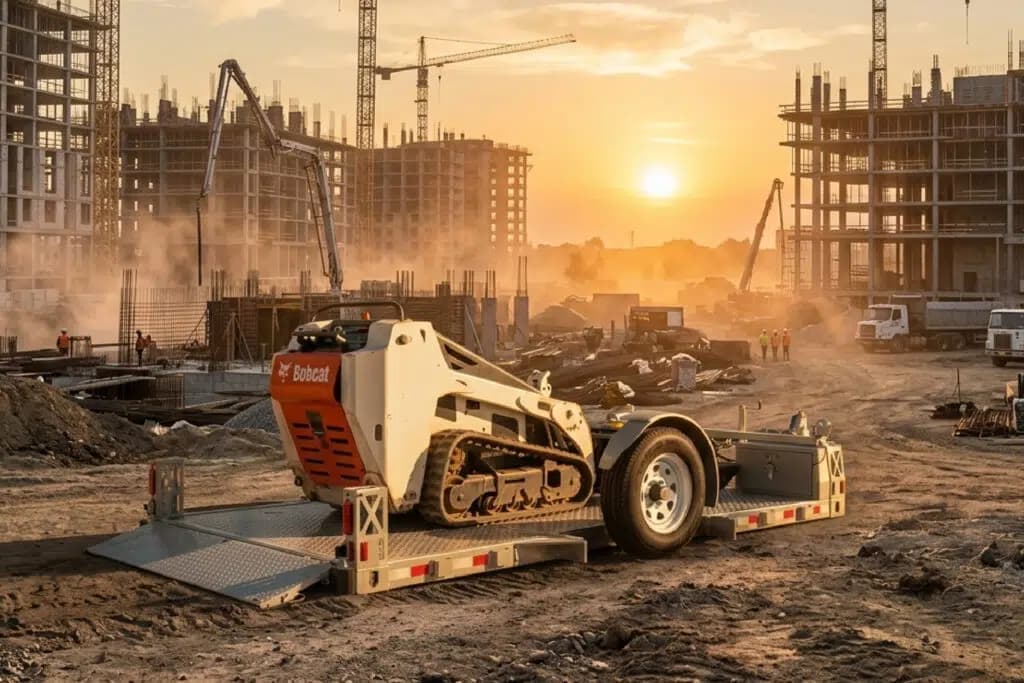
How do you choose the right ground level loading trailer? And are drop decks even worth it in the first place?
Let’s be direct: when most fleet managers, equipment rental operators, or independent contractors see the price tag on a ground-level loading trailer, their initial reaction is often skepticism.
“Why would I pay $12,000+ for a drop deck when a $4,000 standard utility tilt-or-ramp trailer gets the job done?”
It’s an understandable question. For decades, the industry has viewed drop decks as high-priced niche tools meant only for specialized equipment. But looking strictly at the upfront sticker price ignores the true operational impact.
When you factor in damaged undercarriages, high-center tipping incidents, worker injury claims, and the labor cost of sending two-person crews out just to wrestle heavy steel ramps, that “cheap” utility trailer becomes one of the most expensive assets in your yard.
This guide breaks down everything you actually need to consider before buying a drop deck trailer: the math behind the breakover angle, the trade-offs of different drop systems, how to calculate net payload, and how GoodMFG® drop deck trailers compare across the market.
Table of Contents
- Reality Check: Standard Ramps vs. Ground Level Loading Trailers
- Choosing the Right Drop Deck Technology
- What to Evaluate Before Purchasing
- GoodMFG® Model Line-Up: Quick Comparisons
- FAQ
- Key Takeaways
- Load Low, Haul Good
Reality Check: Standard Ramp vs. Ground Level Drop Deck
To understand whether a drop deck trailer makes sense for your fleet, you have to look beyond the initial purchase price of any ground level loading trailer and evaluate your Total Cost of Ownership (TCO).
The Breakover Angle Tax
When loading low-clearance equipment (like scissor lifts, asphalt rollers, pallet jacks, or floor scrubbers), standard tilt or ramp trailers create a steep apex where the ramp meets the deck. This incline typically ranges from 16° to 25°.
When a low-ground-clearance machine crosses that breakover point, it creates two major failure points:
- Undercarriage Scraping: Oil pans, hydraulic hoses, and electrical wiring get sheared off or cracked on the trailer lip.
- High-Centering & Lost Traction: The machine’s drive wheels lift off the ramp or deck, stranding the machine at a dangerous angle.
Preventing a single $80,000 piece of equipment from bottoming out or tipping over can pay for the trailer itself multiple times over.
Ergonomics, L&I, and Safety Claims
Unfolding, setting up, and climbing up steep, narrow trailer ramps is one of the leading causes of workplace slips, back strains, and falls in equipment handling.
- Ground-level securement. With a drop deck, your crew isn’t crawling under a raised deck or balancing on narrow beams in freezing conditions just to chain down equipment. Strap attachment points become much more accessible.
- Zero-anxiety loading. Narrow ramps force operators to execute precise maneuvers high in the air. A full-width drive-on deck lets even entry-level or seasonal drivers drive straight on without hesitation.
Solo Driver Efficiency
Setting up heavy steel ramps, lining up equipment, cautiously crawling up an incline, and rigging chains on an elevated platform takes a two-person crew 25 to 30 minutes per stop.
A hydraulic ground level loading trailer lowers flat in under 60 seconds at the push of a button. A single operator can drive on, secure the load from standing height, raise the deck, and head to the next job site—cutting turnaround time per stop to just 5 to 6 minutes.
Choosing the Right Drop Deck Technology
Not all ground level loading trailers operate the same way. Understanding how different manufacturers achieve drop deck functionality helps you select the right mechanism for your daily route conditions.
Manual / Cable-Winch Drop Decks
- How it works: Uses hand cranks or hand-operated winches to mechanically drop the bed.
- Pros: Lower initial purchase price.
- Cons: Lots of physical effort, slow turnaround, and mechanical cables which are subject to fraying and binding under heavy loads.
Air Suspension Systems
- How it works: Uses heavy-duty air bags to exhaust pressure and drop the chassis.
- Pros: Exceptionally smooth highway rides.
- Cons: System complexity. AIr lines, compressors, and valving draw significant power and are vulnerable to freezing or leaking in harsh weather conditions.
Heavy Dual-Cylinder Trailing Arm Systems
- How it works: Uses flat trailing arms and massive hydraulic rams to swing the axles up and down.
- Pros: Well-established, heavy-duty build.
- Cons: High curb weight. Excessively heavy mechanism components reduce the actual usual net payload capacity of the trailer.
GoodMFG® Hydraulic Articulating Suspension
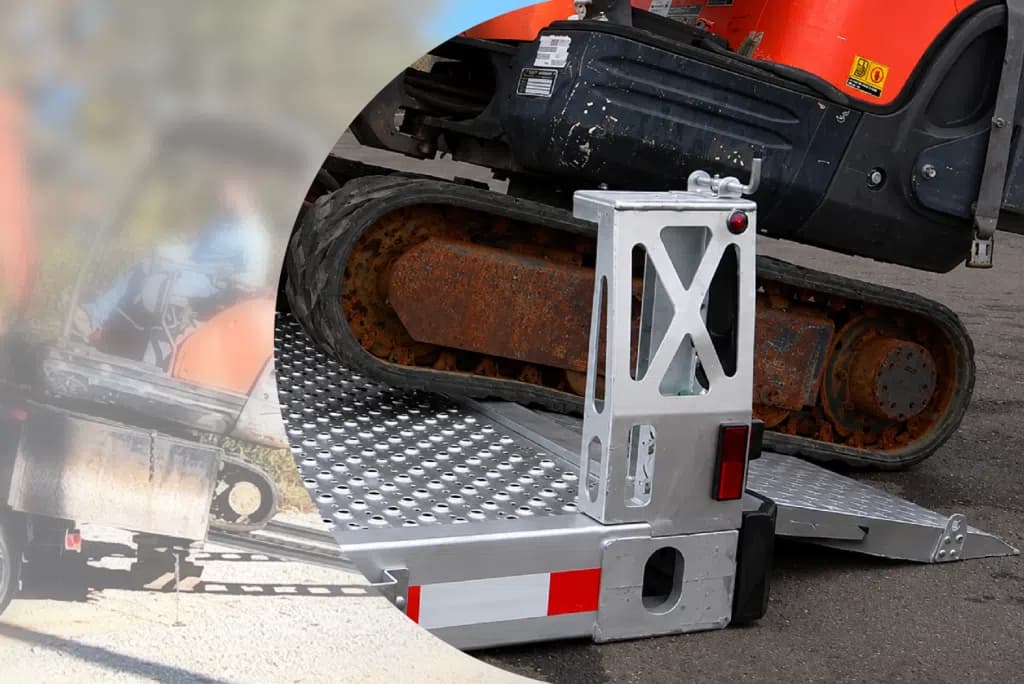
- How it works: Uses high-efficiency hydraulic power units paired with patented articulating suspension arms. At the push of a wireless button, the wheels retract outward and up, lowering the entire chassis flush to the ground.
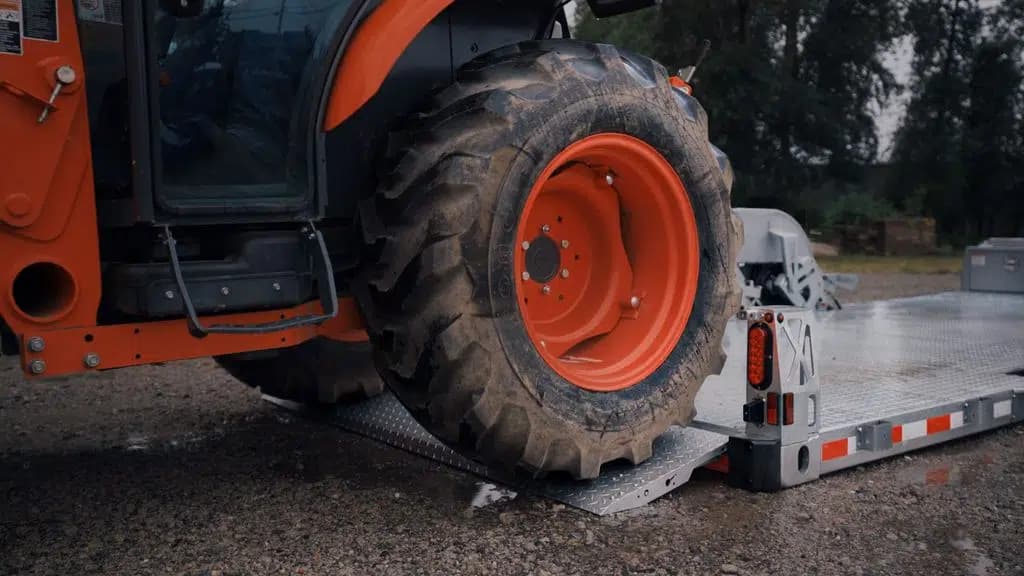
- Why it excels: Delivers a low 5.4-inch deck height paired with a 22-inch long, 74.4-inch wide spring-assisted short ramp. This creates an ultra-gentle 11° approach angle while keeping curb weights low to maximize usable payload.
Essential Buying Criteria: What to Evaluate Before Purchasing
Before signing a purchase order for a ground level loading trailer at your nearest dealership, run through these five essential technical criteria to ensure the trailer fits your fleet:
GVWR vs. Net Usable Payload
Never buy a ground level loading trailer based solely on its Gross Vehicle Weight Rating (GVWR). Drop deck mechanisms add frame structure.
For example: The GoodMFG GT19FL ground level loading trailer features an 11,800 lb GVWR and a lightweight 3,800 lb curb weight, delivering a massive 8,000 lb net usable payload. If a competitor’s 11,800 lb GVWR trailer weighs 5,200 lbs dry, you lose 1,400 lbs of carrying capacity to trailer machinery.
Deck Type: Open Flatbed vs. Enclosed Composite
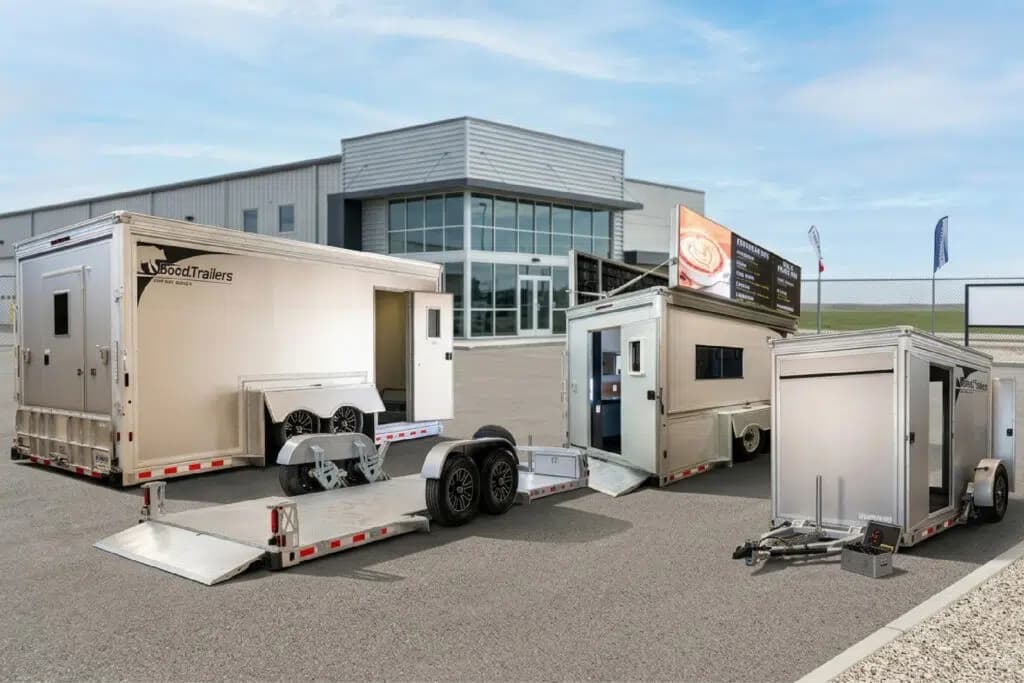
- Open Flatbeds (e.g., GoodMFG GT13FL / GT19FL): These ground level loading trailers are ideal for equipment rental fleets, mini-excavators, scissor lifts, and skid steers. Wide-open sides make side-loading with forklifts effortless.
- Enclosed Cargo (e.g., GoodMFG GT-AL and GT-HD Series): Ideal for mobile workshops, high-value tool transport, electronics, and municipal support teams. GoodMFG enclosed models feature patent-pending composite aluminum panels (1.5” polystyrene foam sandwiched between aluminum sheets). This rivetless construction reduces internal temperatures by 10°–15°F in summer and takes custom vinyl wraps seamlessly.
Route & Job-Site Conditions
- Urban & Highway Operations: Medium-duty aluminum composite models (GT09AL, GT13AL, GT19AL) keep total towing weights down while delivering excellent weather protection.
- Rough Gravel, Mining, & Off-Road: Heavy-Duty Steel Post models (GT13HD, GT19HD) or High-Cube models (GT13HDX, GT19HDX) feature all-steel galvanized framing designed to withstand severe twisting forces on unpaved roads.
Corrosion Resistance & Chassis Build
Equipment transport rapidly chips basic automotive paint, leading to structural rust. Look for hot-dip galvanized steel frames and chassis. Hot-dipping coats both the exterior and interior of tubular steel members, providing a 20+ year service life even in road-salt environments.
Standard Compliance & NATM Certification
Ensure your trailer manufacturer is certified by the National Association of Trailer Manufacturers (NATM). NATM certification verifies that the trailer meets all Federal Motor Vehicle Safety Standards (FMVSS) and can be easily serviced through nationwide dealer networks.
GoodMFG® Model Lineup Quick Comparison
Here is how GoodMFG’s line of patented hydraulic ground level loading trailers breaks down across commercial applications:
| Model | Style | Deck or Interior Dimensions | GVWR | Estimated Carrying Capacity |
| GT13FL | Open Flatbed | 11’8”L x 6’10”W | 7,000 lbs | 5,055 lbs |
| GT19FL | Open Flatbed | 17’9”L x 6’10”W | 11,800 lbs | 8,000 lbs. |
| GT09AL | Enclosed Medium Duty | 8’7”L x 5’9”W x 6’11”H | 7,000 lbs | 4,560 lbs |
| GT13AL | Enclosed Medium Duty | 12’6”L x 6’10”W x 7’6”H | 7,000 lbs | 3,975 lbs |
| GT19AL | Enclosed Medium Duty | 18’7”L x 6’10” W x 7’6”H | 11,800 lbs | 7,929 lbs |
| GT13HD | Enclosed Heavy Duty | 12’6”L x 6’10”W x 7’10”H | 7,000 lbs | 3,468 lbs |
| GT19HD | Enclosed Heavy Duty | 18’7”L x 6’10”W x 7’10”H | 11,800 lbs | 7,900 lbs. |
| GT13HDX | High-Cube Enclosed | 12’6”L x6’10”W x 8’6”H | 7,000 lbs | 3,468 lbs |
| GT19HDX | High-Cube Enclosed | 18’6”L x 6’10”W x 8’6”H | 11,800 lbs | 6,662 lbs |
FAQ
What is the difference between a step deck trailer and a ground-level drop deck trailer?
A traditional step deck (single-drop) trailer drops below standard flatbed height to transport tall freight without exceeding legal road heights, but it still sits elevated off the ground and requires loading ramps. A ground-level drop deck trailer utilizes hydraulic articulating suspension to retract its wheels and lower the entire chassis flush to the ground, eliminating loading ramps entirely.
What is the actual approach angle on a GoodMFG® drop deck?
While standard ramps force equipment up an 18°–25° incline, a GoodMFG hydraulic drop deck lowers to a 5.4-inch deck height paired with a 22-inch spring-assisted short ramp. This combination creates an ultra-gentle 11° approach angle, allowing low-clearance wheeled or tracked equipment to drive straight on without bottoming out.
How fast does the hydraulic drop deck raise and lower?
Raising or lowering a GoodMFG drop deck trailer takes under 60 seconds at the push of a button. Compared to manually deploying, pinning, and adjusting heavy steel ramps (which takes 15–20 minutes), hydraulics drastically reduce site downtime.
Key Takeaways
When evaluating ground level loading trailers, consider these short points.
- Eliminate Undercarriage Damage: Dropping flat to a 5.4″ deck height creates an 11° loading angle, preventing low-clearance scissor lifts and rollers from scraping, tipping, or high-centering.
- Slash Labor Costs: Converting a 2-person, 25-minute manual ramp process into a 1-operator, 6-minute push-button cycle cuts loading labor costs from ~45downto~2.50 per event.
- Maximize Usable Payload: High-efficiency, lightweight hydraulics keep trailer dry weight low, yielding up to 8,000 lbs of net payload capacity on 11,800 lb GVWR models.
- Built for 20+ Year Service Life: Hot-dip galvanized steel framing and rivetless aluminum composite panels resist structural corrosion, extreme weather, and job-site abuse.
- Lower Workplace Injury Risk: Eliminating steep ramps and providing waist-high ground-level tie-downs significantly reduces workers’ comp and L&I claims.
Load Low, Haul Good
Ready to get the best ground level trailers for construction yards, rental yards, and other applications?
Find your nearest dealer here!
Can’t find a dealer? Contact us for options!
See also:
Choosing the Best Drop Deck Trailer for Your Fleet
Does GoodMFG® Make Durable Trailers?
Who Sells Zero Degree Trailers? The Ground Level Loading Truth
This resource was compiled by the GoodMFG® Product Team, drawing on 75 years of combined experience in hydraulic systems, heavy-duty transport, trailers, and modular structures.
P.S. – We build trailers every day, but we don’t run your crews. If there’s a specific logistical headache or a “field reality” we’ve missed, we want to hear about it. Help us refine the equipment that makes your day easier! Email our Marketing Lead at devan-h @ goodrv.com and let us know what we should solve next.