When comparing easy loading enclosed trailers, look beyond how much they can carry. The right combination of loading access, usable space, and interior organization can make getting ready for work—and packing up afterward—more manageable.
Start with a practical question: Which features will make loading easier for the things you actually haul? For rolling workstations, compare ramp angles and deck heights. For bulky equipment, examine doorway clearance and room to maneuver. For tools you need at every stop, consider storage options that keep them accessible without rearranging the entire load.
This guide walks through the features worth comparing, from ground-level loading to interior layouts, so you can evaluate your options and choose an enclosed trailer that puts convenience to work.
Table of Contents
- Easy Loading Enclosed Trailers: Where to Start
- Ramp Angles & Deck Heights
- Measuring Your Loading Route
- Planning Your Layout
- Remember the Setup
- FAQ
- Key Takeaways
- Find an Easy Loading Trailer that Fits the Way You Work
Easy Loading Enclosed Trailers: Where to Start
Start with the part of loading that gives you the most trouble.
Think about the last time loading was frustrating. Were you struggling to move something up a pair of steep, heavy ramps? Were you trying to squeeze a bulky item through the trailer entrance? Did you have to unload supplies just to reach a tool?
Did the load require you to adopt an awkward position that put your back at risk?
Identify the problem before you start comparing features.
Ultimately, the goal of upgrading or replacing your trailer is to solve the problem, so make sure you have a good sense of what the problem actually is before you start shopping for solutions…even one of ours!
Consider Ramp Angle & Deck Height Together
Bring the trailer down instead of sending your equipment up!
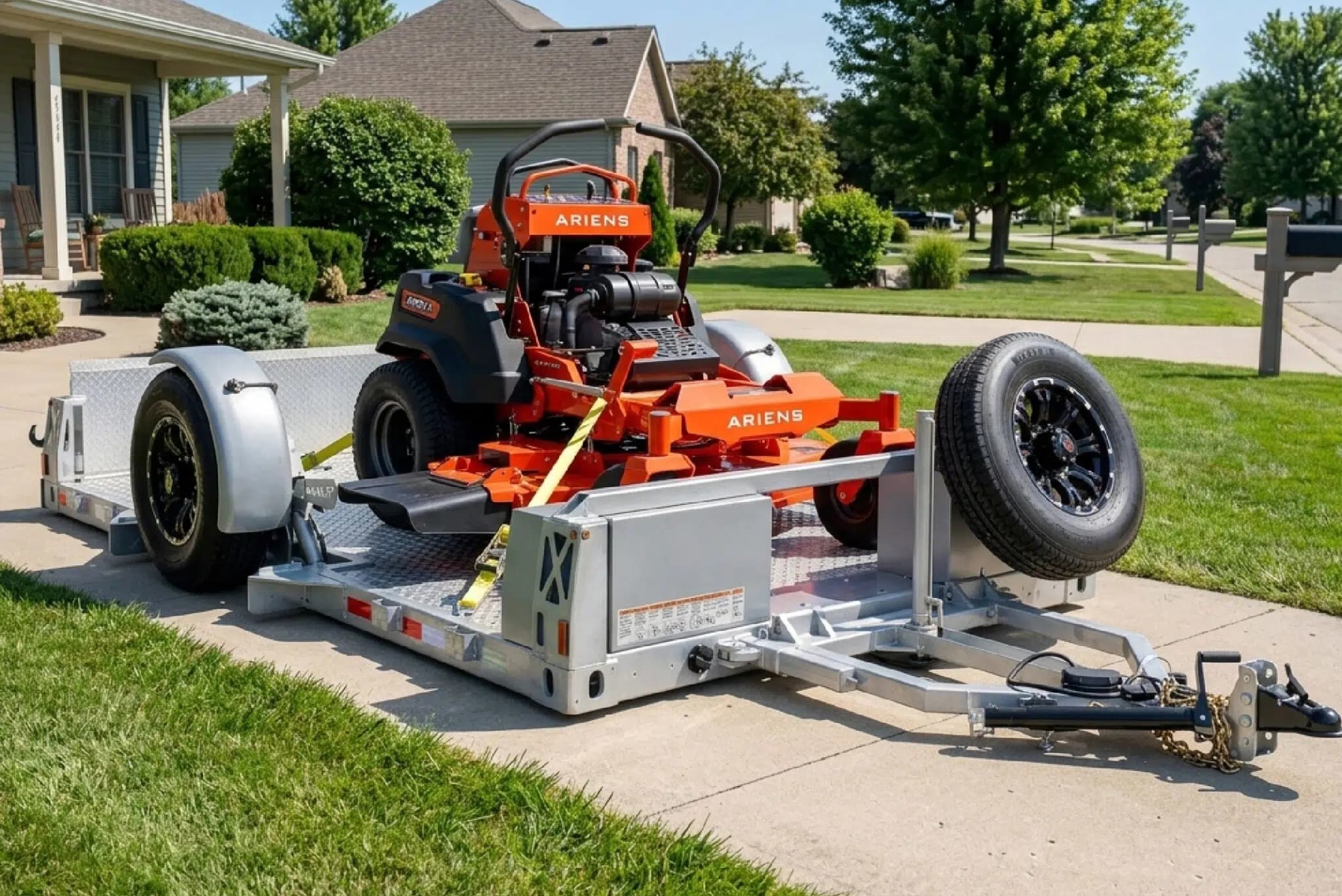
Loading a rolling workstation or equipment cart means moving it from ground level to the trailer floor. GoodMFG®’s hydraulic drop deck system reduces that height difference by lowering the trailer before you load.
A short, 22-inch ramp with an 11-degree approach bridges the remaining transition. Rather than relying on a long ramp to reach a raised deck, the trailer brings the loading surface closer to you.
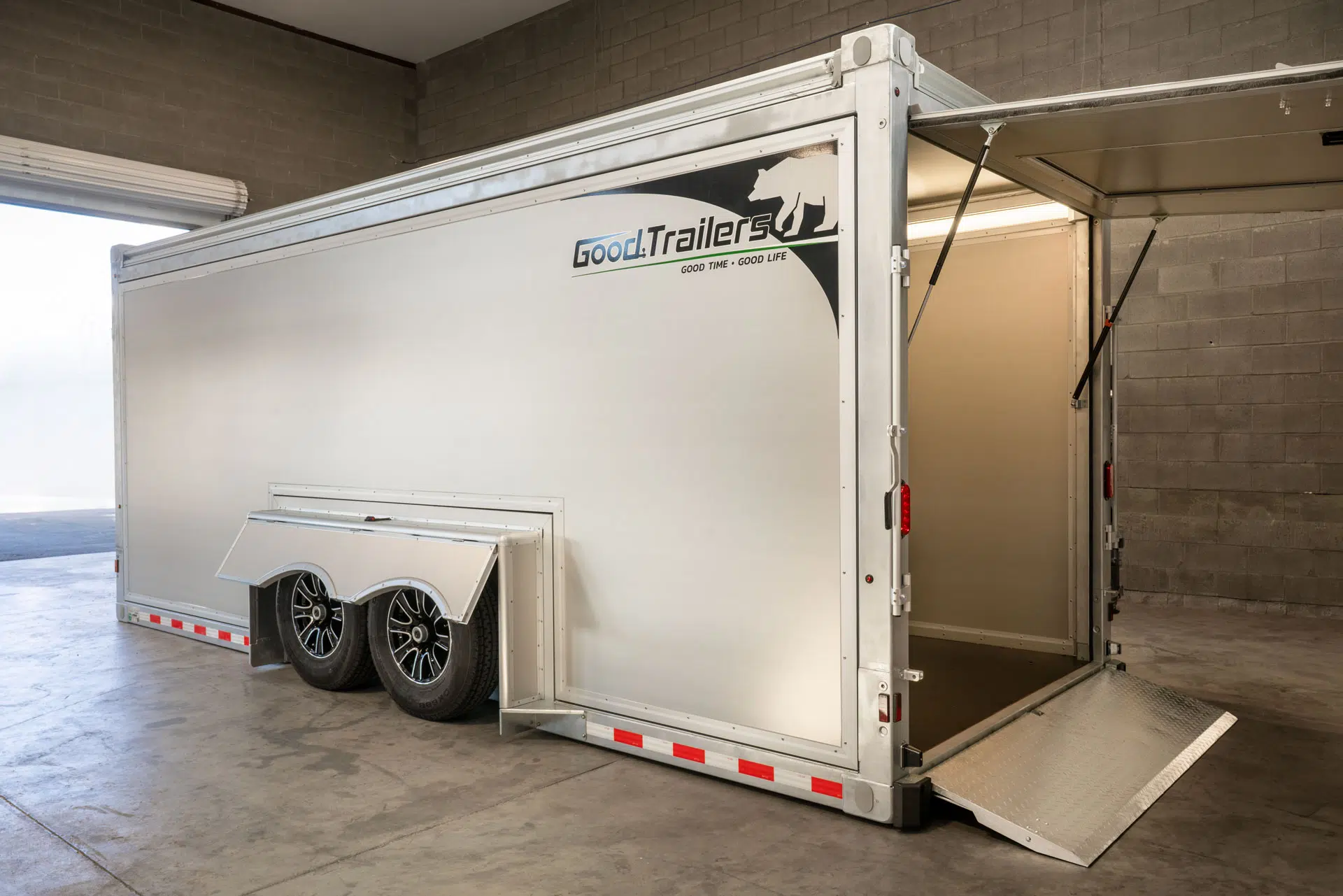
Our ramps are spring-assisted and attached to the trailer, so there’s nothing to set up. You just fold it down when you need it and fold it up when you don’t.
Measuring Your Loading Route
The dimensions of an enclosed trailer describe different parts of the available space. They are not interchangeable.
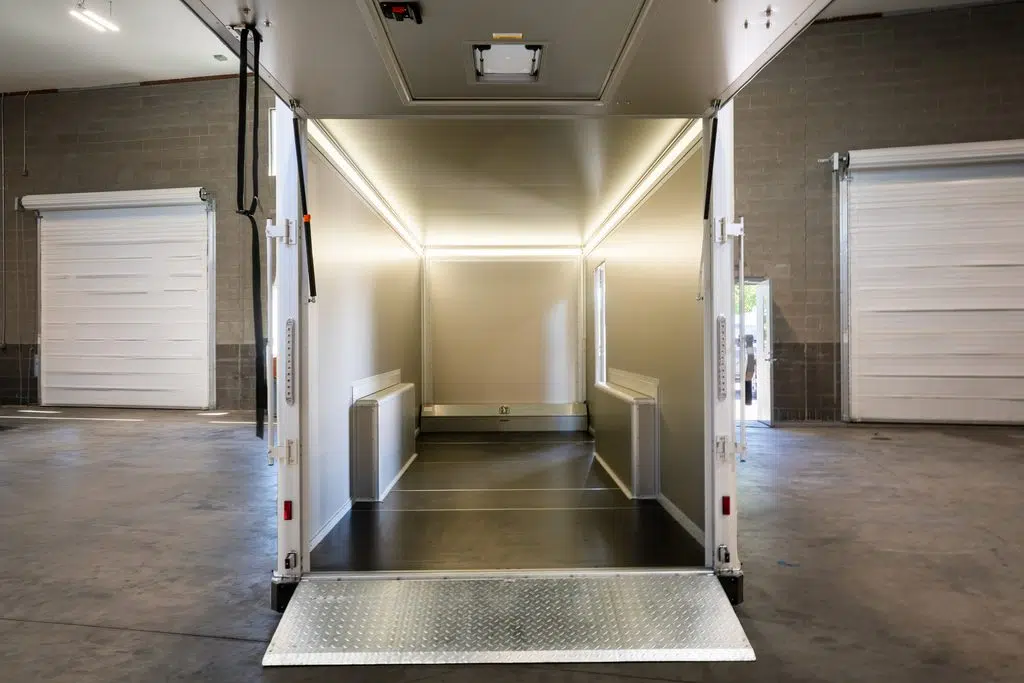
Start with the rear opening. The GT19AL, for example, is 82 inches wide, but its rear opening is 74.4 inches wide. Its interior height is 90 inches, while the rear opening is 85.4 inches high. Cargo needs to pass through the doorway before it can use the space beyond it.
Measure equipment in the condition in which you will load it. Include its cart, handles, packaging, attachments, and anything else that changes its overall dimensions.
Then check usable floor space. Where wheel boxes project into the interior, look at the clear space between them and their position along the floor. The trailer’s full interior width does not tell you how much uninterrupted floor space is available at every point.
This matters differently for different loads. A motorcycle’s handlebars and a rolling cabinet’s base occupy different heights. Plan around the shape of the equipment, not just its widest measurement.
Finally, leave room to handle the load. A cart fitting through a space does not necessarily leave enough room for its operator. You need sufficient aisle width for a person to stand behind and control the cart, along with room to negotiate turns.
The useful question is not only, “Will it fit?”
It is, “Can we get it into position without an awkward maneuver?”
Planning Your Layout
Imagine loading a rolling workstation, several supply bins, and a large piece of equipment. Everything fits.
Now imagine arriving at the job and discovering that the equipment blocks your cabinet doors—and the straps you need to release are tucked behind the workstation.
That is a layout problem, not a lack-of-space problem.
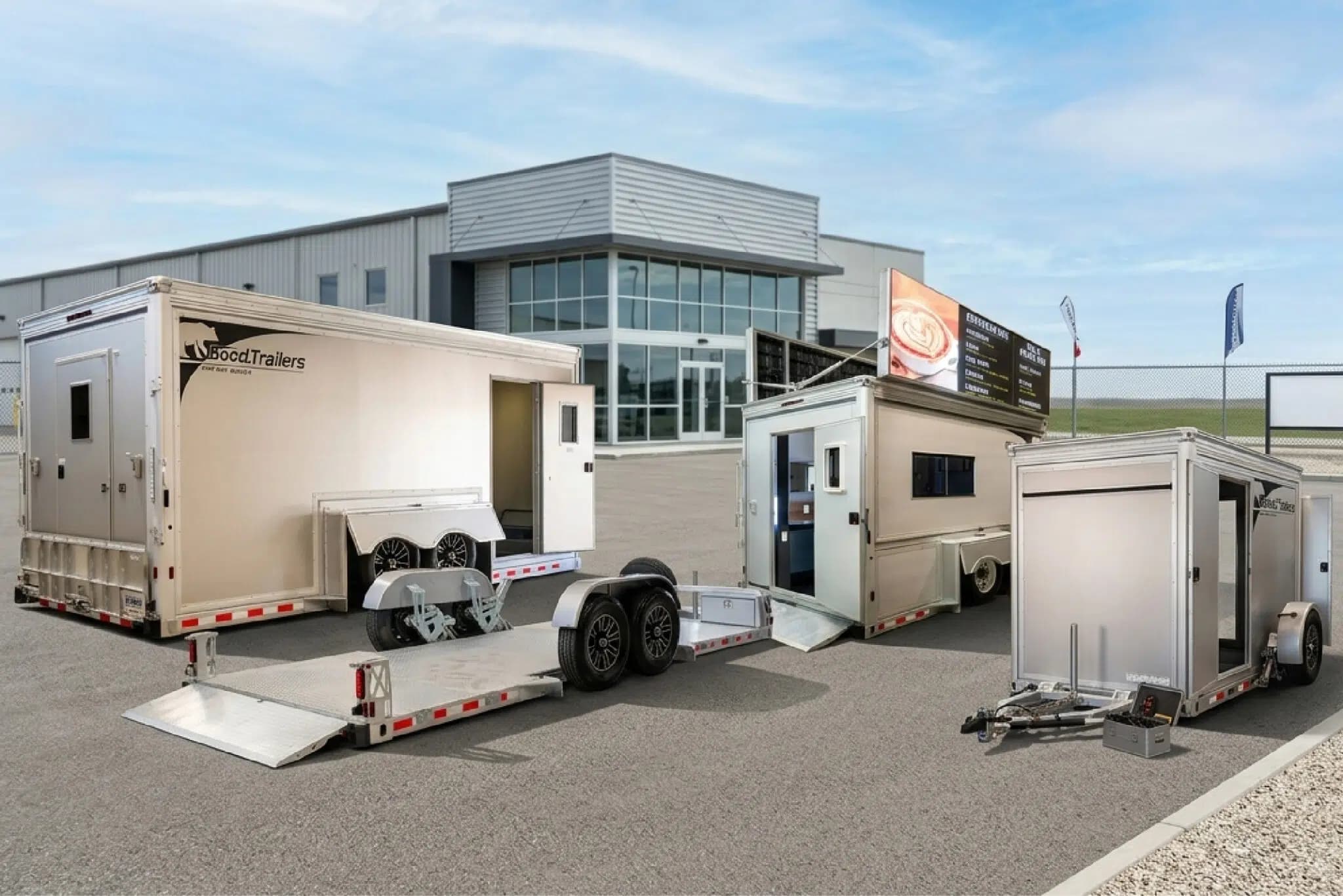
Most of our enclosed units help you solve this problem with an extra man door that lets you get at your goods from the side as well as from the back.
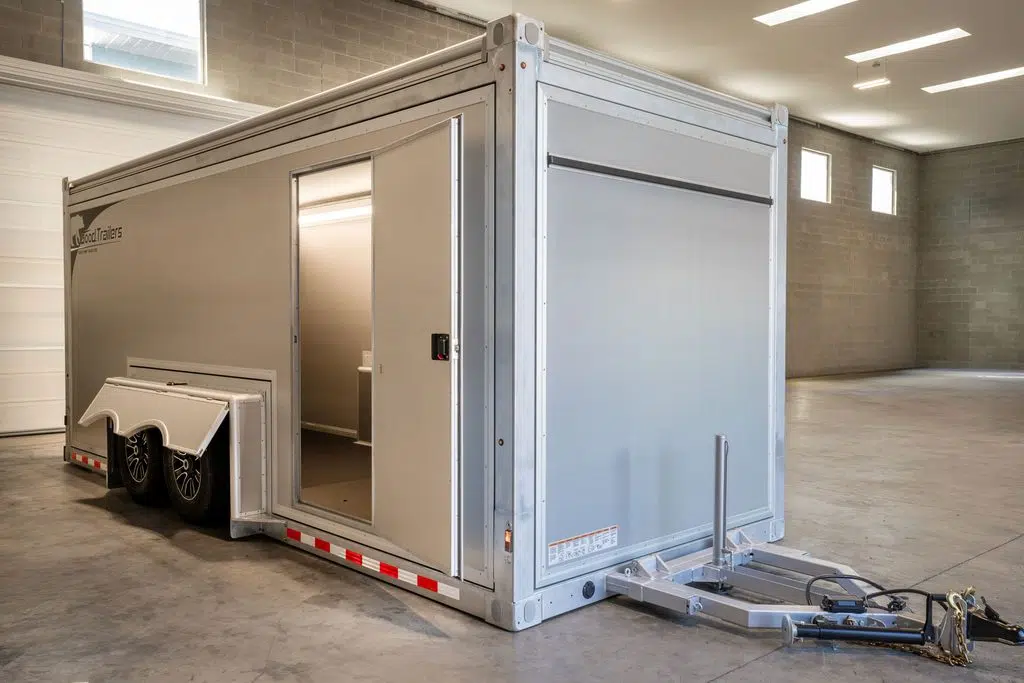
Before choosing an easy loading enclosed trailer, sketch a typical load. Mark what comes out first, what stays aboard, and which tools need to remain accessible throughout the day. Check whether cabinet doors and drawers can open with the rest of the load in place.
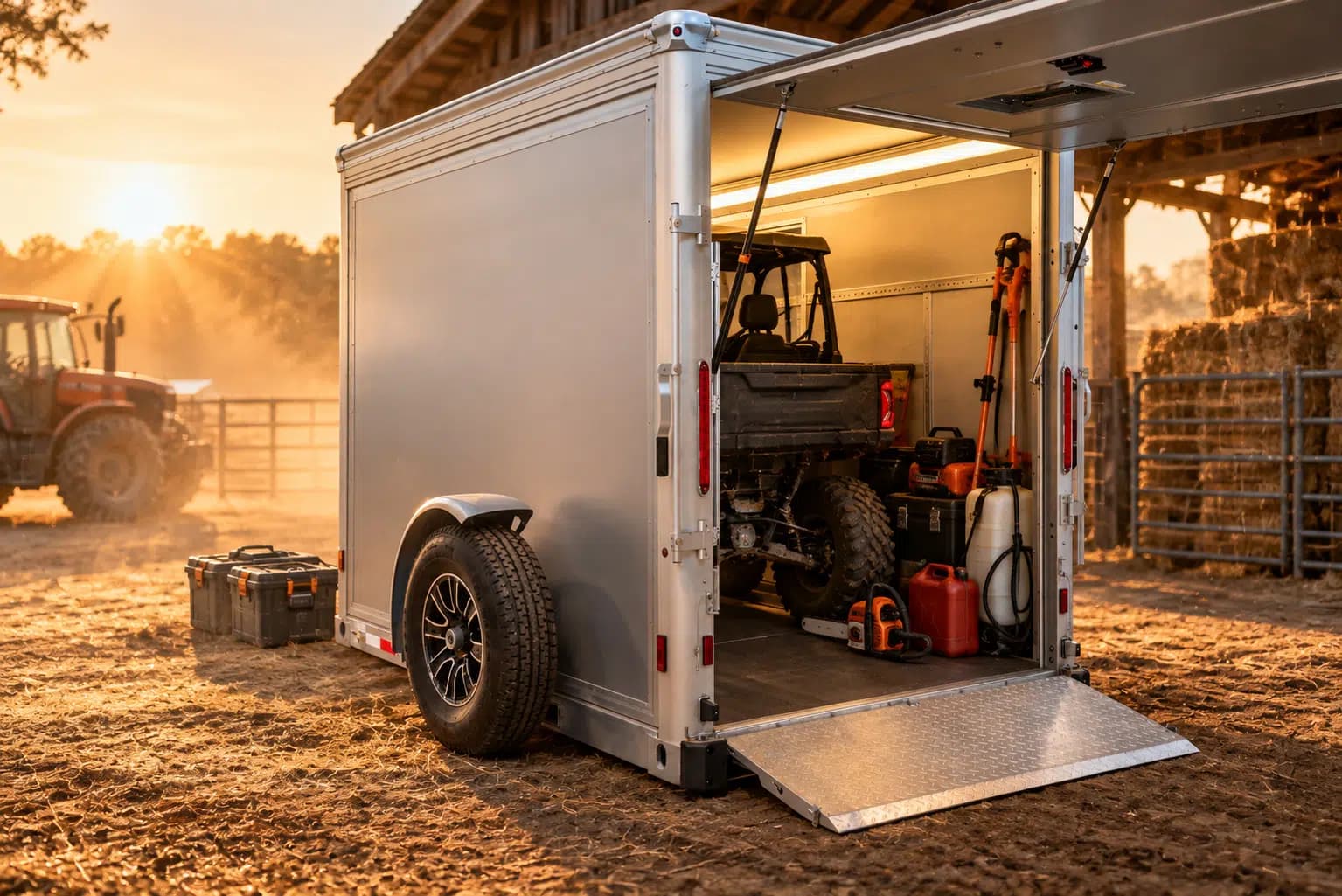
GoodMFG® can configure enclosed trailers with shelves and cabinets, as well as E-track or floor-mounted D-rings. Plan those features around your equipment and access needs rather than treating them as additions to fit wherever space remains.
However, unloading order cannot be the only consideration when choosing an easy loading enclosed trailer. Proper weight distribution and cargo securement remain essential to towing; do not move a heavy item to an unsuitable location simply because it would be easier to reach. Follow the loading guidance for your trailer.
A useful layout makes equipment accessible while supporting proper loading—not instead of it.
Remember the Set-Up
An easy loading enclosed trailer needs to fit the places where you work, not just the cargo you carry.
Consider where you will position it, how the entrance opens, and how you will approach it with equipment. A short ramp does not eliminate the need for maneuvering room behind the trailer.
For Good Trailers by GoodMFG®, preparation includes parking on a safe, level surface, chocking the wheels, checking for obstructions, and uncoupling the tow vehicle and moving it clear before operating the hydraulic drop deck system. Follow the complete operating instructions for your model.
When comparing trailers, consider the entire routine: arriving, preparing the trailer, loading or unloading, securing cargo, and returning everything to transport condition.
You do not need a stopwatch to begin that comparison. Start by asking whether the arrangement addresses the difficult part of your current process—and whether the required setup fits your usual stops. Ask whether it makes life easier or harder. Our trailers often load and unload faster even allowing for unhitching and hitching the tow vehicle, but everyone’s process is different.
FAQ
Does an easy loading trailer mean one person can handle the load?
Not necessarily. If you’re hauling heavy equipment a solo-load may make sense, because you can drive right on. But there’s no single cargo weight threshold that establishes whether a person can safely push or pull a cart full of equipment into the trailer. Footing, posture, handle position, distance, and the required amount of force all matter.
Choose the handling method that is appropriate to the task. A lower loading approach helps! But it shouldn’t be the reason why you attempt a load you can’t reliably control.
Does cargo still need to be secured inside an enclosed trailer?
Yes. Do not assume that closing the door makes the load secure. For commercial motor vehicles, the Federal Motor Carrier Safety Administration explicitly states that enclosed cargo areas remain subject to applicable cargo-securement requirements.
Plan appropriate restraints for the actual equipment. Cargo that can roll requires measures to prevent rolling, and securement components need adequate working-load limits. Choose attachment locations that remain accessible after loading so securing the equipment does not become an afterthought.
Find an Easy Loading Enclosed Trailer that Fits the Way You Work
Your trailer should help you get to work. It shouldn’t make loading the first job of the day.
If you think one of our easy loading enclosed trailers is right for you, reach out to one of our dealers or contact us for options!
See also:
How to Choose the Right Ground Level Loading Trailer
The Ultimate Drop Deck Trailer Buyers Guide
Who Sells Zero Degree Trailers? The Ground Level Loading Truth
This resource was compiled by the GoodMFG® Product Team, drawing on 75 years of combined experience in hydraulic systems, heavy-duty transport, trailers, and modular structures.
P.S. – We build trailers every day, but we don’t run your crews. If there’s a specific logistical headache or a “field reality” we’ve missed, we want to hear about it. Help us refine the equipment that makes your day easier! Email our Marketing Lead at devan-h @ goodrv.com and let us know what we should solve next.