A floor scrubber trailer needs to work with three things: dimensions, weight, and the machine’s transport instructions.
Ride-on floor scrubbers are substantial pieces of equipment. They can weigh well over 1,000 pounds, carry large solution and recovery tanks, and include low-mounted scrub heads, squeegees, batteries, controls, sensors, and other components that affect how they should be loaded and transported.
For cleaning contractors, rental fleets, equipment dealers, and multi-site facilities teams, that makes trailer compatibility worth checking before the first move.
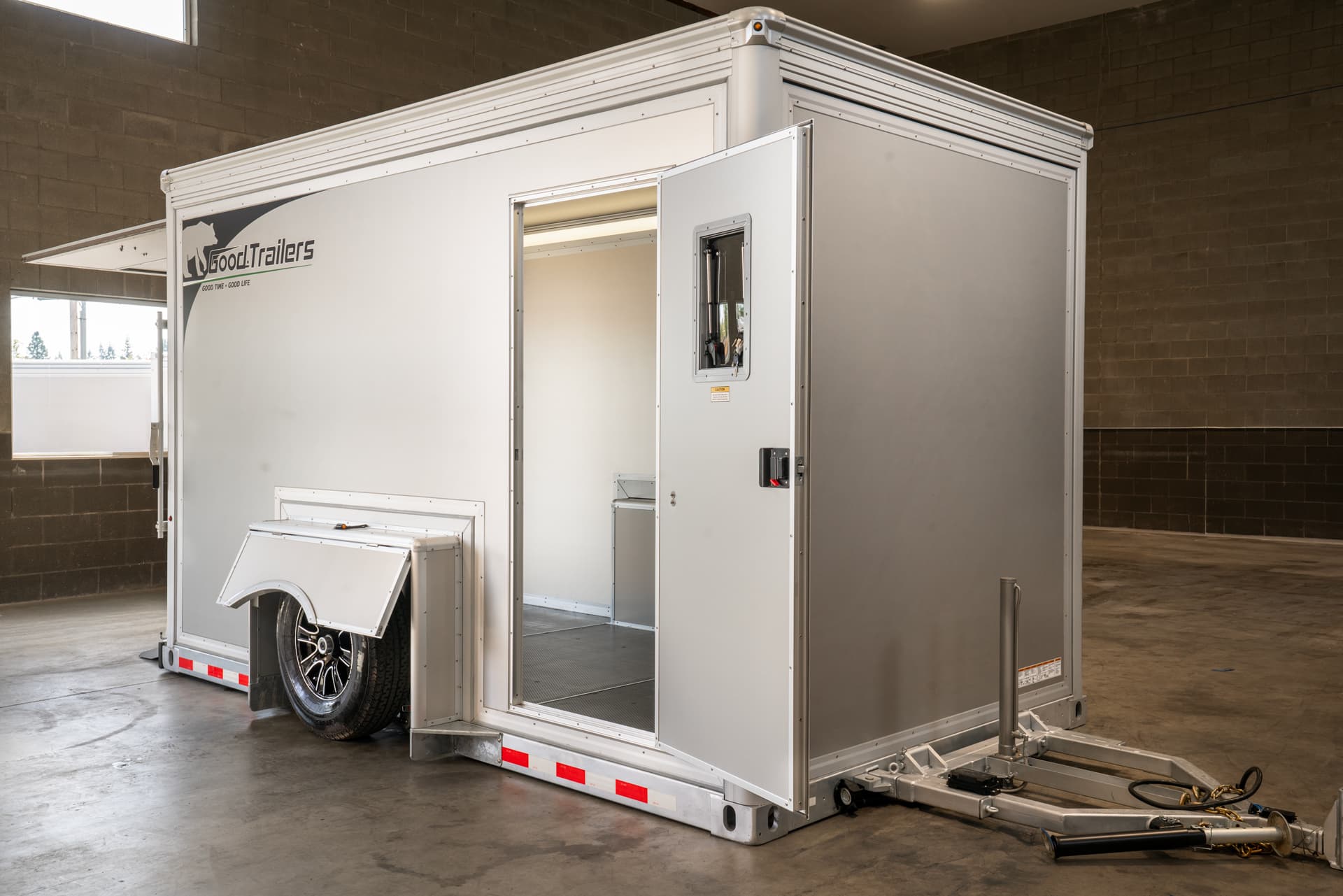
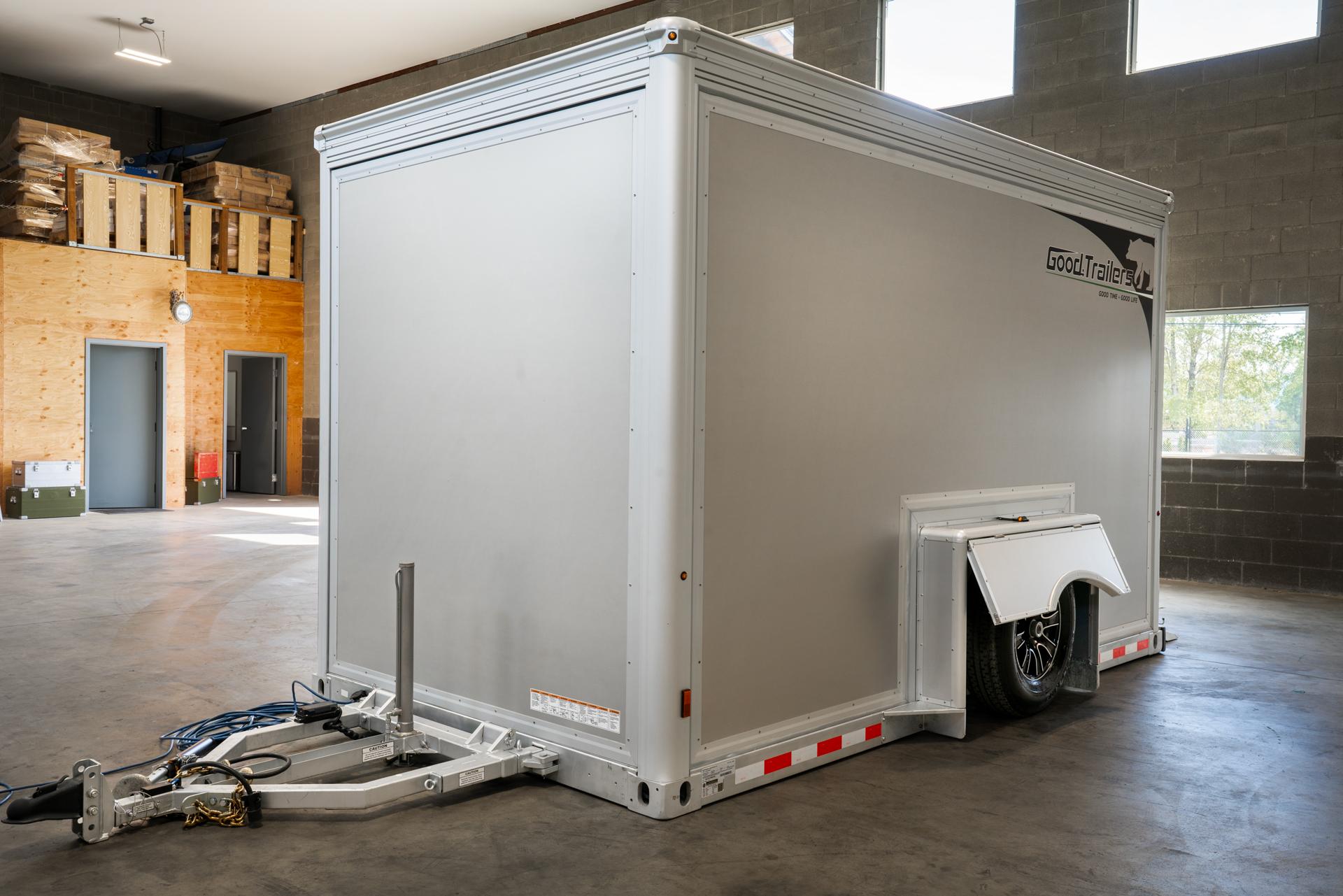
Our enclosed hydraulic drop-deck trailers can be a natural fit for many ride-on scrubbers. The deck lowers to 5.4 inches above the loading surface, with a short 22-inch ramp creating an 11-degree transition onto the trailer floor. But the floor scrubber’s owner’s manual still gets the first vote.
Some machines allow an 11-degree loading grade. Others do not.
That is where choosing the right floor scrubber trailer starts.
Table of Contents
Start With the Floor Scrubber Owner’s Manual
Before comparing trailer models, find the transport or loading section of your scrubber’s owner’s manual.
Manufacturers may specify:
- The maximum loading incline
- Whether tanks should be trained
- The position of the scrub head
- Whether the squeegee should be raised or removed
- Battery-specific transport instructions
- Loading direction
- Designated tie-down points
Those instructions can change the trailer decision even when the machine fits right inside.
The Tennant T12 is a good example. Its current specifications list a maximum loading incline of 20%, or 11°, with the tanks empty. The manual also directs owners to raise the squeegee, scrub head, and brushes, as well as to drain the tanks prior to loading.
The Tennant T16AMR is a different story. Its manual limits trailer loading and unloading to a 7-degree incline.
While both machines are compact enough to fit comfortably in one of our enclosed trailers by their basic dimensions, only one of them aligns with our 11° rear transition. That’s why we’d rather start a floor scrubber trailer conversation with the machine model instead of what the machine weighs.
Who Actually Needs a Floor Scrubber Trailer?
Do you need to move your cleaning equipment between locations on a regular basis? Then you probably need a floor scrubber trailer.
Contract cleaning crews are an obvious fit. A crew may use the same ride-on scrubber at warehouses, factories, retail properties, parking structures, event facilities, or other large sites throughout the week.
Equipment rental companies have a similar need. The machine may leave with a customer one day and return for inspection, service, or another rental the next.
Cleaning-equipment dealers and service departments may move:
- New machines for delivery
- Demonstration units
- Loaner machines
- Customer equipment coming in for service
- Refurbished machines returning to the field
Facilities teams may also share equipment between several buildings or properties rather than keeping one large scrubber at every location.
Measure the Complete Machine
Cleaning width is not the same thing as transport width.
A Tennant T12 has a 37.25-inch body width, but the rear squeegee measures 39 inches and the machine reaches 42 inches with the optional side brush. It stands 56 inches high in its basic configuration and 82.5 inches high with the overhead guard.
Those differences matter when you are checking trailer fit.
For any floor scrubber trailer, look at:
- Total machine length
- Widest point in transport configuration
- Actual transport height
- Squeegee width
- Side brushes or other attachments
- Overhead guards
- Battery configurations
- Any component the manual requires you to remove or reposition
The GT13AL has a 12’6″ × 6’10” × 7’6″ interior and a 74-inch-wide × 84-inch-high rear opening.
That gives a standard T12 substantial width and length clearance. A T12 equipped with the 82.5-inch overhead guard, however, would be much closer to the 84-inch rear-opening height.
Make Battery Configuration Part of the Transport Plan
Ride-on floor scrubbers may use flooded lead-acid, AGM, lithium-ion, or other battery configurations depending on the machine.
Battery choice can affect machine weight and may also bring its own transportation instructions.
The T16AMR, for example, weighs about 1,725 pounds with its standard 360Ah battery package and about 1,400 pounds with its optional lithium-ion batteries. Tennant specifically directs operators transporting the lithium-ion version to contact Tennant or the appropriate regulatory authority for transport instructions.
For floor scrubber trailer planning, the practical rule is straightforward:
Know which battery system is actually installed in the machine and follow any transportation requirements that come with it.
Do not assume two versions of the same scrubber create exactly the same transport load.
Plan Securement Around the Machine’s Tie-Down Points
A floor scrubber trailer should support the securement procedure specified by the equipment manufacturer.
Ride-on scrubbers often have designated tie-down locations rather than leaving the restraint arrangement entirely up to the operator.
Our enclosed trailers can be configured with floor-mounted D-rings or E-track where appropriate. Instead of deciding where those features should go first, start with the scrubber.
Find its approved restraint locations. Then make sure the trailer gives your crew usable, appropriately rated attachment points that work with those locations.
Also consider access.
A securement point that technically exists but is difficult to reach once the machine is parked against a wall does not create a very convenient transport routine.
A good floor scrubber trailer setup should make the manufacturer-approved loading and tie-down procedure repeatable.
Why Enclosed Trailers Make Sense for Ride-On Scrubbers
Floor scrubbers are designed to work indoors. Batteries, controls, displays, sensors, squeegee assemblies, and solution systems all benefit from being kept out of direct rain, road spray, gravel, and debris.
An enclosed floor scrubber trailer also gives you room to keep compatible supporting equipment together, such as:
- Brushes & pads
- Squeegee components
- Hoses & small service tools
- Straps & securement equipment
- Charger equipment where appropriate
- Cleaning accessories
- Other supplies used with the machine
For a cleaning contractor or equipment dealer, that can make the trailer part of a repeatable service set up.
However, sometimes you just don’t have a choice. If the manufacture limits loading to less than an 11-degree grade and you’re going to need to load it with a forklift then you’ll want an open flatbed instead. In that case, follow manufacturer directions about protecting sensitive components from road debris.
What Our Drop Deck Changes
The main advantage of our hydraulic system is simple: it lowers the trailer floor.
The GT13AL and GT19AL lower to approximately 5.4 inches above the loading surface. A 22-inch rear ramp bridges the remaining height at an approximately 11-degree angle.
For a compatible ride-on scrubber, that creates a short transition onto a level trailer floor instead of requiring the machine to climb to a conventional-height cargo deck.
The floor scrubber still has to be rated for that loading grade.
The tanks still need to be prepared according to the manual.
The scrub head, squeegee, brushes, and other components still need to be placed in the required transport position.
But when all of those requirements line up, lowering the transport floor can remove a substantial climb from the loading process.
FAQs
Can the floor scrubber charger travel in the trailer?
Often, yes, provided the charger is intended to be transported separately and can be secured appropriately. Some ride-on scrubbers use off-board chargers, while others may use different charging arrangements. Check the machine and charger documentation before transport.
Can cleaning solution stay in the tanks during transport?
Follow the machine manufacturer’s instructions. Many ride-on scrubber manuals specifically call for draining the solution and recovery tanks before trailer loading.
Should brushes & pads stay installed during transport?
That depends on the machine. Some manufacturers specify raising the scrub head or brushes for loading, while other components may need to be removed or repositioned. There’s no universal rule, so always check your manual.
Key Takeaways
- A floor scrubber trailer should match the machine manufacturer’s transport procedure as well as its weight and dimensions.
- Check maximum loading grade early. Two similarly sized scrubbers can require very different trailer geometry.
- Many manufacturers require solution and recovery tanks to be drained before loading.
- Measure the machine in its transport configuration, including squeegees, side brushes, overhead guards, and other options.
- Battery configuration can change both machine weight and transport requirements.
- Plan trailer anchor points around the scrubber’s designated tie-down locations.
- Enclosed transport can protect finished cleaning equipment, controls, sensors, and accessories from direct rain, road spray, gravel, and debris.
- The GT13AL is a strong starting point for many compatible ride-on scrubbers, while the GT19AL adds room and capacity for larger machines, multiple units, or a larger service package.
- Our drop deck uses an approximately 11-degree loading transition. The scrubber must permit that grade before it is considered a compatible loading setup.
Raise the Bar by Lowering the Deck
If you’ve decided one of our enclosed trailer models is right for your floor scrubber set-up, reach out! You can click here to find your nearest dealer or contact us directly.
Loading form…
This resource was compiled by the GoodMFG® Product Team, drawing on 75 years of combined experience in hydraulic systems, heavy-duty transport, trailers, and modular structures.
P.S. – We build modular structures every day, but we don’t run your operation. If there’s a specific logistical headache or a “field reality” we’ve missed, we want to hear about it. Help us refine the equipment that makes your day easier! Email our Marketing Lead at devan-h @ goodrv.com and let us know what we should solve next.