Finding the right trailers for daily equipment moves can be a challenge. If your team manages a rental fleet or handles moves across job sites, your trailers are either the unsung heroes of your operation, or the daily villain which makes your life a little bit more stupid every day you go to work.
Loading and unloading machines multiple times a day puts constant wear and tear on equipment, strains field crews, and eats into billable hours. While standard tilt decks and ramp trailers have been the industry default for decades, drop-deck trailers and ground-level loading have changed how smart fleets handle daily hauls.
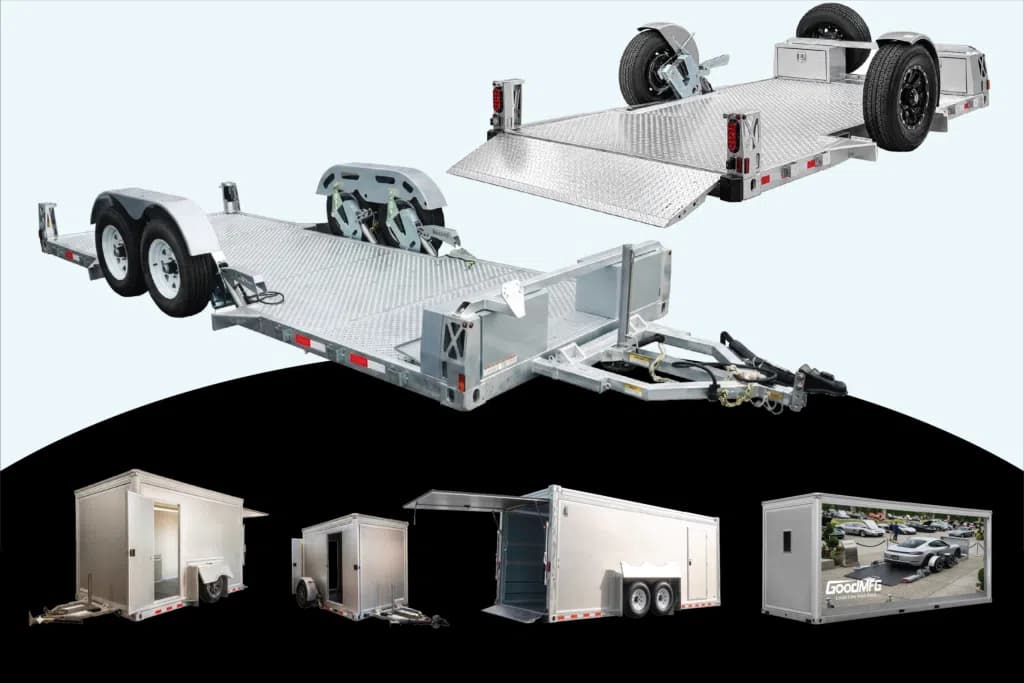
Here’s why switching to a dedicated drop deck flatbed like the GT19FL 19’ flatbed drop deck trailer by GoodMFG® eliminates the biggest headaches of daily equipment transport.
Table of Contents
- Avoid High-Risk Loading Angles
- Reduce Injury Risks
- Reduce Machine Damage
- Solve Securement
- Labor Allocation Solutions
- FAQ
- Key Takeaways
- Load Low Haul Good
Avoid High-Risk Loading Angles
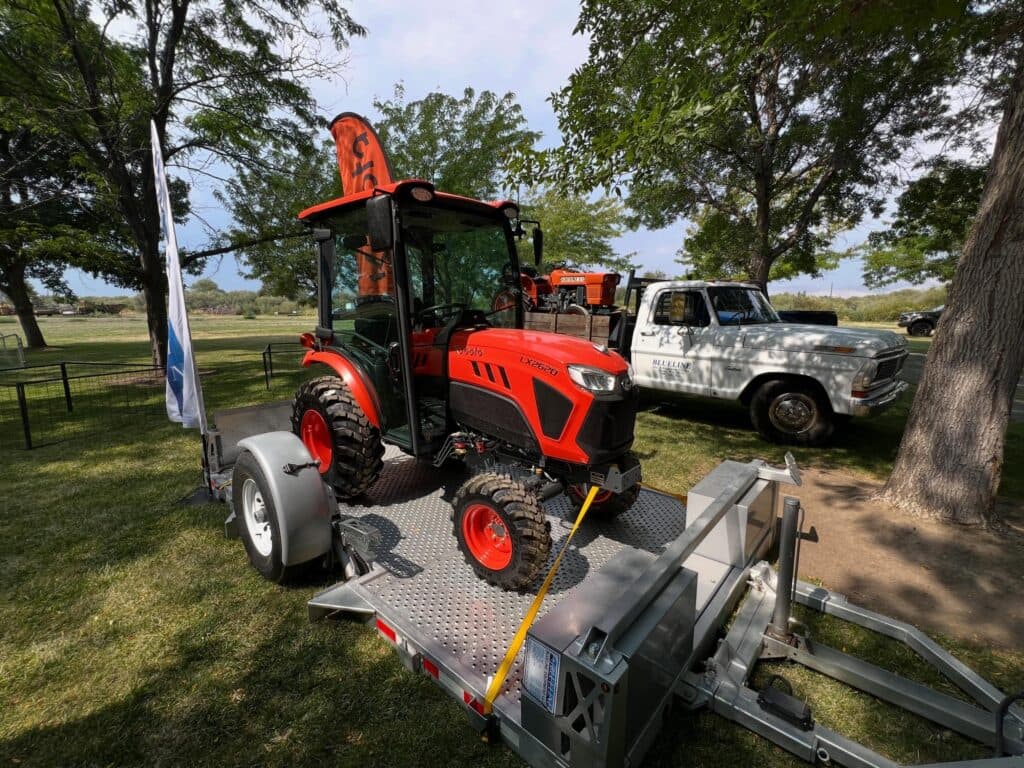
Standard ramps and tilt decks often force equipment up steep inclines of up to 20°. For low-clearance or top-heavy machinery such as scissor lifts, mini track loaders, mini-excavators, or tractors, that incline is a recipe for tail-scraping, track slipping, or dangerous tip-overs.
But Good Trailers drop flat to the ground. They’re equipped with 22” long, 74.4”-wide folding spring-assisted ramps that span the entire rear width of the trailer. The trailer thus creates an ultra-gentle 11° drive-on angle. Machines transition seamlessly onto the deck without bottoming out, breaking traction, or damaging delicate undercarriages.
Reduce Injury Risks
Field crews and delivery drivers lift heavy steel or aluminum ramps dozens of times a day when they have to deal with a standard trailer. Straining backs, pinched fingers, or injuries from dropped ramp gates mean huge L&I claims (workers’ compensation) for rental yards and fleets.
Loading injuries, where heavy equipment tips over, slams down, or rolls back, are all also sources of potential injuries.
Ground level drop decks eliminate this set-up entirely. Our spring-assisted ramp is easy to fold and unfold, and loading is like driving up a gentle driveway. If you’d like to reduce L&I premiums and take pride in running a safety-conscious workplace, then choosing drop deck trailers for daily equipment moves is absolutely the right way to go.
Reduce Machine Damage
Rental yards frequently deal with returned equipment that has scuffed undercarriages, bent hydraulic lines, broken oil pans, or ruined rubber tracks. The reason? The equipment scrapes over the breakover angle on a standard trailer.
Ground-level loading removes the breakover angle entirely, preserving the equipment’s resale value and longevity.
Solve Securement
Sick of crawling around on a high trailer deck or ducking under a raised deck to attach transport chains or straps in bad weather? You should be: it’s slow, dangerous, and hard on the body.
Why not load at ground level instead? Easily access tie-down points. Add our optional D-ring stake pocket system to really get the easiest and safest securement set-up of all. Either way, it’s all easier to inspect and adjust than ever before.
Labor Allocation Solutions
Rental fleets and subcontractors frequently hire seasonal drivers or non-specialized crew members who aren’t experts at loading heavy machinery onto steep ramps. Misaligned loading on narrow ramps leads to costly accidents.
But now you don’t have to worry. Even your most inexperienced crew member can handle the wide, flat, ground-level entrance. It’s practically fool proof, which means you minimize the skill barrier and reduce yard liability.
FAQ
What types of equipment are best suited for drop deck trailers?
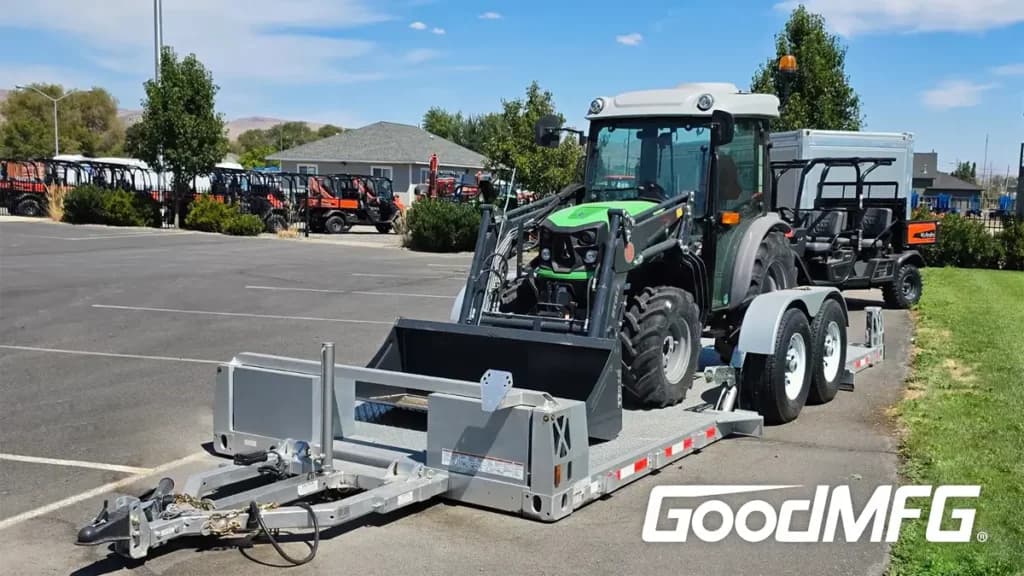
Depending on the carrying capacity of the trailer, you can haul almost any form of heavy equipment. Our drop deck flatbeds will carry up to 8,000 pounds, depending on the model. That means you can haul a wide variety of tractors, scissor lifts, mini-excavators, forklifts, skid steers, wheel loaders, and more.
How does ground level loading help prevent undercarriage and track damage?
Standard trailers force equipment over a steep breakover apex, causing low-clearance machines like scissor lifts and mini excavators to scrape their undercarriages, bend hydraulic lines, or tear up rubber tracks. Ground-level drop decks eliminate the breakover apex entirely. Combined with a gentle 11° angle, 74.4” wide spring loaded assisted 22” short ramp, you get a smooth drive-on experience that eliminates the conditions that cause equipment to bottom out. This protects your fleet’s resale value and helps you avoid costly repair bills.
Can a single operator safely load and secure equipment on a drop deck trailer?
Yes, which makes them ideal for renters, or for newer, less experienced crew members. You can even rent them out as a single package. Even an inexperienced operator tends to do much better with a drop deck! Drive-on loading eliminates anxiety and makes the process simple. Once on board, it’s easy to attach tie-downs without climbing onto high decks. Easy-to-reach tie-down points and optional features like the D-ring stake pocket system turn repetitive drops into fast, solo 5-minute operations.
Key Takeaways
The bottom line on why you should choose drop deck trailers for daily equipment moves:
- Protect low-clearance machinery. An 11° approach angle over a 5.4” deck height prevents scissor lifts and mini-excavators from bottoming out or tipping.
- Slash ergonomic injury risks. Easy lifting folding spring-assisted ramps and waist-high ground-level tie downs eliminate back strains and L&I claims.
- Prevent undercarriage damage. Removing the breakover apex prevents bent hydraulic lines, cracked oil pans, and ruined rubber tracks.
- Lower the skill barrier. Wide, flat ground-level loading allows seasonal or non-specialized drivers to load equipment safely without steep ramp anxiety.
- Built for high-frequency hauls. The GT19FL 19’ flatbed drop deck turns repetitive daily equipment drops into fast, 5-minute solo operations.
Load Low, Haul Good
Every minute spent struggling with steep ramps, positioning blocks, or heavy gate springs is time off the clock. By lowering the chassis flat to the ground, a Good Trailer makes daily equipment drops faster, safer, and less stressful. Ready to upgrade your daily transport fleet? Click here to find your nearest dealer or contact us for assistance.
See also:
Drop Deck Trailer vs. Tilt Trailer: Complete Comparison Guide
The 5-MInute Load: Hydraulic Drop Deck Trailers for Rental Yards
Hydraulic Drop Deck Trailers for Equipment Rental Fleets: Boost Profits & Safety
This resource was compiled by the GoodMFG® Product Team, drawing on 75 years of combined experience in hydraulic systems, heavy-duty transport, trailers, and modular structures.
P.S. – We build trailers every day, but we don’t run your crews. If there’s a specific logistical headache or a “field reality” we’ve missed, we want to hear about it. Help us refine the equipment that makes your day easier! Email our Marketing Lead at devan-h @ goodrv.com and let us know what we should solve next.