Customers breaking equipment is an annoying and expensive cost of running a rental yard.
And while you can’t prevent every instance, there are steps you can take to protect your equipment as much as possible.
Table of Contents
- Prevent Breaking Equipment by Educating Customers
- Prevent Breaking Equipment by Hauling Better
- Incentivize Better Care
- Build a Smart Fleet
- FAQs
- Key Takeaways
- A Good Equipment Care Solution
Prevent Breaking Equipment by Educating Customers
Customer education can be one of the most effective ways to prevent breaking equipment.
Sure, you’re renting to grizzled veteran contractors as often as you’re renting to DIY Dan, but you’re also dealing with the labor force. No contractor is getting crews that are as experienced as he might like.
At the end of the day, you never know who is going to be driving your gear around, so customer education is paramount.
Use QR Codes to Deliver Equipment Tutorials
Attach weather-resistant QR code stickers directly to control panels on high-risk machinery. Linking these to 60-second video walk-throughs covering startup, operation, and common operator errors gives customers immediate visual guidance right when they need it on-site.
Mandatory Pre-Operation Walkthroughs
Require customers to go through a quick, 3-minute demonstration before you let the equipment leave the yard. Have the customer physically turn on the unit, adjust the settings, and operate basic controls under staff supervision. You can couch this as an inspection, but it serves a dual purpose: letting staff catch points of confusion early and establishing baseline operational knowledge.
Prevent Breaking Equipment by Hauling Better
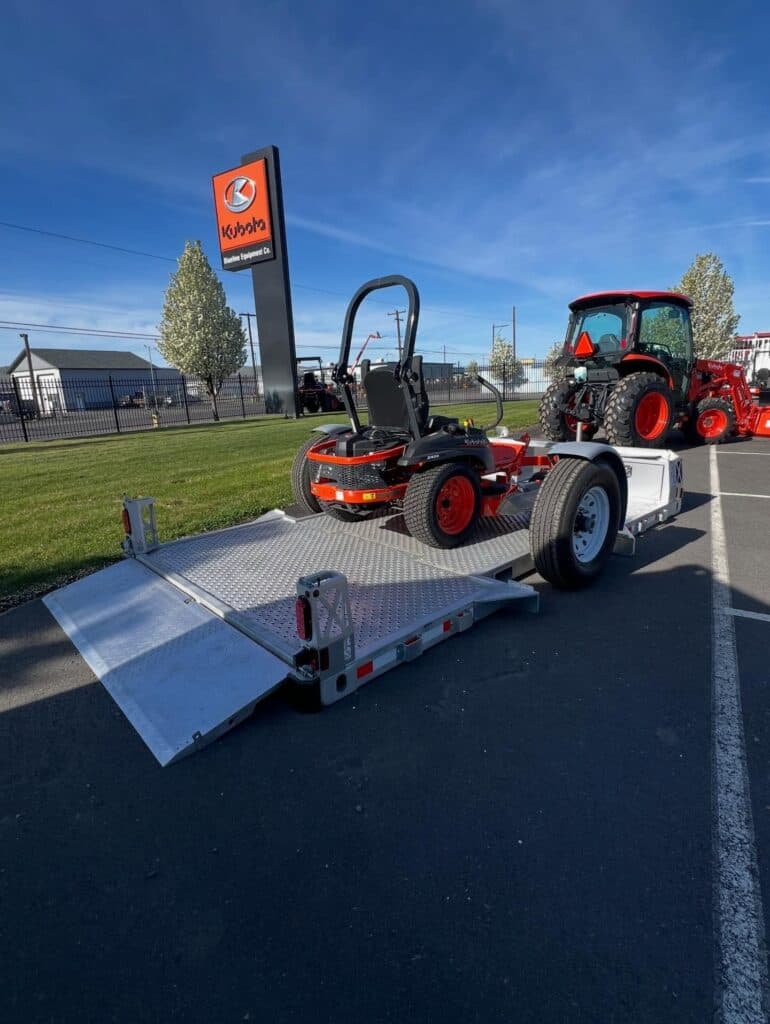
We’re a drop deck trailer company, so of course we’re going to tell you how awesome drop deck trailers are for preventing equipment damage.
But the thing is, it’s true. Most damage happens while loading and unloading, not during equipment use.
Think about the average, standard trailer. The deck is 16” to 18” off the ground. Users unpack a pair of very heavy, long, steep ramps that cover maybe ⅓ of the trailer. Then, an inexperienced operator brings a 3-ton machine up those ramps and hopes for the best.
It’s a recipe for scraped under carriage, equipment that slams down hard at the breakover point, tip overs, slips right off the ramp, and a host of other real nightmare scenarios nobody wants to see.
Incentivize Better Care
Speak to your legal team before implementing any of these steps, but know that implementing them can in fact make your life easier if your team approves the language.
- Damage Waivers. Offer an optional limited damage waiver that covers minor wear-and-tear while explicitly excluding gross negligence or improper fuel use.
- Tiered Hold Deposits. Charge higher refundable security deposits for complex equipment or gear that’s easily damaged. This will encourage careful handling.
- Implement comprehensive digital signoffs. Document the exact condition of the unit using a mobile app to snap time-stamped photos and videos before release. Have the customer sign off on the existing condition logs. This sets clear expectations that missing parts or structural damage will be billed directly to them.
Build a Smart Fleet
Invest in telematics trackers capable of helping you monitor engine diagnostics, tilt sensors, and usage hours in real time. Get remote alerts for over-revving, low fluid levels, or operation outside of designated geo-fences. This gives you the power to contact the customer and to intervene before severe mechanical failures occur.
FAQs
What is the most common cause of customer-induced heavy equipment failure?
Improper fluid management and incorrect fuel usage tend to top the list. After that, you get loading and unloading fails.
Customers frequently top off hydraulic tanks with motor oil, use dirty or contaminated fuel containers, or fill diesel machines with standard gasoline. Adding bright, color-coded fuel caps and clearly labeled fluid fill points alongside a strict “fuel type” review during checkout all help prevent these costly engine burnouts.
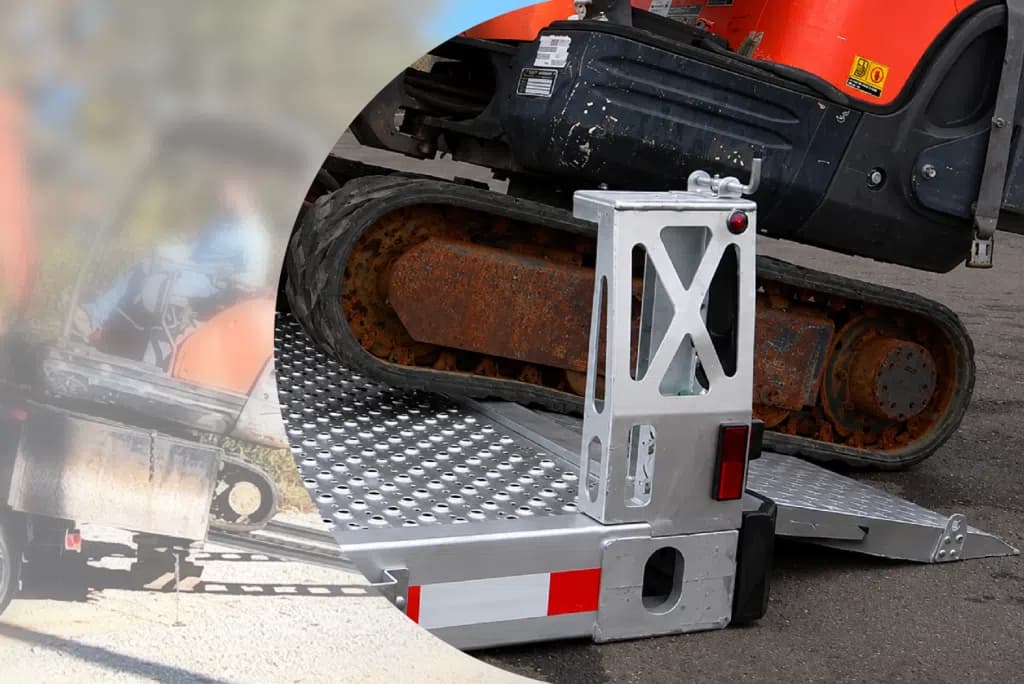
Meanwhile, adding hydraulic drop deck trailers to your rental fleet and bundling them up with customer rentals can help solve the repair challenges that come when customers try to roll equipment up steep, narrow ramps that cover barely 1/3 of the back of the trailer. The wide 74.4” W, 22” long, 11° ramp on a Good Trailer can be a godsend for keeping your equipment safe.
How do drop deck trailers protect heavy equipment compared to standard ramp trailers?
Standard ramp trailers force machinery to negotiate steep angle inclines, often causing low-clearance equipment to scrape their undercarriages, high-center, or tip during loading. Drop deck trailers lower the entire deck to the ground, eliminating steep ramp inclines and drastically reducing structural damage while working to prevent dangerous loading mishaps.
Which check-in/check-out habits yield the highest ROI for damage prevention?
Implementing a two minute visual and physical checklist can yield immediate results. This includes inspecting quick-attach couplers, checking tire and track tension, verifying fluid levels in front of the customer, and ensuring grease points are lubricated prior to release. Making the customer watch or participate in this quick check-in establishes accountability early.
Key Takeaways
If you’re considering ways to stop your customers from breaking equipment, think about these four key takeaways.
- Target transport hazards. Most structural equipment damage happens during loading; ground-level drop-deck trailers eliminate steep ramp breakover angles and tipping risks.
- Standardize operator onboarding. QR code video tutorials and compulsory 3-minute pre-operation walkthroughs stop user error before machines leave your yard.
- Prevent fuel and fluid contamination. Brightly color-coded fill caps and mandatory fuel reviews during checkout prevent costly engine and hydraulic burnouts.
- Document intake conditions. Time-stamped mobile photos ensure clear accountability for missing parts, structural scrapes, and frame damage.
A Good Equipment Care Solution
At GoodMFG® we partner with rental yards across the country to help raise ROI. You can add your trailers to your fleet as rentable assets, or you can even become an authorized GoodMFG® dealer. Talk to us to discuss your options and your opportunities for both saving money and increasing your revenue.
See also:
Capturing Revenue with Equipment Rental Yard Trailers
What is the Best Trailer for Rental Fleets?
Equipment Rental Trailers: Boost Safety & ROI
This resource was compiled by the GoodMFG® Product Team, drawing on 75 years of combined experience in hydraulic systems, heavy-duty transport, trailers, and modular structures.
P.S. – We build trailers every day, but we don’t run your crews. If there’s a specific logistical headache or a “field reality” we’ve missed, we want to hear about it. Help us refine the equipment that makes your day easier! Email our Marketing Lead at devan-h @ goodrv.com and let us know what we should solve next.