Inventory overflow storage becomes a real operational question when the stock still has value, the building is still busy, and the two are starting to compete for the same space.
Seasonal inventory that arrives earlier than expected. Promotions perform better than the forecast suggested. Finished goods wait for an outbound window. Raw materials stack up faster than production can use them. Sometimes growth is the reason. Sometimes the supply chain has bad timing.
No matter the cause of the problem, the goal is not to just put the inventory anywhere you can. The goal is to choose inventory overflow storage that protects the stock without making receiving, production, picking, and fulfillment harder.
For many businesses, that leaves three practical choices. Keep selected overflow inventory on-site, move it to an off-site warehouse, or place it with a third-party logistics provider. Each can be the right answer.
This post is an update of our 2025 post: Solving Short-Term Storage Problems with GoodMFG®.
Table of Contents
Before You Add Inventory Overflow Storage, Make Sure You Need It
More space can solve a capacity problem. It cannot fix inventory that should not be taking up space in the first place.
Before you add inventory overflow storage, identify what is actually consuming your working area. Obsolete stock, discontinued products, unresolved returns, empty packaging, and very slow-moving items can quietly occupy valuable warehouse locations.
That does not mean every slow-moving item needs to disappear. It means the decision should be deliberate. If inventory has a business reason to stay, give it an appropriate location. If it does not, adding another storage location may simply make an old problem larger.
Once the inventory itself passes that test, ask the more useful question: how close does it need to stay to the operation?
When On-Site Inventory Overflow Storage Makes Sense
On-site inventory overflow storage is strongest when employees still need regular access to the stock.
Think about reserve components feeding production, packaging materials, maintenance parts, project inventory, seasonal merchandise being replenished into the main building, or finished goods waiting for a scheduled next step. Moving those items miles away can create a new transportation task every time somebody needs them.
In those situations, a dedicated storage module near the facility can create breathing room without separating the inventory from the people using it.
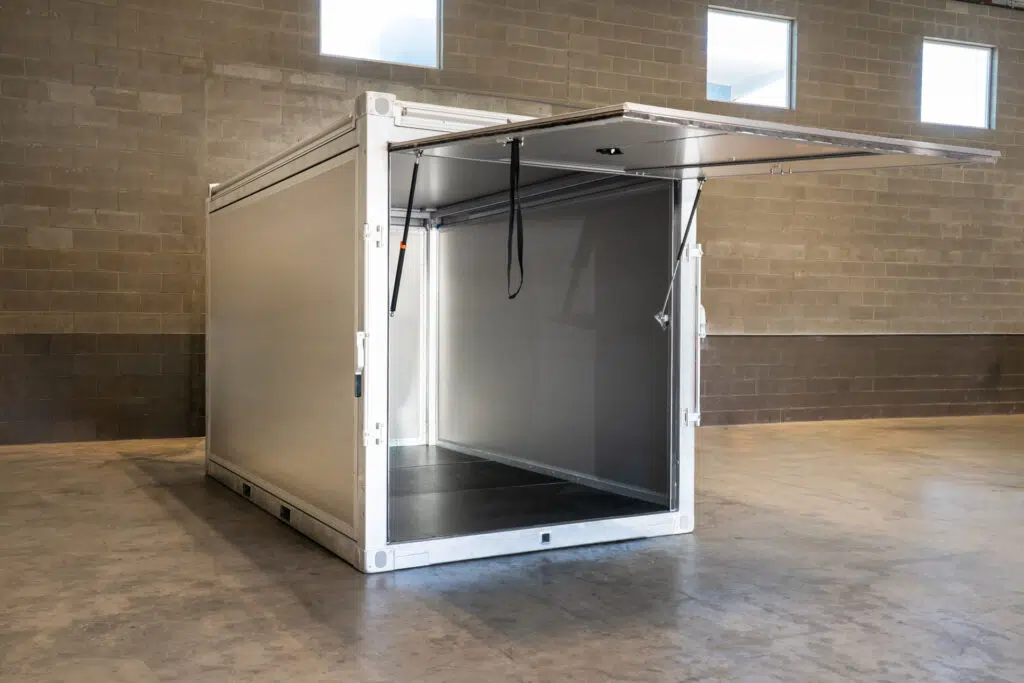
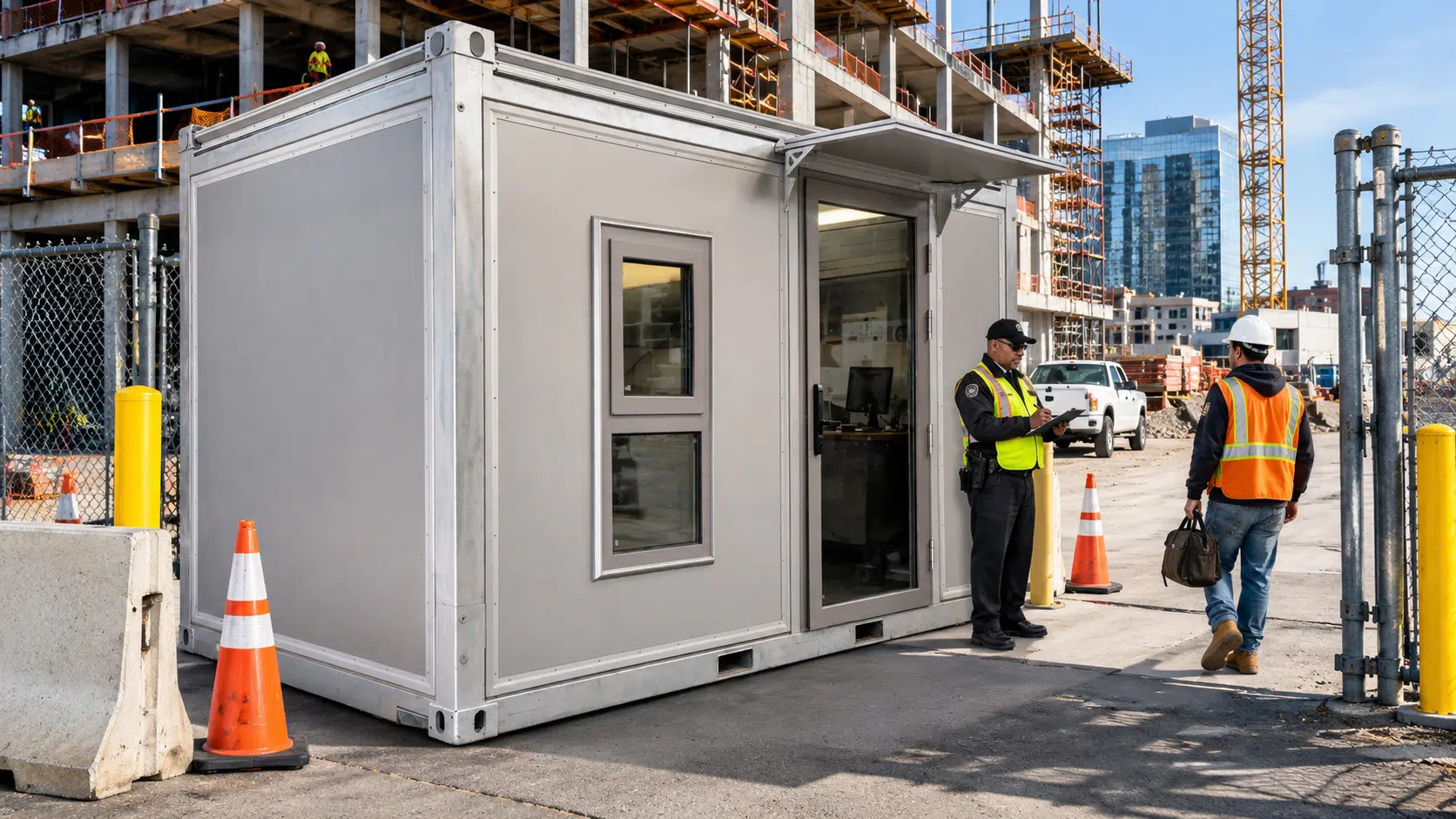
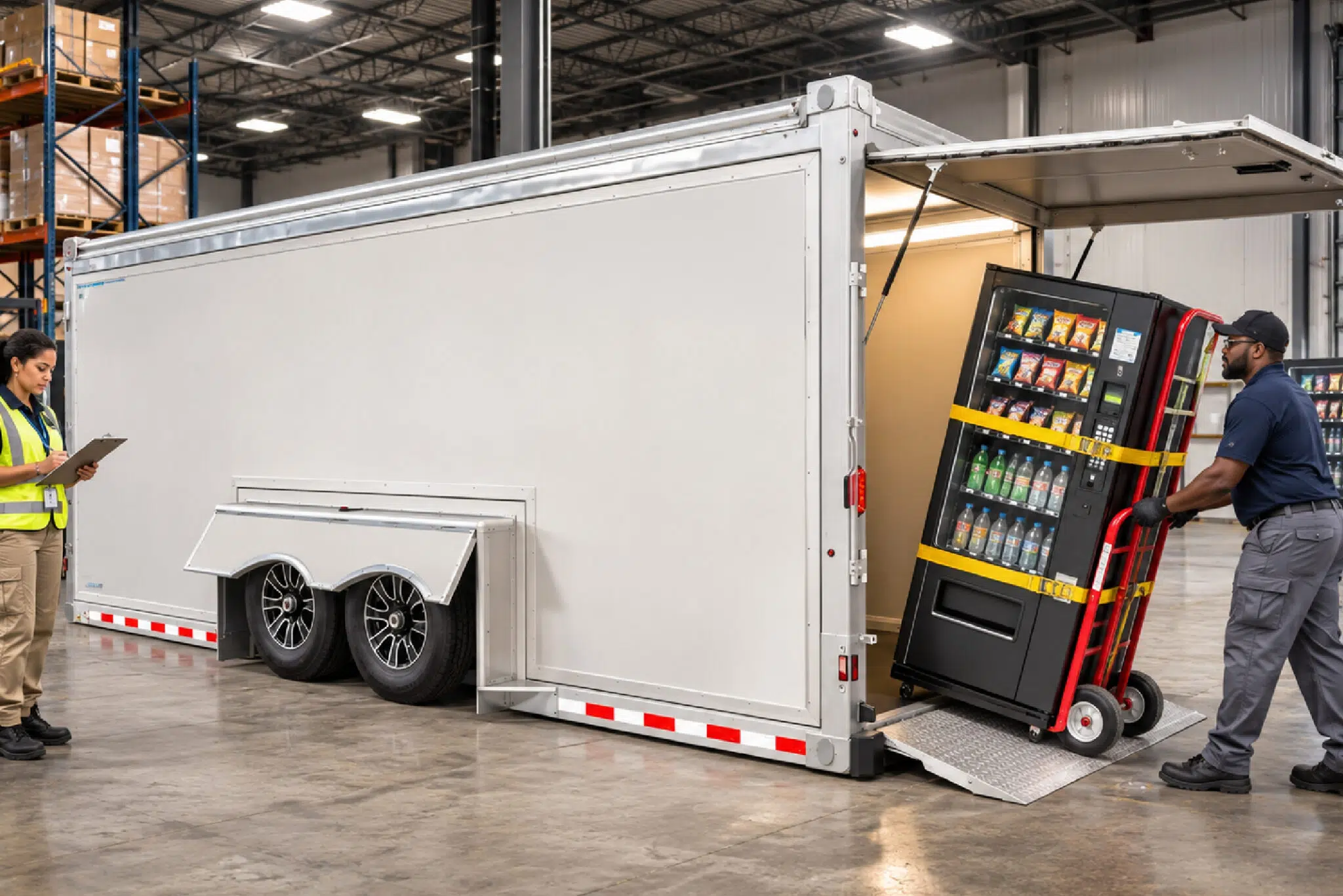
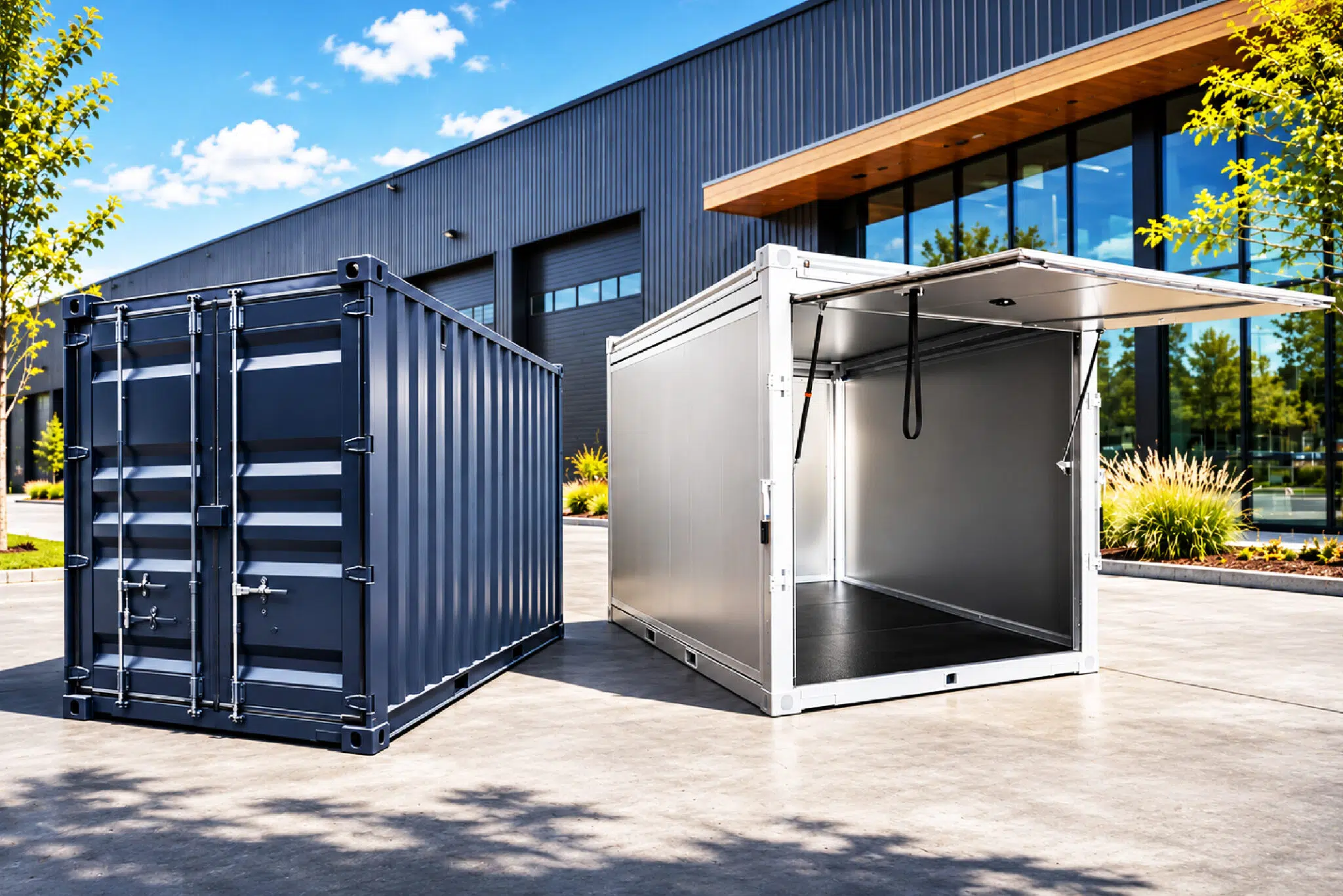
GoodMFG® modular storage is designed for that kind of role. Our storage modules are insulated and lockable, with 13- and 19-foot standard and high-cube configurations available. Options such as shelving, a man door, lift panel, windows, and mini-split HVAC let you adapt compatible units around the inventory and access pattern.
The business case is not simply “more storage.”
It is keeping appropriate inventory close enough to use while moving it out of the space where your primary operation needs to work.
When Off-Site Warehousing is the Smarter Choice
On-site inventory overflow storage is not automatically the right solution just because you have room for a module.
If you need hundreds of pallet positions for a short seasonal build and the stock will sit largely untouched, an overflow warehouse may be much more efficient. The same is true when your property cannot reasonably accommodate the required capacity or when the inventory needs warehouse services or environmental controls your site cannot provide.
Short-term overflow warehouses are built around this exact problem: inventory temporarily exceeds the capacity of the primary facility, so reserve stock moves elsewhere until demand, production, or shipping catches up.
When comparing off-site options, look beyond the quoted storage rate. Ask about receiving, putaway, minimum commitments, case- or pallet-level access, picking, outbound handling, billing periods, and the cost of moving inventory between facilities. This guide to short-term overflow warehousing provides a useful overview of the questions to settle before the first pallet arrives.
If the inventory can sit until you need a large quantity back, distance may not create much inconvenience. That is a different problem from stock employees need several times a day.
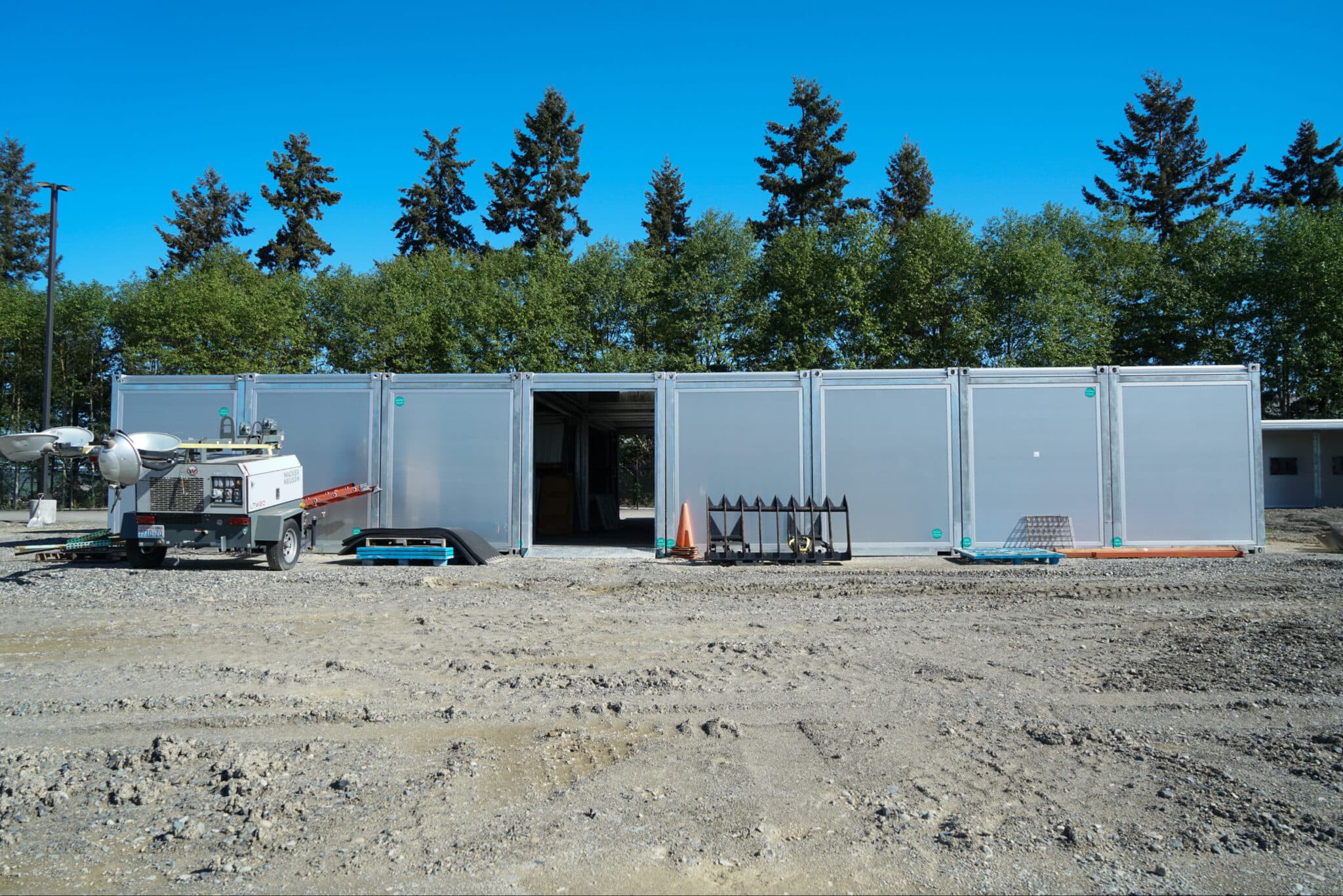
If you need off-site warehousing on a regular basis and have a piece of land you can use, you may stack and link our portable storage buildings to create larger warehouse complexes.
When a 3PL Makes More Sense Than Storage Alone
Sometimes inventory overflow storage is not really the service you need.
If the stock needs to be received, entered into a warehouse system, picked, packed, and shipped directly to customers, you are looking for logistics capability as well as square footage. A third-party logistics provider can make more sense because the inventory can flow through that facility instead of repeatedly returning to yours.
That distinction matters.
A modular storage building can keep inventory close to your team. It does not replace warehouse labor, order fulfillment, freight coordination, or a warehouse-management system. If those are the problems you need solved, choose a partner built to solve them.
If your main business headache is “we need this inventory out of the active warehouse and still close enough to reach,” however, on-site inventory overflow storage does deserve a closer look.
How Often Will You Need the Inventory?
You should match the storage location to frequency of access.
| If the overflow inventory… | Start by considering… |
|---|---|
| Is needed frequently by production, maintenance, or warehouse staff… | On-site inventory overflow storage. |
| Replenishes active inventory throughout the week… | On-site inventory overflow storage |
| Is a moderate volume your property can reasonably accommodate… | On-site inventory overflow storage |
| Will remain mostly untouched for weeks or months… | Off-site overflow warehousing |
| Requires hundreds of pallet positions beyond practical on-site capacity… | Off-site overflow warehousing |
| Needs receiving, picking, packing, & direct fulfillment… | A 3PL |
| Requires tightly controlled temperatures, humidity, or regulated storage… | A facility or configuration specifically designed for those requirements |
| Is obsolete or no longer economically useful… | Disposition before adding more storage |
These are starting points for your analysis rather than hard rules. The important distinction is whether proximity creates meaningful operating value.
When every retrieval becomes a truck trip, low storage rates can become less attractive. When nobody needs the stock for two months, paying to keep it five steps from the loading dock may not buy you much.
Protect Working Space While Protecting Storage Capacity
Inventory overflow storage should improve the operation around the inventory.
A warehouse can technically contain more stock while becoming worse at receiving, picking, replenishment, or material movement. Temporary pallets have a habit of turning into permanent obstacles when nobody gives them a proper home.
That is one reason to separate reserve inventory from active working inventory.
Items employees touch constantly belong where they support the shortest, cleanest workflow. Items that need to stay close but do not need premium warehouse locations may be candidates for on-site inventory overflow storage. Slow-moving reserve stock may belong off site.
The goal is to give your primary building enough to do its primary job.
This is also why seasonal and supply chain surges are worth planning for before the aisle starts looking like available real estate. If the same peak happens every year, you no longer have a surprise. You have a recurring capacity requirement, instead.
Renting Inventory Overflow Storage Can Make Sense for a Temporary Spike
Not every overflow problem justifies buying another structure.
If the need is tied to one unusually large shipment, a renovation, a short seasonal build, or a temporary disruption, renting inventory overflow storage may give you the nearby capacity you need without turning a short-term problem into a long-term asset decision.
Good Sales & Rentals offers modular storage rentals for businesses. It operates right here in Marysville, WA. Working with this dealership or any other authorized dealership offering rental units can be useful when the requirement has a clear end date or you want to solve the immediate space problem before deciding whether the pattern will repeat.
Renting can also offer a useful reality check. If the same inventory overflow storage needs return every quarter or every busy season, ownership deserves a closer financial look.
But the reverse is also true. If you buy space for a one-time surge and it sits empty afterward, the permanent solution may cost more than the temporary problem requires.
Recurring Overflow May Support an Ownership Decision
A repeated inventory problem deserves a different calculation from a one-time spike.
If seasonal inventory arrives every year, production routinely needs reserve material outside the main floor, or growth has created a continuing need for nearby capacity, owning inventory overflow storage can turn a recurring rental or warehousing requirement into a space you control.
This doesn’t automatically make ownership cheaper. Compare the actual costs.
For off-site warehousing, look at more than the monthly storage rate. Include transportation, receiving, putaway, handling, retrieval, minimums, and other service charges.
For on-site inventory overflow storage, consider the structure, delivery and placement, available property, site requirements, maintenance, utilities where needed, and how long you expect to use the space.
Then consider the operating cost of access. If an employee needs a component today, what has to happen before that item reaches the work area?
The right comparison includes both the cost of storing inventory and the cost of getting it back into operation.
Keep Inventory Control Intact When Stock Moves Outside the Main Warehouse
Adding inventory overflow storage creates another physical location. Treat it like one.
Give the location a clear name or code in your inventory process. Identify what belongs there. Record transfers in and out. Make frequently needed stock easy to locate instead of turning the module into the place where miscellaneous things disappear.
The exact system depends on the business. A company using a warehouse-management system may create formal locations or bins. A smaller operation may use a simpler inventory platform. Either way, the principle is the same: inventory should remain visible after it leaves its normal shelf.
This matters for off-site storage too. A second warehouse does not solve much if nobody can confidently answer what is there.
Good inventory overflow storage creates capacity without creating mystery inventory.
Check What the Inventory Requires Before Choosing the Building
Not every product belongs in a general storage environment.
GoodMFG® storage modules use insulated composite aluminum panels. The insulation helps moderate interior temperature swings and reduce the risk of condensation, but insulation alone does not maintain a specific temperature or humidity.
Inventory with defined environmental, regulatory, fire-protection, security, or humidity requirements needs to be checked against the actual storage configuration and site requirements before use.
Do not assume that “indoors” automatically means “appropriate.”
For ordinary equipment, packaged goods, supplies, parts, and other compatible inventory, the combination of insulation, lockable access, and configurable interior space can make on-site inventory overflow storage useful. Specialized materials may need a specialized facility.
Inventory Overflow Storage Scenarios
Seasonal Retail Inventory
A retailer receives holiday inventory several weeks before it will reach the sales floor.
Employees will replenish from it regularly as the season progresses.
On-site inventory overflow storage may make sense because the stock stays close enough for routine replenishment without consuming active back-room or warehouse locations.
If several truckloads will remain palletized and untouched until specific release dates, off-site overflow warehousing may be the cleaner option.
Manufacturing Components Arrive Early
A supplier ships components ahead of schedule. Production will need them gradually over the next six weeks.
Keeping the material nearby can reduce repeated transfers between facilities. If the inventory is compatible with the storage environment and the property can support the unit, on-site inventory overflow storage may provide useful buffer capacity beside the operation.
Finished Goods Are Waiting for an Outbound Window
Finished goods are complete, but a customer has delayed delivery.
If employees do not need regular access and the volume is large, off-site warehousing can be a strong answer.
If smaller quantities need to remain close for staggered releases, an on-site module may be more convenient.
A One-Time Facility Renovation
Finished goods are complete, but a customer has delayed delivery.
If employees do not need regular access and the volume is large, off-site warehousing can be a strong answer.
If smaller quantities need to remain close for staggered releases, an on-site module may be more convenient.
FAQ
Are GoodMFG®’s modular structures only for short-term use?
No.
They can solve temporary space problems, but they are designed as reusable structures rather than as disposable temporary shelteres.
Compatible units can be linked, stacked, reconfigured, or relocated in suitable configurations, allowing the same structures to serve different needs over time.
Can I relocate a modular structure after I no longer need it at the original location?
Yes, with the proper lifting and transportation equipment.
Do Good Modular Structures by GoodMFG® require permits?
It depends. Check your local laws and ordinances. The location, intended use, configuration, utilities, and installation can all matter.
What is inventory overflow storage?
Inventory overflow storage is additional space used when inventory temporarily or permanently exceeds the practical capacity of the primary warehouse, stockroom, production facility, or retail location.
It can be located on site in a modular storage unit, in a separate warehouse, or with a third-party logistics provider. The right option depends on volume, duration, access frequency, handling requirements, and the services the inventory needs.
When should overflow inventory remain on-site?
On-site inventory overflow storage makes the most sense when the stock needs regular access, supports nearby production or operations, and can be accommodated safely and practically on the existing property.
It is less compelling when the inventory will sit untouched, requires far more capacity than the property can support, or needs specialized warehouse services.
Should I rent or buy modular storage for overflow inventory?
Renting can make sense for a short, unusual, or uncertain need. Buying can deserve a closer look when inventory overflow storage becomes a recurring seasonal requirement or a continuing part of the operation.
Compare the complete costs and expected duration rather than assuming one approach is always cheaper.
Can I use a GoodMFG® modular storage unit for temperature-sensitive inventory?
Our storage modules are insulated. This helps buffer the inventory against moderate temperature swings.
If the inventory requires a defined temperature, humidity, regulatory, or environmental range, confirm that the selected configuration and site can meet those requirements before storing it.
Key Takeaways
Here’s the TL;DR when it comes to solving overflow inventory problems.
- Inventory overflow storage should protect working capacity, not simply create another place to put things.
- On-site storage makes the strongest case when employees need frequent access to reserve inventory, components, supplies, or other compatible goods.
- Off-site overflow warehousing can be smarter for large volumes of low-touch inventory.
- A 3PL becomes more valuable when you need logistics and fulfillment services in addition to storage.
- Rental inventory overflow storage can fit one-time or short-term surges; recurring needs may justify evaluating ownership.
- GoodMFG® storage modules are insulated and configurable, but inventory with defined environmental or regulatory requirements needs a configuration specifically suited to those requirements.
- Wherever overflow inventory goes, keep it visible in your inventory-control process.
Keep Inventory Close When as the Work Requires
Inventory overflow storage works best when the location matches the way the inventory moves.
If your reserve stock needs to stay connected to the people using it, GoodMFG® modular storage gives you an on-site option in 13- and 19-foot standard and high cube configurations. We can help you think through access, storage requirements, and available options.
Ready to start the conversation? Find your nearest dealer or contact us for options today!
Loading form…
This resource was compiled by the GoodMFG® Product Team, drawing on 75 years of combined experience in hydraulic systems, heavy-duty transport, trailers, and modular structures.
P.S. – We build modular structures every day, but we don’t run your operation. If there’s a specific logistical headache or a “field reality” we’ve missed, we want to hear about it. Help us refine the equipment that makes your day easier! Email our Marketing Lead at devan-h @ goodrv.com and let us know what we should solve next.