When comparing: modular office vs. office trailer, the right choice usually comes down to one pragmatic question.
How often will you need to move your workspace?
Both can give your team a dedicated place to work near the job. Both can support lighting, power, climate-control options, storage, and other practical add-ons. But they handle relocation differently, and that difference can matter every time a project moves.
Nobody wants to discover they acquired the wrong kind of portable workspace.
At GoodMFG®, we build both modular office buildings and the GT19HD-O office trailer.
This lets us treat the modular office vs. office trailer question as a fit decision. Our priority is helping you find the solution that works best for you.
Table of Contents
Modular Office vs. Office Trailer: The Basic Difference
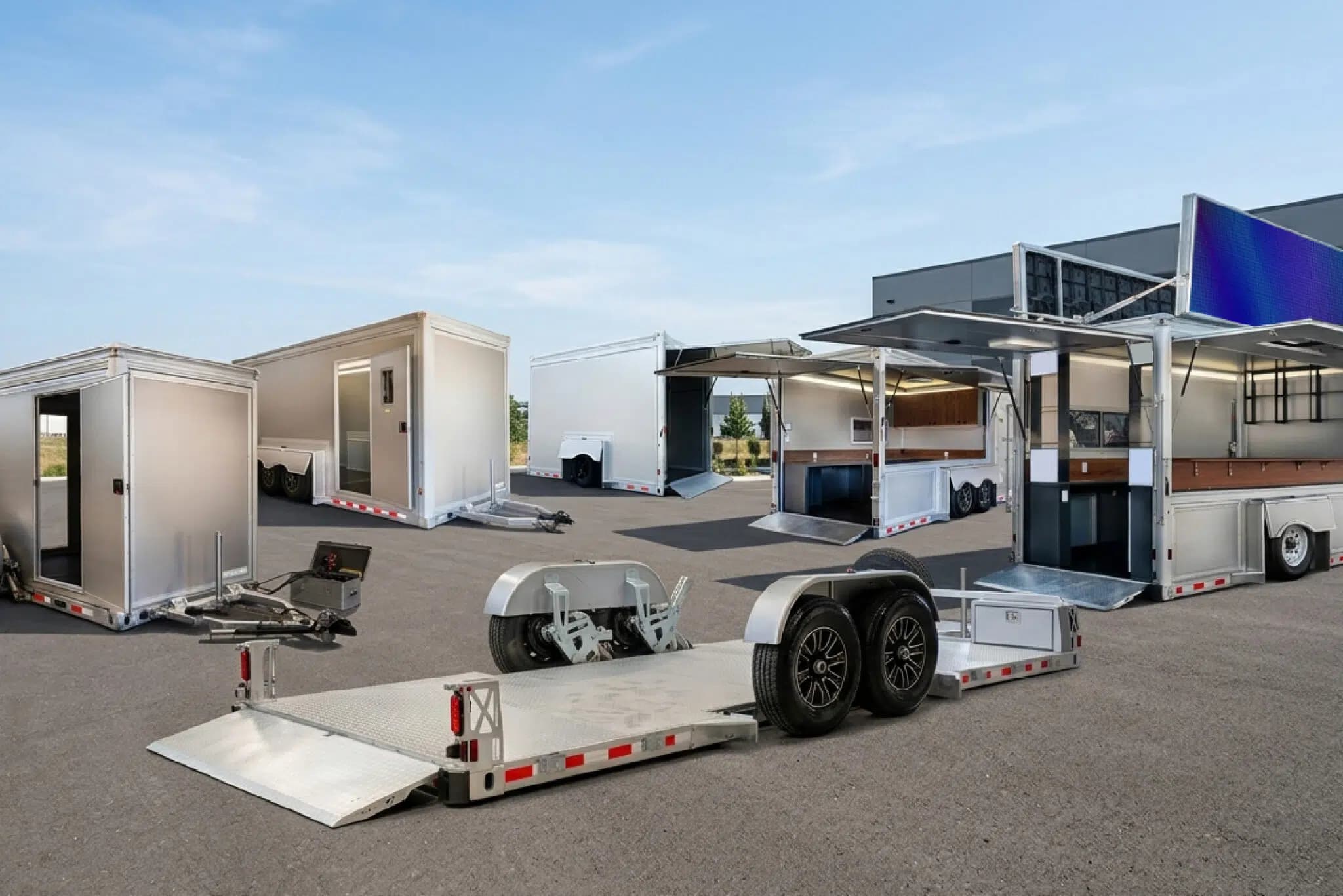
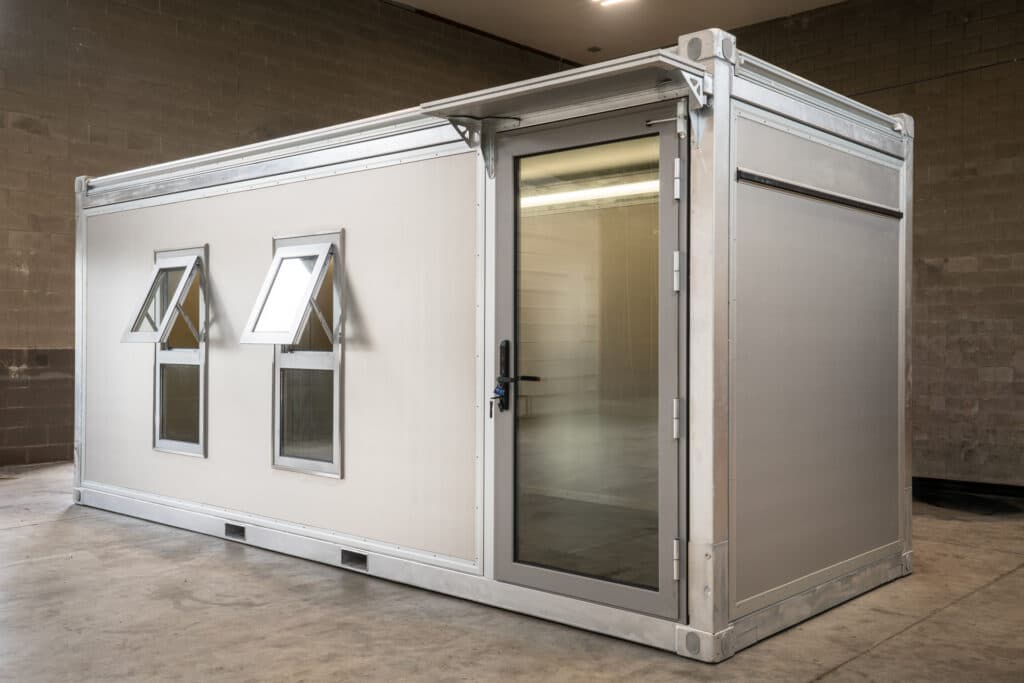
A modular office building is a stand alone, factory-built workspace transported to the site and placed where you need it. GoodMFG® offers 13- and 19-foot modular office buildings with interior lighting and floor mounted electrical outlets both included. You’ll bring your own workspace into these.
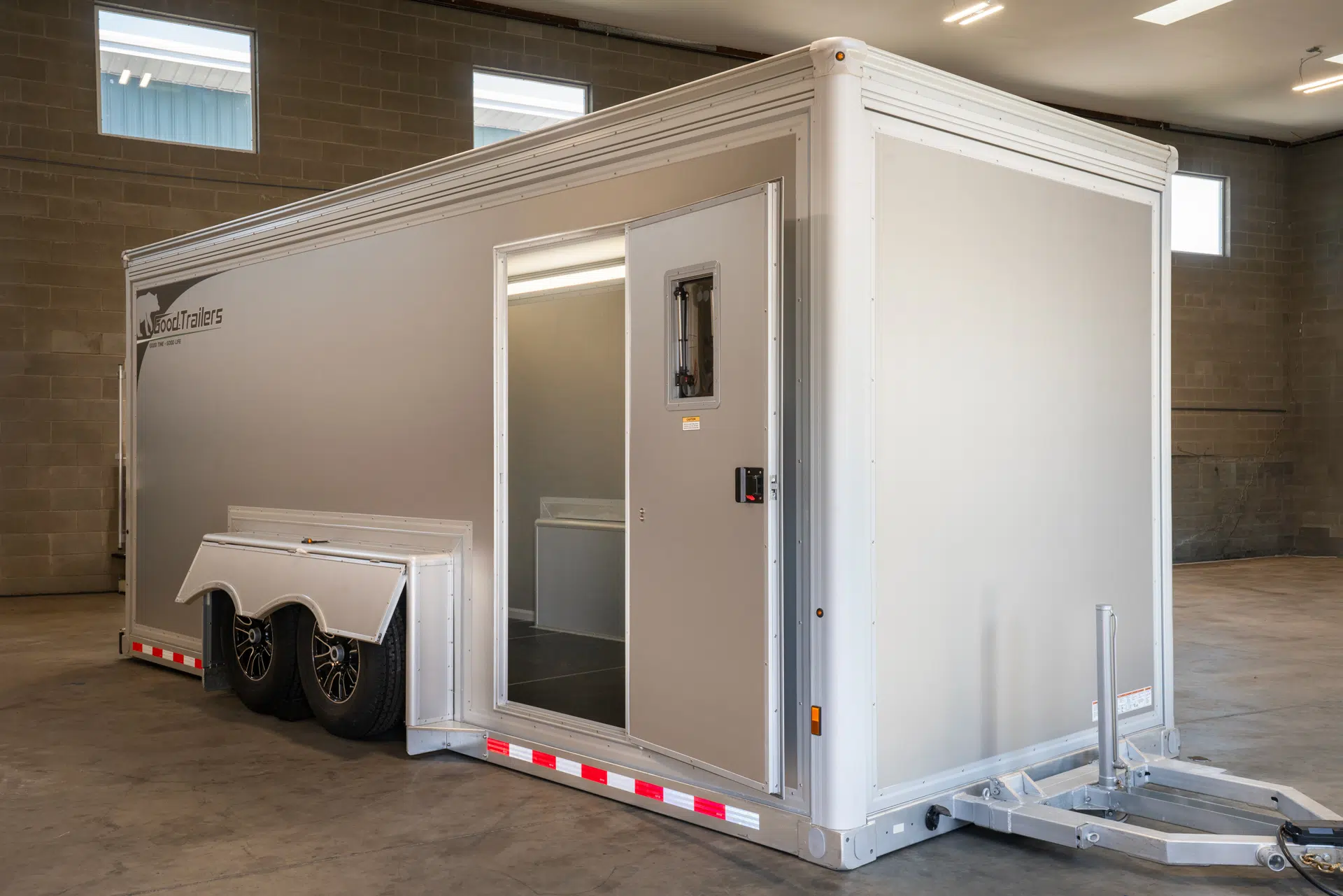
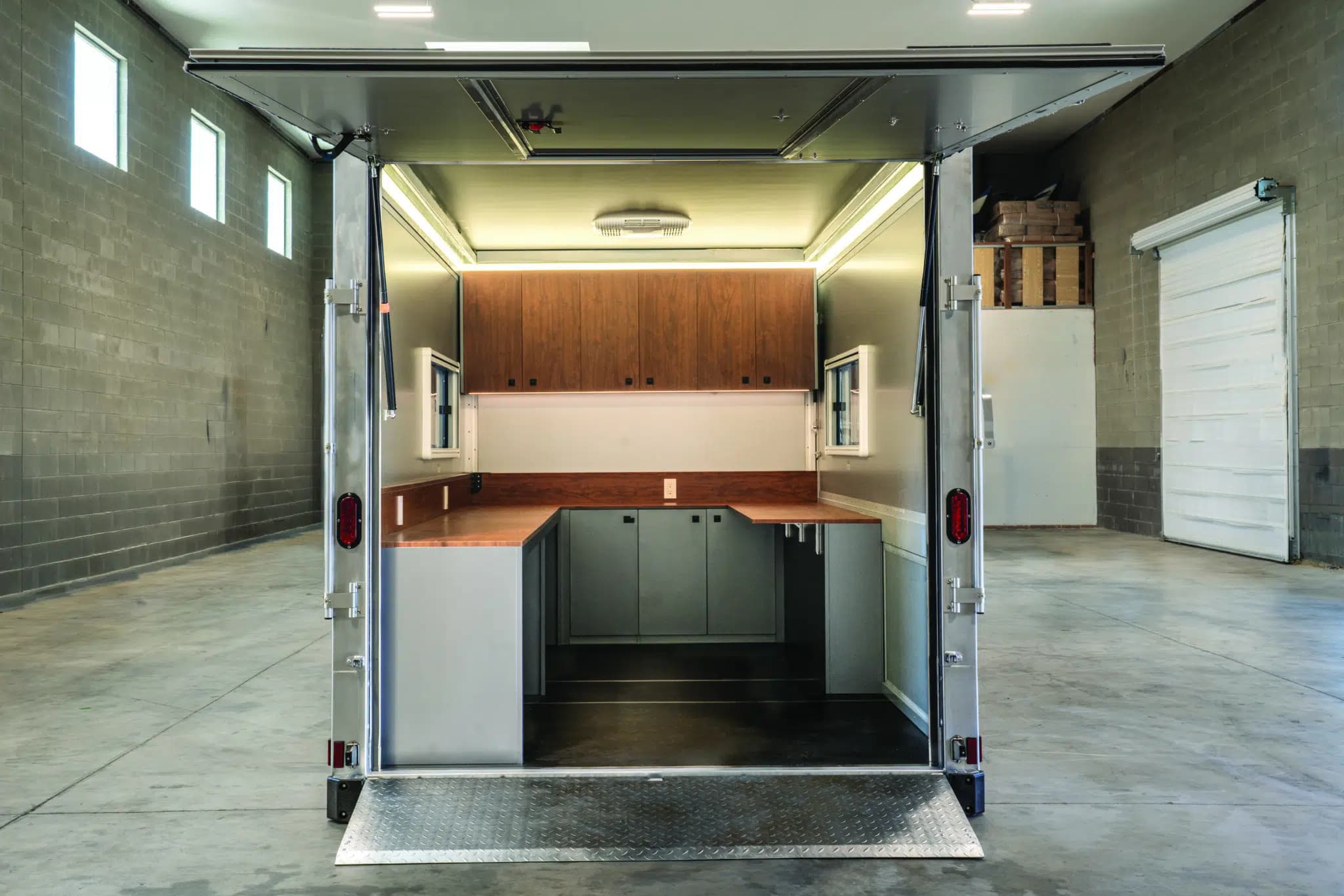
An office trailer is a workspace built on a road-going trailer chassis. The GoodMFG® GT19HD-O is a 19-foot enclosed hydraulic drop deck trailer configured as an office. It travels as a trailer, then lowers for use at the site. In addition, the workstation is built right in. The outlets are mounted along the walls instead of in the floor. A bathroom is optional.
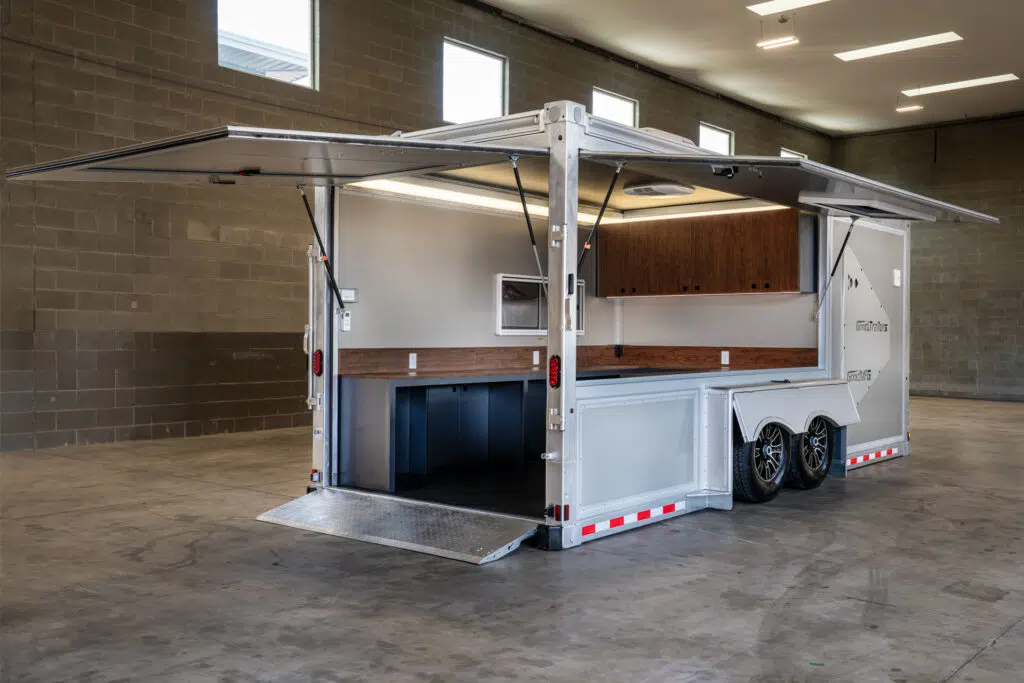
An office trailer is a workspace built on a road-going trailer chassis. The GoodMFG® GT19HD-O is a 19-foot enclosed hydraulic drop deck trailer configured as an office. It travels as a trailer, then lowers for use at the site.
That basic distinction drives most of the modular office vs office trailer decision.
| Question | Modular Office | Office Trailer |
|---|---|---|
| How does it move? | Transported and placed as a standalone module. | Towed as a trailer with an appropriately rated tow vehicle. |
| Best fit when… | The office will stay in one location for longer stretches or become part of a modular layout. | The same office needs to move between jobs more frequently. |
| Workspace options | 13- or 19-foot configurations; compatible units can be incorporated into larger layouts. | One 19-foot office trailer that travel as a complete unit. |
| Entry | Ground-level workspace after placement. | Hydraulic drop deck lowers the trailer closer to the ground. |
| Restroom | Specialized requirements should be planned with GoodMFG®. | Optional onboard restroom. |
The modular office vs. office trailer comparison is less about which one is “more portable” than what has to happen each time you relocate it. That is the practical test that keeps the modular office vs. office trailer choice grounded in your actual workflow.
Choose an Office Trailer When the Office Needs to Follow the Work
If your team regularly changes jobsites or operating locations, moving the office can become part of the routine.
This is where an office trailer earns its keep.
The GT19HD-O stays on its own trailer chassis. Moving it still requires a suitably rated tow vehicle, proper towing setup, a safe route, and the appropriate operating conditions, but the office itself is already designed to travel as a trailer.
If your office changes sites once a month or even more frequently, do not make every move a bigger production than it needs to be. Sometimes the smartest office feature really is the hitch.
Once you’re on site, you can use the hydraulic drop deck system to lower the trailer to the ground. The deck sits at just 5.4″ inches and a short ramp lets you walk into and out of the trailer with ease.
Choose a Modular Office When the Workspace Will Stay Put Longer
Need an office to sit beside a warehouse, plant, equipment yard, construction project, or other facility for months at a time?
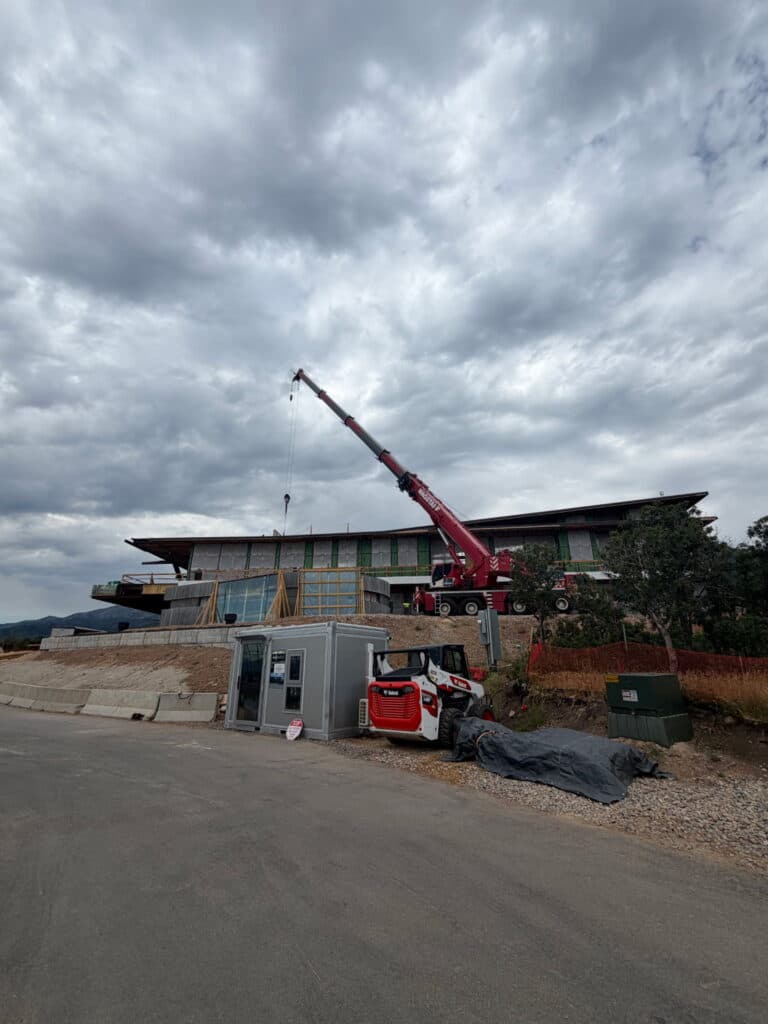
If so, the way that the office functions on a day-to-day basis will probably matter more than raw portability.
GoodMFG®’s modular office buildings come in 13- and 19-foot configurations. The 13-foot model is designed around a dedicated single workstation. The 19-foot model provides room for up to two.
Both include interior lighting and floor-mounted outlets. Depending on the configuration, available options include shelving, cabinets, mini-split HVAC, lift panels, sinks, and other additions.
A modular office can also become part of a larger modular plan. Compatible structures from our line-up may be linked, stacked, reconfigured, or relocated in suitable arrangements as needs change. If you are still working out what kinds of modules belong in that larger plan, our Modular Structure Buyers Guide can help.
Think About Next Move, Not Just First Delivery
Installation day is only the beginning.
Imagine your project office needs to serve one construction site for 18 months and then move to another long-term project. A modular office can still make sense. You simply plan transportation and placement again when that move happens.
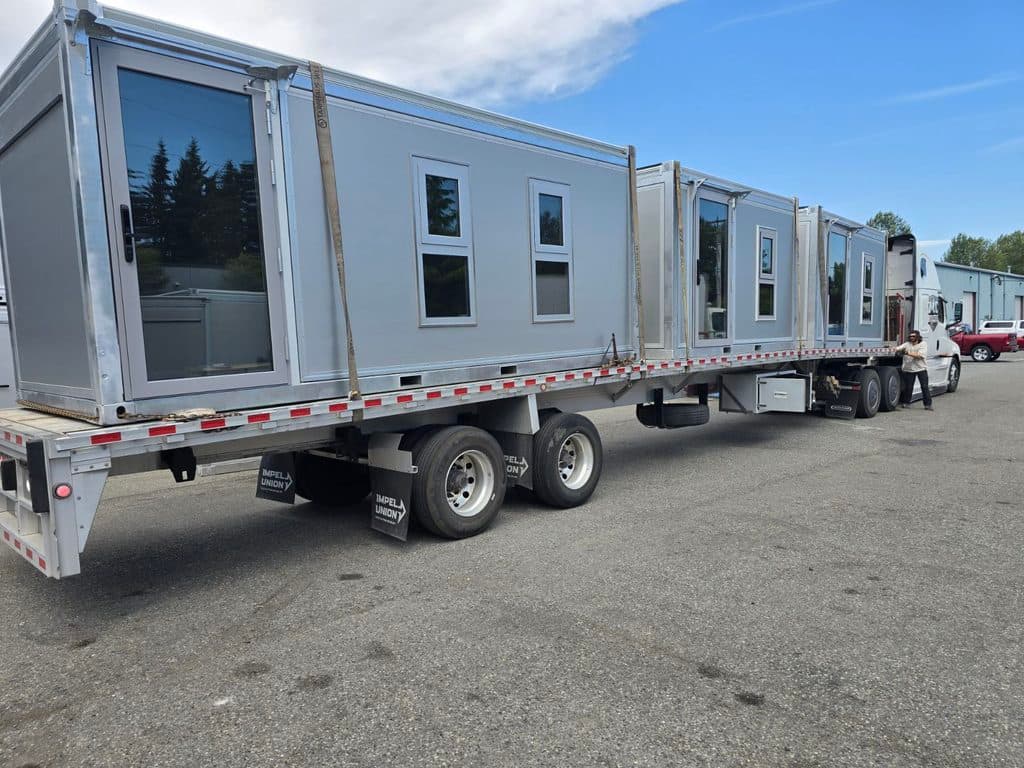
Now suppose a field team wants the same office at several locations each month. Repeated moves change the modular office vs. office trailer equation. A trailer starts solving a logistical problem that a standalone module handles differently.
Before choosing, use the following checklist to think through your options.
- How frequently will the office change locations?
- Who will be responsible for moving it?
- Do you have a forklift and a suitable transport vehicle to move a modular office, or have you found a company that does?
- Do you have a suitable tow vehicle for an office trailer?
- Will the office eventually need to become part of a larger layout?
- Does an onboard restroom matter?
- Which power, connectivity, and storage features need to move with the workspace?
A good modular office vs. office trailer comparison is about your actual workflow.
Compare Workspaces
Mobility matters, but it’s not the whole decision.
A portable office that’s easy to relocate but is unpleasant or impractical to use is still the wrong office.
When you compare a modular office vs. an office trailer, think about the work that happens inside. How many people will use it regularly? What about monitors, printers, radios, plan sets, PPE, paperwork, or storage?
For a dedicated one-person workspace, the 13-foot modular office may be enough. If you need two regular workspaces, the 19-foot modular office gives you more room to plan around them.

What About Setup and Site Requirements?
For a modular office, plan for:
- Delivery access
- A suitable flat location
- Power requirements
- And any approvals or permits that apply to the site and intended use.
For an office trailer, plan:
- Room to position the trailer
- Suitable towing equipment
- Power or utility arrangements
- A flat, clear place to engage the hydraulic drop deck system
Ask your rep about power options.
Local requirements vary, so confirm site, utility, and approval requirements for the actual location rather than assuming a portable structure or trailer automatically avoids them.
A good modular office vs. office trailer decision should reduce logical headaches, not relocate them.
A Few Common Scenarios
Project Manager, On-Site, One Year
Start with the modular office. You can configure a dedicated workspace around the people using it, then arrange transport again when the project ends.
Service Team, Moving Between Active Sites
The office trailer deserves serious consideration. If the office follows the crew, keeping the workspace on a towable chassis removes separate transport and placement steps from every move.
Facility, Needs More Office Space
A modular office gives you a starting point that can potentially become part of a larger compatible layout. Depending on local regulations and permitting needs, you may place one inside or outside the building.
Multiple Sites, No Restroom
The GT19HD-O’s optional onboard restroom can be a godsend when you’re in low-infrastructure areas without a restroom in sight.
FAQ
Is a modular office actually portable?
Yes, every modular office may be picked up and relocated at need, so long as you have the proper transport vehicle and a forklift to move them.
Does the GoodMFG® office trailer require stairs?
Nope! The GT19HD-O uses a hydraulic drop deck system rather than remaining at normal trailer deck heights during use. You bring it down until the chassis is on the ground and the deck sits at 5.4″. Drop the spring-assisted short, low-angle ramp to clear the additional inches, and you’re good to go.
Key Takeaways
- The modular office vs. office trailer decision is mainly about how the workspace will move and change over time.
- GoodMFG® modular offices are standalone 13- and 19-foot workspaces with lighting and floor outlets included.
- The GT19HD-O is a towable 19-foot office trailer with a hydraulic drop deck, workstation, lighting, outlets, and available restroom and HVAC options.
- Frequent site-to-site moves tend to strengthen the case for an office trailer.
- Longer placements and future modular reconfiguration can strengthen the case for a modular office.
- Choose by considering how your team actually works, not around which product sounds more portable.
Find the Office that Fits the Way You Work
Ready to choose? Still not sure which is better for your needs?
Find your nearest GoodMFG® dealer or contact our team. Tell us how often the office needs to move, how many people will use it, and what needs to happen inside. We can help you compare the options around the job instead of forcing the job around the product.
This resource was compiled by the GoodMFG® Product Team, drawing on 75 years of combined experience in hydraulic systems, heavy-duty transport, trailers, and modular structures.
P.S. – We build trailers every day, but we don’t run your crews. If there’s a specific logistical headache or a “field reality” we’ve missed, we want to hear about it. Help us refine the equipment that makes your day easier! Email our Marketing Lead at devan-h @ goodrv.com and let us know what we should solve next.