Thanks to our NATM membership, GoodMFG is an Official Trailer Safety Week Ally. As a result, we’re here to help spread the word about trailer safety—and to provide you with the resources you need to stay safe on the road.
We’re also offering resources specific to our unique hydraulic trailers.
National Trailer Safety Week runs from June 1 to June 7, 2025.
Table of Contents
- Why Celebrate National Trailer Safety Week?
- Hydraulic Drop Deck Safety
- Check Before Every Tow
- Safe Loading
- Additional Towing Tips
- Got Questions?
Why Celebrate?
The National Association of Trailer Manufacturers (NATM) reports end users often lack crucial knowledge about proper trailer usage. We’ve all been taught how important it is to know a car’s safety features but sometimes overlook similar safety considerations on our trailers—even if we’re longtime trailer enthusiasts.
GoodMFG® is dedicated to offering vital information on:
- Towing techniques
- Loading practices
- Maintenance Guidelines
- Cargo securement practices
- Safe hitching
Do you want to support the cause of trailer safety? It’s easy! Share www.TrailerSafetyWeek.com with your network so they can access crucial trailer safety information. Or pass along a few of our own tips.
A focus on trailer safety can help save lives!
For more information you can visit www.NATM.com or www.TrailerSafetyWeek.com. You can also contact [email protected].
Hydraulic Drop Deck Safety
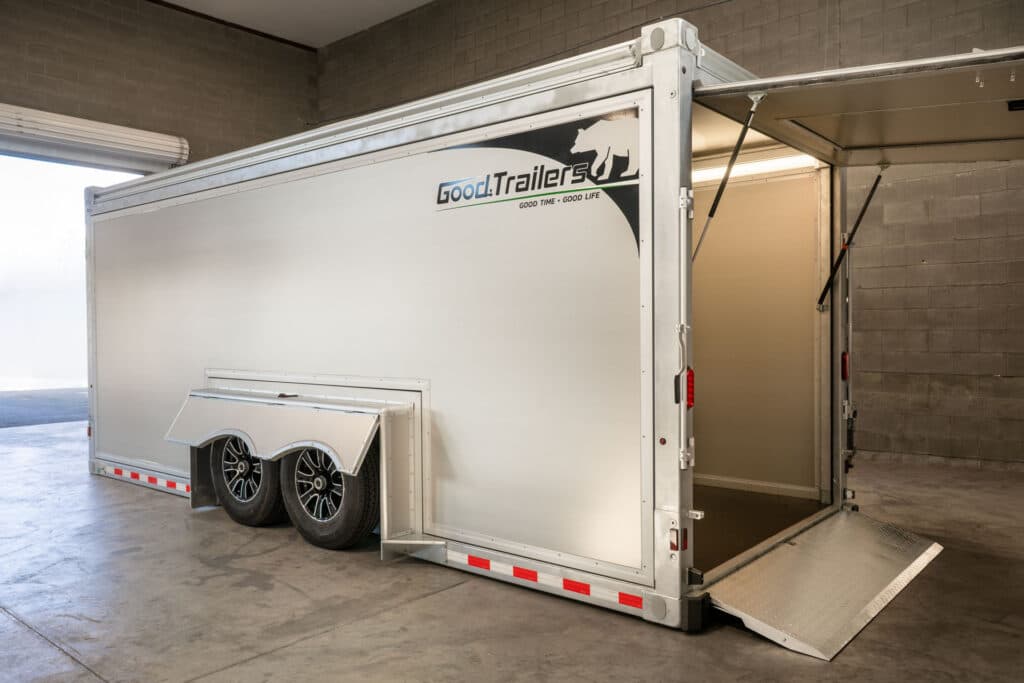
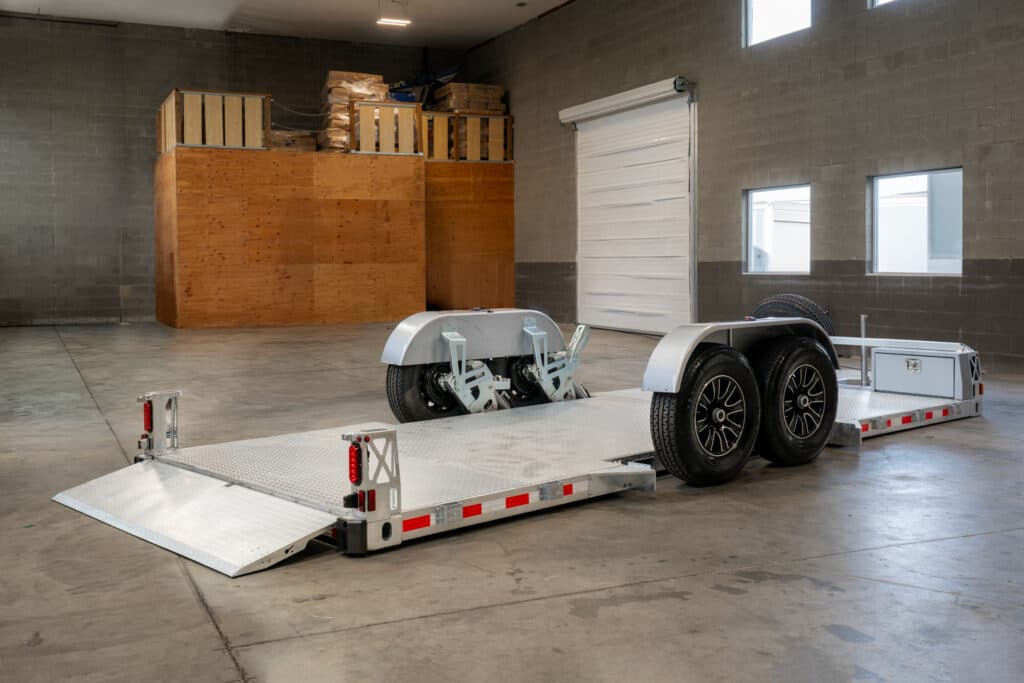
Our trailers are unique. They feature our innovative Hydraulic Drop Deck system, which comes with its own safety concerns. Before operating your own hydraulic drop deck system, take the following safety steps.
- Park on a safe, level surface.
- Add wheel chocks to keep the trailer secure.
- Check around the trailer, and underneath. Your trailer should be free from obstructions.
- Secure all chains and cords.
- Uncouple the trailer from the towing vehicle.
- Pull the towing vehicle clear with the trailer.
- Raise or lower slowly, a little at a time, always maintaining the center of gravity. Move it a little, adjust, and move a little more. Switch sides at need.
In addition, you should review your appropriate Hydraulic Owner’s Manual (3T for single axle trailers, 5T for double axle trailers) for additional care and maintenance information related specifically to your hydraulic system.
Check Before Every Tow
We know life gets busy. It’s easy to overlook routine tasks.
Nevertheless, taking these actions prior to every tow can keep you safer.
- Check your fire extinguisher to make sure it’s in good working condition.
- Check your supply of flares and reflectors.
- Check your tire pressure while your tires are still cold. You can locate the proper tire pressure on your VIN label.
- Check your tires for wear and tear.
- Make sure your wheels are in good condition.
- Make sure your lug nuts are tight and properly torqued. Consult your owners’ manual for the correct torque.
- Ensure the coupler is secured and locked.
- Secure pins for the fold-up tongue.
- Attach your tow chains to the vehicle. Never rig them to the hitch or the ball.
- Make sure your safety breakaway switch cable is fastened to the tow vehicle, not to the safety chains.
- Make sure your cargo is properly loaded, balanced, and tied down.
- Latch and secure all doors and gates.
- Make sure your hydraulic suspension is in the fully lifted position.
- Stow your hydraulic remote control in a safe place.
- Test your tail, stop, and turn lights.
- Test your trailer brakes.
- Retract the tongue and stabilizer brakes.
- Test your breakaway brakes (see your owners’ manual).
These steps can be quick and easy, and if you take the time to do them before every tow, you can feel confident knowing you’re going to be in great shape on the road.
Safe Loading
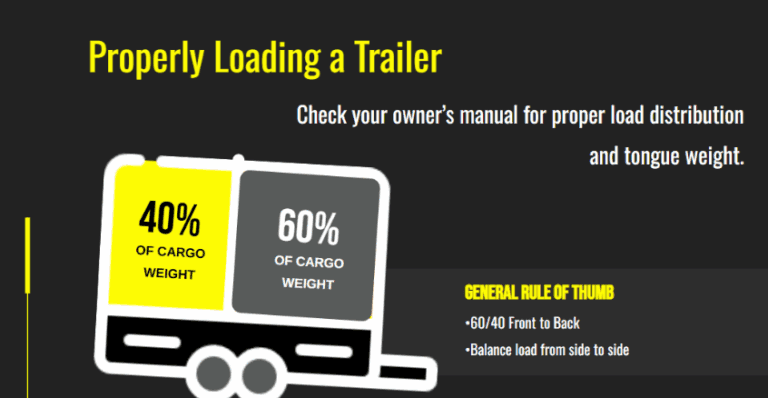
Follow these safe loading tips to make sure your cargo never causes an accident.
- The GVWR=Total weight of the load + empty weight of the trailer. Neither may exceed the GVWR rating on your trailer.
- When in doubt, weigh your trailer on a commercial scale.
- If your trailer is swaying too much, you may have a load problem. Stop and check.
- Use tie-downs that have been rating for the cargo they’re securing.
- Use one tie-down for every ten feet of cargo.
- Secure tie-downs lower on the trailer.
- Stop and inspect your cargo every 50 miles.
- Always remember you’re securing cargo in the event of sudden stops and trailer sway, not just during normal driving conditions.
What you haul matters too. Never transport cargo that is:
- Flammable
- Explosive
- Poisonous
- Or otherwise dangerous
Additional Towing Tips
- Safe towing starts with the right vehicle. Make sure it has enough towing capacity to match the trailer’s GVWR rating.
- Slow down! Many states have set their tow vehicle speed limit at 55 mph.
- Remember you need extra room to stop.
- Remember your turn radius will be wider than you’re used to.
- Remember the tow vehicle will move in the opposite direction from the tow vehicle when you’re backing up.
- Avoid driving nails or screws into the side of the trailer, as you can weaken the structural integrity.
Questions
The team at GoodMFG is always happy to answer trailer safety questions. Call or email us to get personalized support!
See also:
5 Signs Your Trailer Needs Repair
4 Ways the Good Trailer Foldable Tow Bar Will Improve Jobsite Safety
This resource was compiled by the GoodMFG® Product Team, drawing on 75 years of experience in hydraulic systems, heavy-duty transport, trailers, and modular structures.
P.S. – We build trailers every day, but we don’t run your crews. If there’s a specific logistical headache or a “field reality” we’ve missed, we want to hear about it. Help us refine the equipment that makes your day easier! Email our Marketing Lead at [email protected] and let us know what we should solve next.