Ever had a heavy inverter show up “dead on arrival” at a data center or remote solar farm? When you’re moving equipment that expensive, a bad haul doesn’t just mean a scratched cabinet. It means a ruined $75,000 asset.
While these units are highly modular (and as modular enthusiasts ourselves, we love that for them), on-site technicians can’t easily patch up a structural warp that threatens a catastrophic arc fault. Transport damage isn’t standard wear-and-tear. it’s often a total write-off.
The good news? You don’t have to roll the dice every time you load up. Below, we’ll break down the hidden hazards of moving heavy electronics. We’ll also tell you how the right trailer design can eliminate the drops, jolts, and tip-overs that kill your bottom line before the job even starts.
table of contents
Stable Loading
Moving a heavy file cabinet filled with sensitive computer chips and heavy copper transformers creates massive operational headaches.
You’re dealing with tall, narrow metal cabinets with a high center of gravity. Push them up a steep, standard trailer ramp and you need multiple people and a lot of faith, because inverters become incredibly unstable all the way up, especially at the apex of the ramp.

Tipping isn’t the only risk. These aren’t raw blocks of steel. They’re massive computers. Jarring them on a steep ramp incline or bouncing them over a stiff trailer axle can crack internal solder joints or loosen critical electrical connections.
Here’s what happens if you have a better solution. Consider our 19′ High Cube Heavy Trailer model, the GT19HDX.
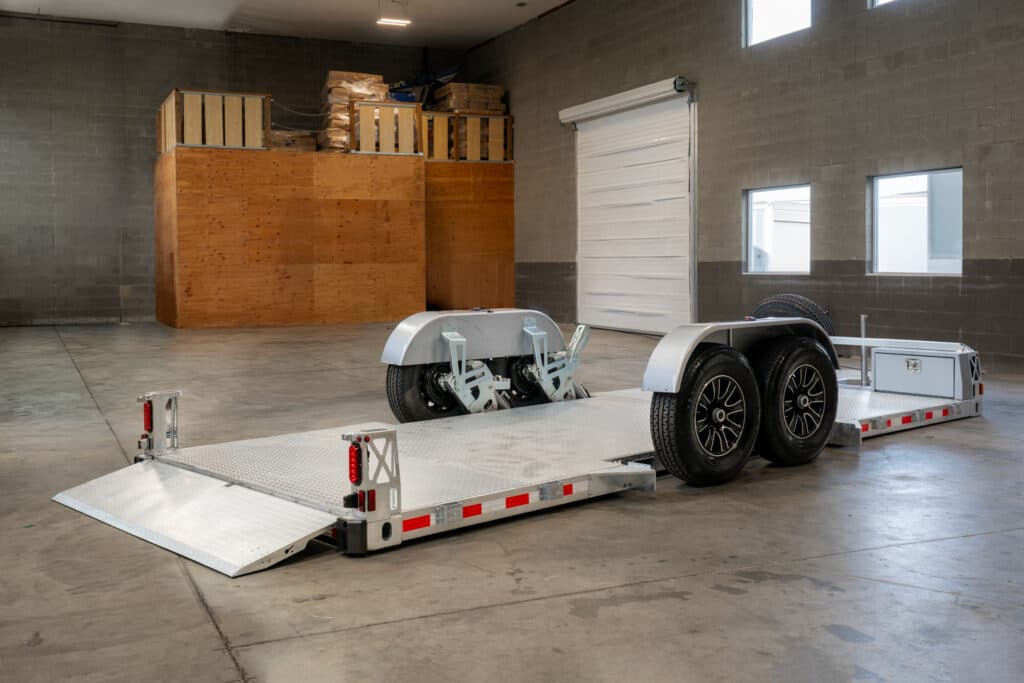
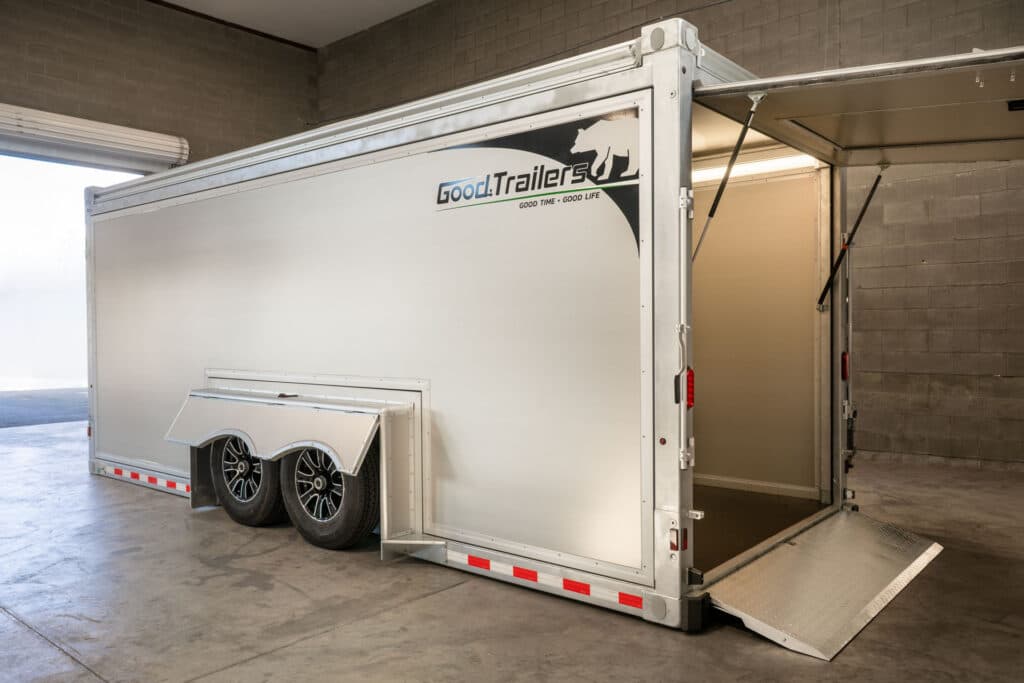
A single operator can use an industrial equipment dolly or machinery roller to push the inverter safely onto the trailer. This is because the chassis lowers all the way to the ground and the deck gets as low as 5.2″. You then unload a spring-assisted ramp that covers the entire 74″ back of the trailer. The ramp itself is just 22″ long, and rises to a gentle 11° angle.
The entry angle is about as flat as it’s possible to get.
Unload Anywhere
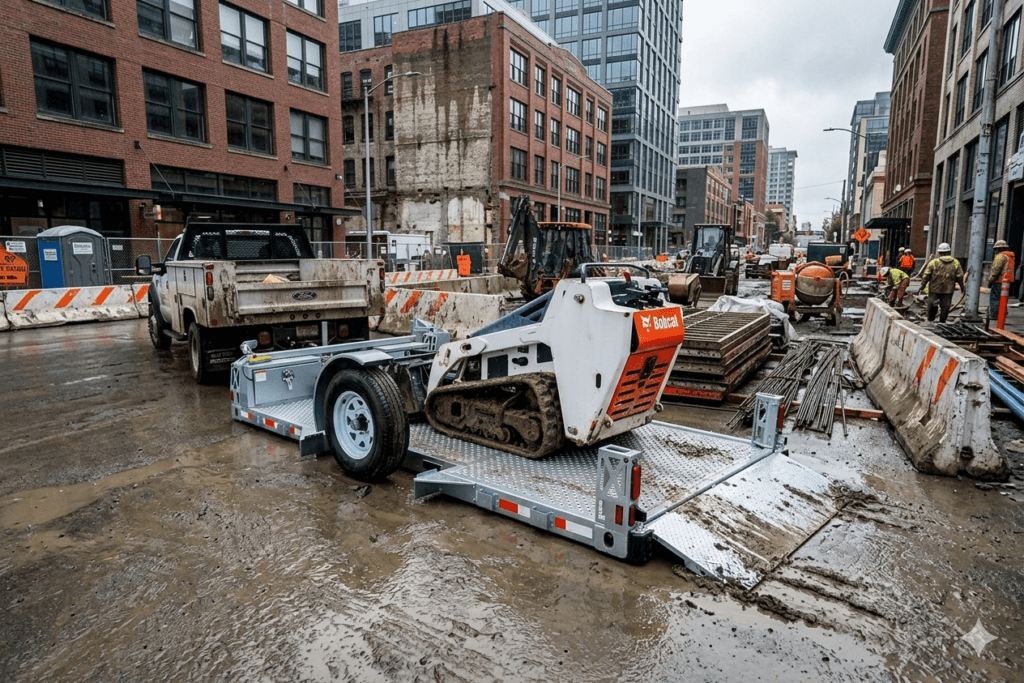
When you’re out in the middle of nowhere, you can’t count on loading docks. And you might not want to haul a separate forklift just to get your inverters back out of the trailer.
With the GT19HDX, loading is just as easy as unloading. Use your remote to lower the trailer all the way to the ground. Unfold the ramp and open the lift panel door. Use your machinery roller to roll the inverter right out.
The incline is gentle enough to be similar to moving from the sidewalk to the street using a curb cut.
Insulated Protection
With the GT19HDX you get the normal physical protection that an enclosed trailer brings: it keeps the rain off (and quite well, because we water test every single one of them).
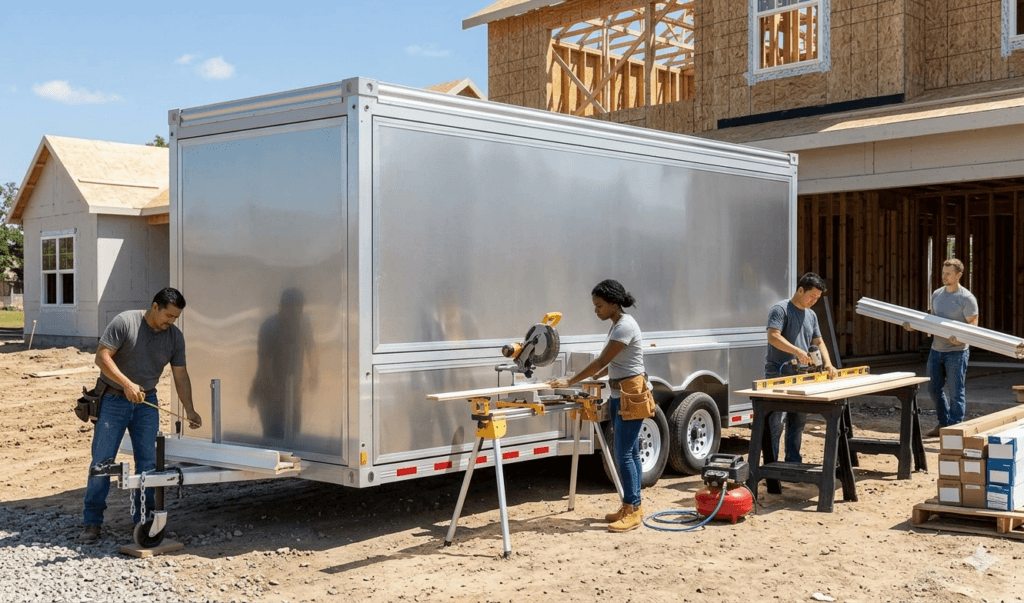
You also get insulation that helps protect your sensitive electronics from temperature extremes. That’s because we build our trailers with patent-pending composite aluminum panels. We take 38 mm of polystyrene foam and sandwich it between sheets of 5052 aluminum to create a smooth, seamless panel.
The panel offers enough insulation to ensure the interior of your Good Trailer will be 10° to 15° cooler than a similar uninsulated aluminum enclosed trailer. That 10° to 15° can make a big difference on the hottest days.
Think of it this way: when an uninsulated aluminum trailer sits on a job site or open asphalt lot in July, it starts acting like an oven. The metal skin absorbs radiant heat from the sun, pushing the interior temperature as high as 140°F on a 90°F day…and since more and more parts of the country are seeing 100°+ days, it’s imperative to take every advantage you can get in the heat management department.
During the winter, the insulation acts as a thermal blanket instead, helping to shield sensitive electronics from rapid freezing.
Mitigating extreme temperature swings provides extra protection to your microprocessors.
The ROI on Your Good Trailer Upgrade
Let’s talk numbers.
Upgrading to a premium, insulated drop-deck trailer isn’t just about making the crew’s life easier. It’s about risk mitigation and profit preservation.
Here’s how the GT19HDX pays for itself across three major buckets:
- Labor & Efficiency Savings. Loading a heavy inverter the “old way” is a multi-man, high-anxiety event. By flattening the loading angle and allowing a single operator with a pallet jack to safely handle the job, you’re turning a stressful half-hour, four-man operation into a five-minute solo task. That means your crew spends less time wrestling equipment and more time billing installation hours.
- Zero Forklift Rentals. If you’re delivering to a remote, half-built solar field, you normally have to coordinate and pay for a forklift on-site just to get your units off the trailer. Because the GT19HDX acts as its own loading dock, you complete eliminate those logistical coordination headaches and rental fees.
- The Ultimate Insurance Policy. A single commercial inverter cabinet can run anywhere from $15,000 to $100,000+. If your trailer prevents just one tip-over accident, one cracked circuit board from violent ramp jarring, or one cooked processor from summer heat, the trailer hasn’t’ just paid for itself. It’s protected your entire project’s profit margin.
When you factor in the massive, thousands-of-dollars-a-day penalties that utility companies charge for project downtime while you wait weeks for a replacement inverter, a Good Trailer isn’t expensive. It’s a small investment that will instantly help your company become more profitable.
Caveats
None of our trailers are capable of hauling multi-megawatt containerized central stations. You still need to pay attention to the weight of your inverter vs. the carrying capacity of the Good Trailer you choose. You’ll also need to pay attention to dimensions, as some inverters won’t even make it through our doors.
Key Takeaways
The TL;DR for crews looking to upgrade this year:
- Eliminate the structural warps that cause arc failure. Heavy commercial inverters are highly sensitive computers. Jarring them up steep ramp inclines can loosen critical connections or cause structural warps that lead to catastrophic operational arc faults.
- Secure high centers of gravity. Tall, narrow electronic enclosures are highly susceptible to tipping on standard trailer slopes. Lowering the trailer to the ground provides a stable entry path.
- Protect sensitive components from radiant summer heat. Uninsulated cargo trailers trap heat, pushing internal temperatures to critical levels that destroy sensitive microprocessors. Integrated 38 mm polystyrene insulation drops interior heat by up to 15°F.
- Eliminate remote site equipment rentals. Delivering components to remote solar grids typically requires coordinating costly crane or forklift rentals. A ground-level hydraulic drop deck functions as its own loading dock, saving thousands in field fees.
- Protect project profit margins. A single loading drop or cooked circuit board can instantly wipe out an entire installation project’s profit. Investing in a low-angle transport system acts as a built-in insurance policy against utility delay penalties.
Protect Your Inverters
Ready to upgrade?
- Call us right now at (360) 889-9789.
- Find a dealer near you.
- Click the green icon to the lower right to chat with Tow-Bot.
- Or contact us to send a message using the form below!
See also:
Heavy Battery Transport: Better Options for Solar Backups
The Top 4 Advantages of Trailers that Lower to the Ground
3 Advantages of GoodMFG® Aluminum Composite Panels
This resource was compiled by the GoodMFG® Product Team, drawing on 75 years of experience in hydraulic systems, heavy-duty transport, trailers, and modular structures.
P.S. – We build trailers every day, but we don’t run your crews. If there’s a specific logistical headache or a “field reality” we’ve missed, we want to hear about it. Help us refine the equipment that makes your day easier! Email our Marketing Lead at devan-h @ goodrv.com and let us know what we should solve next.