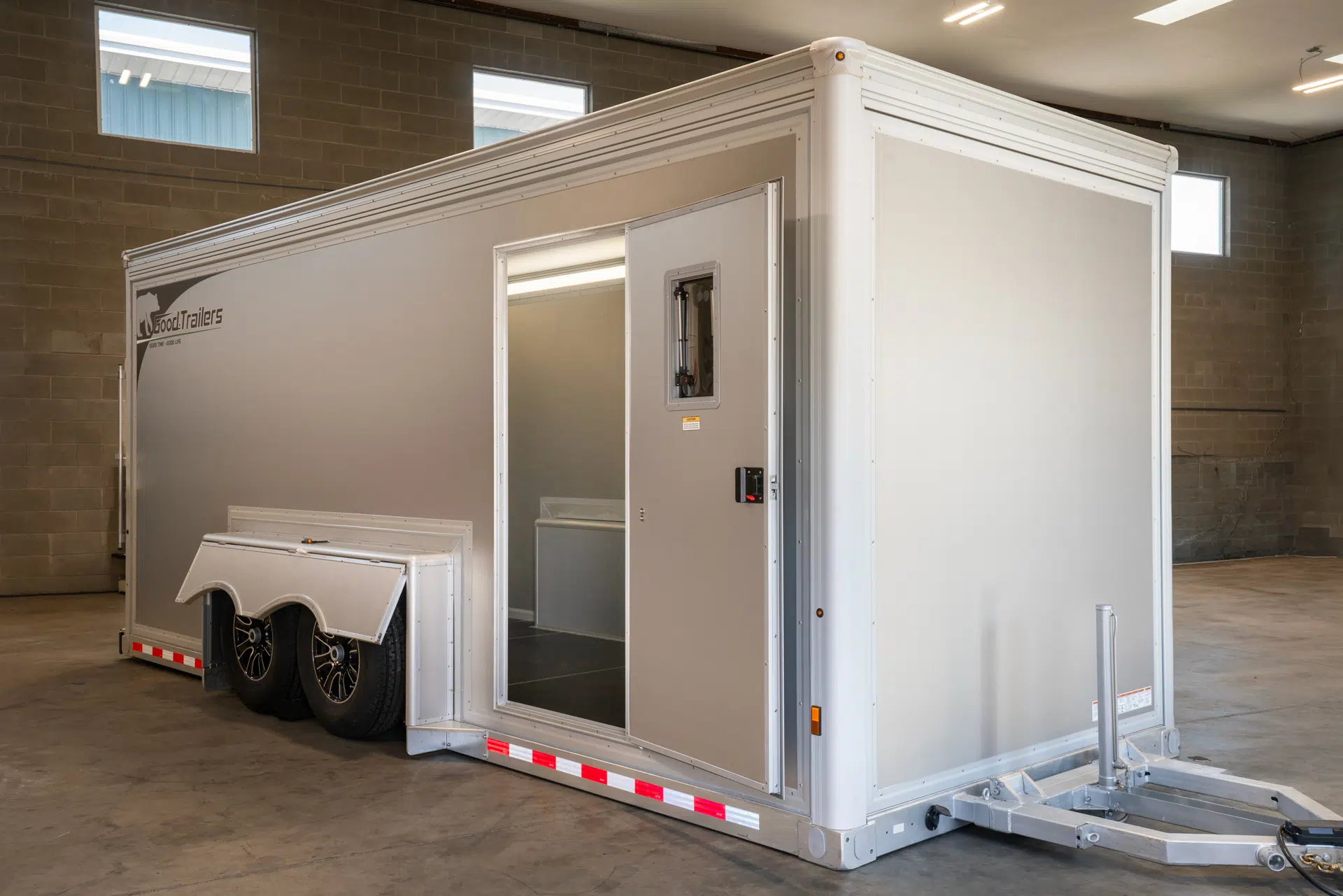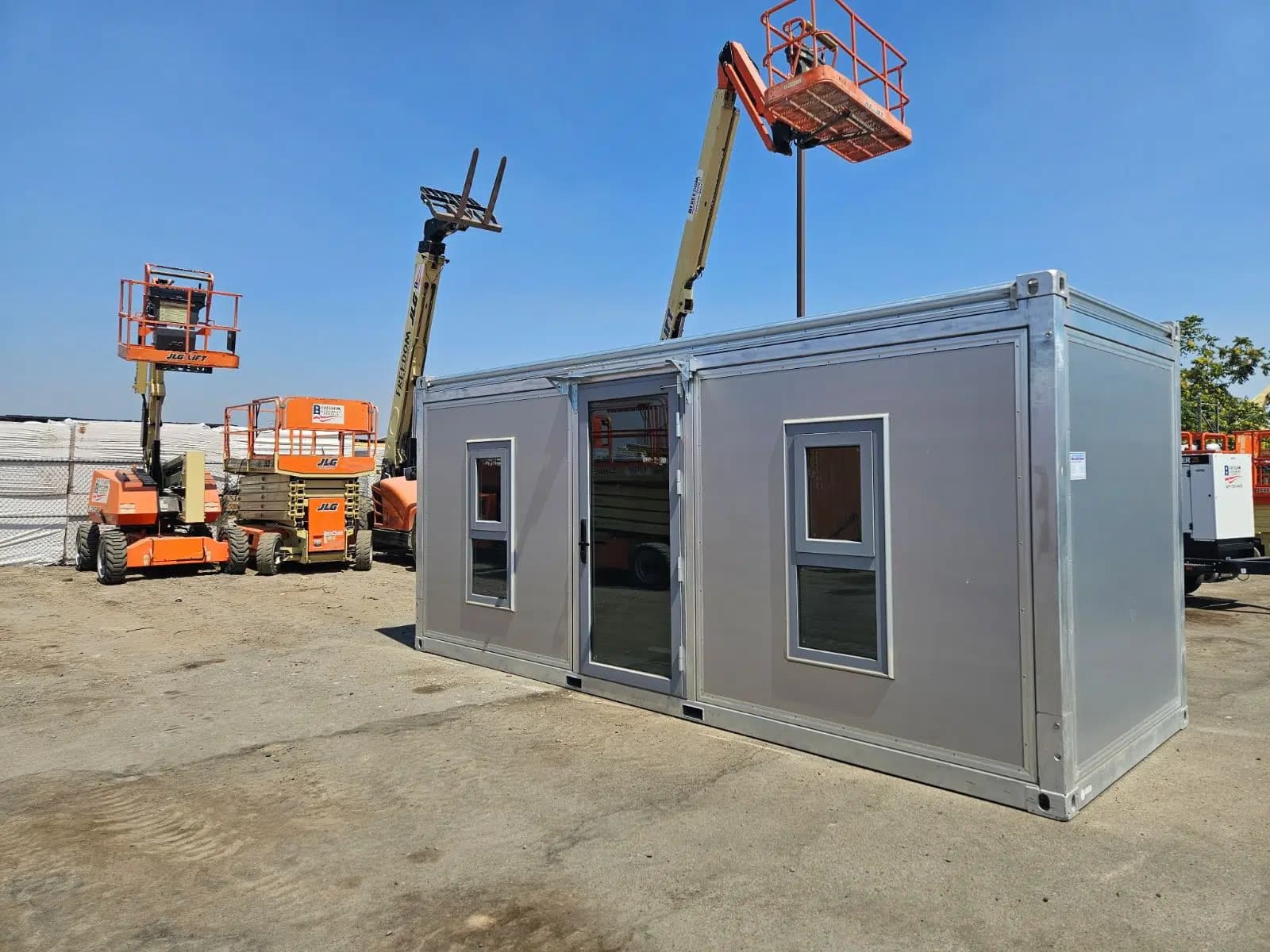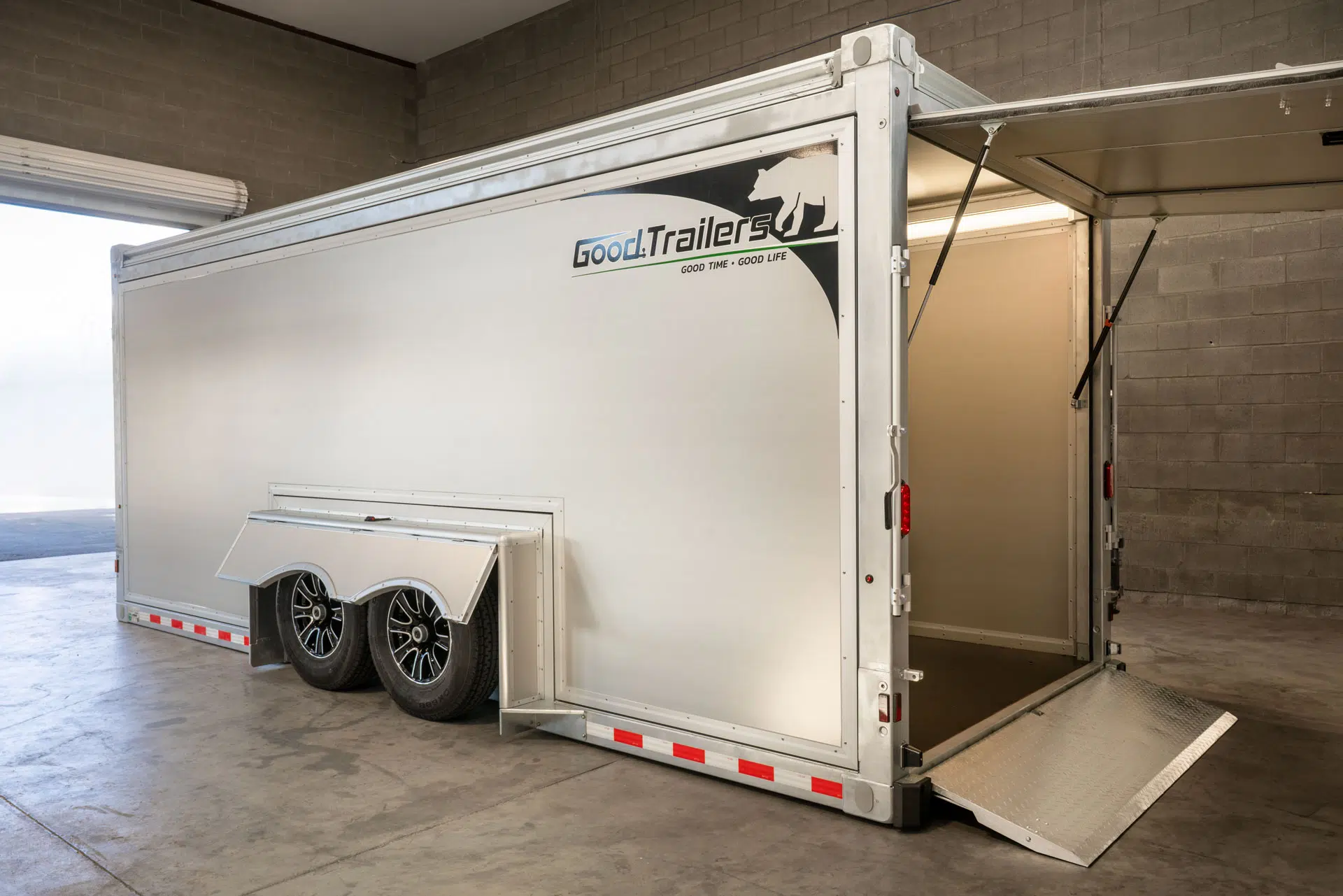
Looking for the advantages of trailers that lower to the ground?
If you manage a fleet or a field crew, you already know the most stressful part of the day doesn’t happen while driving on the highway. It happens when the truck is parked and the ramps come down.
Standard, high-clearance trailers turn the loading zone into a careful balancing act. Every load-out introduces a handful of costly variables. Operators wrestle with heavy steel ramps. Multi-ton machinery teeters on steep inclines. Undercarriages scrape across sharp metal apexes.
Loading is slow. Demanding. And a single slip-up can take an expensive piece of equipment offline for weeks, derailing your schedule.
But it doesn’t have to be a struggle. By dropping the trailer bed flat to the ground, hydraulic drop-deck technology completely rewrites the physics of equipment transit. It removes the guesswork, protects your capital investments, and gives your crew their energy back.
Here are the top four advantages.
Table of Contents
#1 Eliminate the Breakover Point
Loading and unloading accidents often start with the breakover point, the apex where the angle of a ramp hits the flat surface of the trailer. This is where undercarriages get scraped or slammed and where heavy equipment sometimes tips.
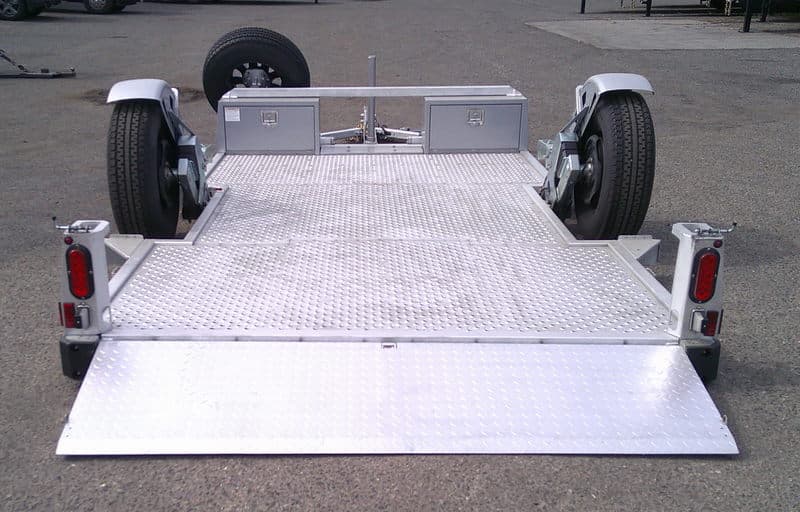
When you use hydraulic drop deck technology, the trailer bed sits flat on the ground. There’s still a bit of a ramp, but the angle is significantly smaller. It’s gentle and easy to drive on without causing damage.
If you’re tired of high-centering, bottoming out, and thousands of dollars of damage, then, for you, this is going to be one of the most important advantages of trailers that lower to the ground.
#2 End Ramp Struggles
When you invest in trailers that lower to the ground, you free your crews from having to deadlift 90-pound manual steel ramps or fight temperamental spring-assisted hinges in the mud and the rain.
You replace physical exhaustion and finger-pinch hazards with a touch of your remote.
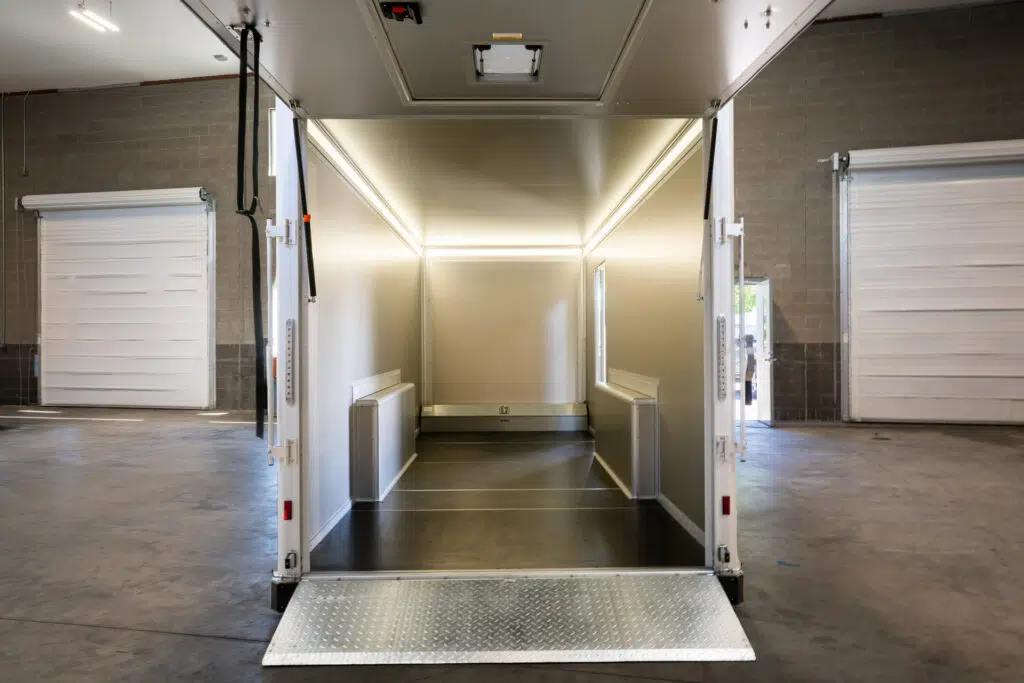
You gain a wide ramp for loading and unloading. It’s light and easy to lower. It’s a short, low-angle construct that takes you from the ground to a deck that sits at just 5.4-inches high.
#3 Stop the Sway
When you’re loading heavy equipment, stability matters. Instead of balancing on suspension, tires, and jacks, you give your equipment a stable foundation.
Your equipment remains stable while your crew secures it, protecting both the equipment and the crew.
#4 Work Smarter & Faster
A trailer that lowers close to ground level can simplify the loading process by reducing the amount of setup required before equipment or materials reach the deck.
Instead of positioning long or removable ramps, operators can lower the trailer to a 5.4-inch deck height and use its short 11° approach to load compatible equipment. For low-clearance machinery, that also reduces the severity of the transition from the ground to the trailer deck.
The same advantage applies to wheeled carts, toolboxes, and other materials that can be rolled aboard with appropriate material-handling equipment.
That doesn’t mean every load becomes a one-person or five-minute job. Heavy, unusual, or difficult-to-position cargo may still require spotters, mechanical assistance, or additional setup. But for compatible loads, a hydraulic drop deck can remove several steps from the loading process and make the procedure more straightforward and repeatable.
FAQ
How do drop deck hydraulic systems hold up in severe winter weather or in freezing temperatures?
Cold weather causes hydraulic fluid to thicken, which can slow down operating speeds if the fluid isn’t rated for low temperatures. For crews working in freezing environments, using all-weather synthetic hydraulic fluid and keeping the battery charged for the electric pump ensures the lowering mechanism operates smoothly year-round. See your hydraulic system owners’ manual for details on the right kinds of fluids to use at any time of year.
How well do hydraulic drop deck trailers retain their resale value over time?
Because specialized drop-deck trailers are in demand in the construction, agricultural, landscaping, and equipment rental sectors, they tend to depreciate slower than standard flatbeds. A well-maintained unit retains up to 70% of its purchase value after 3 to 5 years of commercial use.
Key Takeaways
When thinking about whether you’re going to make the switch from traditional trailers to hydraulic flatbed trailers, consider the following:
- Eliminate the breakover point. Trailers that lower to the ground drop the entire deck bed to a flush position, replacing the sharp peak of traditional ramps with a gentle gradient.
- Better ramp mechanics. Trade heavy, manual 90-pound steel gates and hazardous spring-assisted hinges for a wide, lightweight 74-inch ramp that flips down with ease.
- Rock solid loading foundations. Eliminates the hazardous wobble of loading heavy machinery onto standard trailers by resting the entire heavy-duty chassis directly on solid earth rather than on tires.
- Uniform fleet standardization. Creating an identical, ground-level process across all field crews eliminates operator guesswork, reduces physical exhaustion, and protects capital equipment investments.
Load Low, Haul Good
Ready to benefit from the advantages of trailers that lower to the ground? Start the conversation today.
- Call us right now at (360) 889-9789.
- Find a dealer near you.
- Click the icon to the lower right to chat with Tow-Bot.
Loading form…
This resource was compiled by the GoodMFG® Product Team, drawing on 75 years of combined experience in hydraulic systems, heavy-duty transport, trailers, and modular structures.
P.S. – We build trailers every day, but we don’t run your crews. If there’s a specific logistical headache or a “field reality” we’ve missed, we want to hear about it. Help us refine the equipment that makes your day easier! Email our Marketing Lead at devan-h @ goodrv.com and let us know what we should solve next.