The reason why you need the absolute best trailers for low clearance equipment can really be summed up with one word.
Crunch.
That “crunch” is the violent scraping sound you hear when a pothole protection guard breaks, when a hydraulic line snags, or when a high-centered frame grinds to the halt right where a steep pair of ramps breaks at the edge of a standard trailer deck.
Moving low clearance heavy machinery isn’t just stressful. It’s expensive. Scraped undercarriages. Dangerous spin-outs in wet weather. Tip-overs. Traditional loading methods fail low clearance equipment every single day.
People who have to move that equipment on the daily: equipment rental yard managers, concrete prep businesses, commercial construction crews…whoever you may be…tend to shovel out thousands of dollars every year on repairs, even as they lose money to equipment downtime.
The right trailer can change all that. Let’s take a look at why traditional hauling options fail, why tilt trailers are a popular solution but aren’t always the right solution, and what key features define the best trailers for low clearance machinery.
Table of Contents
- Why Standard Ramps Keep Failing Low Clearance Equipment
- Why Tilt Trailers Are Not the Best Trailers for Low Clearance Equipment
- What Can You Haul with a 19′ Flatbed Drop Deck from GoodMFG®?
- Best Trailers for Low Clearance Equipment: Buyer Checklist
- FAQ
- Key Takeaways
- Tired of Scraping Up Your Low Clearance Equipment?
Why Standard Ramps Keep Failing Low Clearance Equipment
Standard equipment ramps were built for high-clearance machinery like skid steers, backhoes, and tractors. When you try to force low-clearance equipment up traditional ramps, you run into three structural flaws:
- Severe Breakover Angles: The apex where a steep ramp connects to the flat trailer bed creates a sharp peak. Machinery with low belly clearance (or automatic safety skirts) high-centers instantly at this pivot point, hanging up or tearing off components.
- Incline Slippage & Traction Loss: Smooth steel wheels, solid rubber tires, or polished concrete tracks offer almost no grip on angled metal ramps—especially when rain, mud, or snow gets involved. Driving heavy steel-wheeled machinery up a wet 15-to-20-degree slope creates a massive safety hazard.
- Narrow Wheel Pitches & Edge Drop-Offs: Scissor lifts and small pallet jacks have tiny front casters or narrow track widths. Steering them up narrow, dual-standing ramps leaves zero room for error, placing huge mental stress on the operator.
Why Tilt Trailers Are Not the Best Trailers for Low Clearance Equipment
When fleet operators realize standard ramps don’t work, they often look to tilt trailers as an alternative. While tilt trailers remove the traditional ramp hinge, they are still not the ideal solution for low clearance equipment.
- The Incline Trap: Tilt decks still create a steep angle. Even powered tilt models create a a steep incline during loading. For a scissor lift with 2 to 3 inches of ground clearance, that angle is often still enough to trigger pothole guards or scrape the frame.
- The Violent “Pivot Snap”: Gravity-tilt trailers rely on machinery crossing a central pivot point to teeter the deck down. When heavy equipment crosses that threshold, it creates a sudden, jarring “snap-back” effect. This violent motion can throw the operator off balance, damage delicate machinery, and stress the trailer frame.
To move low-clearance equipment safely, you don’t just need a tilting bed—you need a true ground-level drop deck. The superior protection is what makes drop deck flatbed trailers the best trailers for low clearance equipment.
What Can You Haul with a 19′ Flatbed Drop Deck from GoodMFG®?
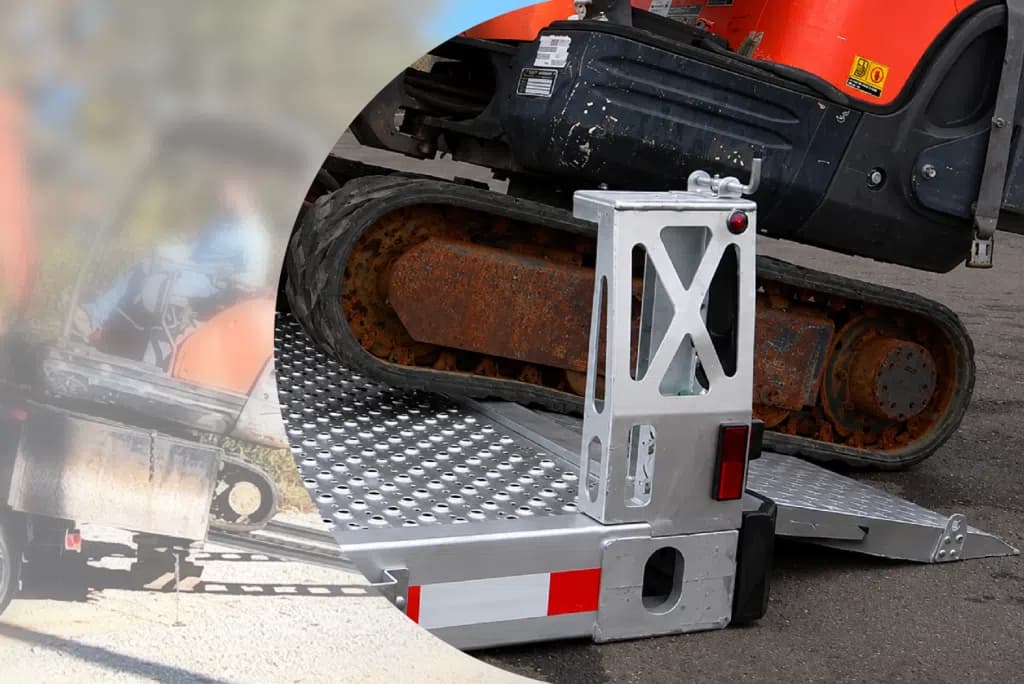
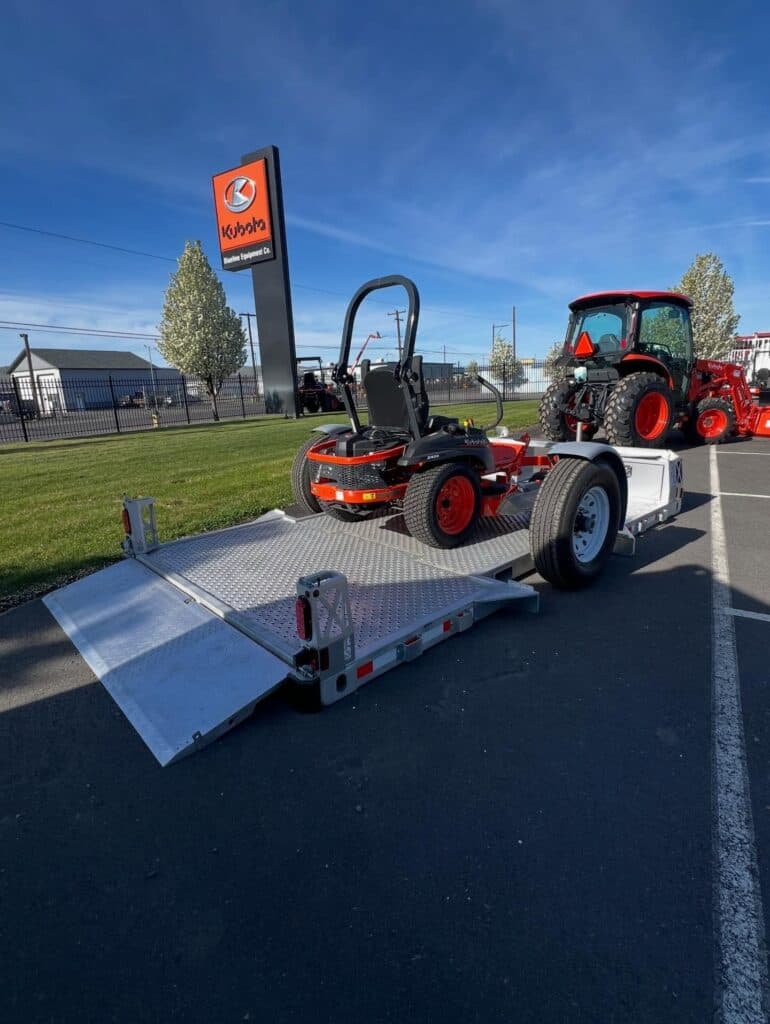
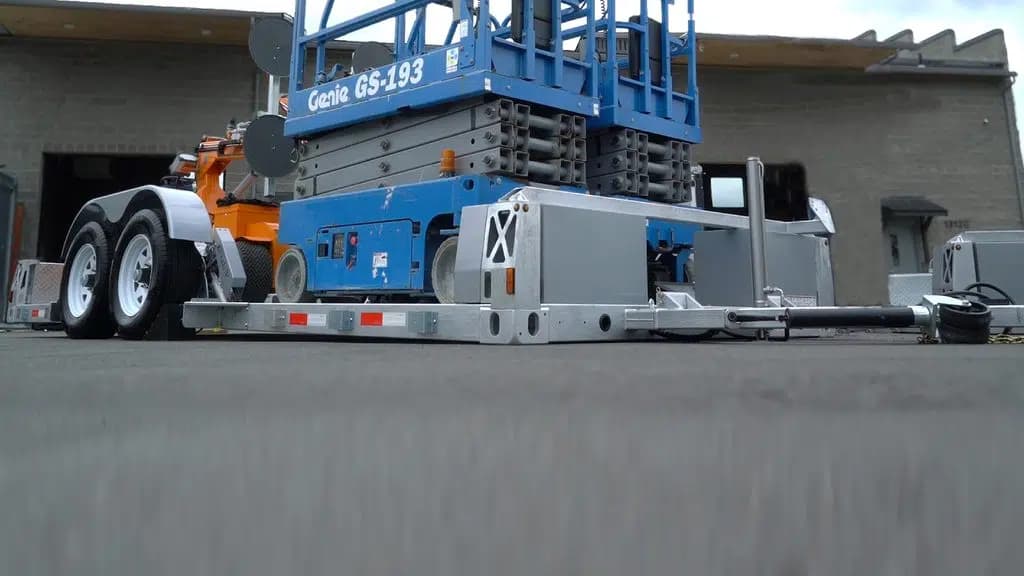
The GoodMFG® GT19FL Hydraulic Flatbed Trailer was engineered specifically to solve the low-clearance nightmare. Utilizing articulating hydraulic suspension, the entire chassis lowers flat to the earth in under 60 seconds, bringing the lowered deck height down to just 5.4 inches with a short, 22-inch spring-assisted ramp that creates a gentle 11° approach angle.
With 17’9” L x 6’10” W of deck space and an 8,000 lb carry capacity, the GT19FL handles the machinery that standard ramps ruin:
| Equipment Category | Machinery Examples | Why a Drop Deck is Required |
| Aerial Work Platforms | Electric Scissor Lifts (e.g., JLG 2632, Genie GS-1930), Vertical Mast Lifts, Compact Booms | Eliminates broken pothole protection skirts and high-centering. Fits multiple scissor lifts on one deck. |
| Surface Prep & Concrete | Ride-On Power Trowels, Large Concrete Slab Saws, Scarifiers, Planers | Keeps exposed undersides and low-hanging blade assemblies from catching on ramp lips. |
| Warehousing Equipment | Cushion-Tire Forklifts, Walkie Stackers, Electric Pallet Jacks | Polyurethane wheels and low belly clearances bottom out instantly on standard ramps; ground-level loading lets them drive straight on. |
| Compaction & Paving | 1.5-to-3-Ton Asphalt Rollers, Trenchers | Smooth drums can’t spin out on flat ground. Ground-level entry removes wet-weather ramp sliding hazards. |
| Commercial Maintenance | Ride-On Floor Scrubbers, Sweepers, Commercial Turf Gear | Protects low-slung fiberglass bodies and ground-level squeegee mounts from cracking. |
Some low-clearance equipment needs additional protection from the weather or additional security to ward off thieves. If you’re moving industrial battery racks, mobile generators, safes, ATMs or similar equipment, consider the GT19AL instead, our enclosed drop deck model which gives you an insulated, highly secure, weather-proof trailer.
Best Trailers for Low Clearance Equipment: Buyer Checklist
If you want to be sure to buy the best trailers for low clearance equipment, don’t settle for “close enough.” Make sure your trailer delivers these critical performance requirements.
- True ground level loading. Look for a drop-deck system that brings the chassis flush to the ground and puts the deck at a low height (5.4” or lower) rather than just tilting at an axle pivot.
- Low angle approach and a full-width wide ramp. You don’t want to have to perform a balancing act. The transition from the ground to the deck should be as smooth, easy, and gentle as the transition from the average street to the average driveway.
- Sufficient carrying capacity. The GT19FL offers 8,000 pounds of carrying capacity so you can transport many different types of machinery. Heavy machinery will typically require you to upgrade to a gooseneck or other type of specialized trailer.
- Single operator efficiency. Hydraulic push button lowering allows one driver to load, tie down, and pull away in 5 minutes without physical strain or the use of a spotter.
FAQ
Can you load low clearance equipment on a drop deck trailer when conditions are wet, muddy, or icy?
Yes. The deck lowers completely flat to the ground, so equipment rely on aggressive incline traction. Flat-plane ground loading virtually eliminates dangerous ramp slide-offs in bad weather.
How long does it take to lower and raise a hydraulic drop deck trailer?
With a push-button hydraulic system, the deck lowers flush to the ground in less than 60 seconds.
Can a 19-foot drop deck trailer haul multiple pieces of equipment at once?
Absolutely. With a deck footprint of 17’9” L x 6’10” W and an 8,000 lb carry capacity, the GT19FL can easily accommodate two mid-sized scissor lifts or a combination of surface prep gear and walk-behind units in a single run.
Key Takeaways
Consider these points when deciding which trailers are the best trailers for low clearance equipment.
- Standard ramps can destroy low clearance gear. Breakover angles snap pothole guards, scrape belly pans, and present slip hazards.
- Tilt trailers don’t solve the problem. Steep angles and violent teeter-totter pivot points can still damage sensitive equipment.
- Ground level loading is the ultimate fix. Lowering the deck to 5.4 inches and unfolding a 22” ramp that sits at a gentle 11° angle eliminates harsh breakover peaks and offers safer loading.
- Wide ramps are kinder. A 74.4” wide ramp lets you simply drive aboard without the balancing act.
Ultimately, ground-level loading reduces operator anxiety, lowers injury risks, and cuts total loading times down to 6 minutes or less.
Tired of Scraping Up Your Low Clearance Equipment?
Stop wasting time with heavy, narrow, high incline ramps. Add the best trailers for low clearance equipment to your fleet today! Find your nearest dealer or contact us to get help.
See also:
Who Sells Zero Degree Trailers? The Ground-Level Loading Truth
Can You Transport a Scissor Lift on a Trailer?
Ground-Level Loading for Forklift Transport
This resource was compiled by the GoodMFG® Product Team, drawing on 75 years of combined experience in hydraulic systems, heavy-duty transport, trailers, and modular structures.
P.S. – We build trailers every day, but we don’t run your crews. If there’s a specific logistical headache or a “field reality” we’ve missed, we want to hear about it. Help us refine the equipment that makes your day easier! Email our Marketing Lead at devan-h @ goodrv.com and let us know what we should solve next.