Concrete saw transport can be an absolute nightmare for concrete contractors. Finding a heavy-duty flatbed for concrete equipment that doesn’t cause more problems than it solves is a persistent challenge for owner-operators, fleet managers, and equipment managers alike.
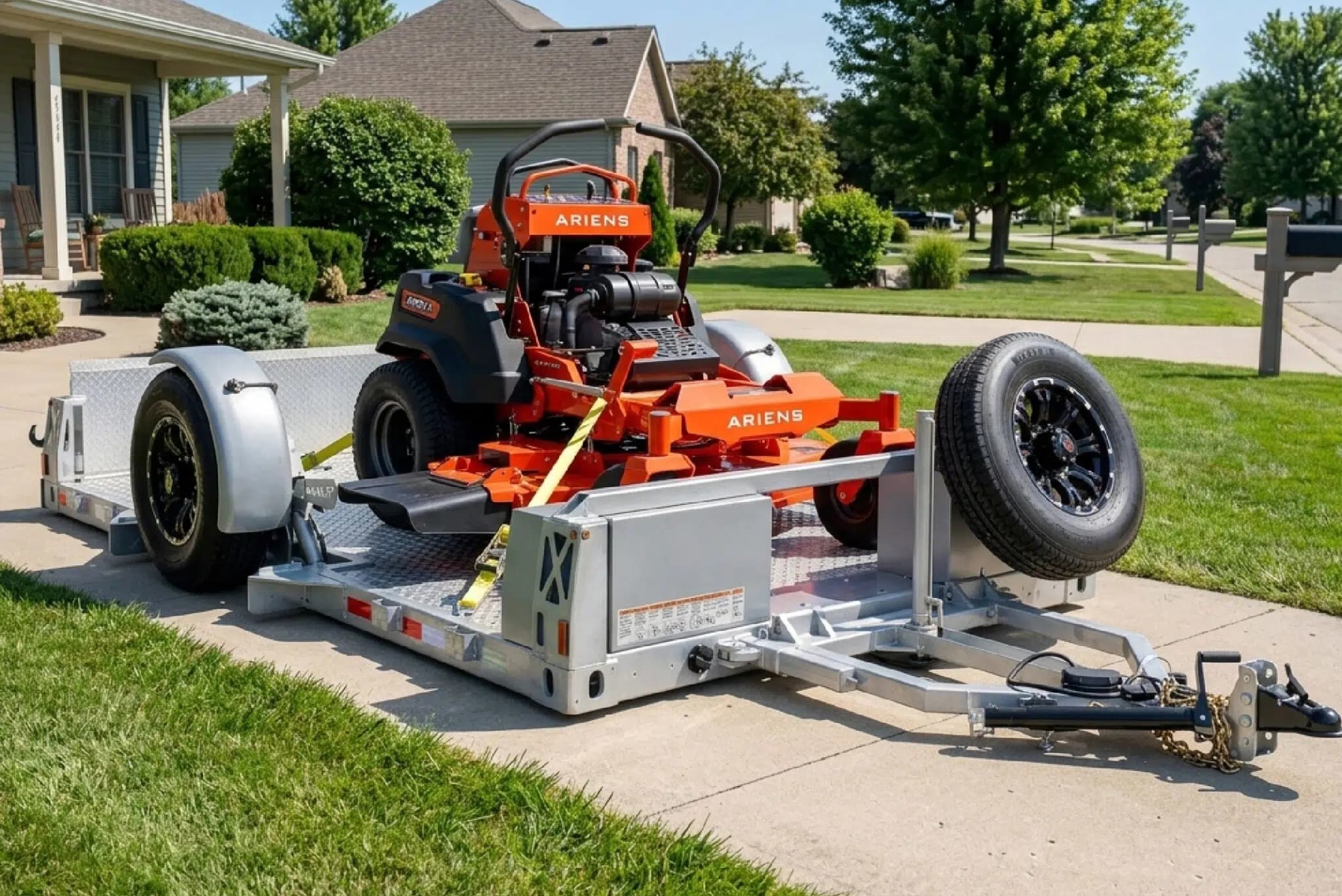
Pictured above: the GT13FL 13′ flatbed trailer, whose 5,055-pound estimated carrying capacity and 11′8″ usable deck make it a potential fit for many walk-behind concrete saws. Always check the exact weight and transport dimensions of your saw before loading. Some saws may require an upgrade to the GT19FL, with 8,000 pounds of estimated carrying capacity.
Read on to discover how you can carry your next Husqvarna 500-D or other concrete saw to your next big job with minimal hassle and maximal efficiency.
Note: models mentioned in blog post may not match models pictured.
Table of Contents
Ground Level Loading for Concrete Saws
Tired of watching $1,000 diamond-grit blades shatter every time one of your operators bottoms out the saw on a high-angle ramp?
It’s not necessarily the operator’s fault.
These machines have a massive motor sitting high up on a relatively narrow wheelbase. Traditional trailer ramps basically set operators up for failure.
Large walk-behind concrete saws can be heavy machines that require careful control when moving up or down a ramp. Steeper loading angles make that transition more demanding.
Husqvarna’s current FS 5000 D manual specifically warns operators to use extreme care when moving the saw on ramps because the machine is heavy and can cause injury or damage if it falls or moves too quickly. For ramps with a large angle, Husqvarna requires the use of a winch.
These saws aren’t cheap: even the lighter Clipper C20 Series can start at around $10,000. The Husqvarna 500-D is around $49,350 as of this writing, depending on where you buy it. When a saw represents a five-figure equipment investment, reducing unnecessary loading difficulty is a practical way to protect that asset.
So, what makes the GT19FL the right trailer for concrete saw transport?
The GT19FL’s hydraulic system retracts the wheels and lowers the deck to 5.4 inches above the ground. A 22-inch-long, 11° rear ramp—76.5 inches wide—bridges the remaining transition.
That lower, gentler transition can make it easier to move compatible walk-behind saws onto the trailer while reducing the severity of the ramp climb. It can also help reduce the chance of scraping or bottoming during loading. Always follow the saw manufacturer’s transport and ramp-loading instructions.
Simplify Loading for Concrete Saws
A low-angle loading transition can reduce the amount of additional handling equipment required for some saws. For a compatible self-propelled saw, a qualified operator may be able to move the machine aboard using the saw’s own drive system rather than winching it up a steeper ramp. Follow the manufacturer’s procedure for your specific machine.
Hauling Power
The GT19FL provides a 17′9″ × 6′10″ usable deck and an estimated 8,000-pound carrying capacity. Depending on the size and weight of your saw, that may leave room and payload for compatible slurry-management equipment as part of the same load.
The exact fit and load-out will depend on the equipment you choose, so check the length and width of each and the exact weight of each before you load. Nevertheless, the GT19FL is well-equipped to handle most set-ups.
Flatbed or Enclosed for Concrete Saw Transport?
A hydraulic flatbed is a practical choice when your priority is straightforward equipment loading, open access to the machine, and easy cleanup after dusty or slurry-heavy work.
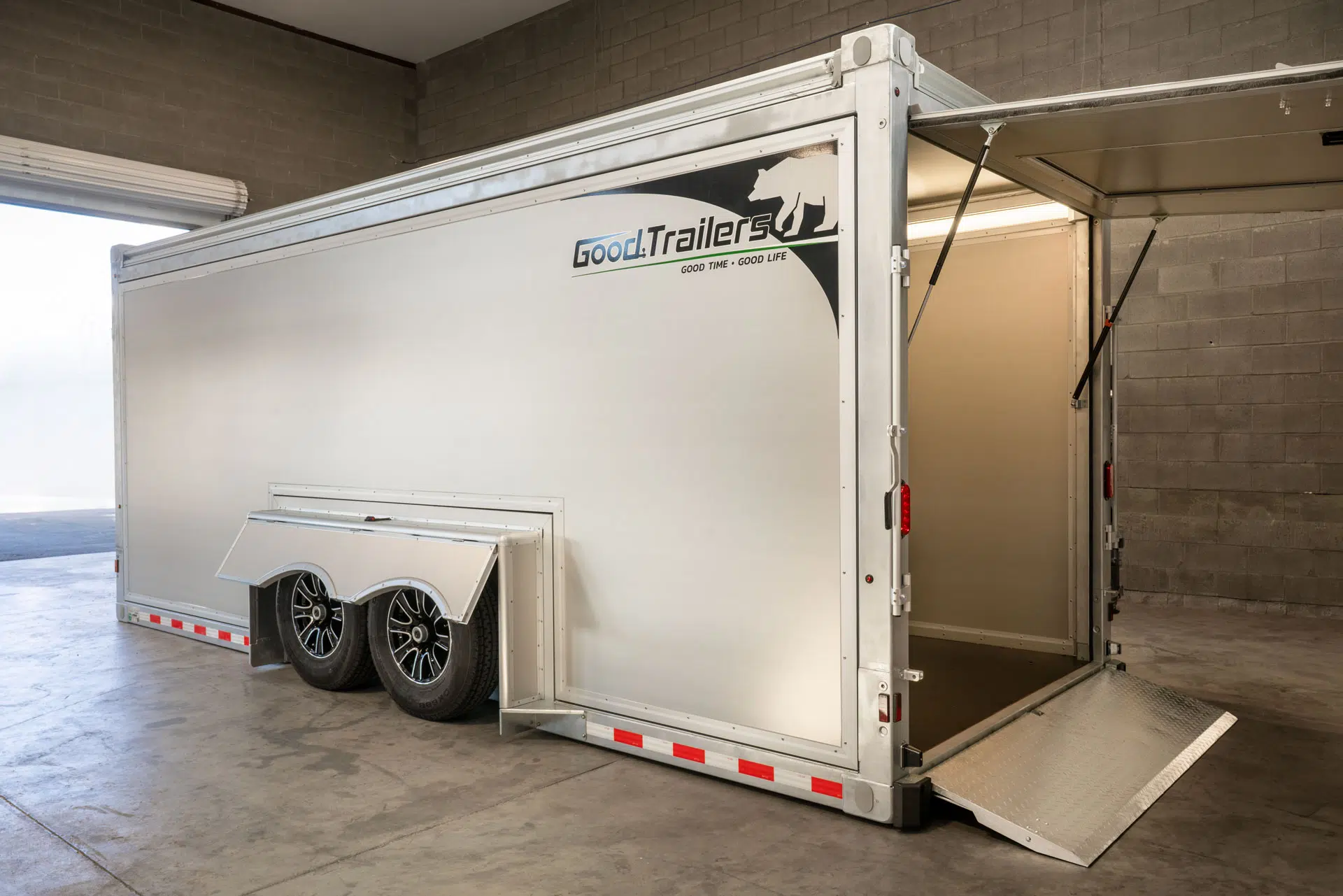
But concrete-cutting crews should also consider an enclosed drop deck, particularly when the trailer carries expensive saws, blades, vacuums, generators, electronics, and other support equipment between jobs.
Concrete saws are built for demanding jobsites, and many use water during cutting. That doesn’t mean weather exposure is irrelevant. Husqvarna’s FS 5000 D guidance calls for dry, frost-free storage and recommends covering the machine when it must be stored outdoors. Cutting blades should also be stored dry.
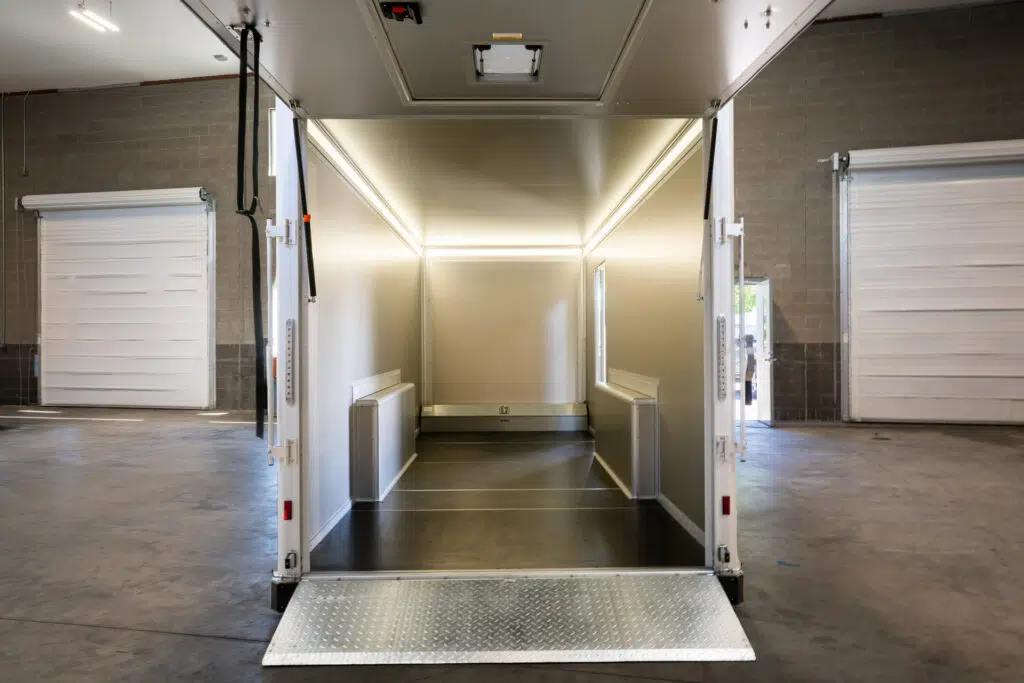
An enclosed GoodMFG° trailer can add:
- Protection from direct highway rain, road spray, dirt, and debris
- Enclosed space for blades and other accessories that benefit from dry storage
- Lockable storage for expensive equipment between jobs
- Room to organize saws alongside compatible slurry management & support equipment.
The GT19FL may still be the better fit for concrete saw transport when open access, payload, and easy clean-up are the priorities.
The GT19AL or other medium duty trailer may make more sense when the trailer also serves as mobile equipment storage between jobs.
Either way, compare the complete transport weight and dimensions with the trailer’s current carrying capacity, deck, and interior dimensions, as well as, on an enclosed model, the rear door opening.
Recommended Add-On: D-Ring Stake Pocket System
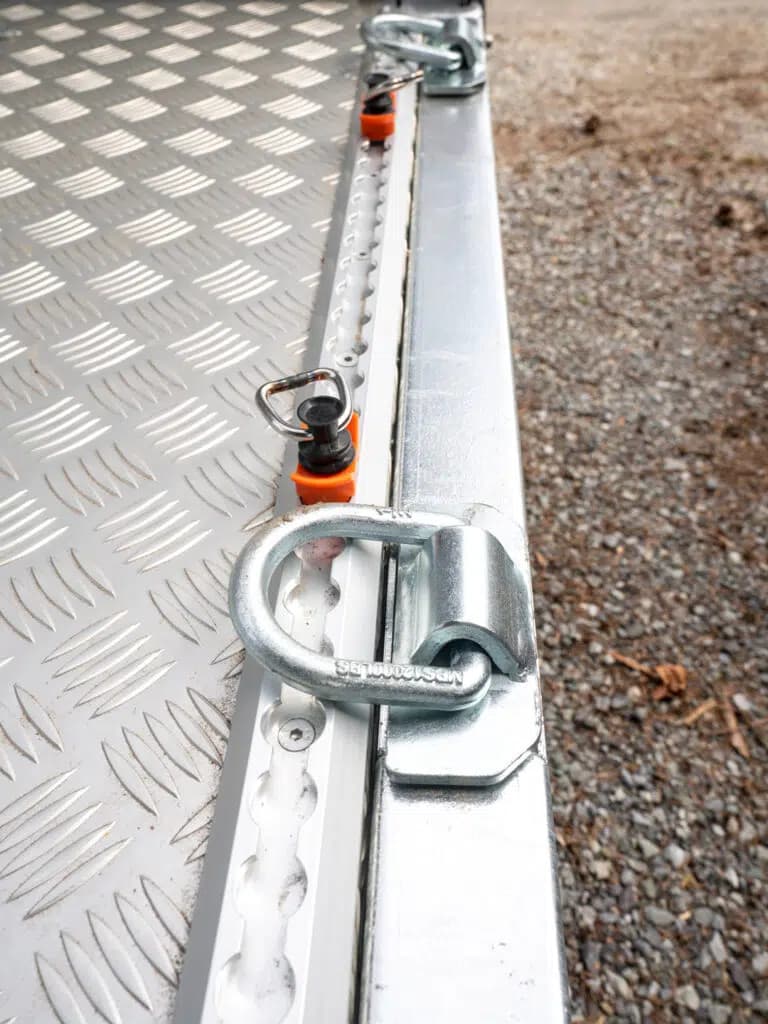
The optional D-ring stake pocket system adds trailer-side anchor locations along the deck, giving you more flexibility when routing restraints to the saw’s manufacturer-approved securement points.
Key Takeaways
If you remember nothing else about concrete saw transport, remember:
- A lower loading transition can really help with concrete saw transport. The GT19FL lowers to a 5.4-inch deck height and uses a short 22-inch, 11° ramp, reducing the climb compared with loading to a standard trailer’s normal 18-inch towing height.
- Useful for compatible self-propelled saws. The lower ramp angle may reduce the need for winching or additional handling assistance, depending on your manufacturer’s instructions.
- Reduced scraping and bottoming potential. The gentler transition can help protect low-clearance components during loading.
- Flexible trailer-side securements. Optional D-ring stake pockets provide additional anchor location. Use them with the saw manufacturer’s designated tie-down points & securement procedures.
Get Your Quote
Ready to experience the benefits of using Good Trailers for concrete saw transport?
- Call us right now at (360) 889-9789.
- Find a dealer near you.
- Send us a message using the form below.
Loading form…
This resource was compiled by the GoodMFG® Product Team, drawing on 75 years of combined experience in hydraulic systems, heavy-duty transport, trailers, and modular structures.
P.S. – We build trailers every day, but we don’t run your crews. If there’s a specific logistical headache or a “field reality” we’ve missed, we want to hear about it. Help us refine the equipment that makes your day easier! Email our Marketing Lead at devan-h @ goodrv.com and let us kow what we should solve next.