GoodMFG® has seen strong interest from elevator companies exploring hydraulic drop deck trailers for moving equipment and elevator components between shops and jobsites. It’s easy to see why: elevator work can involve heavy, awkward loads that are difficult to move onto a raised trailer deck.
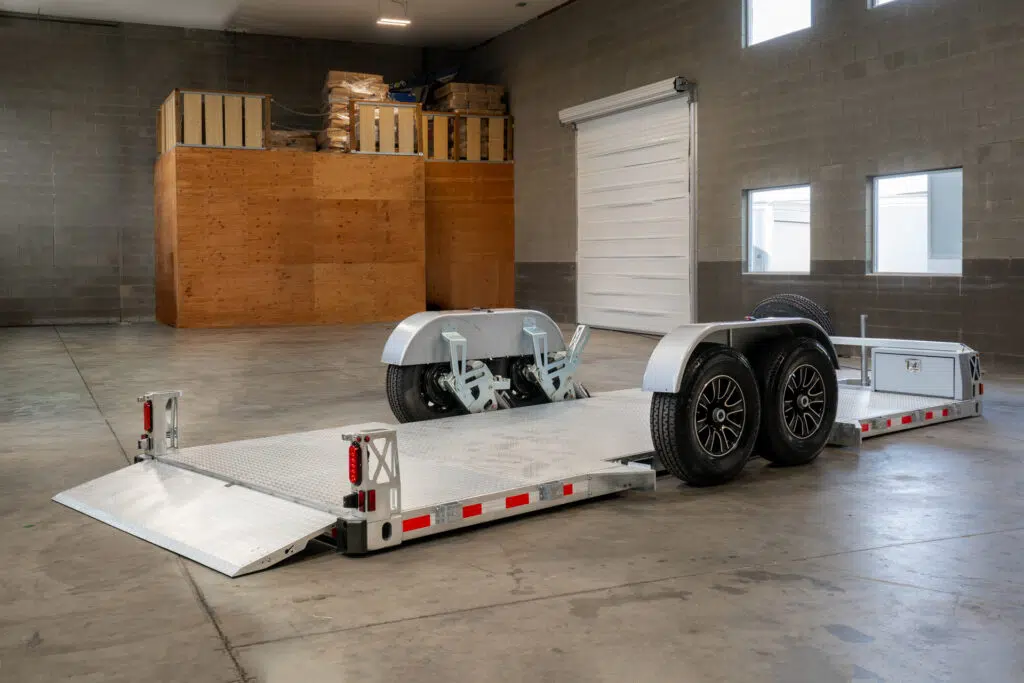
A hydraulic drop deck does not replace every lift gate, forklift, crane, or rigging procedure. What it can do is lower the loading surface to 5.4 inches above the ground, giving compatible wheeled or mechanically handled loads a much shorter transition onto the trailer.
Whether that works for a particular elevator component depends on its weight, dimensions, handling requirements, securement method, and how concentrated that weight is on the deck.
Table of Contents
Which Elevator Components Could be Candidates?
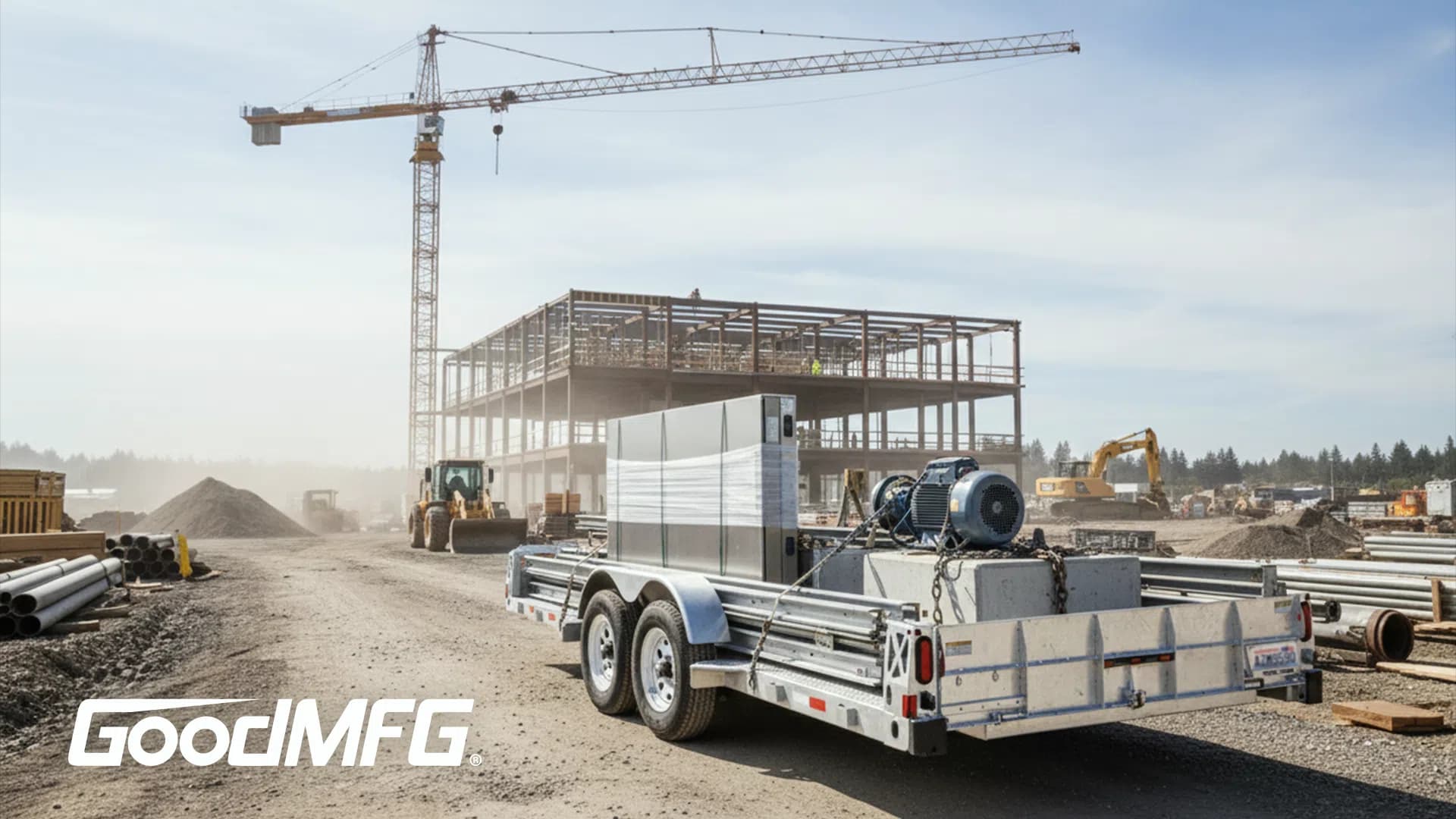
We won’t claim we’re always the right solution for transporting elevator components. But potential loads might be worth evaluating as you consider their weight, handling method, and load distribution. These could include:
- Hydraulic power units & motors
- Calibration or test weights
- Counterweight components
- Appropriately sized guide-rail sections
- Tools, carts, & installation equipment
- Other components that can be safely loaded and secured within the trailer’s ratings.
The GT19FL currently provides an estimated 8,000-pound carrying capacity and a 17′9″ × 6′10″ usable deck. Those numbers are a starting point, not a guarantee that every component under 8,000 pounds is an appropriate load.
Check the complete load dimensions, weight distribution, securement requirements, and handling method before selecting the trailer.
Lower the Deck, Simplify the Loading Path
Elevator components do not become light simply because the trailer lowers. Heavy or awkward components may still require forklifts, cranes, powered handling equipment, rigging, or additional personnel.
What changes is the height those loads have to negotiate to reach the deck.
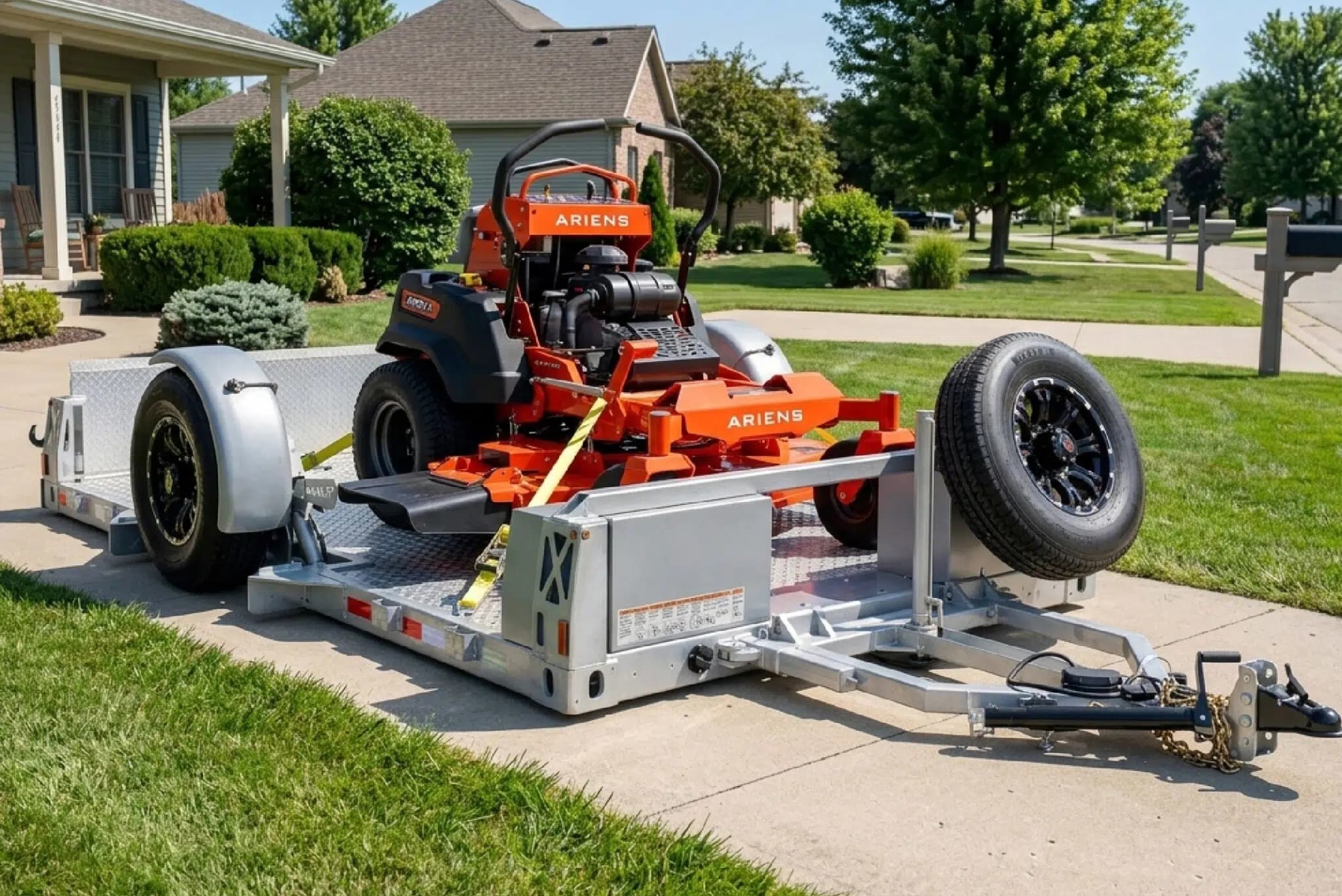
The GT19FL lowers to 5.4 inches above the ground and uses a short 22-inch, 11° rear ramp. That can reduce the vertical climb compared with moving the same load onto a conventional raised trailer deck.
For components already mounted on suitable carts, dollies, skates, or other rated handling systems, that lower transition may reduce reliance on long loading ramps or elevated loading docks.
Always use handling equipment that is rated for the load and approved for the surface and incline involved.
For operations that currently spend time coordinating ramps, lift gates, loading docks, or additional handling equipment, a lower loading deck may reduce setup steps for compatible loads. The actual labor and equipment savings will depend on the company’s existing workflow.
Bring the Deck Closer to the Load
A hydraulic drop deck is best thought of as another tool in the material-handling plan—not a replacement for proper rigging.
If a component can appropriately be moved on rated wheeled handling equipment, lowering the trailer can reduce the height that equipment must climb. If the component requires lifting, rigging, or crane handling, those requirements still apply.
The goal is to choose the simplest appropriate handling method for the actual component rather than forcing every elevator load through the same process.
Flatbed or Enclosed? Which is Better for Transporting Elevator Components?
A flatbed such as the GT19FL provides open access from the sides and may make sense when equipment transport and material handling are the priorities.
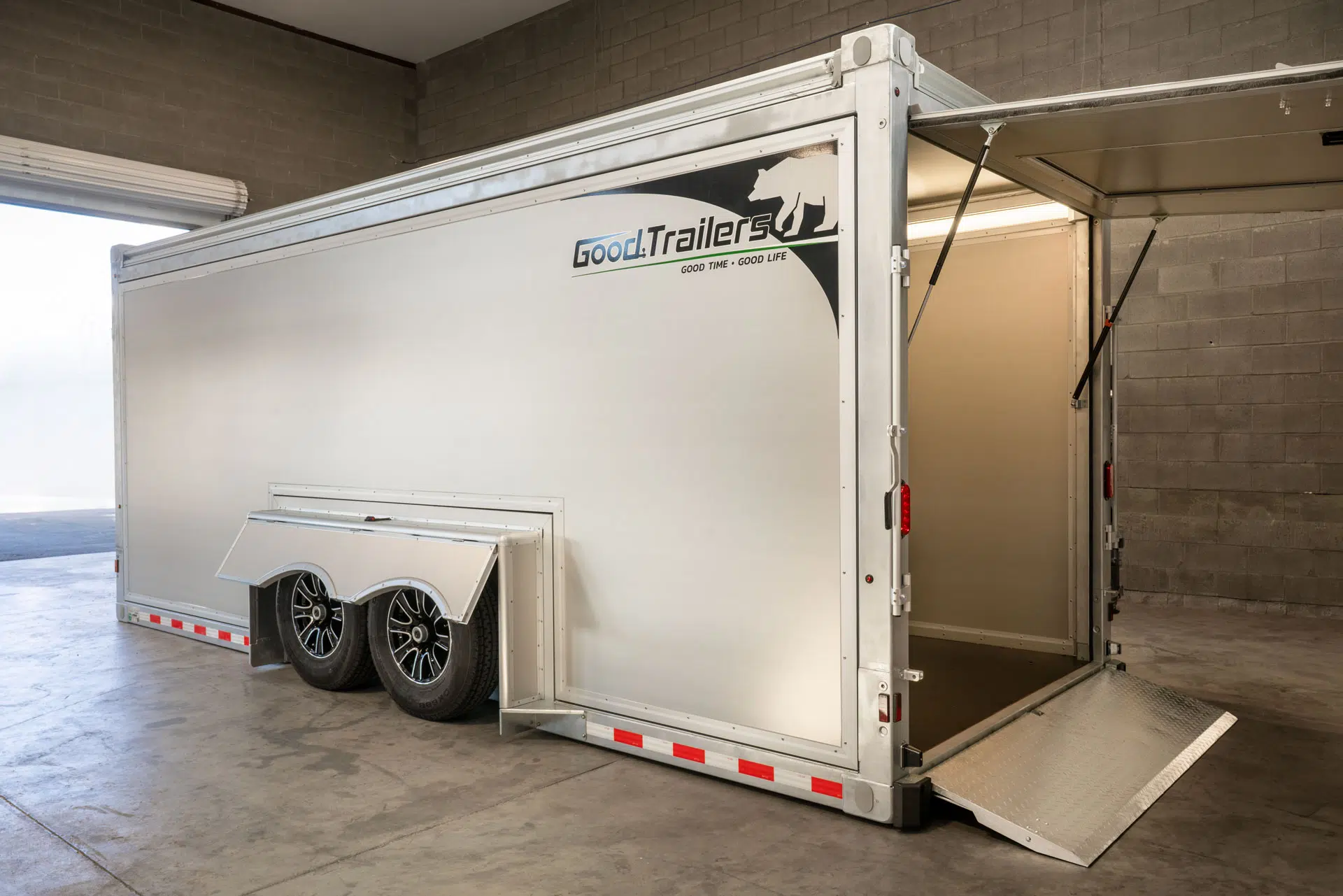
If your operation also transports tools, electrical equipment, finished components, or other cargo that benefits from protection from direct rain, road spray, and debris, an enclosed GoodMFG® drop deck may be worth comparing as well.
Remember that enclosed models also add a rear-opening dimension to the fit calculation.
Is a Drop Deck a Good Fit for Your Elevator Operation?
Every operation moves a different mix of equipment and components. If you’re evaluating one for your fleet, bring us the weight, dimensions, handling method, and securement requirements for the loads you move most often.
We can help you compare those requirements with our models so you can get help with the equipment your crew actually moves every day.
Find your nearest dealer or contact us today.
Loading form…
This resource was compiled by the GoodMFG® Product Team, drawing on 75 years of combined experience in hydraulic systems, heavy-duty transport, trailers, and modular structures.
P.S. – We build trailers every day, but we don’t run your crews. If there’s a specific logistical headache or a “field reality” we’ve missed, we want to hear about it. Help us refine the equipment that makes your day easier! Email our Marketing Lead at devan-h @ goodrv.com and let us know what we should solve next.