When you’re trying to find the right farm utility trailers, you need more than a steel box on wheels. You need a reliable, single-operator workhorse that helps you avoid some of the worst situations farmers face.
Like this one. It’s dark. It’s raining. You’re tired. You’re trying to move your skid steer or tractor yourself. You lower the narrow ramps on your standard farm utility trailer only to watch them sink two inches into soft mud.
You fire up the tractor, creep up the slick metal incline, hold your breath as the tires spin—and then hear that sickening crunch of an undercarriage high-centering over the breakover crest.
To avoid costly damage and physical strain, here are the essential features to evaluate when selecting farm utility trailers.
Table of Contents
- Can You Operate the Farm Utility Trailer Alone?
- Does the Farm Utility Trailer Protect Your Equipment?
- Is it Durable Enough to Keep Up?
- Do You Need a CDL to Haul These Farm Utility Trailers?
- Can You Sell Produce Out of These Farm Utility Trailers?
- What Farm Equipment Can a Good Trailer Haul?
- FAQ
- Key Takeaways
- Load Low, Haul Good
Can You Operate the Farm Utility Trailer Alone?
Getting enough hands to help out on a busy farm is always a challenge.
So you need to make sure that a single operator can move gear on and off the farm utility trailer without help from a pair of spotters.
Traditional trailers typically take one person to drive up narrow steel ramps, a second person to spot the wheels, and a third person to watch for undercarriage clearance. Without those spotters, there’s always a chance the equipment will slip right off the ramp.
The Hydraulic Drop Deck Advantage
A hydraulic ground-level trailer lowers the entire chassis flush to the ground in under 60 seconds with push-button simplicity.
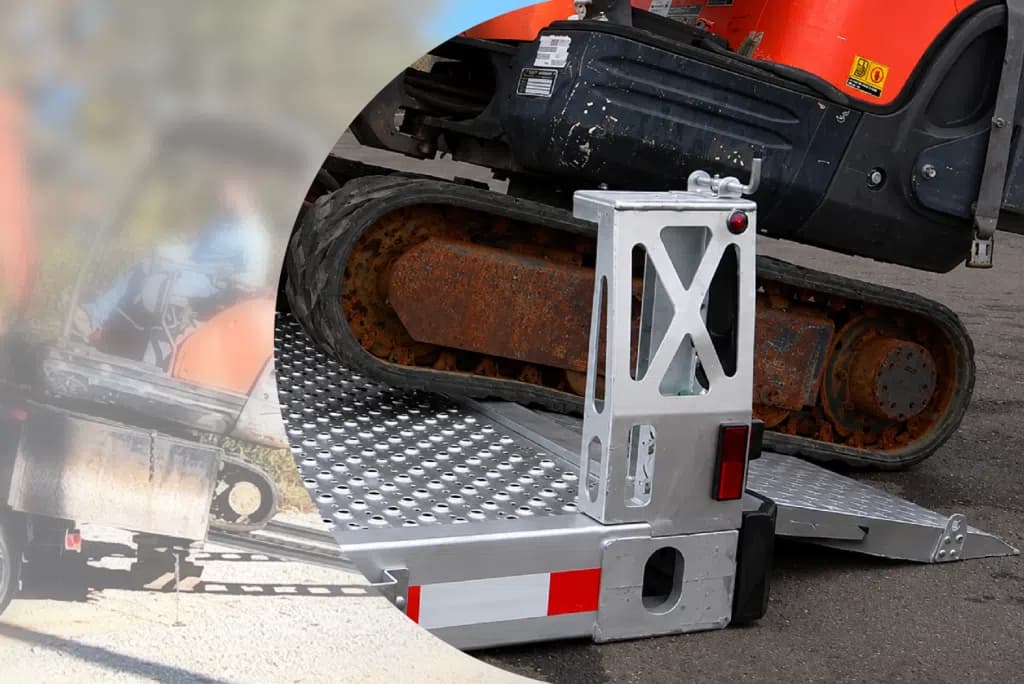
- Full-Width Entry: Drive straight onto a wide 22-inch spring-assisted short ramp that spans 74.4 inches wide.
- Gentle Approach Angle: An 11 approach angle makes driving onto the deck feel like transitioning from a street into a smooth driveway.
- Zero Ramp Lifting: Eliminates wrestling with heavy 50–80lb manual steel ramps multiple times a day, protecting operators from lower back strain and crush injuries.
Hydraulic drop deck trailers mean reduced equipment risk, reduced injury risk, and the power to allocate your scarce labor more productively. They really are the perfect farm utility trailers for compact and mid-sized equipment.
Does the Farm Utility Trailer Protect Your Equipment
Tipping isn’t the only risk when you’re trying to move heavy equipment.
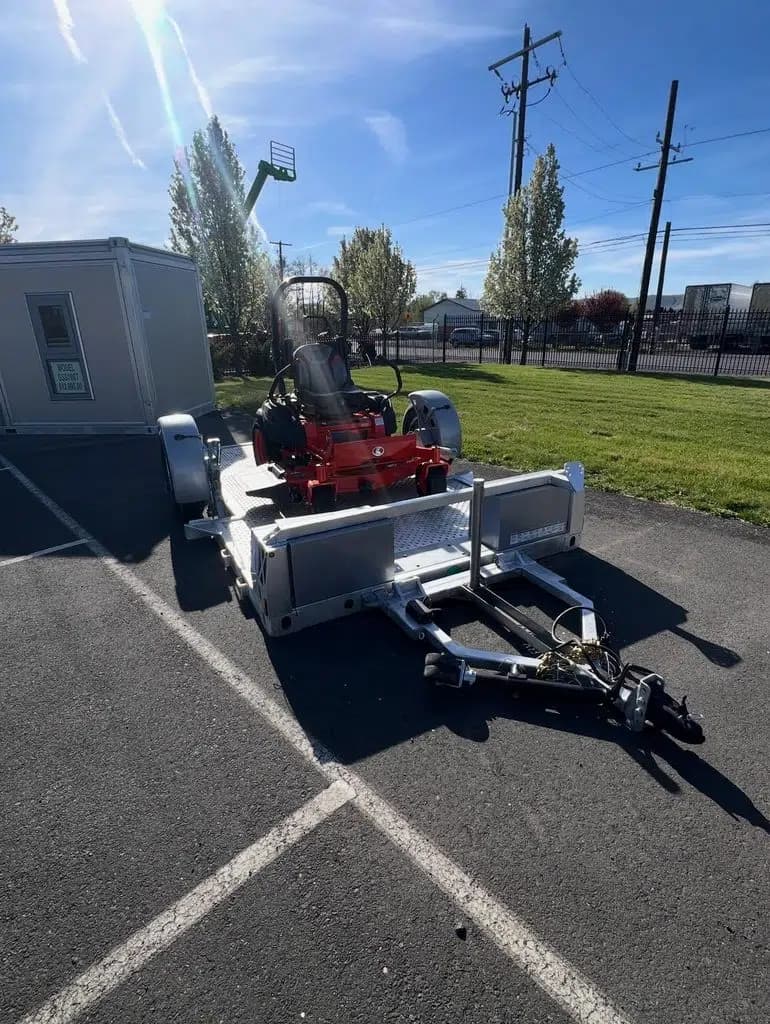
When you’re driving low clearance gear such as zero-turn mowers, small tractors, or other utility vehicles, the breakover angle at the crest of the ramp can momentarily cause the equipment to catch at the ramp before slamming down onto the deck. The underside hits the trailer edge, which can cause expensive structural damage.
Farm machinery is a massive financial investment. Repairing scraped belly pans, sheared hydraulic fittings, or bent mower decks gets expensive fast.
By lowering the deck to a 5.4” height, you eliminate the breakover angle. The ramp is too gentle and too short to create that kind of steep apex. Farm utility trailers that help you save thousands of dollars in heavy equipment damage pay for themselves very quickly.
Will These Farm Utility Trailers be Durable Enough to Keep Up?
If you opt for a standard budget trailer, you’re likely to be driving something that uses lightweight painted angle iron.
When you opt for a Good Trailer, you’re opting for:
- Hot-Dip Galvanized Steel: GoodMFG® trailers feature a heavy-duty galvanized chassis that withstands mud, standing moisture, and harsh agricultural chemicals.
- Enclosed Hydraulic Components: Hydraulic pumps, valves, and wiring are housed inside a weather-sealed, heavy-duty onboard toolbox to prevent corrosion and damage.
- 12V Shore-Power Battery System: Efficient power consumption ensures reliable, all-day operation on a single charge.
Now that’s how you get a trailer that stands up to mud, manure, and fertilizer. Good Trailers are great farm utility trailers because they’re positioned to delivery years of ROI. They’re also easy to service at any NATM-certified service center.
Do You Need a CDL to Haul These Farm Utility Trailers?
The last thing farmers need? Regulatory headaches. And needing a CDL just to move your everyday farm tools definitely counts.
Good Trailers offer a sweet spot as far as payload capacity goes.
Navigating commercial driver’s license (CDL) requirements creates unnecessary operational headaches. Understanding federal weight thresholds ensures anyone on your farm crew can tow legally.
A commercial driver’s license is generally triggered when the Gross Combination Weight Rating (GCWR) of the truck and trailer reaches 26,001 lbs. or more. GCWR = Tow Vehicle GVWR + Trailer GVWR.
The GT19FL features an 11,800 lbs. GVWR with a net carrying capacity of approximately 8,000 lbs. When paired with a standard 3/4-ton or 1-ton pickup, total combined weight stays comfortably below commercial CDL limits in most states, allowing your entire team to haul equipment legally.
Can You Sell Produce Out of Your Farm Utility Trailers?
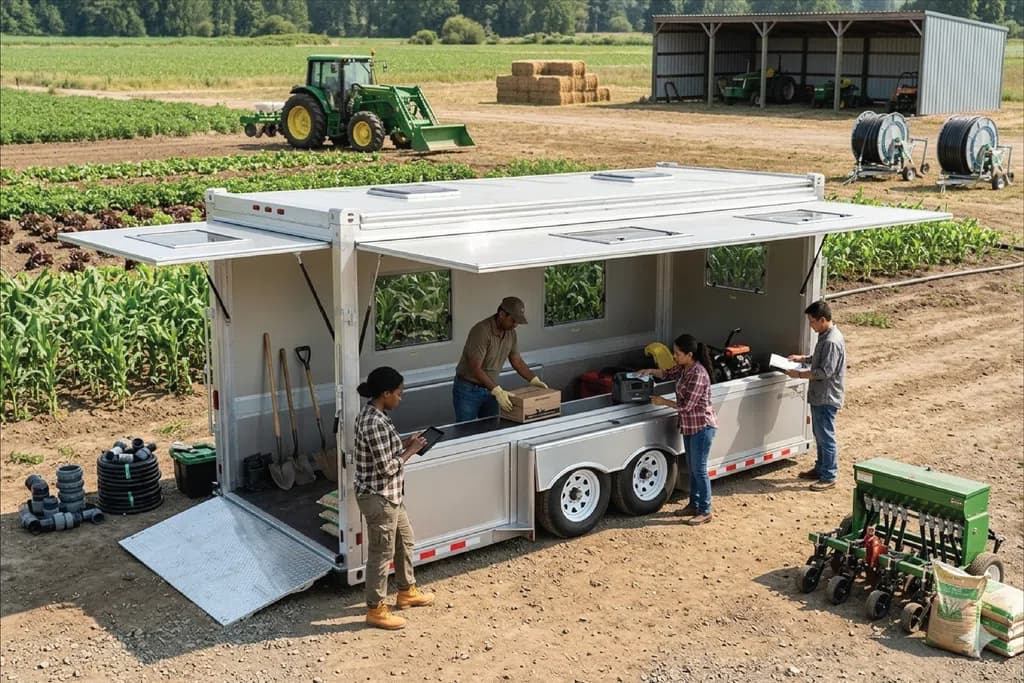
Farm utility trailers aren’t just for hauling dirt and machines. They can be vital tools for direct-to-consumer farm sales, farmers’ markets, and roadside stands. You have a couple of options here depending on how you want to sell.
Options include:
- Unload with ease at the market stand. Stick to your flatbed. Use your pallet jack to unload thousands of pounds of pumpkins or sweet corn. Because the deck lowers all the way down you can skip the forklift and use the pallet jack instead.
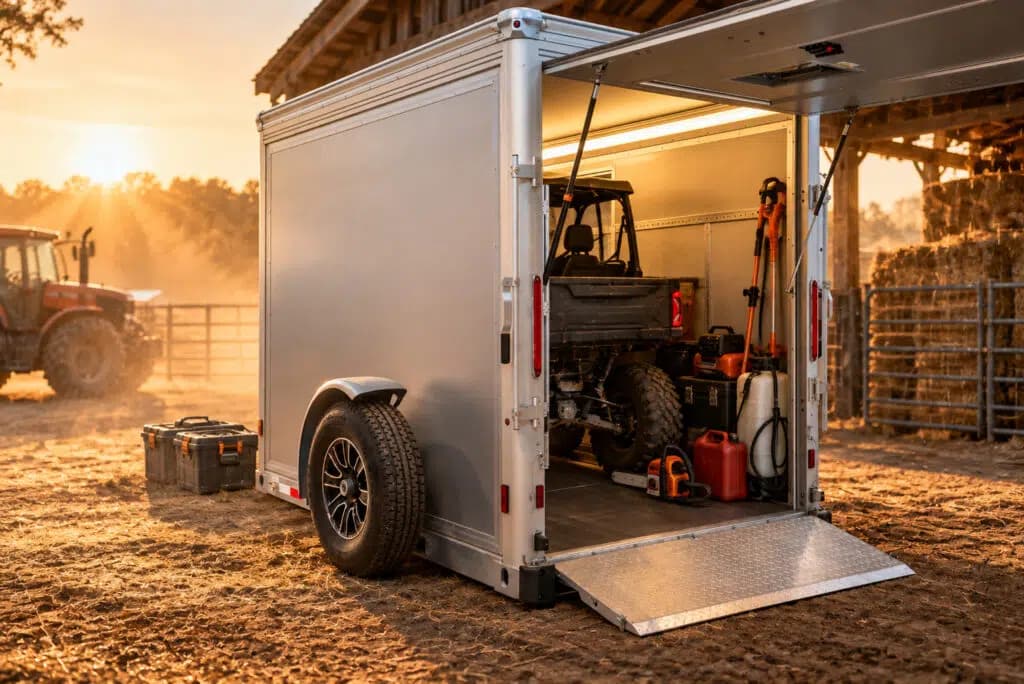
- Create a mobile farm stand. Use an enclosed trailer with lift panels or go all the way to our GT13AL-C model and take it to the farmer’s market. Create displays while enjoying insulated walls, rapid ground-level set-up, and gain the ability to work with your customers at ground level.
Avoid trip hazards. Never lift another heavy crate to the ground. Reduce fatigue and enjoy market day far more than you usually do.
What Farm Equipment Can a Good Trailer Haul?
It all depends on the weight, length, and width of the item you’re trying to hall. That said, you can haul:
- Small compact track loaders
- Utility tractors
- Bulk seed boxes & totes
- Liquid fertilizer totes
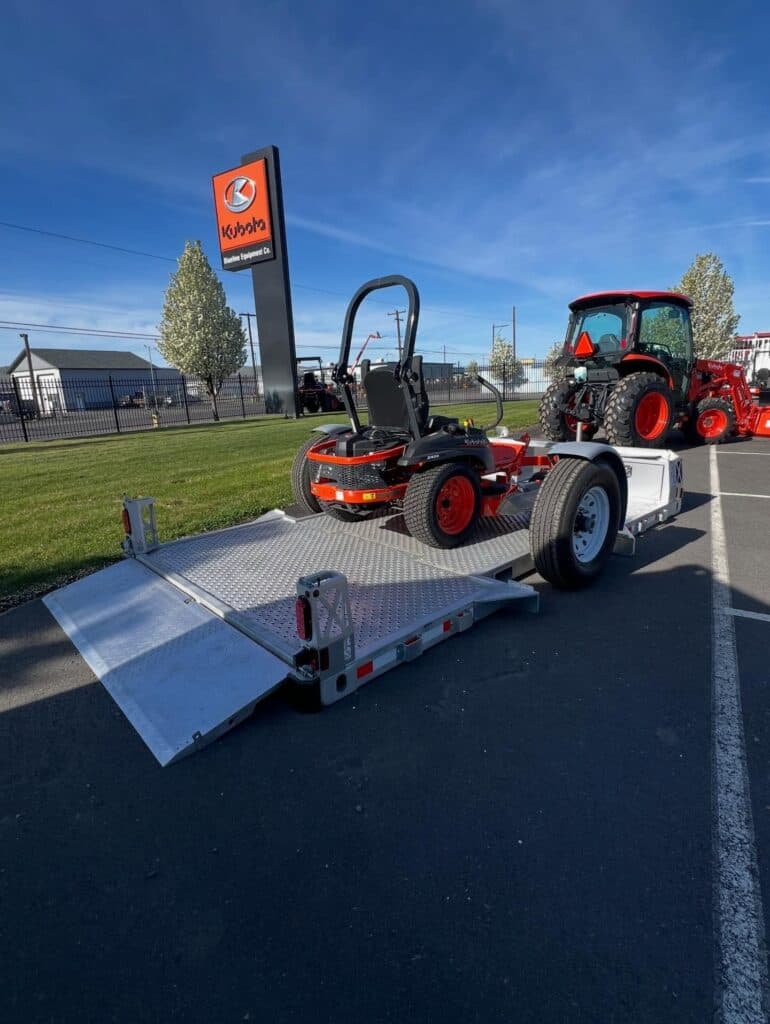
- Commercial zero turn mowers
- UTVs
- Pallets of feed or hay
The key is to keep what you haul under the 8,000 pounds carrying capacity.
FAQ
Can you load equipment on a drop deck trailer in wet, muddy, or icy conditions?
Yes. Because the deck lowers completely to the ground, machinery doesn’t rely on steep incline traction in order to load. Ground-level loading virtually eliminates dangerous ramp slide-offs in bad weather.
How long does it take to lower and raise a hydraulic drop deck trailer?
With push-button hydraulic controls, the trailer lowers completely flush to the ground in roughly sixty seconds.
Can a 19-foot flatbed trailer carry multiple pieces of farm gear at once?
Yes. With a generous deck footprint of 17.75’L x 6.8’W and a 8,000 payload capacity, the GT19FL can easily fit two compact machines, multiple seed totes, or a full utility vehicle with farm tools in a single trip.
Key Takeaways
Here’s what you should be thinking about as you choosing farm utility trailers for your operation.
- Traditional ramps are a hazard. Manual ramps cause back strain, slip risks, tip risks, and undercarriage high-centering.
- Ground-level loading saves time. Push-button hydraulic drop decks lower all the way to the ground in under 60 seconds and allows for effortless solo operation.
- Avoid the CDL. Keeping your GVWR under 11,800 lbs. means you can use most standard pick-ups to haul without triggering CDL limits. (Do check the CDL on your specific truck to be sure).
- Galvanized durability. The galvanized steel chassis on a Good Trailer protects your trailer against fertilizer, corrosion, rust, and harsh weather.
Load Low, Haul Good: Upgrade Your Farm Fleet Today
Stop wrestling with heavy, slippery ramps and get the farm utility trailer that protects your valuable farm machinery.
Ready to get started?
Find a dealer or contact us today!
See also:
The Complete Guide to Tractor Hauling Trailers
Does GoodMFG® Make Durable Trailers
How Drop Deck Trailers Handle Extreme Weather
This resource was compiled by the GoodMFG® Product Team, drawing on 75 years of combined experience in hydraulic systems, heavy-duty transport, trailers, and modular structures.
P.S. – We build trailers every day, but we don’t run your crews. If there’s a specific logistical headache or a “field reality” we’ve missed, we want to hear about it. Help us refine the equipment that makes your day easier! Email our Marketing Lead at devan-h @ goodrv.com and let us know what we should solve next.