Want to lower labor costs? Think hard about the number of crew members it takes to load and unload your trailers right now.
If you’re running standard utility trailers or tilt deck trailers, you’ll likely dispatch up to three crew members to wrestle machinery or heavy materials up steep ramps just to avoid costly tip-overs and undercarriage damage.
You’ve watched billable minutes tick away while your team spends 30 minutes setting up narrow ramps, checking wheel alignments, and carefully coaxing equipment up an incline. You know down to the dollar what you’re paying each worker per hour just to get a scissor lift, track loader, or pallet onto a deck before the day’s actual work can even begin.
With hydraulic drop deck trailers, you can reduce load times to under 5 minutes with a single operator. Here is how upgrading your fleet helps you lower labor costs and allows your new trailer to pay for itself within its first year on the road.
Table of Contents
- Lower Labor Costs with Solo Loading
- Slash Downtime to Lower Labor Costs
- Reduce L&I Claims
- FAQ
- Key Takeaways
- Load Low, Save More
Lower Labor Costs with Solo Loading
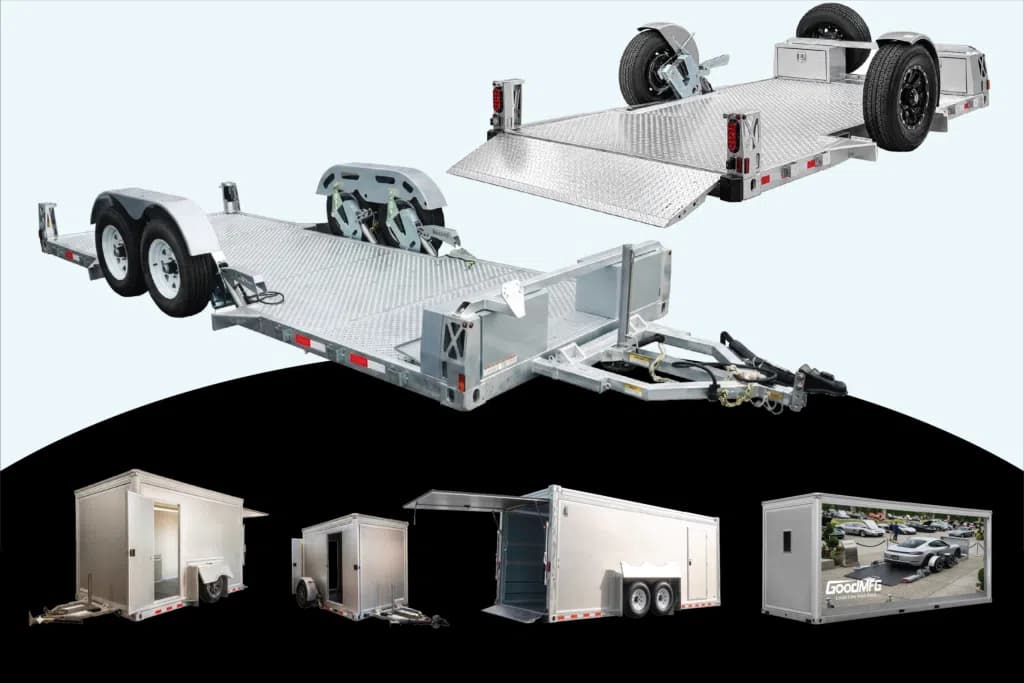
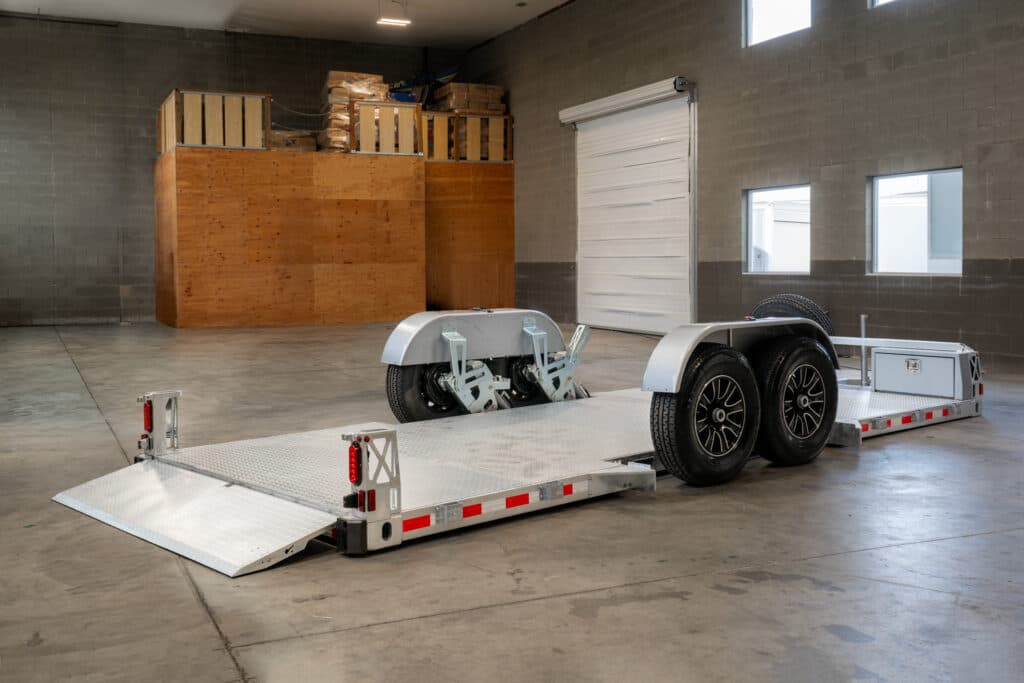
A hydraulic drop deck trailer lowers the entire deck flush to the earth at the push of a button. Once lowered, the deck sits at a ground clearance of just 5.4 inches.
Instead of long, narrow, split-ramp balance beams, an integrated 22-inch long, 74.4-inch wide, spring-assisted fold-out short ramp spans the entire rear width of the trailer at a shallow 11° approach angle.
This creates an ultra-gentle roll-on transition for forklifts, pallet jacks, and low-clearance track machines. Because there is zero risk of sliding off a narrow ramp edge, one operator can generally handle the entire loading and securing process alone, freeing the rest of your crew to focus on billable field work.
Slash Downtime to Lower Labor Costs
Crew members can’t generate revenue with equipment that is stuck in transit.
When a crucial piece of gear or palletized material is delayed by slow loading routines, an entire multi-man crew stands idle on the job site waiting for it to arrive.
Slashing load and unload cycles from 30 minutes down to 5 minutes speeds up equipment arrivals across concurrent job sites. Your teams get to work faster, complete projects ahead of schedule, and eliminate non-productive payroll burn.
Reduce L&I Claims
Loading top-heavy machinery or bulky cargo onto a high trailer deck presents constant slip, fall, and tip-over risks. Reaching up to strap down equipment on an elevated platform only increases the likelihood of strains and falls.
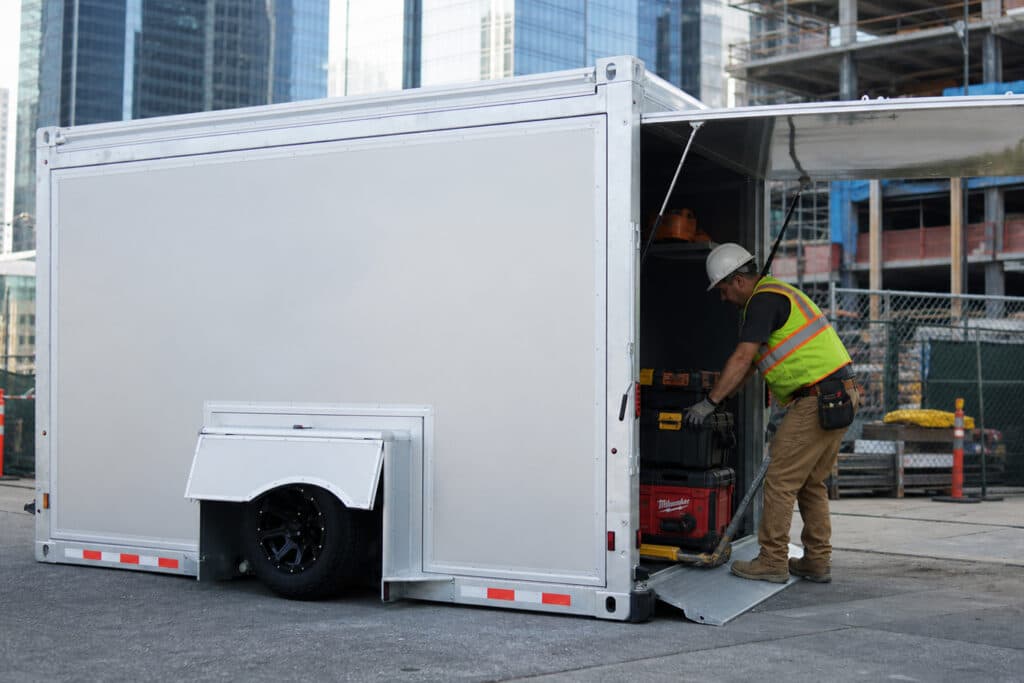
- Ground-level securement. Operators tie down loads at natural heights while standing safely on solid grounds.
- Reduced breakover risks. Eliminating of steep ramp peaks should prevent machines from tipping backward or sliding during rainy weather.
Lowering physical injury risks directly protects your workforce while preventing costly Workers’ Comp (L&I) claims and workers’ compensation insurance premium hikes.
FAQ
How does a hydraulic drop deck trailer allow for single-operator loading?
By lowering flush to the earth with an ultra-shallow 11° approach angle and a full-width rear ramp, equipment can be driven straight onto the deck without spotters, balancing risks, or narrow ramp alignment.
How much time can a drop deck trailer save during loading and unloading?
Hydraulic drop decks reduce setup and load times from roughly 30 minutes down to under 5 minutes per cycle, keeping your field crews focused on billable work rather than waiting on equipment arrivals.
How do drop deck trailers help reduce L&I and Workers’ Comp claims?
Operators bind down and secure loads while standing safely on solid ground at natural height. Eliminating steep ramps and high trailer edges drastically minimizes slip, fall, and tip-over injuries.
How fast can a drop deck trailer pay for itself in labor savings?
By cutting required loading crews from 3 workers down to 1 and eliminating 25 minutes of idle payroll burn per load cycle, most fleets recover the trailer’s purchase price within its first year of operation.
Key Takeaways
Want your trailers to actually help you lower labor costs?
- Slash payroll overhead. Converting a three-man, 30-minute loading drill into a one-man, 5-minute task cuts labor costs per load from roughly $45 down to $2.50. Those savings add up.
- Eliminate crew idling. Faster transit times mean machinery arrives at job sites on schedule, eliminating costly worker downtime.
- Minimize injury risks. Tie-downs at ground level and an 11° slope dramatically reduces slips, falls, and L&I claims.
- Rapid ROI realization. The accumulated savings from reduced labor hours, lower insurance risks, and faster job completion allow a drop deck trailer to pay for itself quickly over a single work year.
Upgrading to hydraulic drop deck trailers might be one of the smartest moves you make this year.
Load Low, Save More
Ready to turn your equipment trailers into tools for maximum job-site productivity? Contact us today to learn how GoodMFG® drop deck trailers can streamline your fleet’s daily operations.
See also:
Solo Loading for Heavy Equipment
Optimizing Daily Equipment Moves on Active Construction Sites
How to Reduce Heavy Equipment Loading Injuries
This resource was compiled by the GoodMFG® Product Team, drawing on 75 years of combined experience in hydraulic systems, heavy-duty transport, trailers, and modular structures.
P.S. – We build trailers every day, but we don’t run your crews. If there’s a specific logistical headache or a “field reality” we’ve missed, we want to hear about it. Help us refine the equipment that makes your day easier! Email our Marketing Lead at devan-h @ goodrv.com and let us know what we should solve next.