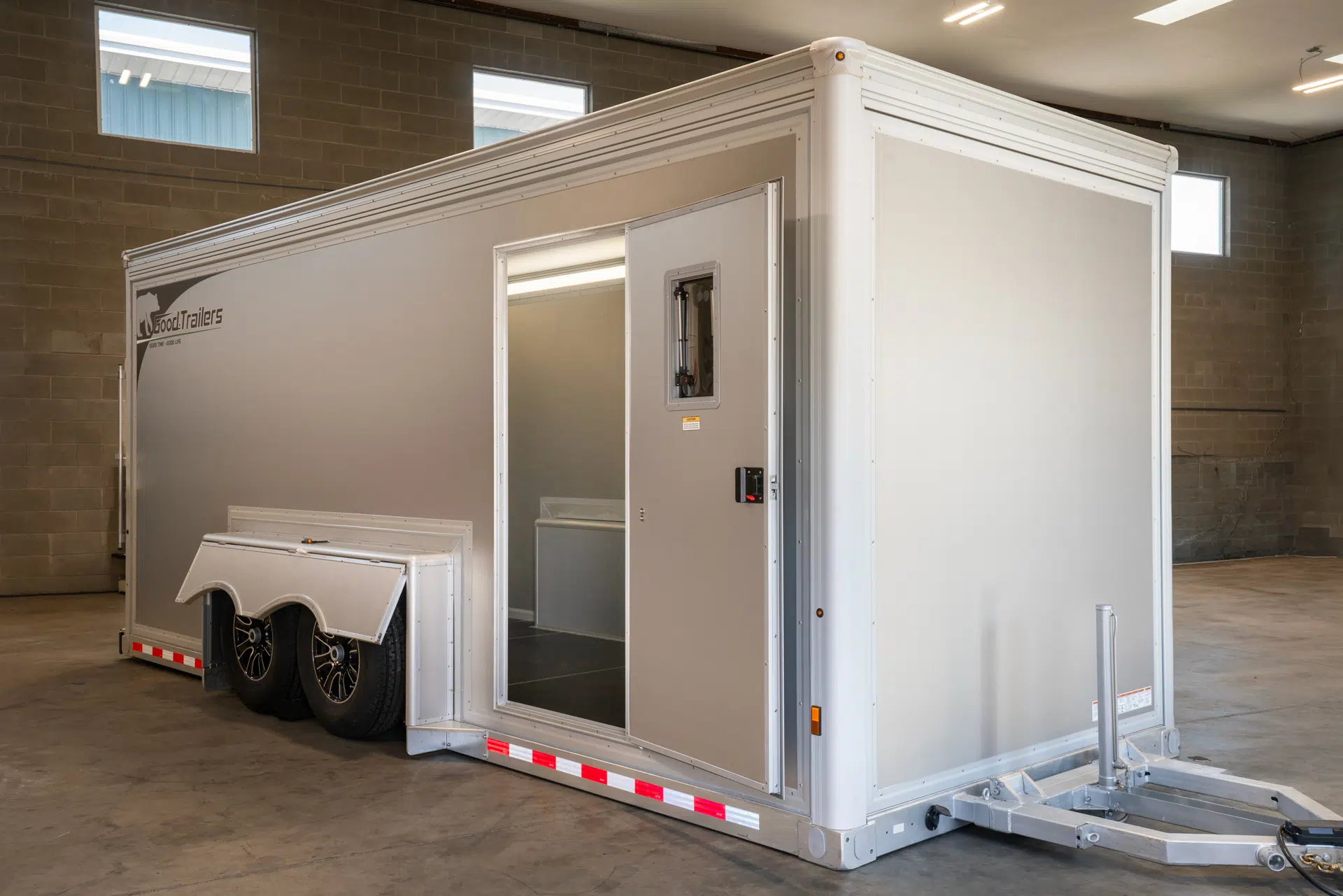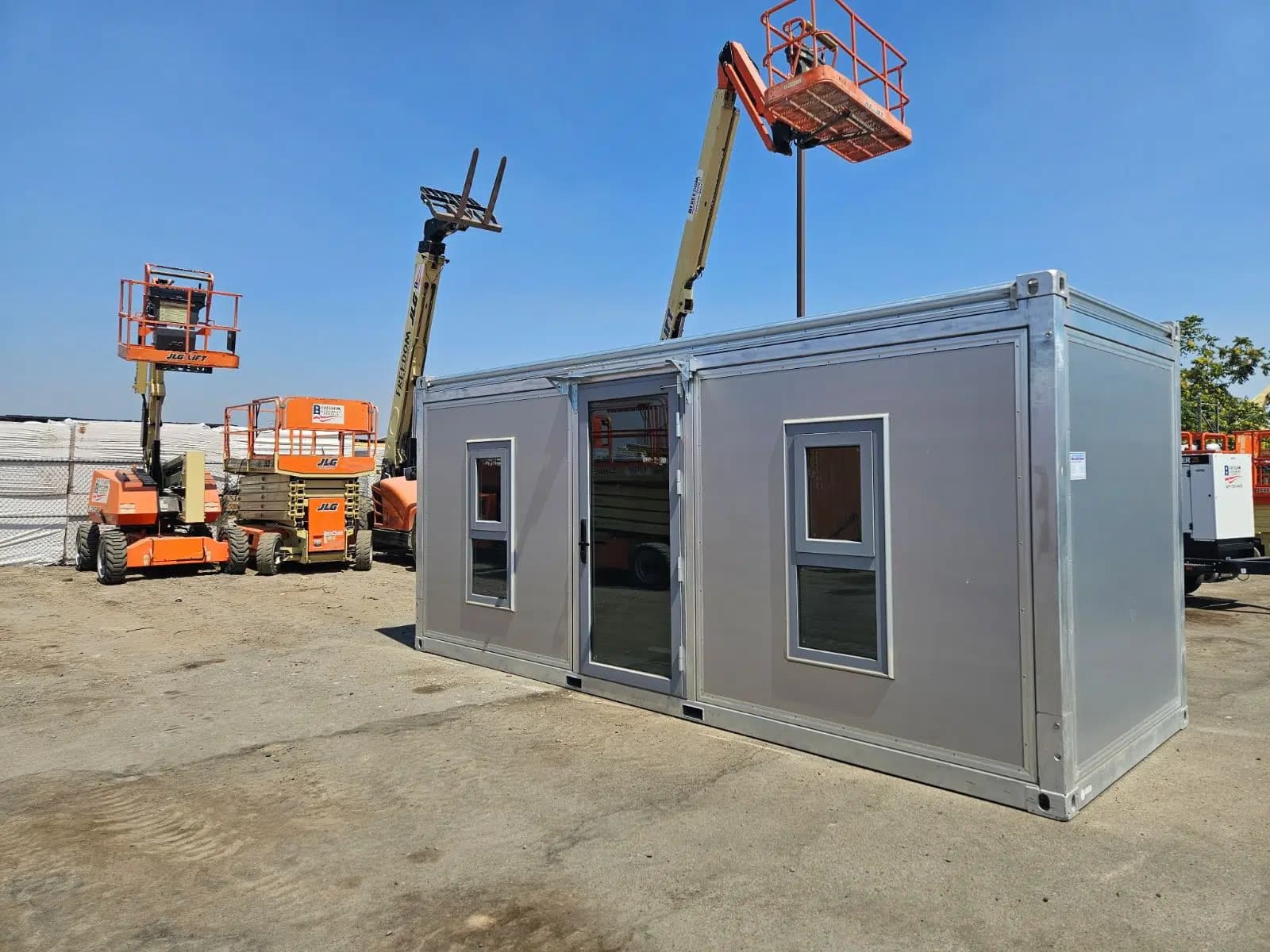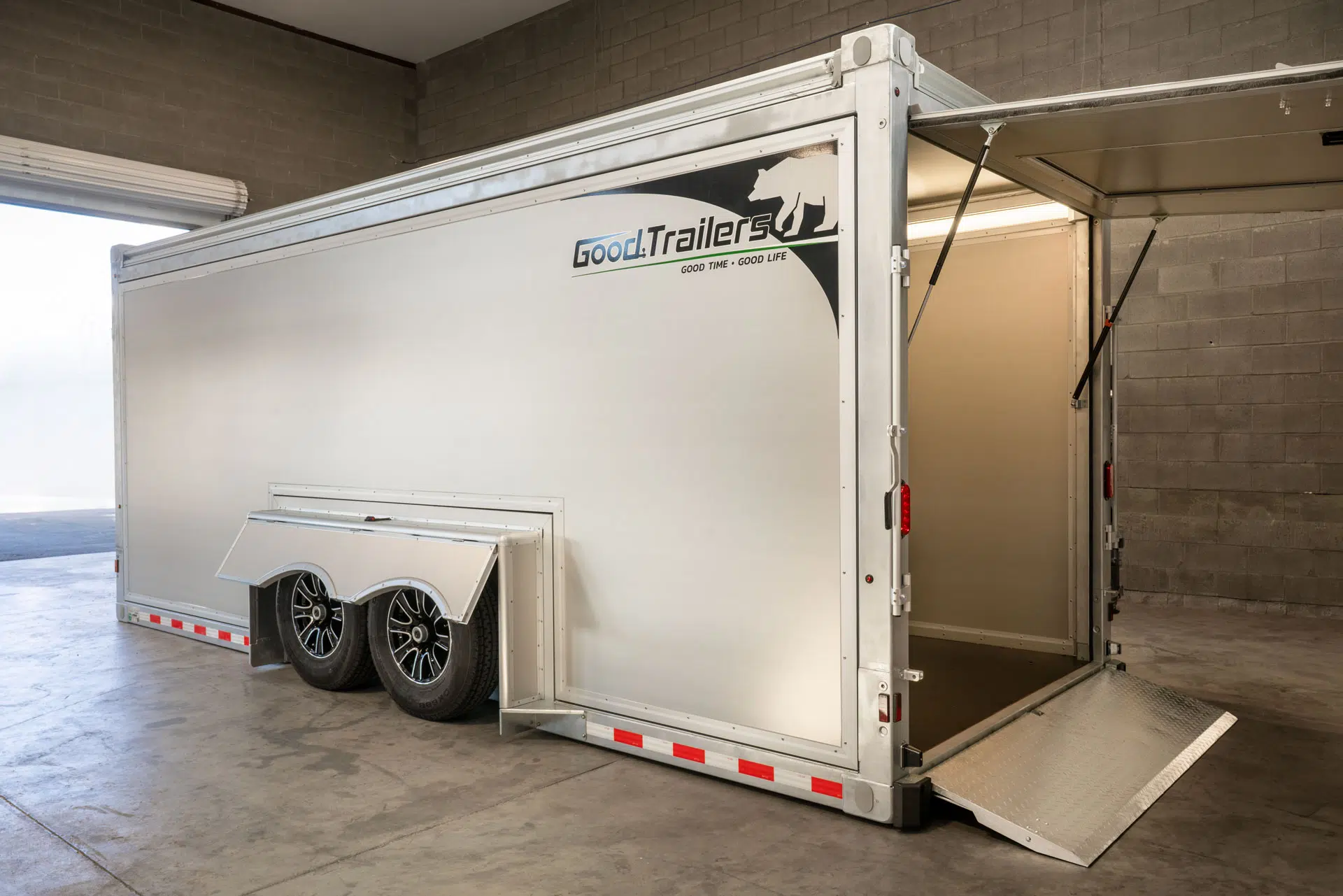
One of the best things about Good Modular Structures is the ability to stack and link compatible units to create larger configurations using our corner casters and locking corner connectors.
In the past, we’ve used this capability to create retail spaces, warehouses, offices, and more.
Our patented corner caster and connector system is what makes those expanded layouts possible.
Table of Contents
Caster Connectors
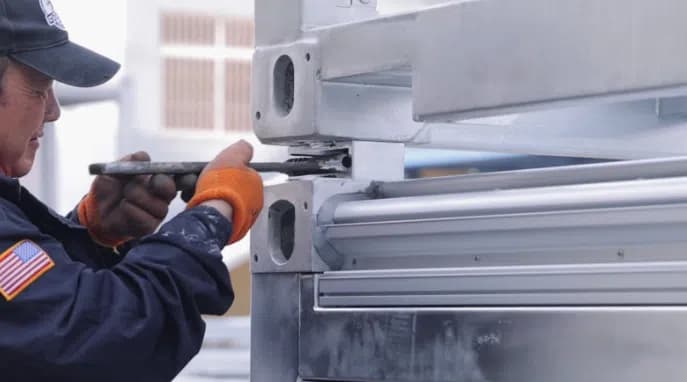
Each corner caster is joined using a corner connector that slips into the caster, twists, and locks into place.
There are several connector configurations, including connectors designed to join one structure above another and connectors used to link structures side by side. There are also connectors designed to bring multiple corner casters together at the same junction.
Depending on the configuration, the connectors lock compatible units together horizontally or vertically.
Once the appropriate connectors are installed and locked at the required corners, they help hold the individual structures together as part of the planned modular configuration.
The system works through two complementary features. First, the mating shapes inside the corner-caster assembly engage when the structures and connectors are positioned correctly. Second, the connector twists and locks to secure the connection.
That gives us a standardized way to join individual modules while still preserving the ability to reconfigure compatible structures later as needs change. Our current modular guidance describes GoodMFG® structures as linkable, stackable, reconfigurable, and relocatable in suitable configurations.
Frequently “Cast” Questions
How difficult is it to use these connectors?
If you need to reconfigure Good Modular Structures, the locking system is relatively straightforward once you understand the procedure.
We recommend having one of our team members or an authorized dealer show you the correct process before attempting to connect, disconnect, stack, or relocate structures yourself, or outsource the process to a qualified professional.
You’ll typically also need the appropriate tools to tighten or loosen the connector hardware.
For larger configurations, the connector itself is only one part of the planning process. The weight of the structures, lifting equipment, site conditions, foundation or support requirements, and the final layout all need to be considered.
What are the caster connectors and corner casters made out of?
Our corner casters and connectors are made from galvanized steel.
Galvanizing helps protect the steel against corrosion, which is useful for structural hardware that may spend much of its service life exposed to outdoor conditions.
How secure are linked structures?
The corner-caster and connector system is designed to hold compatible GoodMFG® modular structures together in approved linked or stacked configurations.
Depending on the layout and intended use, structures can be configured with interior divisions or combined to create larger usable spaces.
The exact arrangement matters. Number of units, model selection, loading, site conditions, anchoring, foundations, and other installation requirements can affect what configuration is appropriate.
For that reason, we recommend planning larger linked or stacked projects with our team rather than assuming any group of units can be connected in any arrangement.
How many Good Modular Structures can be linked or stacked?
There is not one universal number that applies to every project.
Compatible GoodMFG® modular structures can be linked side by side or stacked, but the number and arrangement depend on the models being used, intended use, loading, site conditions, and the final configuration.
Tell us what you want the finished space to do, and we can help plan the arrangement and confirm the applicable stacking limits, connections, foundation, and anchoring requirements before installation.
Can the structures be reconfigured later?
One of the advantages of the modular system is that compatible units can be linked, stacked, relocated, or reconfigured as needs change.
That does not mean an assembled structure should simply be disconnected and moved without planning. The configured weight, lifting method, site conditions, utilities, anchoring, and other installation details still need to be considered before changing the layout.
Start Your Project with Good Modular Structures
What are you trying to create?
A warehouse? A temporary office complex?
Good Modular Structures can be used individually or combined into larger layouts when a single module isn’t enough.
Because much of the construction is completed before the units reach the site, some basic configurations can also be assembled relatively quickly on a prepared location. More complex arrangements take additional planning for placement, utilities, connections, anchoring, and approvals.
And if your needs change later, the modular system gives you options to reuse, relocate, link, or reconfigure compatible units rather than necessarily starting over with an entirely new structure.
Ready to get started?
Loading form…
See also:
Modular Structure Buyer’s Guide
Solving Short-Term Space Problems with GoodMFG®
Rapid Deployment Modular Structures: What to Plan Before You Need the Space
This resource was compiled by the GoodMFG® Product Team, drawing on 75 years of combined experience in hydraulic systems, heavy-duty transport, trailers, and modular structures.
P.S. – We build trailers and modular structures every day, but we don’t run your operation. If there’s a specific logistical headache or a “field reality” we’ve missed, we want to hear about it. Help us refine the equipment that makes your day easier! Email our Marketing Lead at devan-h @ goodrv.com and let us know what we should solve next.