Farm storage needs rarely stay the same all year.
Seed arrives before planting. Parts and repair supplies accumulate during busy seasons. Market inventory, tools, packaging materials, and seasonal equipment all need somewhere protected and accessible—sometimes for a few weeks, sometimes for years.
That makes modular farm storage useful for a simple reason: it gives an operation enclosed storage space without requiring every new need to become a permanent building project.
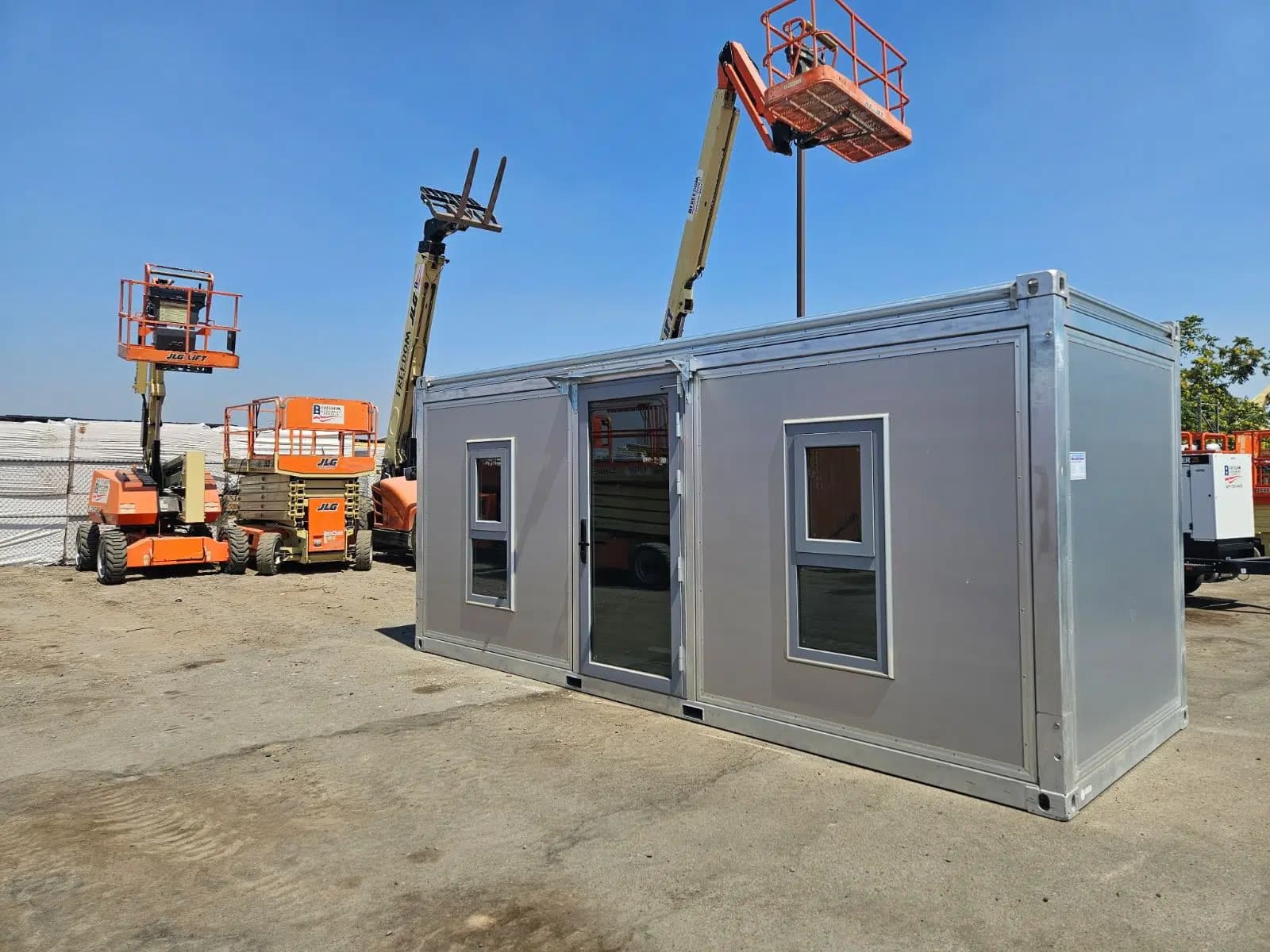
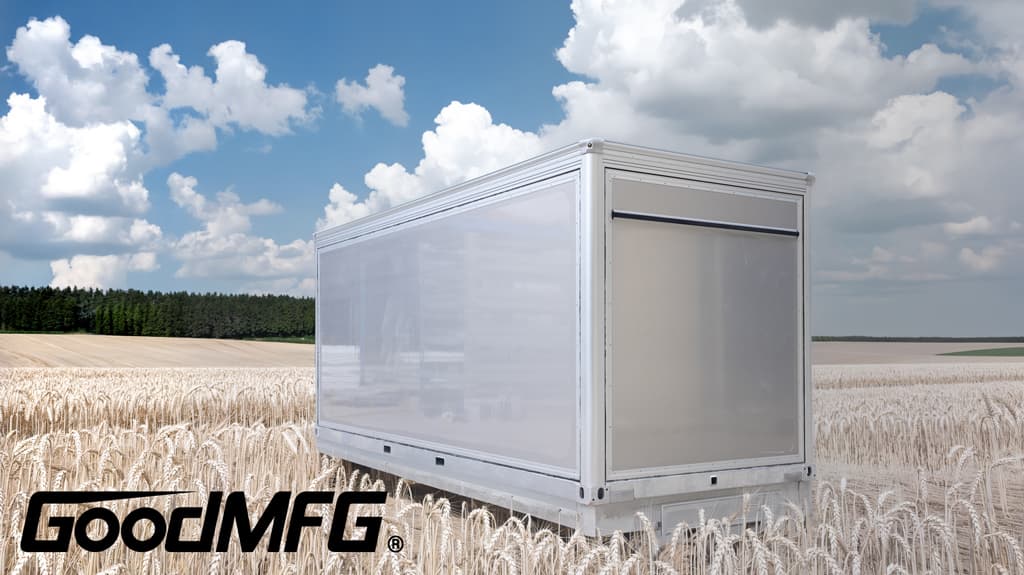
GoodMFG® modular storage units provide a clean, lockable, insulated enclosure that can be used individually or combined with additional units as the operation grows. Current storage models range from approximately 85 to 126 square feet of floor space, with high-cube versions available when additional vertical clearance matters.
Table of Contents
What Makes Farm Storage Different?
Farm inventory changes with the season.
A storage space that holds planting supplies in spring may be used for repair parts, irrigation components, tools, packaging materials or market supplies later in the year.
That makes flexibility valuable.
GoodMFG® modular structures are factory-built storage units that can be used individually or linked with compatible units in larger configurations. Structures may be reconfigured or relocated at need.
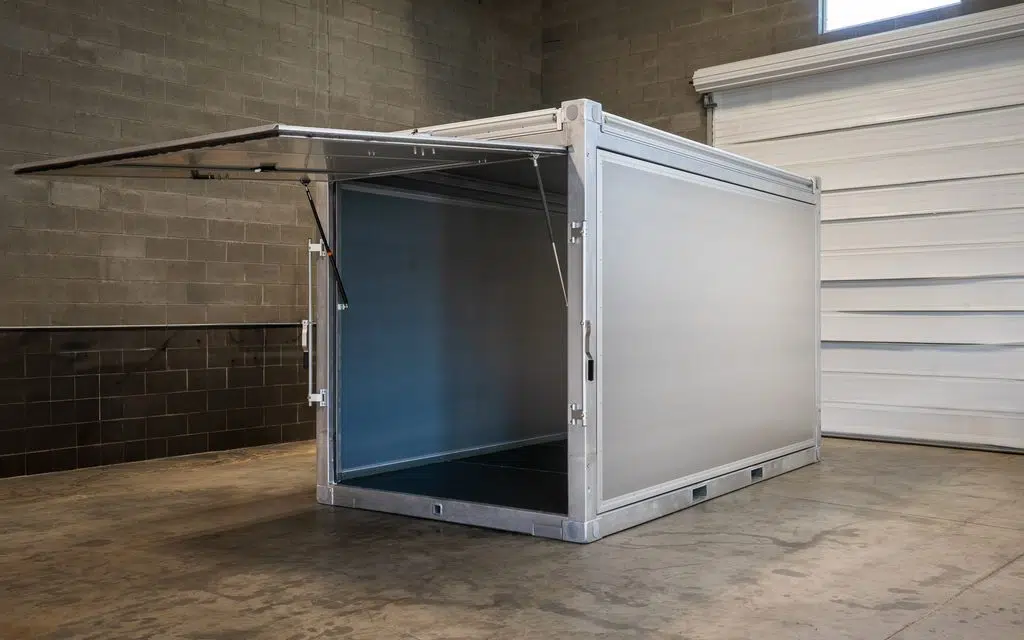
For an agricultural operation, that can make sense when:
- Seasonal inventory temporarily exceeds existing barn or shop space
- Valuable parts need cleaner storage than a farm shed provides
- Tools or packaged materials need a lockable enclosure that’s kept near the work
- The farm is expanding but doesn’t need another permanent building
- Storage needs move from one part of the operation to another over time.
The advantage is adaptable enclosed space.
What Will You Store?
Before choosing a storage structure, divide inventory into categories.
A farm might need storage for:
- Packaged seeds
- Repair parts
- Hand & power tools
- Irrigation components
- Empty packaging & market supplies
- PPE & work supplies
- Dry non-hazardous materials
- Equipment accessories
- Seasonal retail inventory
Each has different requirements.
Some of these items only need to be kept out of direct weather.
Others may be sensitive to heat, humidity, pests, contamination, or freezing. Some agricultural chemicals may be heavily regulated.
So, don’t start with: “How much can I fit?”
Start with: “What environmental and handling requirements does this inventory have?”
Once you know that, you can choose farm storage solutions that make sense for your operation.
Protecting Seed from Moisture & Temperature
Seed storage guidance consistently emphasizes the need to keep seeds in cool, dry conditions.
An enclosed modular structure can provide a solid outer storage environment. For commercially packaged seed products that require precise environmental control, you may need to add a mini-split AC, or you may need to plan appropriate dehumidification or monitoring.
Insulated Farm Storage
GoodMFG® modular structures use composite panels made with a polystyrene foam core between sheets of #5052 aluminum. That insulated construction slows heat transfer through the walls and roof compared with an uninsulated metal skin.
An insulated enclosure is less directly responsive to rapid outdoor temperature changes than a thin, uninsulated metal shell.
It can also help reduce the conditions that contribute to interior surface condensation by keeping interior-facing surfaces from becoming as cold as an uninsulated exterior metal panel. Our experience with our own modular structures here in the Pacific Northwest has been very good. Under normal storage use, we’ve not observed interior condensation becoming a recurring problem.
That doesn’t mean exterior temperatures and humidity can’t ever cause a problem, but it does mean, to the extent we found it possible, that we’ve designed our modular storage units to reduce the likelihood of internal condensation.
Clean, Dry Farm Storage Starts with the Building
There is a big practical advantage to using a new, purpose-built storage structure. You get to know its starting history.
A new GoodMFG® modular structure has not spent years carrying unknown freight or storing someone else’s materials before it arrives at your farm. You start with a new enclosure, rather than inheriting an unknown storage history.
When you’re storing parts, tools, or market supplies where cleanliness matters, that can make a big difference and give you real peace of mind.
GoodMFG® modular storage units also use aluminum composite wall panels and galvanized steel framing rather than conventional exposed wood wall construction. They’re designed for durable, long-term use.
We water test every unit as part of our quality-control process, before they leave the facility.
Pest Resistant Farm Storage Structures
If you need your farm storage structure to keep rodents and insects out, Good Modular Structures are a good bet. The walls don’t provide the same easily chewed organic substrate as exposed wood does.
These modular structures can support a strong pest-exclusion strategy. Of course, these structures should still be inspected and maintained just like any other agricultural storage building.
Right Sizing Your Farm Storage
oodMFG® currently offers standard-height and high-cube storage models in 13-foot and 19-foot lengths.
| Model | Interior Dimensions | Floor Area | Interior Volume |
|---|---|---|---|
| GM13ST | 12′6″ × 6′9″ × 7′4″ | 85 ft² | 629 ft³ |
| GM19ST | 18′7″ × 6′9″ × 7′4″ | 126.48 ft² | 936 ft³ |
| GM13HQ | 12′6″ × 6′9″ × 8′6″ | 85 ft² | 725.5 ft³ |
| GM19HQ | 18′7″ × 6′9″ × 8′6″ | 126.48 ft² | 1,075 ft³ |
Choose the 13-foot model when:
You need a relatively compact footprint for tools, parts, packaged supplies or overflow inventory.
Choose the 19-foot model when:
You need more shelving, aisle room, larger inventory quantities or several storage zones inside one structure.
Choose a high-cube model when:
Floor space is adequate but vertical clearance or taller shelving would improve the way you use the space.
The important distinction is that high-cube models add height, not floor area.
Scale Up When Seasonal Storage Needs Change
Storage demand in the busiest month may be completely different from storage demand six months later.
GoodMFG® structures use a corner-caster and connector system that allows compatible units to be linked or stacked in approved configurations. They are designed to be reconfigured as needs change.
That gives a farm several options:
- Start with one unit.
- Add another when inventory expands.
- Use separate units for categories that should remain segregated.
- Reconfigure the layout when the operation changes.
- Relocate units when storage is needed somewhere else.
That flexibility is useful!
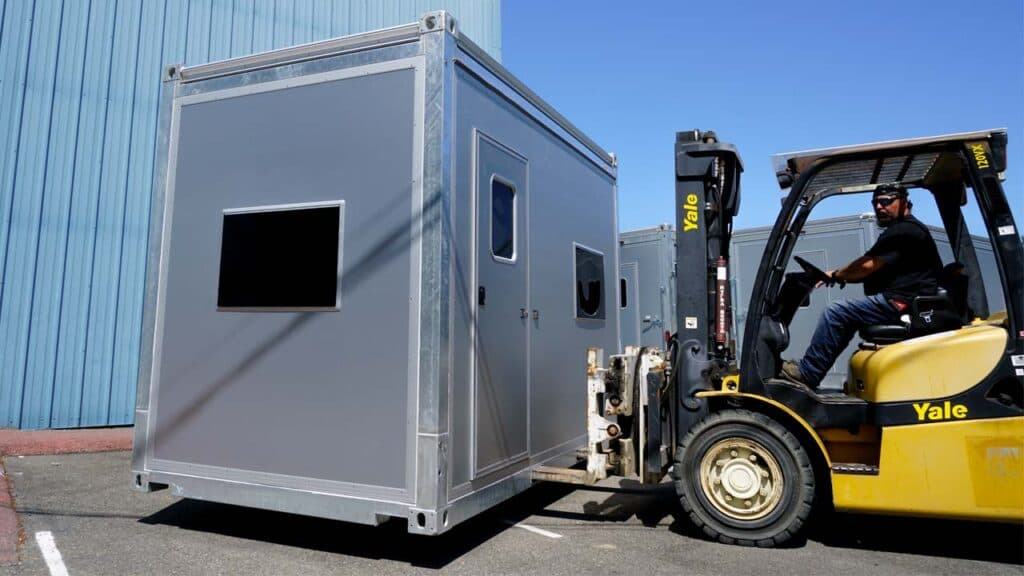
You can, by the way, move Good Modular Structures with a standard forklift.
Where Should Modular Farm Storage be Located?
You don’t necessarily need to pour a concrete foundation just because you’re adding storage. You can place a Good Modular Structure if the site is:
- Reasonably level
- Stable enough for the structure and its contents
- Accessible for delivery & placement
- Located where water will not routinely pool around it
- Arranged so doors and lift panels have adequate operating clearance.
Depending on the site, pavement, concrete, packed dirt, or properly prepared concrete gravel may all be practical choices.
Local requirements and the final structuring configuration can affect anchoring, permits, and placement, so confirm those requirements before delivery.
What Shouldn’t Go in General Farm Storage?
“Farm supplies” is an extremely broad category.
Fuel, pesticides, certain fertilizers, compressed gasses, batteries, and other materials can have specific fire code, ventilation, spill-containment, temperature, segregation, and hazardous materials requirements.
Consult your product’s Safety Data Sheet, label requirements, and applicable regulations before choosing to store it in a Good Modular Structure.
FAQ
Is a GoodMFG® modular structure rodent-proof?
There isn’t a building in the world that’s completely rodent-proof.
However, GoodMFG®’s modular structures use composite aluminum panels and galvanized steel framing rather than exposed wood wall construction. This can make it useful to a pest-exclusion strategy.
Doors, seals, penetrations and any damaged areas still need to be inspected and maintained.
Can GoodMFG®’s modular structures be climate controlled?
GoodMFG® offers modular configurations with optional mini-split systems.
Adding HVAC does not automatically make a structure suitable for every temperature or humidity sensitive ag product.
Determine the required storage range first, then design the environmental control system around it.
Can I expand the storage later?
Yes, compatible GoodMFG® modular structures are designed to be linked or stacked in approved configurations, and layouts can be expanded or reconfigured as needs change.
Key Takeaways
Here’s the TL;DR if you’re looking for a solid farm storage solution.
- Good farm storage starts with the inventory. Seed, parts, tools, packaged supplies and agricultural chemicals can have very different storage requirements.
- GoodMFG® modular structures provide new, lockable, insulated and weather-resistant enclosed spaces. Current models offer 85 or 126.48 square feet of floor area. High cube versions are also available.
- Modularity is especially useful for seasonal agriculture. Compatible structures can be added, linked, relocated, or reconfigured as storage needs change.
- Not every agricultural material belongs in general-purpose storage. Verify requirements for chemicals, fuels, batteries, and other regulated materials before deciding where to store them.
Give Farm Inventory a Better Place to Live
Farm storage doesn’t have to be complicated. Good Modular Structures provide durable, insulated, lockable homes for inventory that shouldn’t be sitting under a tarp or scattered around the shop.
Ready to upgrade? Find your nearest dealer, or contact us for options.
Loading form…
See also:
Clean, Dry Storage: An Alternative to Shipping Container Condensation
This resource was compiled by the GoodMFG® Product Team, drawing on 75 years of combined experience in hydraulic systems, heavy-duty transport, trailers, and modular structures.
P.S. – We build trailers every day, but we don’t run your crews. If there’s a specific logistical headache or a “field reality” we’ve missed, we want to hear about it. Help us refine the equipment that makes your day easier! Email our Marketing Lead at devan-h @ goodrv.com and let us know what we should solve next.