Moving concrete grinders from job to job is rarely as simple as checking the weight of one machine.
A floor-preparation crew may also need to transport dust-control equipment, tooling, cables, hoses, weights, hand tools, and other support gear. Depending on the job, water-control or dust-extraction equipment may be part of the operating setup as well.
That means the best trailer for moving concrete grinders needs to answer several questions:
- How heavy is the complete load?
- Will the machine fit through the trailer opening?
- What loading angle does the grinder manufacturer allow?
- How will everything be secured for transport?
- Does the equipment need protection from the weather while traveling, or between jobs?
For some concrete grinding crews, a hydraulic drop deck trailer can make those loading problems more manageable.
Table of Contents
Why Concrete Grinder Transport Deserves a Closer Look
Commercial floor grinders range from relatively compact machines to equipment weighing well over half a ton.
For example, Husqvarna currently lists its PG 5 at 403 pounds, while the larger PG 8 XR weighs 1,422 pounds. Its PG 8 DR is even heavier at 1,457 pounds.
That still may be well within the carrying capacity of an equipment trailer.
But payload isn’t the only issue.
Large grinders can have:
- Low grinding heads
- Relatively small transport wheels
- Significant machine weight concentrated into a compact footprint
- Specific requirements for moving on slopes
- Designated transport positions
- Manufacturer-specified tie-down locations
So you need to know whether your exact grinder can be loaded onto, positioned on, secured to, and unloaded from the trailer while following your manufacturer’s instructions.
Why Loading Angle Matters when Moving Concrete Grinders
A trailer at normal road height needs some way to connect the ground to the deck.
The steeper or more abrupt that transition becomes, the more attention you need to pay to the grinder manufacturer’s slope limits and transportation procedure.
GoodMFG® takes a different approach from a fixed-height equipment trailer.
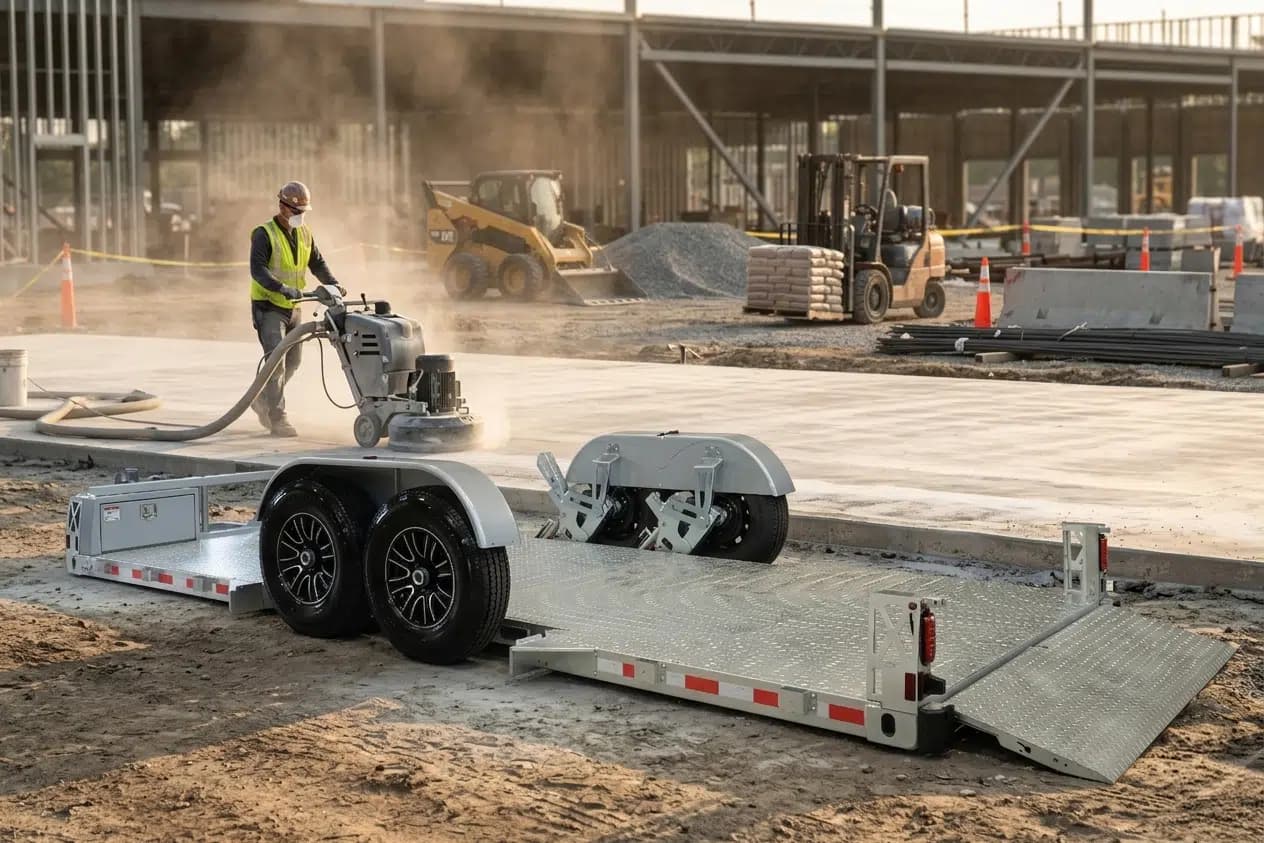
At normal towing height, the GT13FL and GT19FL decks sit approximately 18″ above the ground. When loading, the hydraulic suspension lowers the trailer until the chassis rests on the ground, bringing the deck surface to 5.4″ above the loading area.
A short 22″ long, 76.5″ wide ramp with an 11° approach angle bridges the transition from the ground to the deck, reducing both the height the machine has to climb and the severity of the transition.
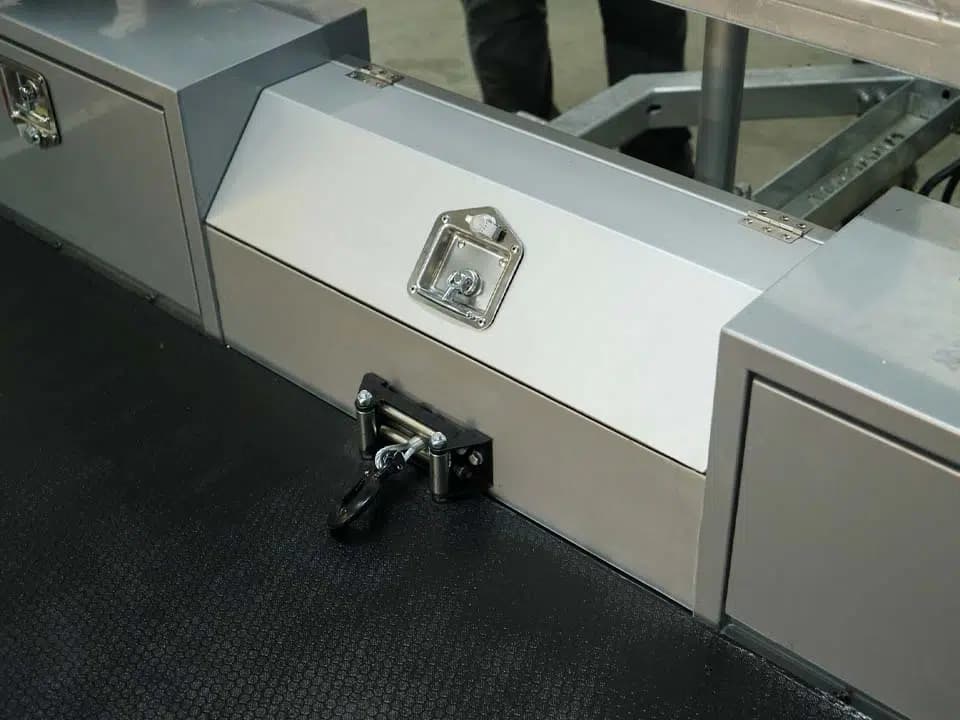
For heavy rolling equipment, that can be useful even when the equipment itself is not permitted to drive up the ramp under it’s own power. And if yours needs a winch? GoodMFG® offers them as add-ons.
Flatbed or Enclosed: Which is Better for Moving Concrete Grinders?
The GT13FL or GT19FL flatbed trailer models make sense when open access to the grinder and support equipment are the priorities. They’re great for carrying one grinder plus compatible support equipment, and may provide plenty of capacity depending on the complete load.
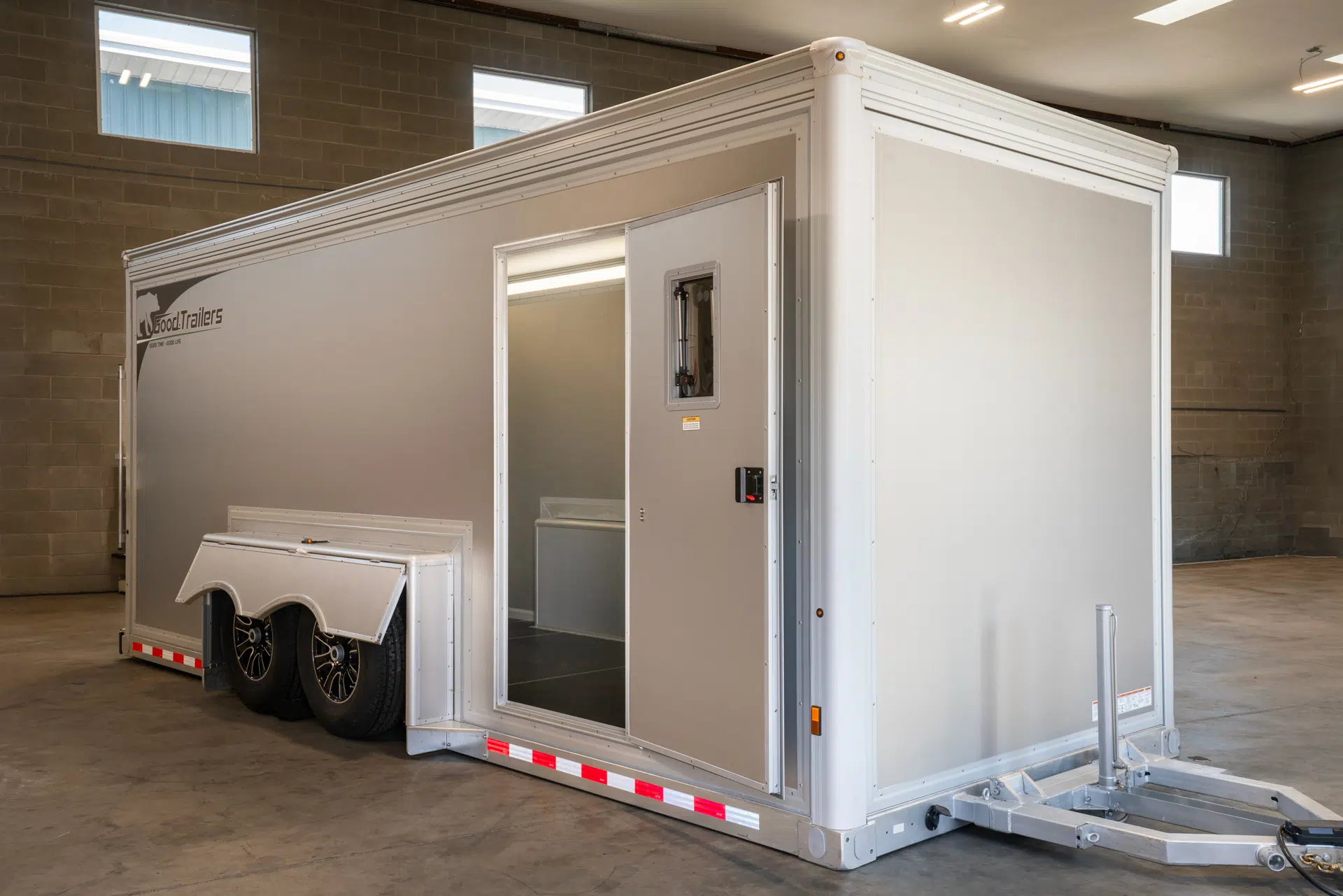
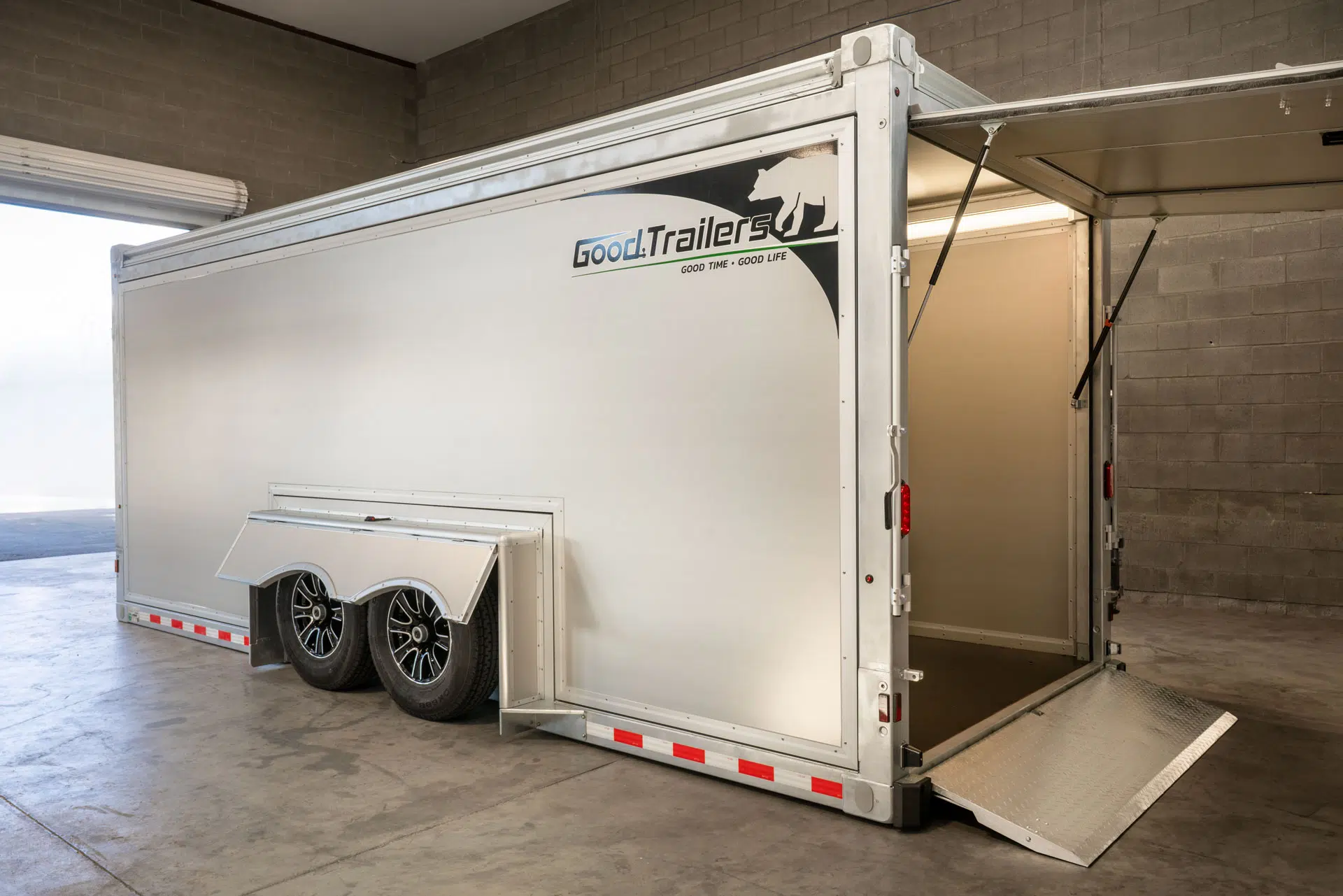
An enclosed trailer like the GT13AL or GT19AL can make sense when the grinder travels with dust control equipment, tooling, electronics, cables, and other gear the crew wants protected from rain, dirt, debris, and road spray.
Enclosed transport can also make sense for grinders that spend time stored in a trailer between jobs. Husqvarna PG 6/PG8 DR/XR machines require indoor storage in a dry, frost-free area, for example, so keeping them in an insulated enclosed trailer can certainly be a benefit. While this won’t automatically create the required storage environment, it will provide a lot more protection than an open flatbed will.
Concrete Grinder Trailer Size & Payload
When you’re moving concrete grinders, it’s tempting to check the weight of your machine and then stop there.
But you’re probably carrying a lot more than that single machine. You’re probably also carrying dust extraction or water control equipment, tooling, spare abrasives, cables, hoses, removable weights, pre-separators, generators, hand tools, and a few other things beside.
Compare that complete load with the trailer’s carrying capacity and deck or interior dimensions. You need to account for fit and weight distribution. Start by measuring the machine in its manufacturer-specified transport position, then work around it, planning your load. When you choose a trailer for moving concrete grinders it’s vital to remember you’re actually buying working room for the complete equipment package. You’re rarely buying for the grinder alone.
Watch the loading angle too. Some concrete grinders need an approach even lower than 11°, which means we aren’t going to be right for moving every concrete grinder out there. We encourage our customers to follow the manufacturer’s instructions for the equipment they are hauling.
FAQ
Can I drive a concrete grinder directly onto a GoodMFG® drop deck trailer?
Some you can, some you can’t. Some grinders permit an 11° approach and some don’t. Some will let you winch the machine onto the trailer, which makes our winch add-on the bridge solution.
Will the 11° ramp prevent a concrete grinder from scraping?
Ground-level loading reduces the severity of the transition when compared to many standard trailer heights. No trailer can prevent every mishap. However, ground-level loading reduces the chance of scraping and other types of damage, so long as you are following the manufacturer’s instruction regarding your specific machine and load out.
How should I secure my concrete grinder?
Follow the grinder manufacturer’s instructions and use its designated tie-down points. To make moving concrete grinders easier, we also offer a number of securement add-ons like D-ring stake pockets or E-track which can make it easier to secure the grinder properly.
Key Takeaways
Here’s the TL;DR on moving concrete grinders.
- Concrete grinder transport is about more than payload. Weight, dimensions, loading angle, support equipment, securement, and storage conditions all affect trailer selection.
- GoodMFG® hydraulic trailers lower the chassis to the ground and bring the deck to 5.4 inches. A short 22-inch ramp provides the final 11° transition.
- Low-angle loading does not override the grinder manual. Some current commercial grinders have slope limits below 11°, so manufacturer-approved winching or another loading procedure may be required.
- Plan for the complete grinding system. Dust extraction, water-control equipment, tooling, hoses, cables, weights, and other support equipment consume both payload and floor space.
- Flatbed and enclosed trailers solve different problems. Flatbeds prioritize equipment access; enclosed trailers add protection from direct weather and organized space for the rest of the system.
Get the Right Trailer for Moving Concrete Grinders
Ready to select your drop deck trailer? Find your nearest dealer or reach out to our team today!
Loading form…
See also:
Easy Loading Enclosed Trailers: Evaluating Options
Best Trailers for Low Clearance Equipment
This resource was compiled by the GoodMFG® Product Team, drawing on 75 years of combined experience in hydraulic systems, heavy-duty transport, trailers, and modular structures.
P.S. – We build trailers every day, but we don’t run your crews. If there’s a specific logistical headache or a “field reality” we’ve missed, we want to hear about it. Help us refine the equipment that makes your day easier! Email our Marketing Lead at devan-h @ goodrv.com and let us know what we should solve next.