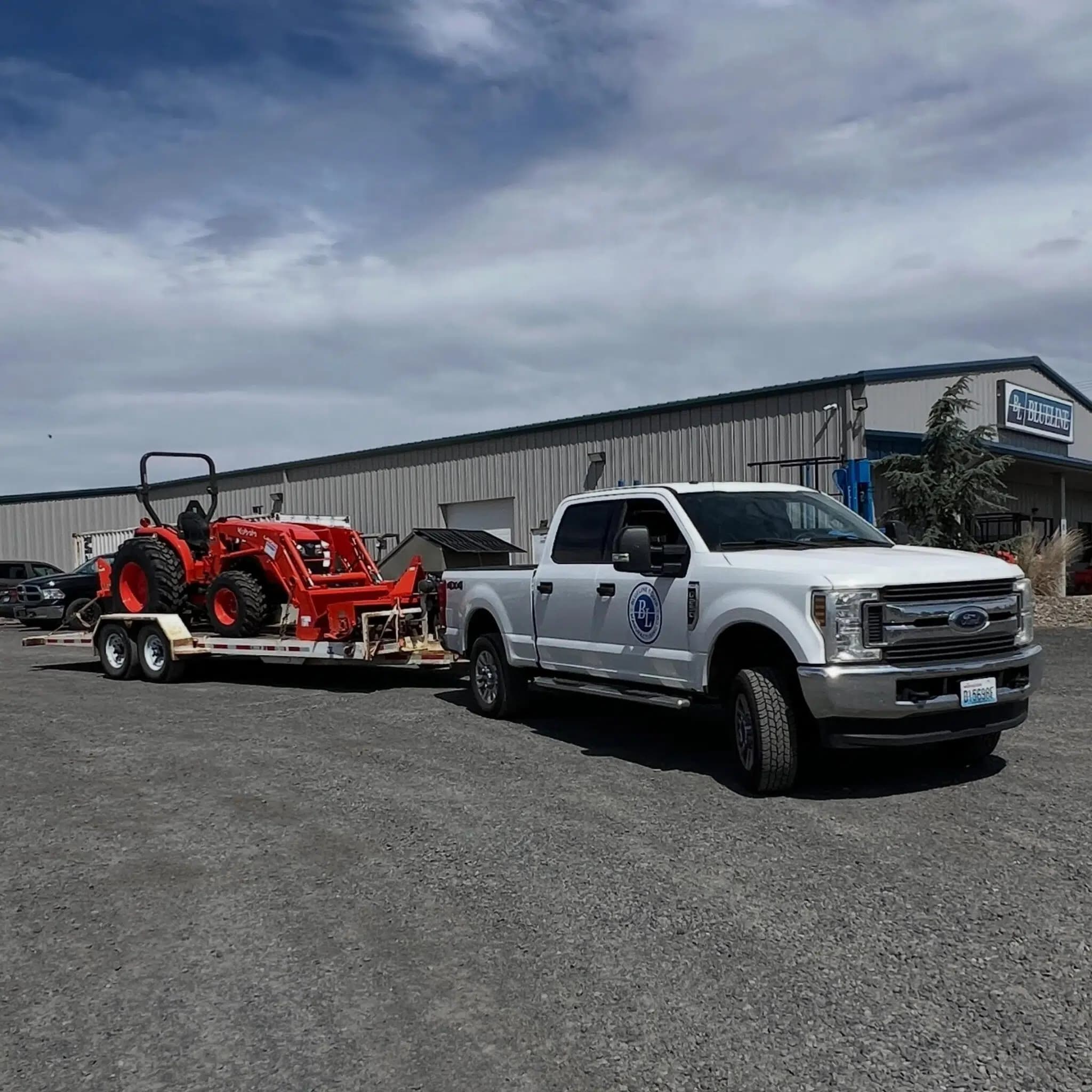
A lot of Kubota L-Series owners want to keep their trailer requirements good and light, opting for a shorter, smaller trailer over a longer, heftier one. And of course, nobody wants to spend more money than they have to. But is that 7,000 GVWR trailer really the best trailer for Kubota L-series trailers?
As it turns out, a 7,000-pound-GVWR trailer may be sufficient for some Kubota L-Series configurations, but not all of them.
The deciding factor isn’t tractor weight alone: loaders, rear implements, ballast, loaded tires, complete transport length, load distribution and tow-vehicle ratings all matter.
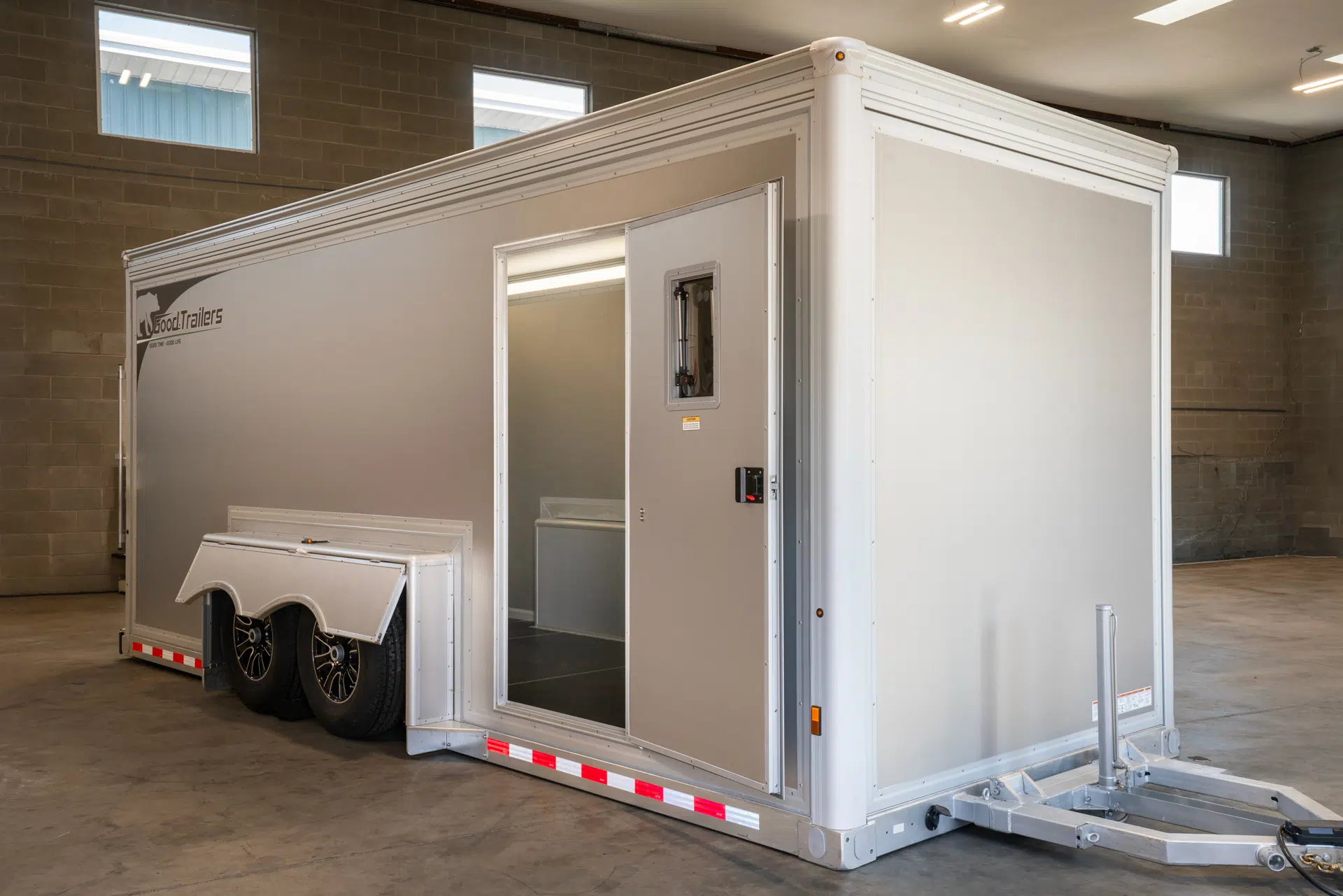
For owners who routinely transport an L-Series tractor with attachments, the GT19FL’s 17′9″ usable deck and 8,000-pound estimated carrying capacity provide considerably more room to work with than the GT13FL’s 11′8″ deck and 5,055-pound capacity.
Pictured above: Kubota L-4740 on GT19FL.
Looking at a different Kubota model? See our general Kubota equipment trailer guide.
Table of Contents
Kubota L-Series Tractors Weights
Kubota’s current Standard L02 tractors range from approximately 2,601 to 3,549 pounds, depending on model, drivetrain and transmission configuration. Current Grand L70 models range from approximately 3,726 pounds in lighter ROPS configurations to 4,762 pounds in heavier cab configurations.
Always use Kubota’s specifications for the exact tractor you’re transporting. These are tractor weights—not complete transport weights with loaders, implements, ballast and other equipment added.
Calculate the Complete Transport Weight
The tractor’s published weight is only the starting point.
Add the actual weight of the loader, bucket, rear implement, wheel ballast or loaded tires, additional weights, securement equipment and anything else traveling on the trailer.
Don’t rely on a generic allowance. Attachment and ballast weights vary substantially by tractor and configuration.
The GT19FL provides an estimated 8,000 pounds of carrying capacity, so compare that figure with the complete configured load, not just the trailer’s base weight.
Calculate the Complete Tractor Length
Base tractor length is useful for initial trailer selection, but attachments can significantly change the complete transport envelope.
Don’t calculate overall length by adding the advertised size of an implement to the tractor’s published length. Instead, measure the tractor in its actual transport configuration from its furthest forward point to its furthest rearward point.
The GT13FL provides an 11′8″ usable deck; the GT19FL provides 17′9″. Some base L-Series tractors fit comfortably within the GT13FL’s length, while tractors carrying loaders and rear implements may benefit from the substantially longer GT19FL.
Loading & Unloading Your Kubota L-Series Tractor
Payload and deck length are only part of trailer selection. The tractor still has to get onto the deck.
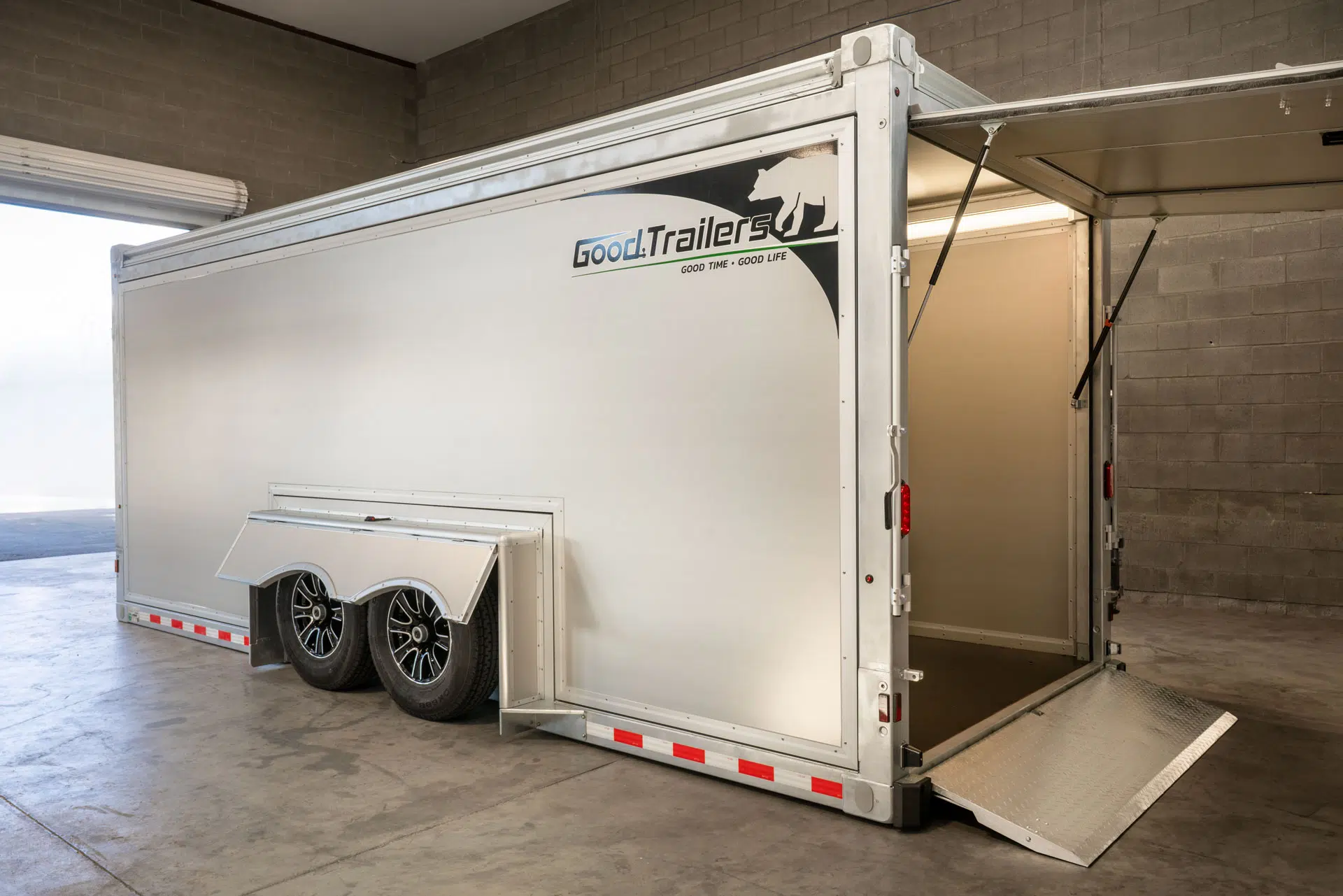
The GT19FL lowers from an 18-inch towing height to a 5.4-inch deck height. A short 22-inch, 76.5-inch-wide ramp with an 11° approach bridges the remaining transition.
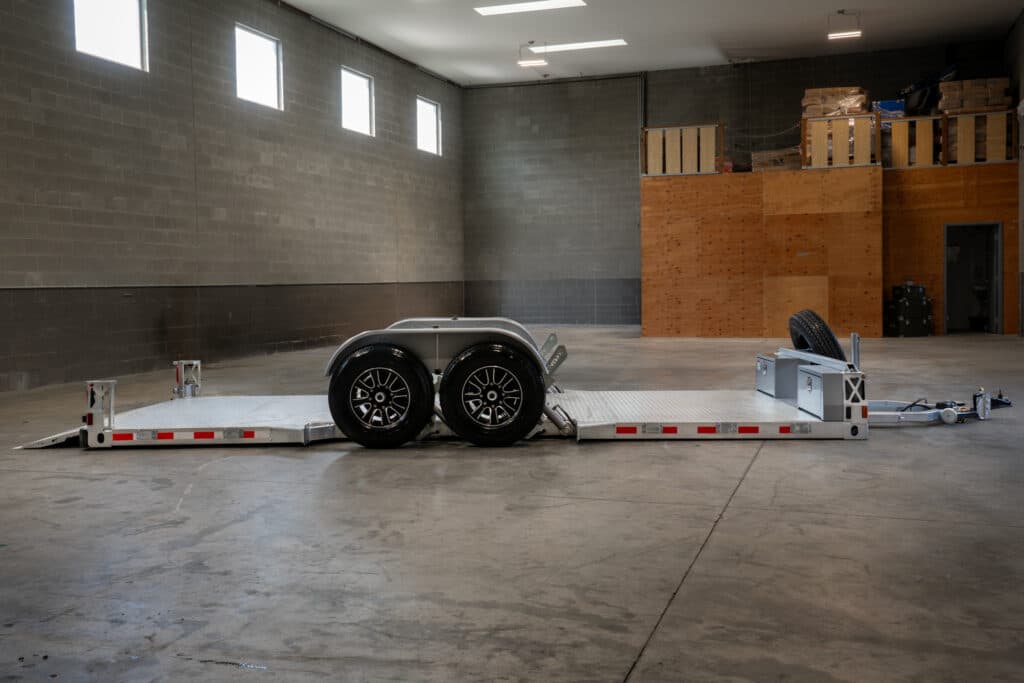
You just drive your tractor right on the thing. Done. Dusted.
Secure it.
Raise the deck back into place.
Hook it back up to your towing vehicle and get where you need to go.
The GT19FL can also transport other appropriately sized equipment when the complete load fits within its 8,000-pound estimated carrying capacity, 17′9″ × 6′10″ usable deck, load-distribution requirements and securement limits.
If you’re going to own a trailer at all, it should support almost any project you want to do. Ours are the perfect solution if you want to haul scissor lifts, mini-excavators, skid steers, and more.
If you own a rental fleet, then consider adding GT19FL trailers to make returns and hauls so much easier for your customers, your peace of mind, and your repair bills!
FAQ
Can a 7,000 lbs. GVWR trailer haul a Kubota L-Series?
Yes, in some configurations. The GT13FL has a 5,055-pound estimated carrying capacity and an 11′8″ usable deck, which can accommodate the base weight and dimensions of some L-Series tractors. Loaders, implements, ballast and other equipment consume payload and deck space, so the complete configuration determines whether the GT13FL or GT19FL is the better choice.
How long is a Kubota L-Series with a loader and a brush hog?
There isn’t one reliable length. Measure the complete tractor with its actual loader and rear implement positioned for transport rather than adding nominal implement sizes to the tractor’s base length.
Key Takeaways
When considering which trailer is the best trailer for Kubota L-Series tractor, consider these takeaways.
- Calculate the complete load. Tractor weight is only the beginning; loaders, implements, ballast, loaded tires and other cargo all consume trailer capacity.
- Measure actual transport length. Don’t estimate it from nominal implement sizes.
- GT13FL can work for some L-Series configurations. The GT19FL provides substantially more payload and deck length when attachments are part of the load.
- Lower loading geometry is a real advantage. The GT19FL lowers to 5.4 inches and uses a short 11° approach, reducing the climb without making loading risk-free.
Tired of the Ramp Dance?
Look, you bought a Kubota L-series because you wanted a machine that works as hard as you do. We happen to think our trailers are the best trailer for Kubota L-series tractors because they pair a world-class tractor with a world-class trailer that protects your gear. If you’re tired of scooting your trailer up steep, narrow ramps that feel like a pair of balance beams, it’s time to raise the bar by lowering the deck.
Want to add Good Trailers to your rental fleet? We are actively seeking equipment rental partners in Oregon and northern California. Want to talk? Just call or contact us to start the process today.
Want the best way to protect your Kubota L-Series trailer? Visit your nearest dealer today! Can’t find one near you? Call our office: we’ll help you out.
See also:
The Complete Guide to Tractor Hauling Trailers
Does GoodMFG® Make Durable Trailers?
This resource was compiled by the GoodMFG® Product Team, drawing on 75 years of combined experience in hydraulic systems, heavy-duty transport, trailers, and modular structures.
P.S. – We build trailers every day, but we don’t run your crews. If there’s a specific logistical headache or a “field reality” we’ve missed, we want to hear about it. Help us refine the equipment that makes your day easier! Email our Marketing Lead at devan-h @ goodrv.com and let us know what we should solve next.