Understanding how a breakaway switch works on a trailer is a vital safety step every operator should be aware of. But if you’re new to the world of trailers, a breakaway switch is one component you might not be too familiar with.
In addition to understanding how a breakaway switch works on a trailer, you also need to understand how to test and maintain your switch so it is always there for you when you need it.
Even if you’re an experienced hauler, this post might be worth the review. Plus, we’ll offer some details specific to Good Trailers.
Table of Contents
- What is the Breakaway System?
- Parts of the Breakaway System
- Charging the Breakaway Battery
- Testing the Breakaway System
- FAQ
- Key Takeaways
- Get More Help
What is the Breakaway System?
Imagine a scenario wherein the coupler or the hitch fails.
That’s when your breakaway system steps in. A properly connected and working breakaway brake system can apply electric brakes on the system after it detects a problem.
The safety chains keep the tow vehicle attached. As the system applies the brakes at the trailer’s axles, the trailer and tow system should be able to come to a complete, controlled stop.
Parts of the Breakaway System
The parts of the breakaway system are:
- Battery
- Switch
- Pull Pin
- Lanyard
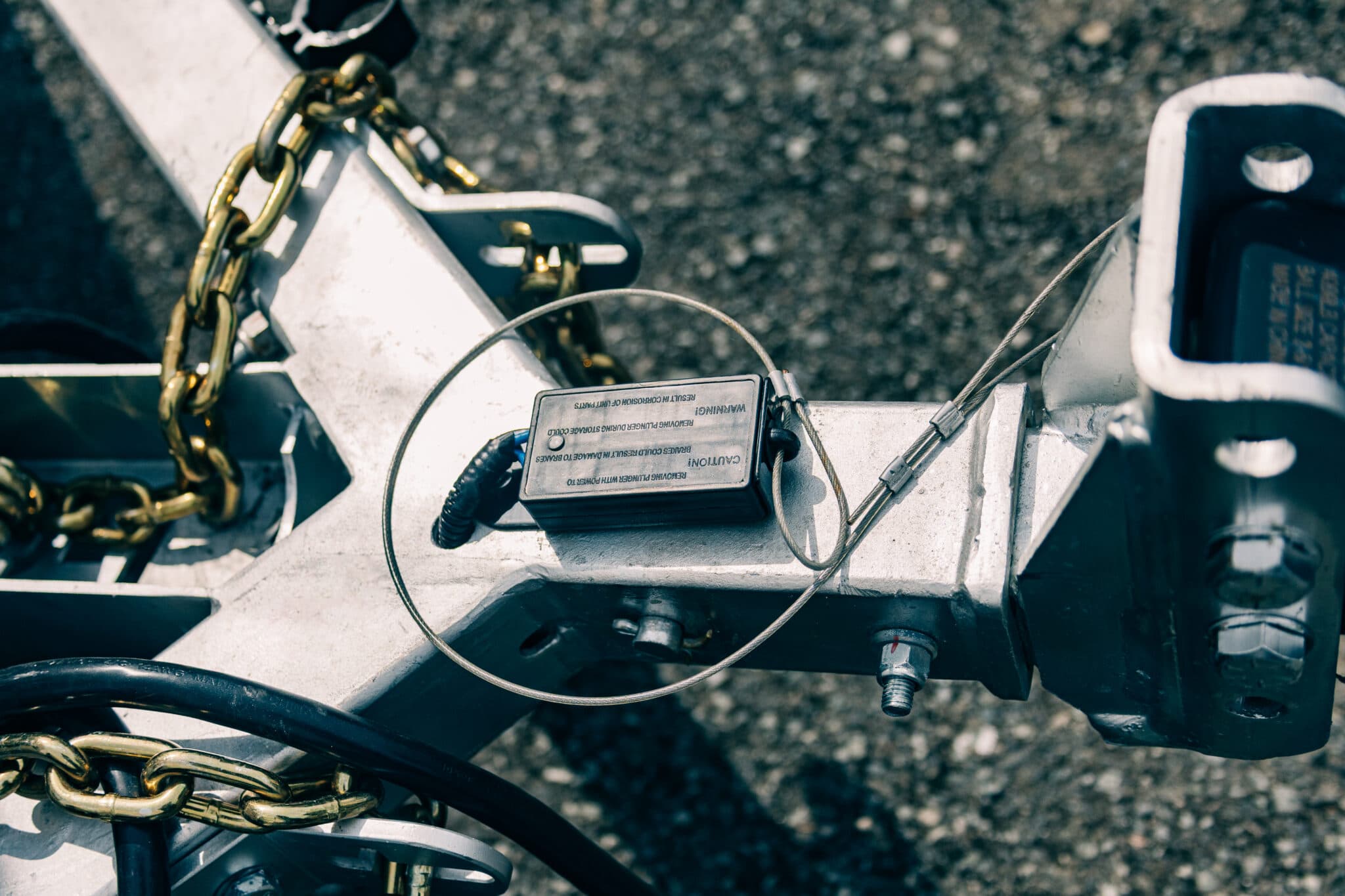
The pull pin lanyard looks like a simple wire loop, like this.
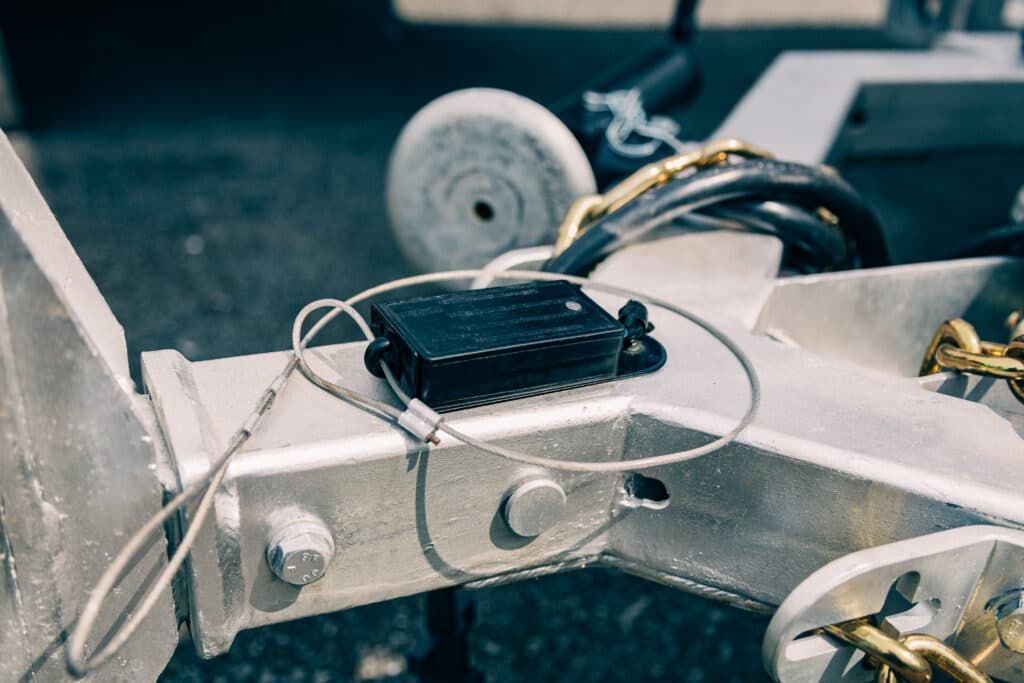
So here’s how a breakaway switch works on a trailer.
You attach the lanyard to your tow vehicle. The other end connects to a pull pin seated inside the breakaway switch. The lanyard should be positioned so that if the trailer separates from the tow vehicle, it pulls the pin out of the switch before all the slack is taken up in the safety chains.
Pulling the pin out of the switch activates the breakaway circuit, allowing the dedicated breakaway battery to send power to the trailer’s electric brakes. The battery is pictured below.
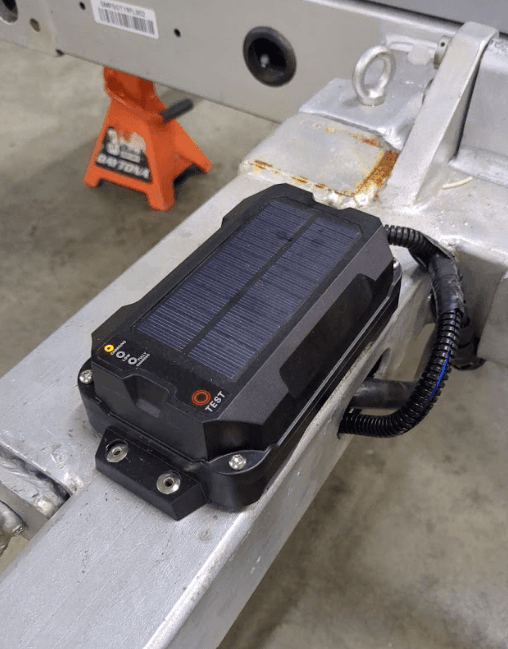
The switch and pull pin are mounted separately from the breakaway controller.
Charging the Breakaway Battery
Good Trailers use a solar breakaway controller. The integrated solar panel helps keep the battery charged, and the controller can also receive charge from the tow vehicle or an auxilary breakaway.
Before towing, press the Test button on the controller to check the battery condition. Green means the battery is charged. Red means the battery needs charging before use. If no indicator illuminates, the battery is flat or heavily discharged.
The yellow charging indicator only illuminates when the controller is receiving charge. It won’t light up just because sunlight is reaching the solar panel.
How to Test the Breakaway Brake System
It’s important to test your breakaway system before every tow. The Test button on the battery only checks the battery condition. To verify the breakaway system actually applies the trailer brakes, perform a functional test as well.
- Park the trailer on a firm, level surface and chock the wheels so the trailer can’t roll while you perform the test.
- Disconnect the trailer’s electrical plug from the tow vehicle. This isolates the breakaway system from the tow vehicle’s electrical system before you pull the breakaway pin. Don’t pull the pin while the trailer is electrically connected because that can damage the tow vehicle’s brake control electronics.
- Press the Test button on the power controller and make sure the internal battery indicates sufficient charge.
- Using the proper jacking point and safe jacking procedure, raise one brake equipped wheel just far enough that it can spin freely.
- Set the wheel to spinning.
- Pull the pin completely out of the breakaway switch, just as it would be pulled if the lanyard went taut during a separation.
- Confirm the brake engages and stops the spinning wheel.
- Immediately reinsert the pull pin. Do not leave the breakaway system activated. The battery discharges while the pin is removed, and towing with the breakaway brakes activated can overheat and damage them.
- Lower the trailer safely, remove the jack and wheel chocks, reconnect the electrical plug, and complete your normal pre-tow checks.
Never tow your trailer if you have a faulty breakaway brake system.
Want an easier set of instructions? Check out this video. The video doesn’t cover all the steps listed above, but you should still do them.
FAQ
Can I use the breakaway switch as a parking brake when unhooked?
No. You should never use your breakaway pin as a handbrake or parking brake. Pulling the pin sends power continuously to the brake magnets, which will melt or damage your electric brake coil, and drain the breakaway battery completely. Always use physical wheel chocks to hold an unhooked trailer.
Where is the best place to attach the breakaway cable on my truck?
Attach the lanyard loop directly to a dedicated frame eyelet or permanent chassis point on your tow vehicle. Never attach the lanyard to the removable hitch ball, safety chain loops, or the receiver shank itself—if the entire hitch receiver assembly detaches from the truck, the breakaway cable won’t pull the pin.
What happens if the breakaway pin gets pulled while I’m driving normally?
If your breakaway cable catches on something (like road debris or a tight turn) and accidentally pulls the pin while driving, your trailer brakes will lock up aggressively. If this happens, pull over safely to a hard shoulder immediately, check for damage, and reinsert the plastic pin straight back into the switch box.
Key Takeaways
Here’s the TL;DR on how a breakaway switch works on a trailer.
- Automatic Emergency Protection: A breakaway system acts as a safety fail-safe that automatically engages the trailer’s electric brakes if the trailer becomes completely disconnected from your tow vehicle.
- 4 Simple Components: The system relies on a battery, a switch box, a pull pin, and a lanyard attached to your tow vehicle.
- Battery Maintenance is Crucial: Solar trailer batteries charge continuously outdoors, but they should still be monitored regularly and stored indoors during winter or long idle periods to preserve battery life.
- Test Before Towing: Check the battery status and function test the breakaway brakes before towing. Never tow with a breakaway system that isn’t operating correctly.
Get More Help
The team at GoodMFG® is always happy to help if you encounter any problems or are struggling to understand any part of your hydraulic drop deck trailer system, including how a breakaway switch works on a trailer. Just give our office a call at (360) 889-9789 to get expert help and stay safe out there!
See also:
How to Read the Specs on a Trailer
5 Signs Your Trailer Needs Repairs
This resource was compiled by the GoodMFG® Product Team, drawing on 75 years of combined experience in hydraulic systems, heavy-duty transport, trailers, and modular structures.
P.S. – We build trailers every day, but we don’t run your crews. If there’s a specific logistical headache or a “field reality” we’ve missed, we want to hear about it. Help us refine the equipment that makes your day easier! Email our Marketing Lead at devan-h @ goodrv.com and let us know what we should solve next.