Moving heavy toolboxes between shops, jobsites, service areas, and temporary workspaces sounds simple until the toolbox is on wheels, packed with tools, and weighs far more than anyone wants to push up a steep ramp.
Large rolling cabinets and jobsite boxes introduce several practical questions:
- How much does the box actually weigh when loaded?
- Are its casters rated for that weight?
- Will it fit through the trailer opening?
- Can your crew move it safely with the handling equipment available?
- How will you secure it once it is inside?
The right trailer can make moving heavy toolboxes considerably more manageable.
But start with the toolbox, not the trailer.
Table of Contents
Measure the Toolbox Before Choosing the Trailer
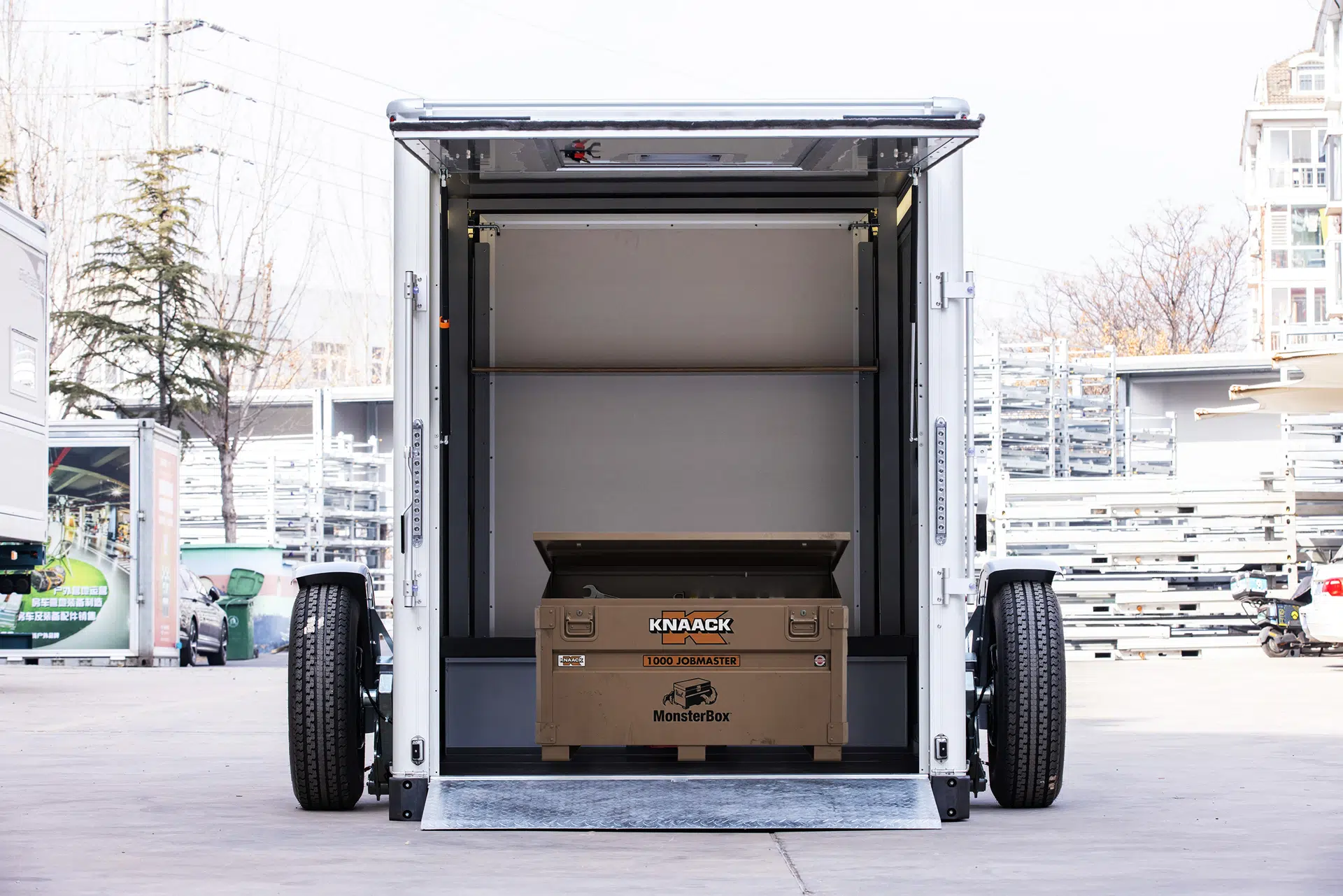
Measure all three dimensions, then determine the best loading orientation. Consider trailer dimensions and whether you can get the toolbox inside and comfortably secured.
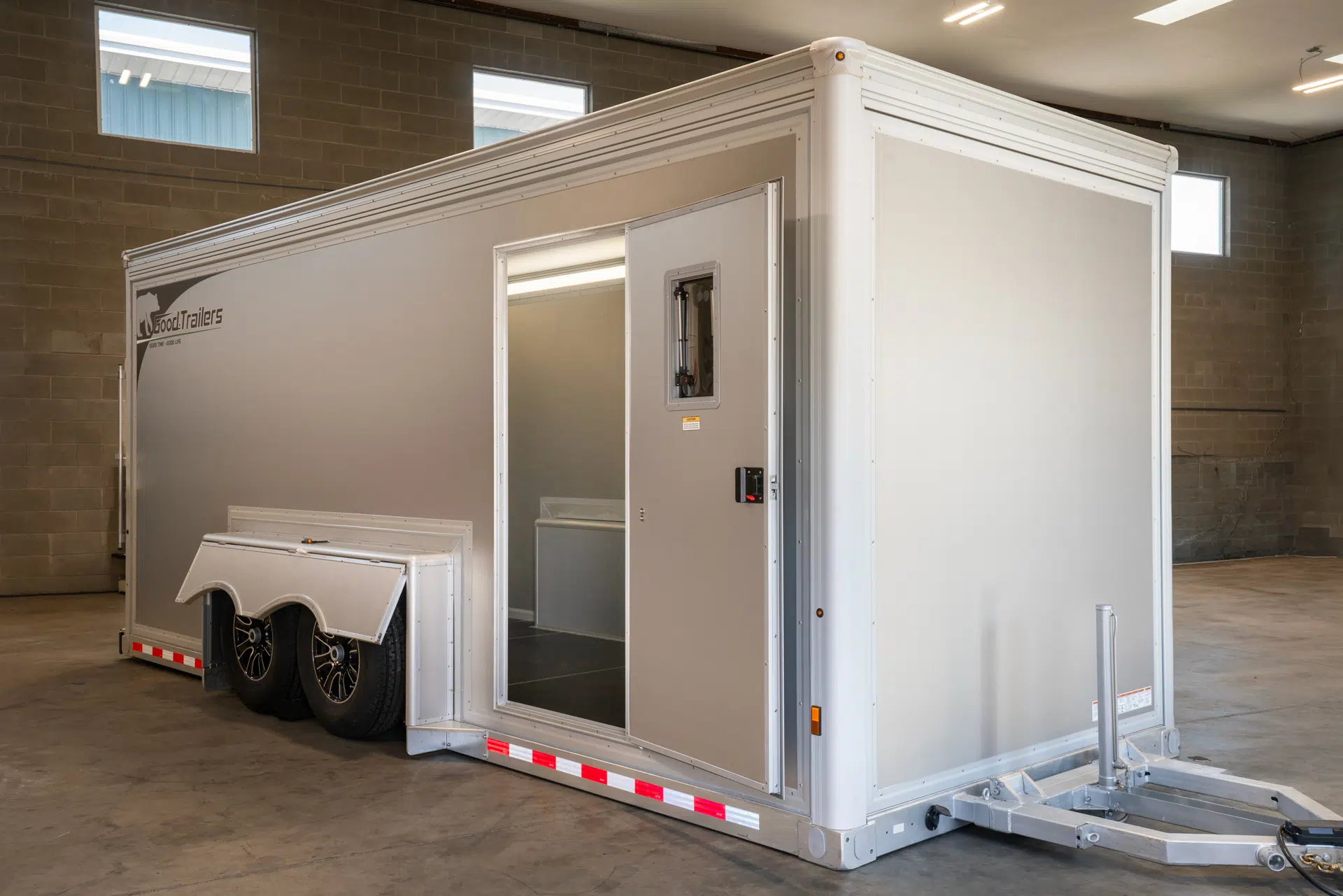
For example, the GT19AL has:
- 18’7″ interior length
- 6’10” interior width
- 7’6″ interior height
- 74.4″ x 85.4″ rear opening
- 7,929-lb estimated carrying capacity
- 11,800 lbs GVWR
The Matco triple-bay cabinet is a little too long to roll right in on the long side (79″), but it can be rolled in on its shorter side. That will impact the configuration of everything else you have to carry, so you’ll want to plan the load.
Which Good Trailer is the Right Choice for Moving Heavy Toolboxes?
You don’t necessarily need the largest trailer we carry. For smaller rolling tool storage, the GT13AL may provide all the room and payload you need.
| Specification | GT13AL | GT19AL |
|---|---|---|
| Interior | 12′6″ × 6′10″ × 7′6″ | 18′7″ × 6′10″ × 7′6″ |
| Rear opening | 74″ × 84″ | 74.4″ × 85.4″ |
| Est. carrying capacity | 3,975 lbs | 7,929 lbs |
| GVWR | 7,000 lbs | 11,800 lbs |
| Lowered deck | 5.4″ | 5.4″ |
| Loading ramp | 22″, 11° | 22″, 11° |
Choose based on the actual loaded weight and dimensions. And remember, the carrying capacity has to handle everything you put inside the trailer…not just the toolbox.
Why Loading Geometry Matters when Moving Heavy Toolboxes
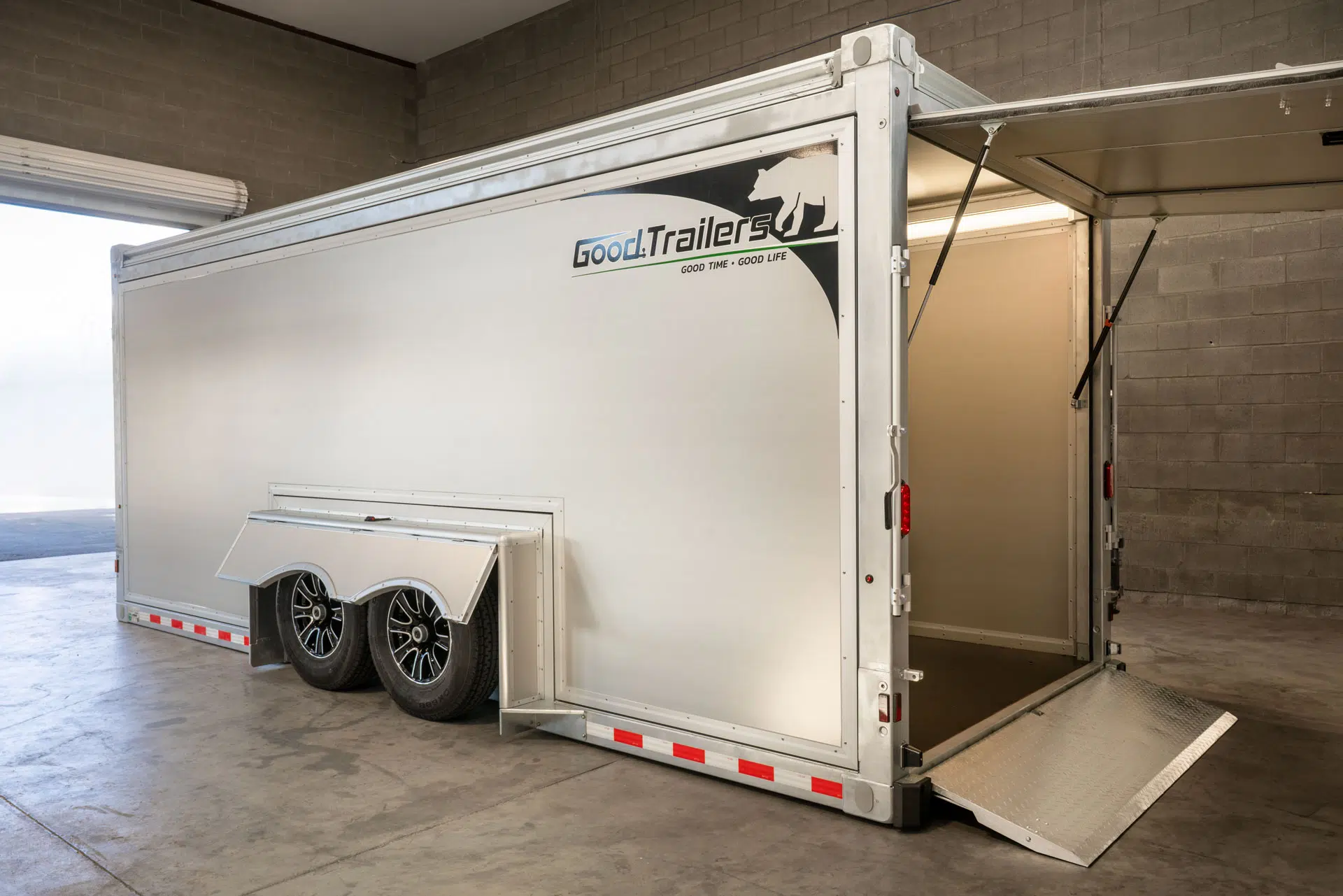
At towing height, the GT19AL deck sits about 18 inches above the ground.
Before loading, the hydraulic drop deck lowers the trailer until the deck is just 5.4 inches above the ground. A short 22-inch ramp with an 11° approach bridges the remaining transition.
That matters when your cargo is already sitting on wheels.
Instead of asking a heavy rolling cabinet to climb all the way to normal trailer height, you bring the trailer closer to the cabinet.
Essentially you:
- Reduce the vertical climb
- Reduce the severity of the ramp transition
- Make it easier to control compatible wheeled equipment
- And give workers better access to the load while positioning and securing it.
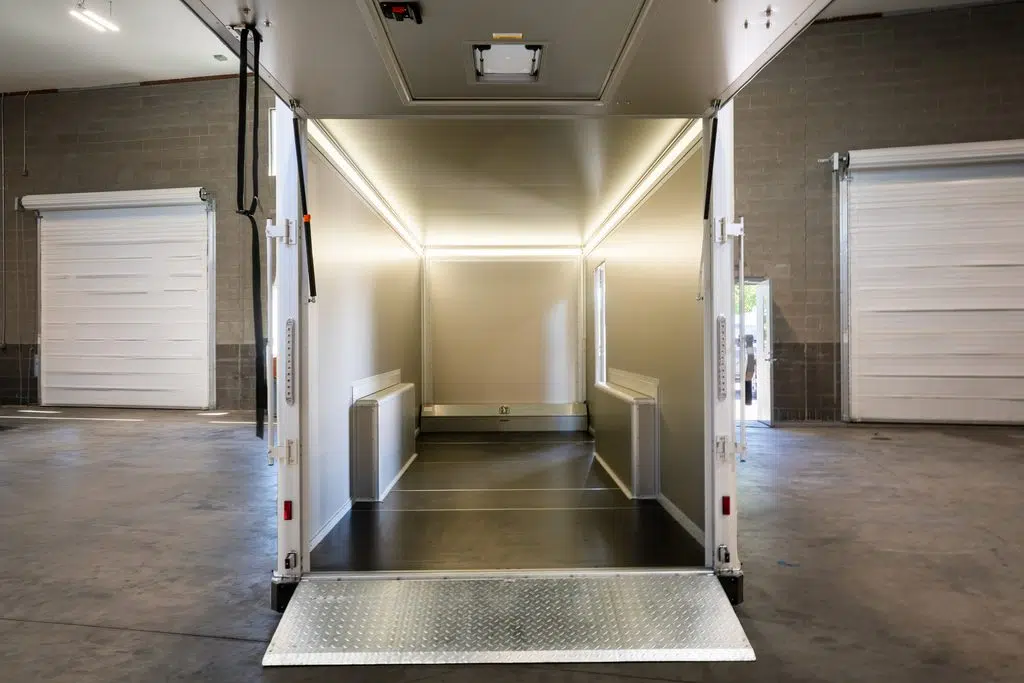
The advantage of using a drop deck trailer while moving heavy toolboxes is the handling equipment (pallet jacks, powered tugs, or whatever you use) doesn’t have to overcome as much trailer height.
Tip: Check the Casters
Before you load up your toolbox, you need to ensure the caster system is rated for the weight you’re putting inside the box.
For example, KNAACK publishes several caster packages with different total capacities:
- Model 495: 1,600 lbs.
- Model 516: 2,240 lbs.
- Model 695: 2,600 lbs.
- Model 600 heavy-duty set: 3,280 lbs.
Those ratings include the weight of the job box and its contents.
The trailer’s payload rating, the toolbox’s structural rating, and the caster rating all need to work together.
Plan Securement Before Loading
Caster brakes are useful when a toolbox is parked.
They are not a substitute for cargo securement during transportation.
GoodMFG® enclosed trailers can be configured with E-track or floor mounted D-rings, giving you additional locations for building an appropriate restraint system.
Inspect all tie-down locations before loading, then secure the cargo with the appropriate straps, chains, or tensioning devices.
How you attach those restraints depends on the cabinet, and the instructions that come with it.
Why an Enclosed Trailer Helps When Moving Heavy Toolboxes
Ground-level loading is only part of the reason why an enclosed trailer can make sense for mobile tool storage.
Keep highway weather off the tools.
The enclosure provides a barrier against direct highway rain, spray, dirt, and debris.
This does not make the contents immune to every environmental condition, but it gives expensive tools and electronics significantly more protection from direct road exposure than an open flatbed does.
Keep everything together.
Cabinets, job boxes, chargers, parts, and additional supplies can travel in the same enclosed workspace, provided the complete load remains within trailer ratings and is properly distributed and secured.
Add organization
We can configure enclosed trailers with cabinets, shelves, E-track, D-rings, T-slots, and other storage options. That can transform the trailer from mere transportation into a mobile workshop workflow.
FAQ
Can one person load a heavy rolling toolbox into a GT19AL?
Sometimes, but do not assume that one-person manual loading is appropriate simply because the trailer lowers to the ground. For very heavy loads, use appropriate mechanical assistance rather than relying on human pushing force.
Do caster brakes secure the toolbox for road transport?
No.
Caster brakes can help prevent unwanted movement while the cabinet is parked, but you should still secure your cargo for transportation.
Key Takeaways
- Loaded weight matters more than empty weight when you’re moving heavy toolboxes. Include the cabinet, tools, accessories, and everything else you intend to carry in the trailer.
- Caster capacity can become a limiting factor. The trailer may have plenty of capacity, but if you overload your caster capacity you may run into some trouble.
- Secure the toolbox for transportation. Caster brakes are not cargo restraints. Optional E-track and D-rings can provide securement points.
Ground-Level Loading for Your Precision Tools
A hydraulic drop deck trailer can’t make a heavy toolbox lighter. What it can do is reduce the height you have to traverse while moving heavy toolboxes. It can also provide an enclosed space for the tools while giving you options for planning securement and organization around the work you already do.
Ready to compare your set-up?
- Call GoodMFG® at (360) 889-9789
- Find an authorized dealer
- Talk to TowBot
- Or send us your toolbox dimensions, loaded weight, and intended setup so we can help you compare models.
Loading form…
See also:
Mobile Workshop Trailers for On-Site Equipment Repair
The Ultimate Mini Excavator Trailer Guide
The Ultimate Guide to Skid Steer Trailers
This resource was compiled by the GoodMFG® Product Team, drawing on 75 years of experience in hydraulic systems, heavy-duty transport, trailers, and modular structures.
P.S. – We build trailers every day, but we don’t run your crews. If there’s a specific logistical headache or a “field reality” we’ve missed, we want to hear about it. Help us refine the equipment that makes your day easier! Email our Marketing Lead at devan-h @ goodrv.com and let us kow what we should solve next.