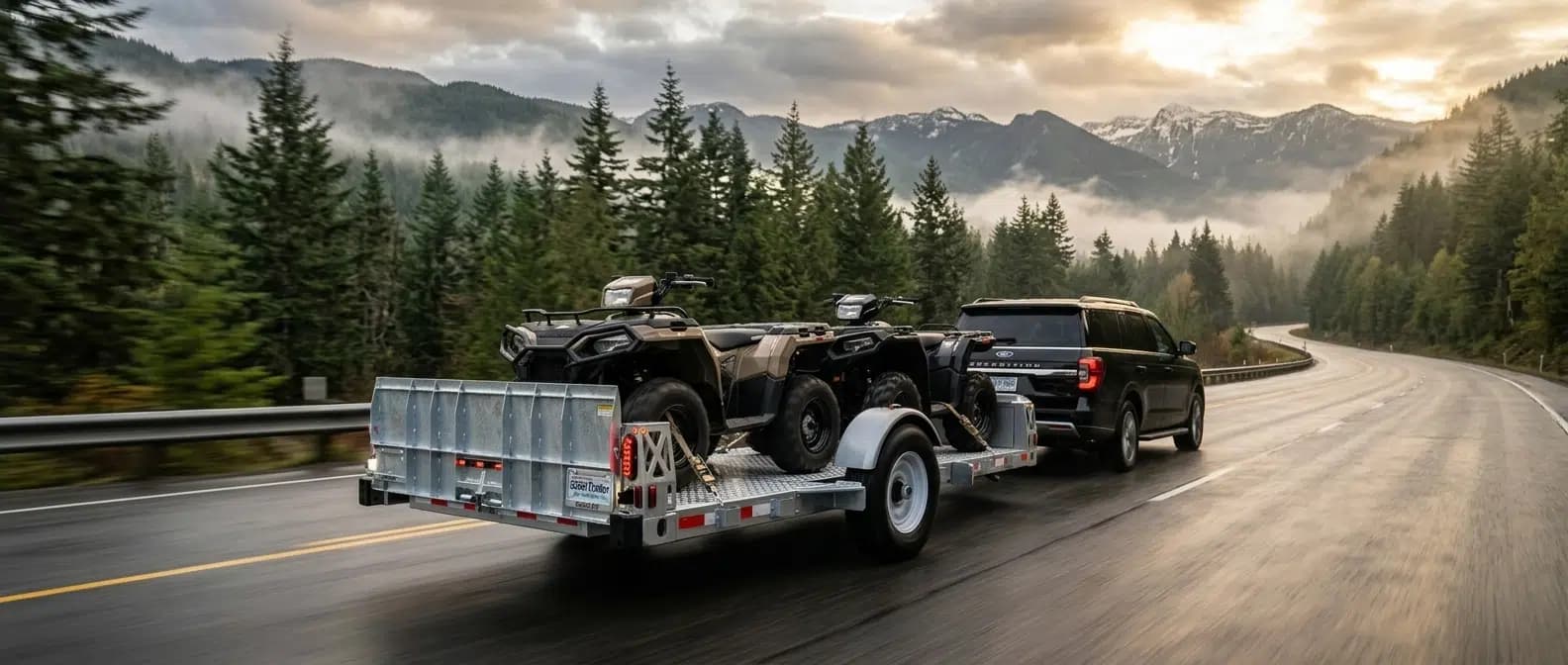
Looking for the right ATV trailer or UTV trailer?
ATVs and UTVs are excellent tools for gaining access to challenging job sites, for material transport, for plant access, for farm support, and for dozens of other applications.
Yet before your ATV or UTV can serve you, you first have to find the ATV trailer that will get it where it needs to go. This is because ATVs and UTVs aren’t usually highway-legal, which means you will need a hauling solution.
Because ATVs and UTVs must navigate through tough, muddy terrain they can be especially prone to damage when navigating traditional trailer ramps. Protecting your investment requires better solutions.
Table of Contents
- The Drop Deck Advantage
- Choosing the Right ATV Trailer or UTV Trailer
- FAQ
- Key Takeaways
- Find Your Next ATV Trailer or UTV Trailer
The Drop Deck Advantage
Loading and unloading: the most common ways ATV or UTV owners damage their machines. They’re also the most common times for operators to injure themselves.
The reason? These vehicles have high centers of gravity and high torque. That means, under the right circumstances, they’re incredibly easy to tip.
Three scenarios are common.
The first is a ramp kickout incident. As the rear tires hit the ramp, they apply a massive amount of rearward force because they provide the power to ATVs and UTVs. The result? The ramps split out backwards, leaving your front wheels on the trailer and your rear wheels contending with the force of gravity, whereupon they’ll drop instantly to the ground. The result? A flipped ATV or UTV.
The second is a tip scenario where the ramp is simply too steep. This tends to happen when the operator applies a sudden burst of throttle to overcome the “lip” of the trailer. The front end gets light, and the wheel pivots on the rear axle, pinning the operator between the machine and the trailer bed.
Finally, there’s what happens when the complicating factor of mud enters the equation. Standard metal ramps can become incredibly slick when they’re wet, muddy, or dusty. If one tire spins while the other grips, the vehicle will jerk to one side. If a tire slips off the edge of a narrow ramp, the vehicle will tip. This is especially dangerous when dealing with wider, heavier UTVs.
So, what’s the solution?
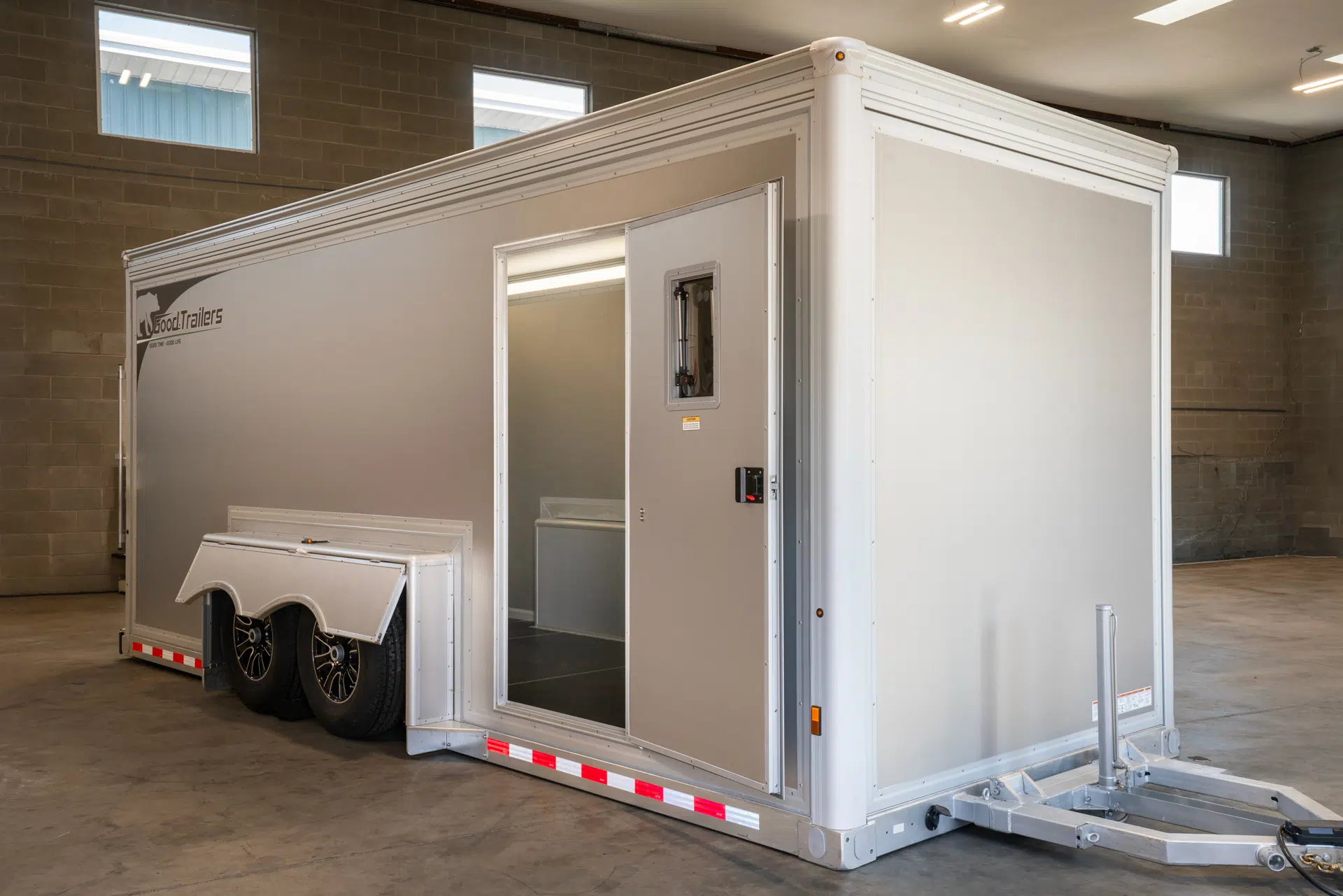
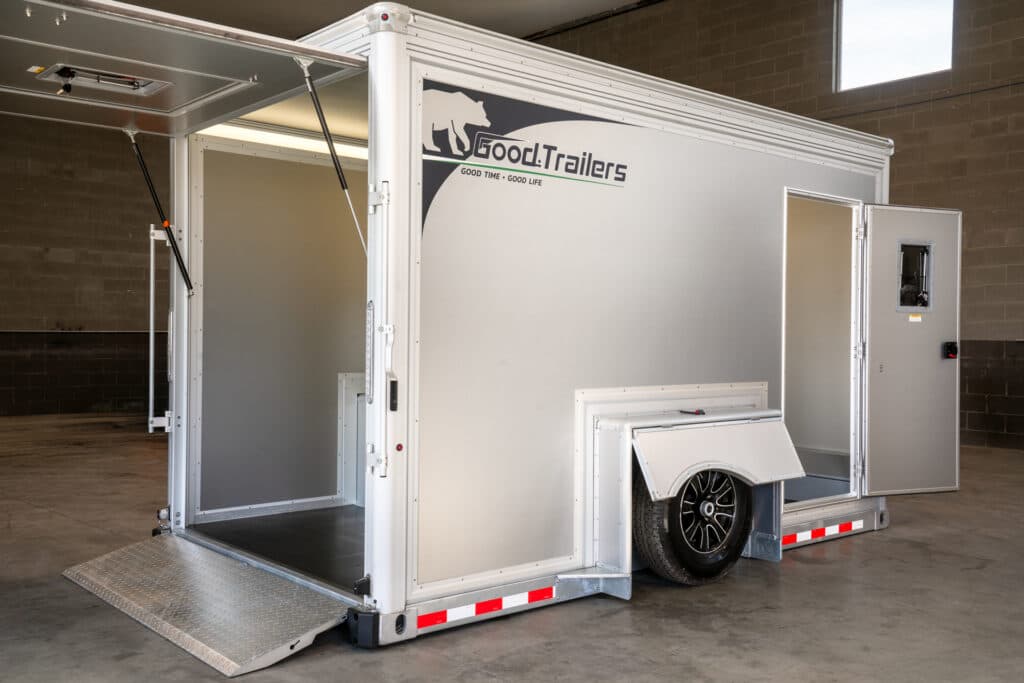
Good Trailers offers an entirely different loading (and unloading) experience.
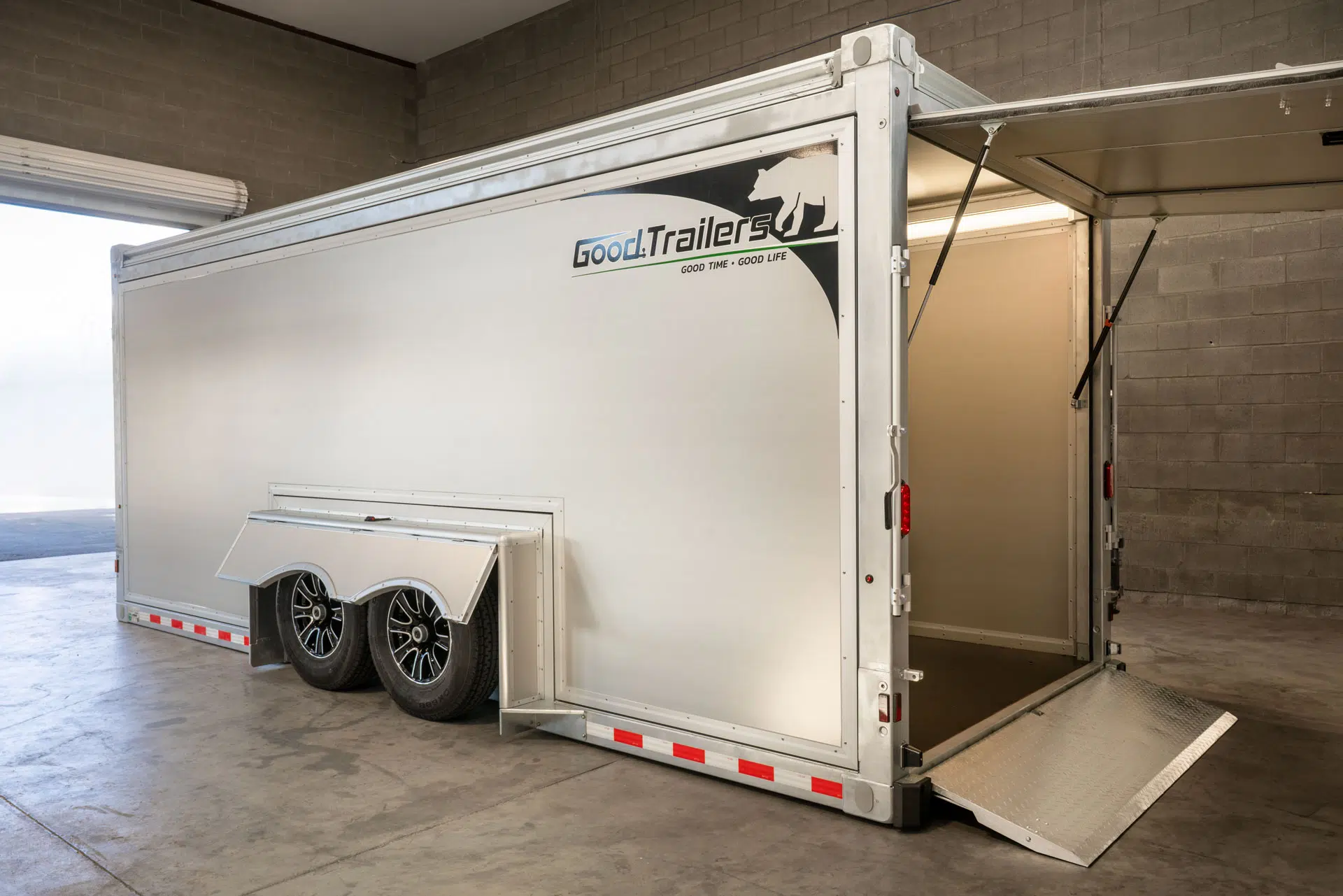
First, the loading angle is much gentler. Standard trailer loading angels start at roughly 15°. Our flatbed and cargo trailer loading angle is at 11° once you use our patented hydraulic drop deck system to bring the trailer all the way down to the ground.
Standard trailer deck heights tend to start around 16″. Once you lower our hydraulic drop deck trailers all the way to the ground, our deck heights sit at 5.4-inches.
Standard trailer ramp lengths tend to start at around 6 feet. Our ramps are just 1’10”.
The result? A smooth, easy drive-on loading experience that reduces most of the risks of loading an ATV or UTV onto a trailer.
Plus, you can secure your vehicle at ground level.
Once it’s secured, you can raise the deck and go.
The whole process takes less time and reduces the risk that any type of loading or unloading accident will occur.
Choosing the Right ATV Trailer or UTV Trailer
You can haul an ATV with either a flatbed trailer or an enclosed trailer. Here are some thoughts to consider as you make your choice.
- Do you want a lighter, quicker tow without having to worry about height restrictions? A flatbed is a good way to go.
- Do you travel long distances? If you do, and you also need a secure place to store gear, or want to protect your ATV from the salt and the rain, an enclosed drop deck trailer is a great choice.
- Want to customize with gear racks, helmet hooks, fuel can mount, or custom toolboxes? Our patent-pending composite aluminum design makes it easy to add these features to any of our cargo trailers.
In addition to considering these hauling needs, you’ll want to compare the weight, width, and length of your ATV to your chosen trailer solution to make sure that the one you’ve chosen offers the best solution for your haul.
FAQ
Why are traditional trailer ramps dangerous for loading ATVs and UTVs?
Traditional ramps sit at steep angles (around 15° or higher) and can kick out backward under high rear-wheel torque. Wet, muddy tires also slip easily on narrow metal ramps, creating severe rollover and tipping hazards.
How does a drop-deck trailer prevent ATV or UTV tipping during loading?
A GoodMFG® drop deck trailer lowers the deck to 5.4 inches above the ground, creating a gentle 11° loading angle. This eliminates ramp kickout and the need for high-throttle bursts to help you clear the trailer lip.
Should I choose a flatbed or an enclosed trailer for my UTV or ATV?
Choose a flatbed for lightweight, easy towing without height restrictions. Opt for an enclosed cargo trailer if you travel long distances, need gear protection from weather or road salt, or want locked storage.
Key Takeaways
When choosing your ATV trailer or UTV trailer, remember:
- Drop decks help you eliminate ramp kick out. Ground level loading removes the rearward force that causes traditional ramps to “split out,” a leading cause of loading flips.
- Taming torque. The gentle 11° ramp angle on a Good Trailer helps you eliminate the need for sudden throttle bursts to clear the trailer lip, keeping the front end weighted and stable.
- True ground level loading. By lowering the deck to just 5.4 inches, you turn a dangerous climb into a simple drive-on transition.
- The mud solution. Unlike narrow metal planks that become slick in the field, our full-width deck provides a more stable, slip-resistant surface for wet tires.
- Flatbed vs. enclosed trailers. Choose a flatbed for quick, lightweight towing, or go with a composite aluminum enclosed trailer for long-distance protection and custom gear storage.
Find Your ATV Trailer or UTV Trailer
Need help selecting the right trailer for your ATV or UTV?
- Call us right now at (360) 889-9789.
- Find a dealer near you.
- Or click the icon to the lower right to chat with Tow-Bot!
See also:
How to Transport a John Deere Gator Safely
The Ultimate Mini-Excavator Trailer Guide
This resource was compiled by the GoodMFG® Product Team, drawing on 75 years of combined experience in hydraulic systems, heavy-duty transport, trailers, and modular structures.
P.S. – We build trailers every day, but we don’t run your crews. If there’s a specific logistical headache or a “field reality” we’ve missed, we want to hear about it. Help us refine the equipment that makes your day easier! Email our Marketing Lead at devan-h @ goodrv.com and let us know what we should solve next.