When it’s time to transport a John Deere Gator, what do you need to protect your expensive investment?
John Deere Gators are useful for so many things: farming, ranching, construction, and property management, just to name a few use cases. But you can’t just drive them down the highway.
If you want to avoid damaging the machine or causing a road hazard, you need the right trailer for the job.
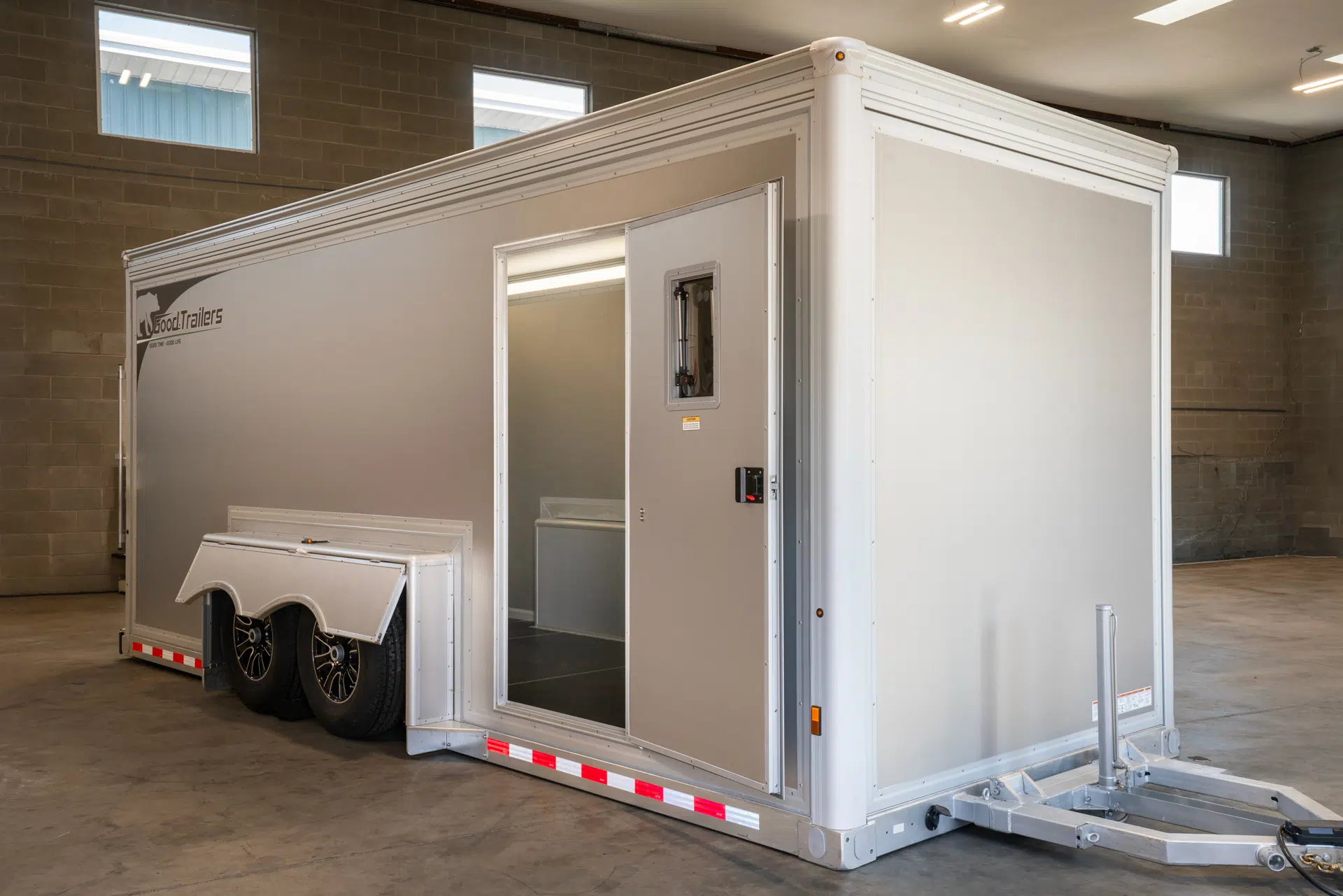
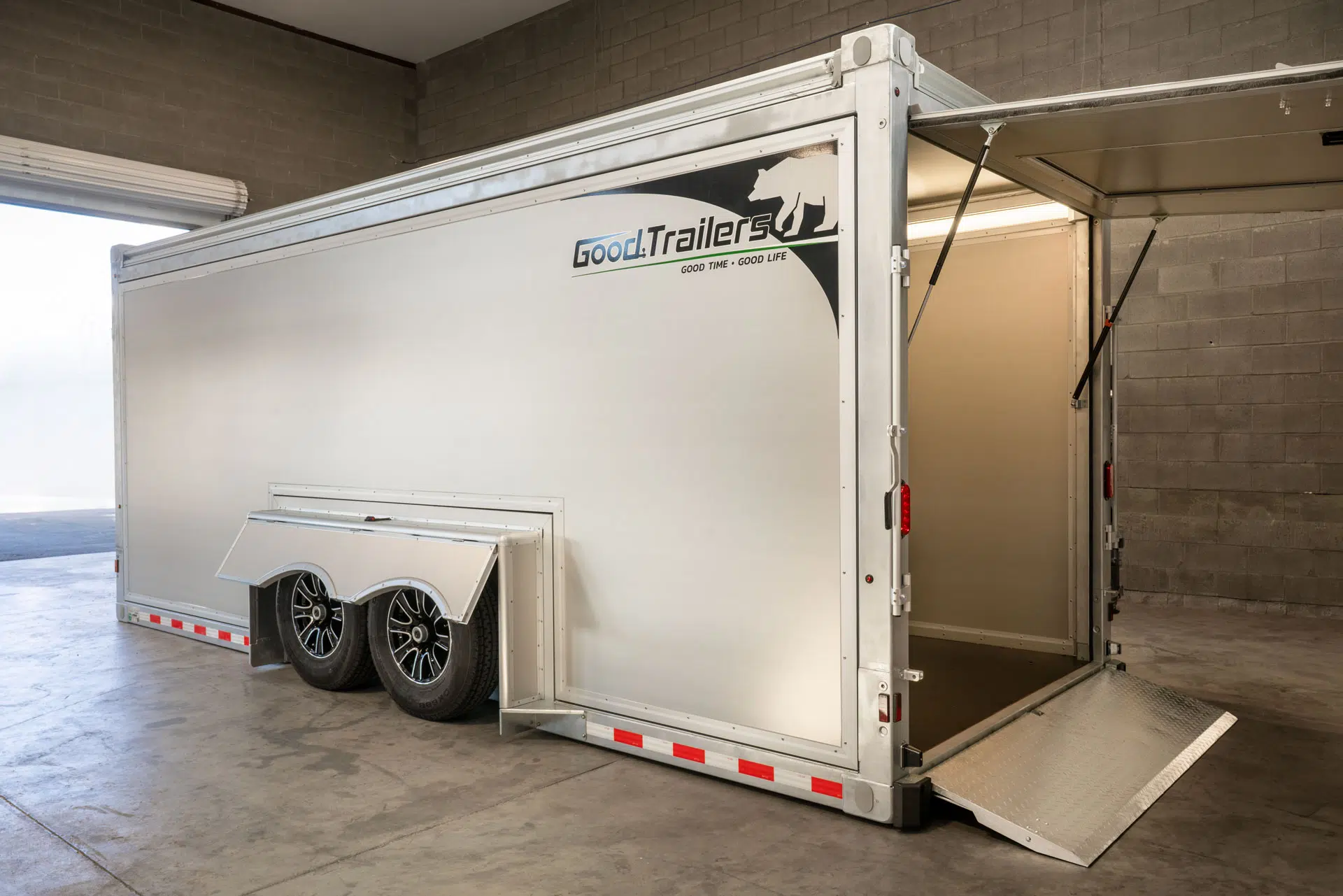
Fortunately, if you want to transport a John Deere Gator, Good Trailers are uniquely suited for the job. If you want to do it safely, Good Trailers are even better. Here’s some tips on what you need to do to protect your valuable new UTV.
Table of Contents
- Assessing Trailer and Gator Specs
- Safe Loading
- Safe Securement
- Will You Need a CDL to Transport a John Deere Gator Safely?
- FAQ
- Key Takeaways
- Get the Right Trailer for Your Gator
Assessing Trailer & Gator Specs
What size flatbed trailer is required to comfortably haul a full-size Gator?
To find out which trailer will help you transport a John Deere Gator safely, check these specs.
- Weight
- Length
- Width
Even the full-size Crossover XUVs like the XUV855M don’t weigh very much: just 2,109 lbs. But they’re a bit long at 12.83 feet. That means a ZUV855M won’t fit our 13′ trailer (interior dimensions: 11’10″L x 6.9″W). You’ll have to upgrade to our 19′ trailer, the GT19FL.
However, a smaller UTV like the Gator TX 4×2 will fit a GT13FL just fine. Our 13-footer still has 5,550 lbs. of carrying capacity and can handle it with ease, even if it’s full of gas, includes a brush guard, or has accessories loaded in the bed. Do check your weights of course, since we can’t know exactly what you’re trying to haul.
Choose the right flatbed trailer based on the Gator model you own.
John Deere divides their Gator UTVs into 4 categories.
- The Work Series
- Electric UVs
- Mid-Size Crossover XUVs
- Full-Size Crossover XUVs
While you’ll want to check the length on your specific model, in general, if you have anything up to a Mid-Size you can get away with our GT13FL model. If you upgrade to a Full-Size Crossover XUV, you’ll need to upgrade to a GT19FL as well.
Safe Loading
What is the safest way to load a John Deere Gator onto a flatbed trailer?
We’ll start with general tips…and then we’ll talk about why you want hydraulic drop deck power to help you load a John Deere Gator with a minimum of stress and hassle.
General Tips
While no haul or load is ever 100% safe or damage-free (things happen), there are some steps you can take to make it as safe as possible.
- Load on flat, level ground.
- Put the Gator in “Park” and engage the parking brake.
- Place 60% of the Gator’s weight at the front of the trailer axles to keep the trailer from swaying while you tow it.
Ground Level Loading for Your John Deere Gator
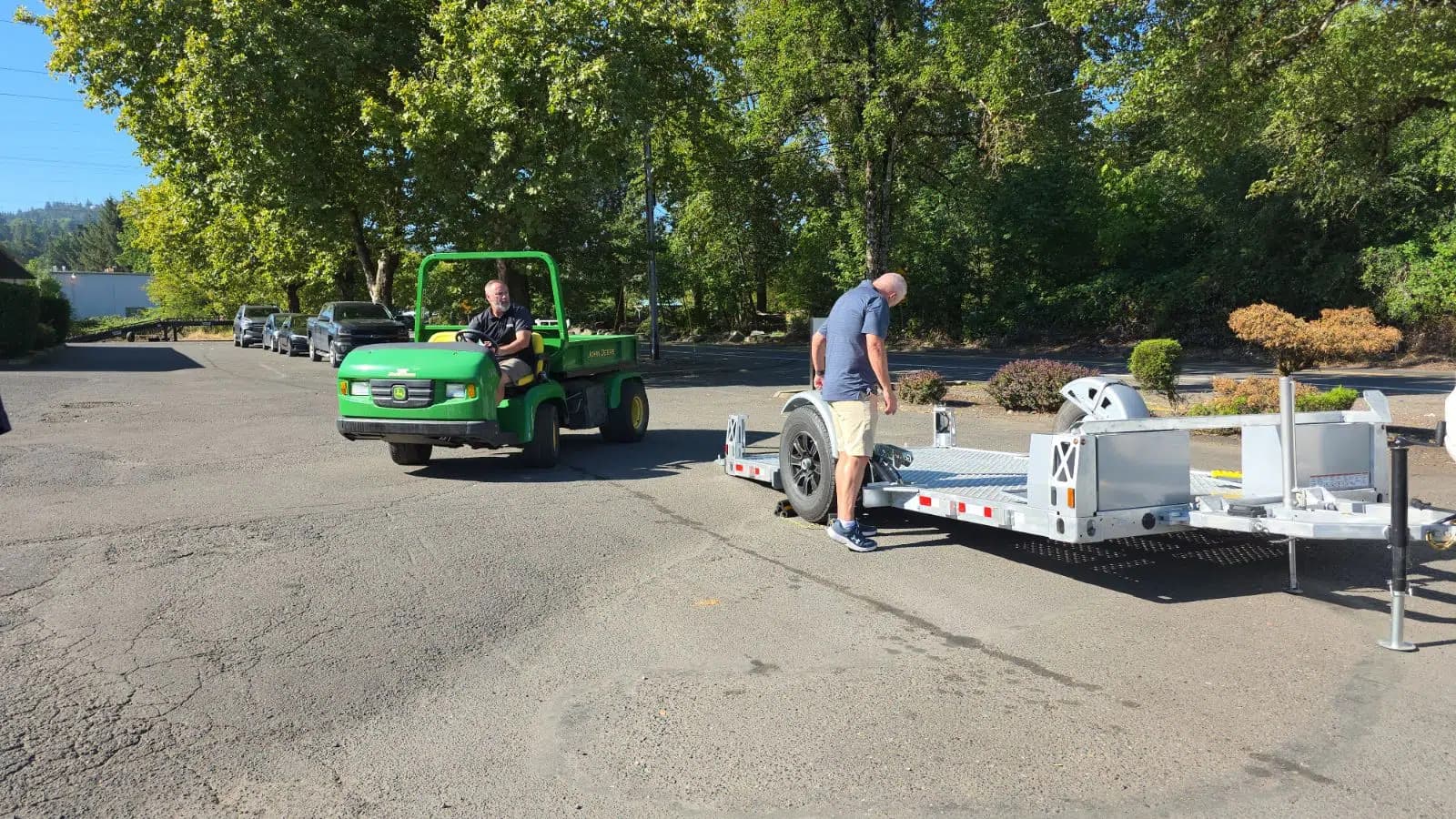
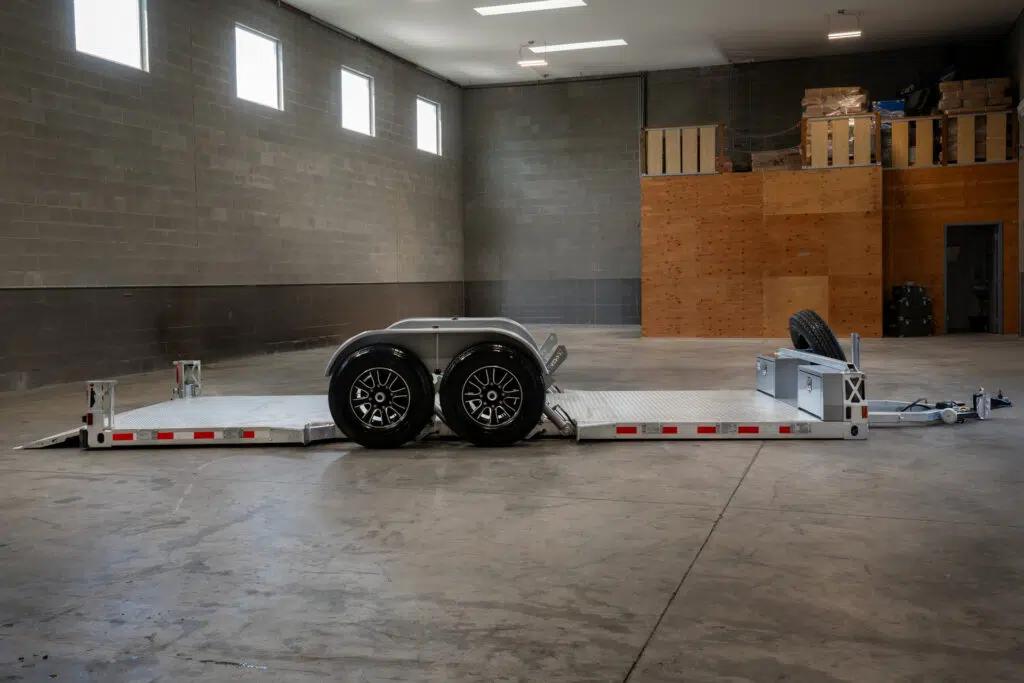
Most trailers come with a 16 inch to 18-inch deck and require a roughly 6-foot long 18° ramp to get the Gator from the ground to the deck. The ramp might just be two narrow planks, or it might be a small ramp that takes up just 1/3 of the trailer’s width. It doesn’t take a lot of operator experience to know that loading such a trailer is a tricky and often dangerous process.
By contrast, Good Trailers:
- Lower all the way to the ground at the touch of a button.
- Have a 5.4-inch lowered deck height (17 inches when raised).
- Allow you to load on a full-width 1’10” ramp sitting at just 11°.
- Gives you a true drive-on loading experience.
- Makes it easy to drive the UTV to the correct spot for 60% weight distribution at the front.
- Raise the deck and go.
- Lower it again for drive-off unloading.
If you want to protect your $20,000 Gator from damage, ground-level loading can’t be beat.
Safe Securement
Can I use chains to secure my UTV or will they damage it?
Chains can damage the Gator’s tubular frame or plastic bodywork. Instead use:
- 4x heavy-duty, 2-inch-wide ratcheting straps with a minimum 3,000 lbs. working load limit.
- Soft loop extensions to wrap around the Gator’s frame without scratching it.
- Add high-visibility markings for your tie-down points.
Use a four-point tie-down to keep your UTV safe.
- Each corner of the Gator must get its own independent strap.
- Pull the straps outwards towards securement points at a 45-degree angle.
- After tightening the first strap, wriggle the machine to ensure tension gets distributed evenly before you tighten the remaining three.
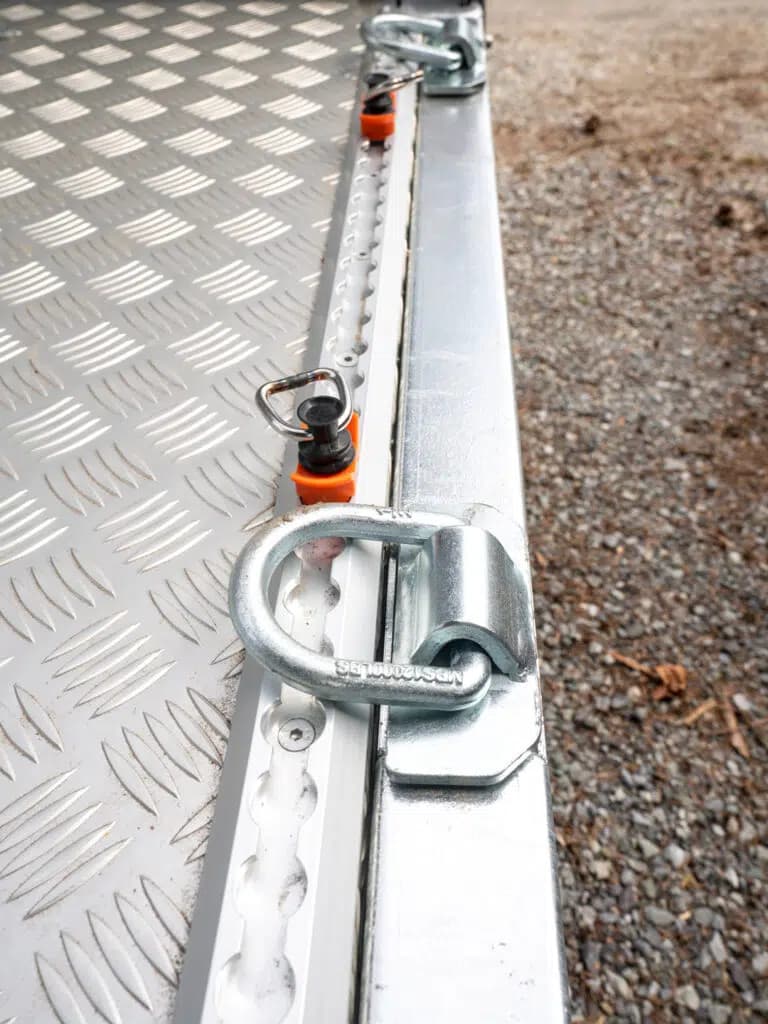
Note: our D-Ring stake pocket add-on is a great way to make securing your ATV even easier.
Will You Need a CDL to Transport a John Deere Gator?
Whether or not you need a CDL to haul a John Deere Gator depends, not on the Gator itself, but on the type of truck you’re using to haul the trailer combined with the type of trailer you are using.
If the GVWR of the truck and the GVWR of the trailer exceed 26,001 lbs., you will generally need a CDL. Some states do have exceptions for farmers moving their own equipment to and from their own lands, though, so double-check the laws where you live.
FAQ
Should I transport my John Deere Gator facing forward or backward?
We recommend the Gator face forward. Transporting a UTV backward exposes windshields, cabs, and hood latches to reverse wind pressure, which can tear soft doors or pop open hoods. If you must load backward, remove or secure any light plastic components and cab enclosures.
What gear should my John Deere Gator be for transport?
Place the Gator in “Park” and engage the parking brake after securing all tie-down straps. Never rely solely on the parking brake to keep the vehicle in place on a trailer deck.
How often should I stop and check my tie-down straps during a trip?
Straps stretch and shift during transit. Check strap tension after your first 5 to 10 miles, and then every time you stop for a fuel or rest break. Always check strap tension immediately if you go over rough pavement or bump roads.
Key Takeaways
If you remember nothing else, remember…
- Size Matters. While smaller Work Series Gators fit a 13′ trailer, Full-Size Crossover models (like the XUV855M) are nearly 13′ long and require a 19′ trailer for safe clearance.
- Ditch the Chains. Protect your Gator’s tubular frame and bodywork by using 2-inch heavy-duty ratchet straps with soft loop extensions instead of metal-chains.
- Master the 60/40 Rule. To prevent dangerous trailer sway, always position 60% of the Gator’s weight forward of the trailer axles.
- True Ground-Level Loading. Eliminate the “tightrope” walk of narrow 18° ramps. The GT19FL lowers to a 5.4-inch deck height for a simple drive-on experience.
- Check your combined GVWR. Stay under the 26,001 lbs. threshold (Truck + Trailer) to avoid CDL requirements and verify your specific state’s farm-use exemptions before assuming they apply to you.
Get the Right Trailer for Your Gator
If you want to transport a John Deere Gator safely, it’s hard to go wrong with a drop deck trailer from GoodMFG®!
- Call us right now at (360) 889-9789.
- Find a dealer near you.
- Click the icon to the lower right to chat with Tow-Bot.
See also:
Best Trailer for the Kubota L-Series
The Ultimate Guide to Skid Steer Trailers
The Top 4 Advantages of Trailers that Lower to the Ground
This resource was compiled by the GoodMFG® Product Team, drawing on 75 years of combined experience in hydraulic systems, heavy-duty transport, trailers, and modular structures.
P.S. – We build trailers every day, but we don’t run your crews. If there’s a specific logistical headache or a “field reality” we’ve missed, we want to hear about it. Help us refine the equipment that makes your day easier! Email our Marketing Lead at devan-h @ goodrv.com and let us know what we should solve next.